Vienna Airport to City Centre Every Way from VIE Explained
Vienna airport offers four ways into the city, and the wrong choice can cost you time or money.
Your First Decision in Vienna Hits Before the Kerb
You land at Vienna International Airport (VIE), 18 km southeast of Stephansplatz, and the critical choice comes sooner than you expect. It is not how to reach the city. It is which route you select, because each lands you in a different place at a different price. Picking wrong can cost you 40 minutes and money you did not need to spend. The decision turns on where your hotel sits, how much you value a dedicated seat versus a commuter carriage, and whether you are willing to open an app before you step onto the platform. The fastest train is not the best one for every traveller. The cheapest one takes twice as long. The taxi, the supposedly simple option, requires you to know a flat rate that the driver may not offer unprompted.
Vienna rewards advance decisions. The city's beauty is formal and orderly, which makes it a pleasure to navigate if you have the facts before you arrive, but a slow frustration if you assume a European capital will be casual about its transport. It is not. The public transport etiquette is strictly enforced by other passengers, not by officials: jaywalking draws a glare, standing in the wrong carriage zone draws a tut, and boarding a tram without a validated ticket is a risk the locals do not take. The infrastructure is excellent. You have to understand it before you need it.
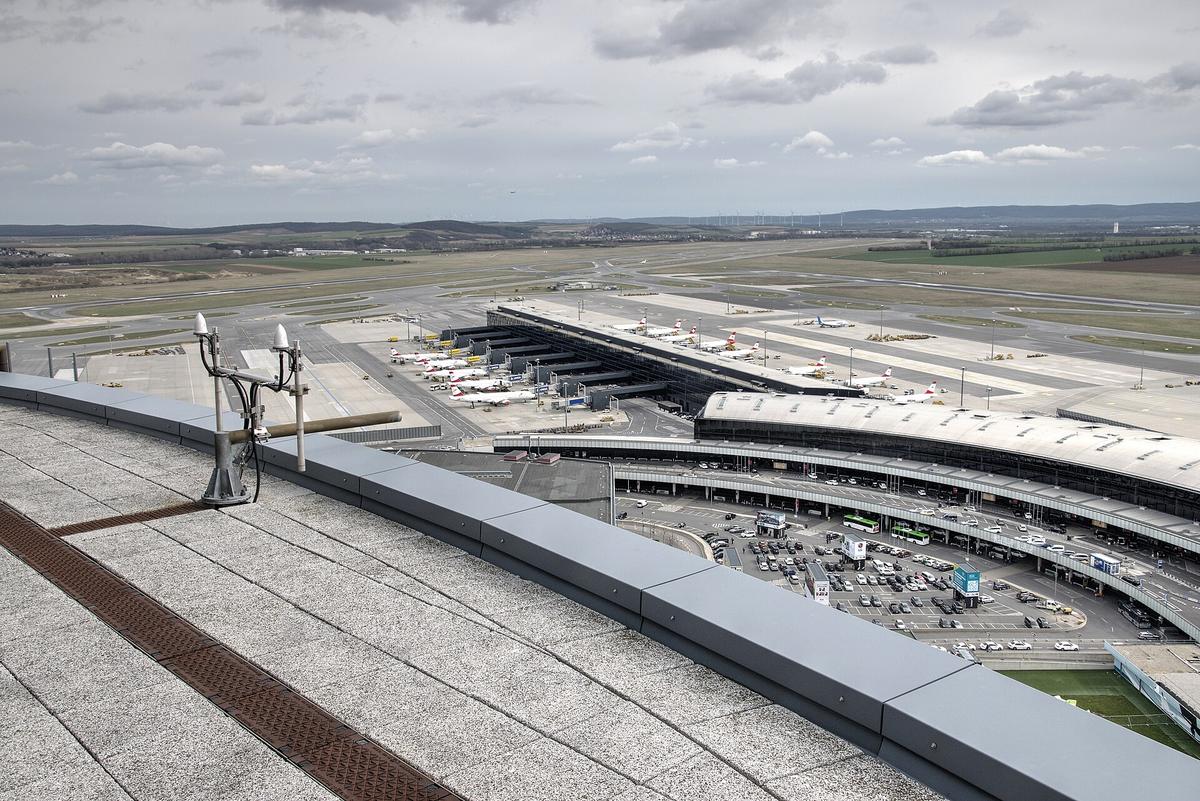

CAT Vs. ÖBB Express Vs. S-Bahn S7: the Core Tradeoff
The three rail routes from VIE to central Vienna are the City Airport Train (CAT) to Wien Mitte, the ÖBB long-distance service to Wien Hauptbahnhof, and the ÖBB S-Bahn S7 that stops at multiple stations including Wien Mitte and Wien Rennweg. All three are reliable. None of them share the same terminus or the same fare band. The CAT is a fixed-price premium product for a 16-minute non-stop ride. The ÖBB express costs roughly a third of that for a 15-minute journey. The S7 matches the express fare but takes 25 minutes. The price gap between the CAT and the express is wide enough to buy a solid lunch at a Beisl or a ticket to the Kunsthistorisches Museum. That is the fact that matters most if you are budget-conscious and not staying near Wien Mitte.
CAT: Faster, Fancier, And A Dead End
When you walk off an Austrian Airlines, Lufthansa, British Airways, Air France, KLM, Turkish Airlines, Emirates, Qatar Airways, Ethiopian Airlines, ANA, EVA Air, Air China, or Korean Air long-haul flight at VIE, the CAT terminal is the first thing you see before you even reach the main arrivals hall. It is clean, clearly signposted, and operated by City Air Terminal Betriebsgesellschaft m.b.H. every 30 minutes. The train is quiet, has luggage racks that work, and deposits you at Wien Mitte in 16 minutes. Wien Mitte is a transport hub: U-Bahn lines U3 and U4 meet there, and you can connect quickly to the Innere Stadt, Landstraße, and the western districts. The downside is that Wien Mitte is not the main station. If your hotel is near the Belvedere, the Wieden district, or anywhere south of the city core, you will need a second train or a long tram ride. The CAT is also the most expensive single ticket on the line and is not covered by the WienMobil app's day pass or the VOR zoned fare. You pay the standalone price every time.
ÖBB Express: The Cheaper Faster Train That Skips The Centre
The ÖBB long-distance train runs from VIE directly to Wien Hauptbahnhof in 15 minutes. That is one minute faster than the CAT. The catch is that the Hauptbahnhof sits outside the Innere Stadt. Factor in the U-Bahn connection from there to Stephansplatz, adding roughly 8 minutes. The service frequency is irregular, approximately hourly, so you cannot simply show up and board. You check the departure board and wait. But at roughly one third of the CAT fare, this is the correct choice if your accommodation is in the 4th, 5th, or 10th district. It also works if you plan a day trip to Bratislava, Krems and the Wachau Valley, or Melk Abbey. All of those depart from Hauptbahnhof.
S-Bahn S7: Slower, Cheaper, And More Useful For Some Neighbourhoods
The S-Bahn S7 matches the ÖBB express fare but takes 25 minutes to Wien Mitte rather than 15. Why choose it? Because the S7 stops at Wien Rennweg, the station for the Belvedere. That distance is not walkable from Hauptbahnhof unless you have 20 minutes and no luggage. The S7 also stops at Wien Praterstern, the direct connection to the Prater Riesenrad and the Leopoldstadt district. For anyone staying in Landstraße or the eastern districts, the S7 is the most practical rail option. Frequency is every 30 minutes, similar to the CAT, but you are less likely to find a seat during weekday peak hours because the S7 is a commuter line. Vienna residents use it to reach the city from the southeast suburbs. They do not have luggage. You do.
VIE Airport Transport: the Complete Field
Beyond the three trains, the fourth option is a taxi or ride-hailing service to the city centre. The City of Vienna regulates taxi tariffs, and the operator must use a meter. Expect the journey to fall within a band set by the municipal tariff for a 20-to-25-minute drive in off-peak conditions. Peak weekday periods from 07:00 to 09:00 and 16:00 to 18:30 can push the travel time to 35 or even 55 minutes and the fare higher. Ride-hailing services Bolt and Uber operate from designated zones in car parks P4 and P8, not from the terminal kerb. If you want simplicity and a door-to-door transfer, a taxi is the answer, but confirm the approximate fare before you get in. The airport bus route operated by ÖBB Postbus, the Vienna Airport Lines, runs to Morzinplatz and Schwedenplatz in 22 minutes off-peak, at a fixed price published on the operator website. It is the only surface option that serves the central canalside area directly.
One fact that catches many arrivals: none of these tickets are sold on the platforms or on the vehicles. Vienna does not sell tickets on trams or buses. You must buy from a station machine, a Tabak Trafik shop, or the WienMobil app before you step aboard. The critical trip-up is that visitors who see a ticket machine at VIE assume they are set for the whole journey. But the zoned VOR fare for the S7 and the ÖBB express is a single ticket valid only for that ride. If you buy a ticket for the S7 to Wien Mitte and then try to take the U-Bahn to your hotel, you will be travelling without a valid ticket. Buy a day pass or a single ticket that covers all zones for the full trip. The WienMobil app handles this correctly if you tell it your origin and destination.
| Train | Terminus | Time | Single Fare | Frequency |
|---|---|---|---|---|
| City Airport Train (CAT) | Wien Mitte | 16 min | Fixed premium fare (operator website) | Every 30 min |
| ÖBB long-distance | Wien Hauptbahnhof | 15 min | VOR zoned fare (approx one third of CAT) | Approx hourly |
| ÖBB S-Bahn S7 | Wien Mitte (and Wien Rennweg, Wien Praterstern) | 25 min | VOR zoned fare (same as ÖBB express) | Every 30 min |
_Art.IWMART4518.jpg)
Which One Should You Take?
If your hotel is in the Innere Stadt, the 1st district, take the CAT to Wien Mitte and walk or ride the U3 one stop. You will be in the pedestrianised core at Stephansdom before the S7 passengers have cleared passport control. If your hotel is in Landstraße near the Belvedere, take the S7 to Wien Rennweg. That is the only rail option that drops you within walking distance of the Belvedere, the diplomatic quarter, and the stately residential streets of the 3rd district. If your hotel is in Margareten, Mariahilf, or Neubau, take the ÖBB express to Hauptbahnhof and transfer to the U1 or the U2. If you are staying in Leopoldstadt near the Prater, take the S7 to Wien Praterstern. If you are on a tight budget and staying anywhere served by the Hauptbahnhof, the ÖBB express is the obvious choice. The fare difference from the CAT buys you a solid lunch at a Beisl.
When The Taxi Makes Sense
The taxi is most useful for families with children, travellers with very heavy luggage, or late-night arrivals when the train frequency drops. The municipal tariff band is steep for a solo traveller but reasonable for a group of three or four splitting the fare. The ride-hailing services are slightly cheaper but require you to find the designated zone in P4 or P8, which is not signposted from the arrival gates with the same clarity as the taxi rank. Do not rely on a ride-hailing app as your primary plan if your phone battery is low or your SIM does not have data. Connectivity in Vienna is good, but the free Wien.at Public WLAN requires re-registration that can fail if the page times out.
One App To Rule Them All
The WienMobil app is essential for ticket purchase and route planning. Download it before you leave home and set up a payment method. When you land you can buy your train ticket in under a minute rather than queuing at a machine.
Common Questions
How much does a train from Vienna airport to the city cost?
The City Airport Train is a fixed premium fare, published on the operator website. The ÖBB long-distance train and the S-Bahn S7 each use the VOR zoned fare, which is roughly one third of the CAT price. Check the VOR website for current rates.
Is the CAT train worth the extra money?
It depends on where you are staying. The CAT is worth the premium if your hotel is in the Innere Stadt or close to Wien Mitte, and you value the dedicated non-stop service and luggage space. It is not worth the money if you need to transfer to another train at Wien Mitte because your accommodation is south of the city. In that case the ÖBB express to Hauptbahnhof is faster overall.
How often do trains run from VIE to Vienna?
The CAT runs every 30 minutes. The S-Bahn S7 runs every 30 minutes. The ÖBB long-distance service runs approximately hourly, but the schedule is irregular. Check the ÖBB app or the departure boards at the station before committing.
Can I use the same ticket for the train to the city and then the subway?
Only if you buy a day pass or a multi-zone ticket that covers the entire trip. The single VOR ticket for the S7 or ÖBB express is valid for that train only. If you need to transfer to the U-Bahn you must buy a separate ticket or a day pass upfront.
Is it easy to get a taxi at Vienna airport at night?
Yes. The taxi rank at VIE operates 24 hours. The journey to the centre takes 20 to 25 minutes in off-peak conditions. Expect the fare to fall within the municipal tariff band. At night the streets are empty so the trip can be faster than during weekday peak periods.
Read next
-
 Vienna Hotels What the Price Bands Actually Get You
Vienna hotel price bands deliver distinctly different experiences. Here is what each band actually gets you, from building type to seasonal pricing patterns.
Vienna Hotels What the Price Bands Actually Get You
Vienna hotel price bands deliver distinctly different experiences. Here is what each band actually gets you, from building type to seasonal pricing patterns.
-
 Where to Stay in Vienna District by District and What Each Costs You
Where to stay in Vienna depends on what you are willing to trade off. Each district costs you something different in time, money, and atmosphere.
Where to Stay in Vienna District by District and What Each Costs You
Where to stay in Vienna depends on what you are willing to trade off. Each district costs you something different in time, money, and atmosphere.
-
 What to Do in Vienna Ordered by Whether It Is Worth the Time
Three full days is the minimum to see the core sights. Less forces a brutal trade-off between the imperial palaces and any sense of Vienna's neighbourhood lif
What to Do in Vienna Ordered by Whether It Is Worth the Time
Three full days is the minimum to see the core sights. Less forces a brutal trade-off between the imperial palaces and any sense of Vienna's neighbourhood lif
-
 When to Visit Vienna and What Each Season Does to the City
At 16:30 in mid-December, the Rathausplatz Christmas market is already shoulder to shoulder. You cannot move freely; you shuffle.
When to Visit Vienna and What Each Season Does to the City
At 16:30 in mid-December, the Rathausplatz Christmas market is already shoulder to shoulder. You cannot move freely; you shuffle.
-
 Getting Around Vienna Without Wasting Half Your Trip on Foot
Most visitors waste the first hour of their Vienna trip standing on a tram platform, ticketless, watching the doors close.
Getting Around Vienna Without Wasting Half Your Trip on Foot
Most visitors waste the first hour of their Vienna trip standing on a tram platform, ticketless, watching the doors close.
-
 How to spend two or three days in Vienna without rushing or wasting time
Vienna's major sights are farther apart than they look on a map. This itinerary groups them by U-Bahn line so you spend your days seeing the city, not walking
How to spend two or three days in Vienna without rushing or wasting time
Vienna's major sights are farther apart than they look on a map. This itinerary groups them by U-Bahn line so you spend your days seeing the city, not walking
-
 Austria Travel Guide, Imperial Cities and Alpine Valleys by Train
Austria pairs baroque imperial cities with Alpine valleys close enough to reach by train, making a week the minimum to experience both.
Austria Travel Guide, Imperial Cities and Alpine Valleys by Train
Austria pairs baroque imperial cities with Alpine valleys close enough to reach by train, making a week the minimum to experience both.
-
 Staying connected in Austria with eSIM, local SIM, or just hotel WiFi
Austrian mobile coverage vanishes in the places you need it most: deep Alpine valleys and high passes.
Staying connected in Austria with eSIM, local SIM, or just hotel WiFi
Austrian mobile coverage vanishes in the places you need it most: deep Alpine valleys and high passes.
-
 Best Time to Visit Austria for Cities, Lakes and Skiing Without Crowds
Austria's seasons dictate what's open: Christmas markets end on 24 December, the Salzburg Festival consumes July and August, and many hotels close the first
Best Time to Visit Austria for Cities, Lakes and Skiing Without Crowds
Austria's seasons dictate what's open: Christmas markets end on 24 December, the Salzburg Festival consumes July and August, and many hotels close the first