Seeing Klimt at the Belvedere Without the Wrong Ticket
The Belvedere is two museums, not one, and The Kiss is in Upper Belvedere. Here is how to pick the right ticket and why the gardens cost nothing to walk through.

Seeing Klimt at the Belvedere Without the Wrong Ticket
The Kiss lives in Upper Belvedere. That is the building you need, regardless of what any combination ticket implies. The Belvedere complex is not one museum. It is three separate sites spread across a hillside in Vienna's 3rd District: Upper Belvedere, Lower Belvedere, and Belvedere 21, plus a baroque palace garden connecting the two historic palaces. Each holds a distinct set of works and its own admission. Buying a combined ticket for all three when you only want the Klimt paintings means paying for temporary exhibitions you did not plan to see and adding an extra hour of walking through buildings whose content does not interest you. Book the Upper Belvedere general admission ticket from the official source at belvedere.at and nothing else.
- What You Came For: The Kiss (Gustav Klimt, 1908-1909) hangs in Upper Belvedere's permanent collection, along with 23 other Klimt works including Judith and Portrait of Fritza Riedler.
- Upper Belvedere Address: Prinz Eugen-Straße 27, 1030 Vienna. Tram D stops at Schloss Belvedere directly outside.
- Typical Visit Length: Upper Belvedere alone: 1.5 to 2.5 hours. All three sites: 3 to 4.5 hours.
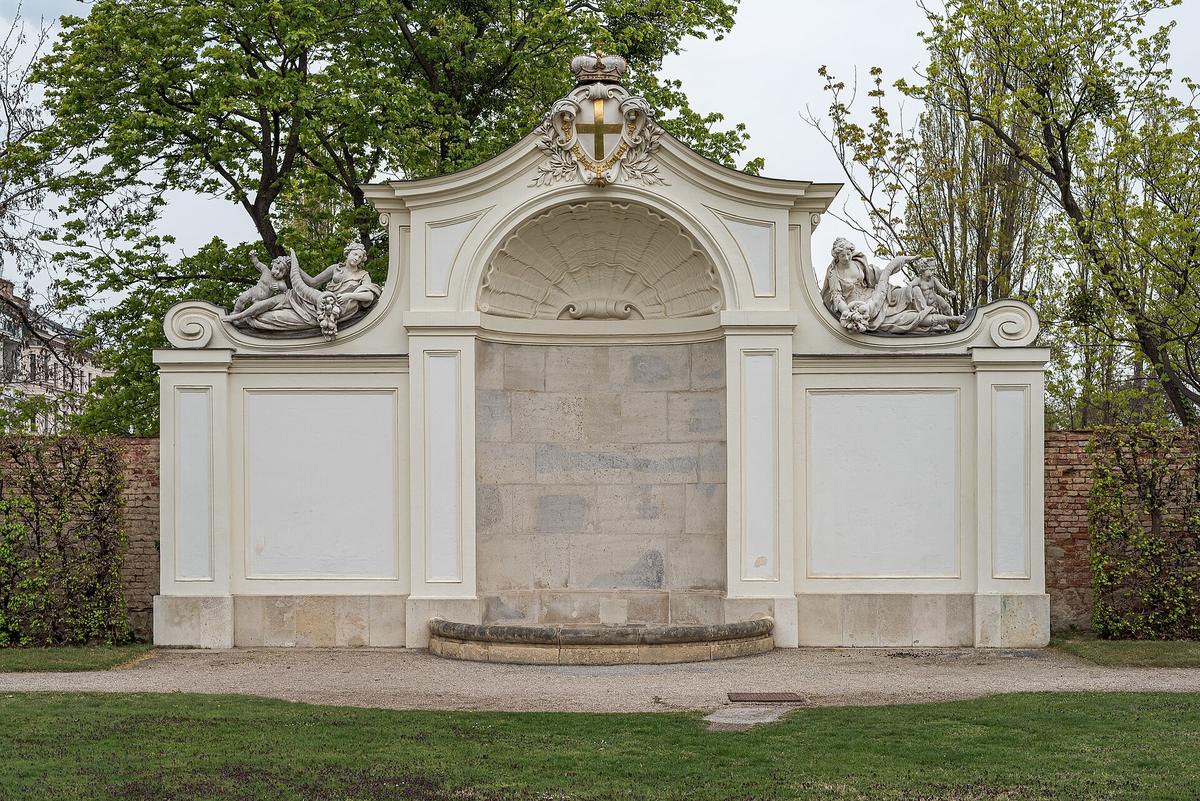
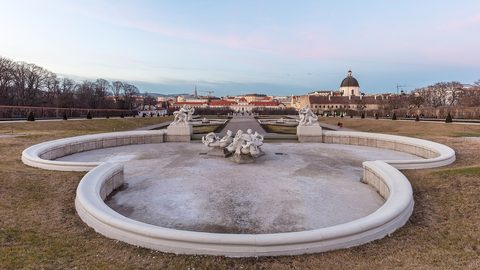
- Garden Access: Free of charge. The 3-hectare baroque garden between Upper and Lower Belvedere is open to the public with no ticket required.
- Official Booking: Belvedere.at. Advance booking is strongly recommended during April, October and December.
- UNESCO Status: Palace and Gardens of Belvedere are part of the Historic Centre of Vienna World Heritage Site (inscribed 2001).
Upper Belvedere Lower Belvedere Difference
The difference is straightforward once you know which building holds what. Upper Belvedere, completed in 1723, contains the permanent display of Austrian art from the Middle Ages to the mid 20th century. That is where you find Gustav Klimt, Egon Schiele, Oskar Kokoschka, and Ferdinand Georg Waldmüller. The building itself was designed by Johann Lukas von Hildebrandt as a summer residence for Prince Eugene of Savoy, and its state rooms on the first floor are part of the museum experience.
Lower Belvedere, finished in 1716, serves almost entirely as a space for temporary exhibitions and former state rooms. Its display changes with each show. Unless a current exhibition genuinely interests you, Lower Belvedere does not require your time or your ticket money. The same applies to Belvedere 21, which focuses on Austrian and international art from 1945 onward. It sits at Arsenalstraße 1, a ten minute walk from the main palace grounds, and its building was originally the Austrian pavilion for the 1958 Brussels World's Fair.
Which One to Choose
Choose Upper Belvedere. Skip Lower Belvedere unless the temporary programme pulls you. Skip Belvedere 21 unless your interest runs to postwar Austrian work. A combined ticket covers one entry to each site within a fixed number of days from first use, but buying it when you only want the permanent display is paying for access you will not use. Upper Belvedere shows roughly 800 works from a total holding of about 20,000 objects. The Österreichische Galerie Belvedere, the federal museum that operates the site, publishes the exact exhibition schedule annually on belvedere.at for those who do want the temporary shows.
Belvedere Advance Booking Vienna
Book for Upper Belvedere before you travel during any period from April through October, and again during December. Walk up entry is possible outside those months and on weekday mornings in November, January, February, and March, excluding the Christmas and New Year weeks. But even then, timed slots sell out on weekends and public holidays year round.
The quietest season runs from November to March, with the caveat that the weeks between Christmas and New Year are as crowded as July. The busiest pattern hits July and August, when heat and peak tourist crowds converge. Vienna's formal order means queues form in disciplined lines, but standing in one for 40 minutes in un-air-conditioned indoor waiting areas is not how you want to spend your visit window. Arrive at opening time or within the first hour. The second best window is late afternoon on weekdays outside school holidays.
Getting There
Buy your ticket from a station machine, Tabak Trafik shop, or the WienMobil app before you board. Tickets are not sold on trams or buses. Tram D stops at Schloss Belvedere. Tram 18 and O stop at Quartier Belvedere. The S-Bahn and regional trains stop at Wien Quartier Belvedere. From the airport, take the ÖBB Railjet to Hauptbahnhof in 15 minutes, then change to the U-Bahn or walk 15 minutes to the palace.
Belvedere Palace Gardens Free
The gardens are free. No ticket. No timed slot. No queue.
Walk up from the Lower Belvedere side at Rennweg 6, climb the gradual slope past the fountains, sculpted hedges, and wide lawns, and arrive at the Upper Belvedere's main facade. The gardens are part of the UNESCO listed Historic Centre of Vienna World Heritage Site, and they function as a public park rather than a museum annex. Locals use the benches to read. Couples photograph the cascading water features against the palace backdrop. There are no barriers separating the garden from the street access points, which means you can pass through them on your way from Schwarzenbergplatz (700 metres from Lower Belvedere) toward the Botanical Garden of the University of Vienna (300 metres from Belvedere 21) without ever buying a ticket.
Use the Garden as Your Scout
See Upper Belvedere from below, judge the crowd at the entrance, then decide whether to commit to your timed slot or wait for a less busy moment. The garden absorbs the summer overflow that the museum cannot.
Klimt Collection Vienna Belvedere
Upper Belvedere holds 24 Klimt paintings, the largest single grouping of his work in the world. The Kiss is the headline, but the room around it contains Judith, Portrait of Fritza Riedler, and a range of his landscape and allegorical works. Do not rush past those for a single selfie at the main attraction. The permanent display spreads across multiple rooms, and Klimt occupies just one section. Egon Schiele and Oskar Kokoschka have their own spaces, and the medieval altarpieces on the ground floor are among the strongest in Central Europe.
Photography is permitted in the permanent display without flash or tripod. Some temporary exhibitions restrict it entirely. Audio guides are available at Upper Belvedere. Cloakrooms are available at all three sites. The museum receives approximately 1.7 million visitors per year across all Belvedere sites, but the Österreichische Galerie Belvedere publishes the verified annual count on its official site.
Timing and Neighbourhood
Your visit will run 1.5 to 2.5 hours for Upper Belvedere alone. If you add the full complex, budget 3 to 4.5 hours. The Belvedere is in the Landstraße district (3rd district), a stately residential area that also holds the diplomatic quarter. Nearby within walking distance: the Botanical Garden of the University of Vienna at 300 metres, Schwarzenbergplatz at 700 metres, Karlskirche at 1 kilometre, and the Vienna State Opera at 1.5 kilometres. Naschmarkt is 1.5 kilometres from Lower Belvedere, though the market closes Sundays and its restaurants stay open late only in the Innere Stadt. Plan your food stops separately.
| Visitor Type | Recommended Site | Why |
|---|---|---|
| Klimt and Schiele focus | Upper Belvedere only | The Kiss lives here; 24 Klimt paintings and Schiele works on permanent display. |
| Temporary exhibition enthusiast | Lower Belvedere only | Lower Belvedere is dedicated to rotating shows; check belvedere.at for current programme. |
| Post 1945 art interest | Belvedere 21 only | Austrian and international art from 1945 onward in the former Brussels World's Fair pavilion. |
| First time visitor to Vienna | Upper Belvedere | One site. 1.5 to 2.5 hours. Baroque palace plus the permanent display. Skip the combined ticket. |
| Dedicated art museum visitor | Combined ticket optional | 3 to 4.5 hours. Book only if you want all three sites. Otherwise stick to Upper Belvedere. |
Practical Reality: Vienna is Not a Walking City
Do not assume Vienna is compact enough to walk between major sights. The Innere Stadt is walkable. The Belvedere is not in the Innere Stadt. Upper Belvedere sits in Landstraße, a 25 minute walk from the State Opera, and Schönbrunn Palace is another 25 minutes by U-Bahn from there. Visitors who try to cover both on foot waste the hours they should have spent inside the galleries. Take the U-Bahn. Use the WienMobil app to buy your ticket before boarding. Validate it before you step onto the platform. Locals will glare if you cross against a red pedestrian light, even on an empty street, and they will tut quietly if you board a tram without a validated ticket. The city's strict public etiquette is not rudeness. It is a system that works because everyone follows it.
Who Vienna Suits
Vienna is best for culture first travellers who genuinely enjoy art museums and classical music. It is not for party centric backpackers on a shoestring budget or those who find imperial formality stuffy. Solo travellers value the safety and efficient infrastructure. Older travellers appreciate the flat terrain and excellent public transport. Give it three full days minimum. That lets you hit the Belvedere, the Kunsthistorisches Museum, the Hofburg Palace, and still catch a neighbourhood like Neubau's independent galleries or the Karmelitermarkt in Leopoldstadt. Less than that forces a brutal trade off between core imperial sights and any sense of the city's neighbourhood life.
Common Questions
Do I need to visit both Belvedere palaces or just Upper Belvedere for The Kiss?
Only Upper Belvedere. The Kiss is in the permanent display on the first floor. Lower Belvedere holds temporary exhibitions. Skip it unless the current show interests you.
Can I see the gardens without a ticket?
Yes. The 3 hectare baroque garden between Upper and Lower Belvedere is free and open to the public. No ticket required.
When is the quietest time to visit Upper Belvedere?
November to March, excluding Christmas and New Year weeks. Within that window, arrive at opening time or late afternoon on weekdays outside school holidays.
How many Klimt paintings are at the Belvedere?
24 paintings, including The Kiss, Judith, and Portrait of Fritza Riedler. That is the largest single grouping of Klimt work in the world.
Read next
-
 Vienna Hotels What the Price Bands Actually Get You
Vienna hotel price bands deliver distinctly different experiences. Here is what each band actually gets you, from building type to seasonal pricing patterns.
Vienna Hotels What the Price Bands Actually Get You
Vienna hotel price bands deliver distinctly different experiences. Here is what each band actually gets you, from building type to seasonal pricing patterns.
-
 Where to Stay in Vienna District by District and What Each Costs You
Where to stay in Vienna depends on what you are willing to trade off. Each district costs you something different in time, money, and atmosphere.
Where to Stay in Vienna District by District and What Each Costs You
Where to stay in Vienna depends on what you are willing to trade off. Each district costs you something different in time, money, and atmosphere.
-
 Flying into Vienna airport and getting to the city without a mistake
Vienna airport offers four ways into the city, and the wrong choice can cost you time or money.
Flying into Vienna airport and getting to the city without a mistake
Vienna airport offers four ways into the city, and the wrong choice can cost you time or money.
-
 What to Do in Vienna Ordered by Whether It Is Worth the Time
Three full days is the minimum to see the core sights. Less forces a brutal trade-off between the imperial palaces and any sense of Vienna's neighbourhood lif
What to Do in Vienna Ordered by Whether It Is Worth the Time
Three full days is the minimum to see the core sights. Less forces a brutal trade-off between the imperial palaces and any sense of Vienna's neighbourhood lif
-
 When to Visit Vienna and What Each Season Does to the City
At 16:30 in mid-December, the Rathausplatz Christmas market is already shoulder to shoulder. You cannot move freely; you shuffle.
When to Visit Vienna and What Each Season Does to the City
At 16:30 in mid-December, the Rathausplatz Christmas market is already shoulder to shoulder. You cannot move freely; you shuffle.
-
 Getting Around Vienna Without Wasting Half Your Trip on Foot
Most visitors waste the first hour of their Vienna trip standing on a tram platform, ticketless, watching the doors close.
Getting Around Vienna Without Wasting Half Your Trip on Foot
Most visitors waste the first hour of their Vienna trip standing on a tram platform, ticketless, watching the doors close.
-
 Schönbrunn Palace
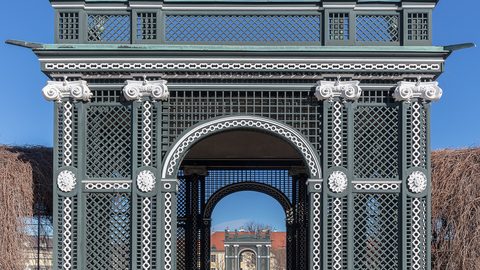
 requires a strategy, not just a ticket. Here is how the entrance works, why the Grand Tour needs advance booking, and how to use the free
Schönbrunn Palace
Schönbrunn Palace requires a strategy, not just a ticket. Here is how the entrance works, why the Grand Tour needs advance booking, and how to use the free
-
 Hofburg
The Hofburg is several attractions sharing one name. Here is which sections matter, how the ticket bundles actually work, and a cheaper way to see the
Hofburg
The Hofburg is several attractions sharing one name. Here is which sections matter, how the ticket bundles actually work, and a cheaper way to see the
-
 St Stephen's Cathedral
The main nave of St Stephen's Cathedral is free, but the towers and catacombs each require a separate ticket.
St Stephen's Cathedral
The main nave of St Stephen's Cathedral is free, but the towers and catacombs each require a separate ticket.