What to Know Before You Go to Morocco
Morocco packs four imperial cities, the High Atlas and the Sahara into one intense country where bargaining shapes daily life and the senses never rest.
- Flag
-
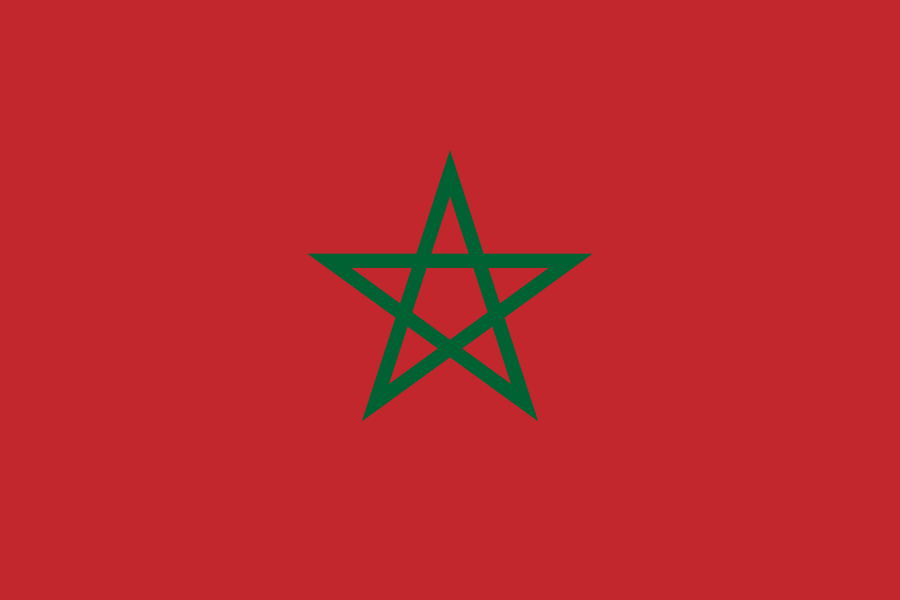
- ISO code
- MA
- Population
- 36,029,138
- Currency
- MAD
- Dial code
- +212
What to Know Before You Go to Morocco
The call to prayer cuts across the terminal car park before you have even cleared customs. The air in Marrakech carries dust, charcoal smoke, and jasmine. This guide exists because the gap between the glossy riad photos and the actual street swallows unprepared visitors. You need at least 10 days to see the imperial cities, the High Atlas, and the Sahara in one trip. Anything less forces you to choose between north and south. Jetlag plus transit distances eat two full days just moving between regions. Plan for the sensory intensity, the bargaining that governs most transactions, and the physical toll of constant negotiation. That is what the country actually asks of a traveller.
- Official Name: Kingdom of Morocco
- Capital: Rabat
- Population: Approximately 38 million (2024 census, Haut Commissariat au Plan)
- Area: 446,550 km² (excluding Western Sahara); approximately 710,850 km² including Western Sahara
- Official Languages: Arabic, Amazigh (Tamazight)
- Widely Spoken Languages: Moroccan Arabic (Darija), French, Tashelhit, Tamazight, Tarifit
- Currency: Moroccan dirham (MAD)
- Currency Status: Closed currency; import and export of dirhams prohibited beyond MAD 2,000
- Exchange Requirement: Foreign currency must be declared on entry if exceeding MAD 100,000 equivalent
- Government Type: Constitutional monarchy
- Head of State: King Mohammed VI (since 23 July 1999)
- Time Zone: UTC+1 (year round; no daylight saving time since 2018)
- Driving Side: Right
- International Dialling Code: +212
- Emergency Number (Police): 190
- Emergency Number (Ambulance / Fire): 150
- Tourist Police: 190 (ask for Brigade Touristique)
- Country TLD: .ma
Morocco Itinerary Planning
Start with a hard constraint: you cannot see the whole country in a week. The common mistake is trying to cover Marrakech, Fes, Chefchaouen, the desert, and Essaouira in 7 days. That creates a trip that is 60% transit on winding roads and leaves zero margin for the delays, bargaining, and sheer exhaustion that define overland travel here. A 10-day minimum gives you one region plus a desert excursion. A 14-day itinerary allows Marrakech, the High Atlas, the Sahara at Erg Chebbi, and Fes with a stop at Aït Benhaddou along the route. Add 3 more days for Chefchaouen and the northern port of Tangier.
Pick Your Axis
Decide your axis first. The north-south rail line links Tangier, Rabat, Casablanca, and Marrakech. The desert route from Marrakech to Merzouga is 560 km and takes 9 to 10 hours non-stop by road. You cannot do that as a day trip. Book an overnight at a desert camp in Erg Chebbi. For the Atlas, base yourself in Imlil for Toubkal treks or in the Todra Gorge for rock climbing. The intercity train network ONCF covers the Tangier-to-Marrakech corridor. The Al Boraq high-speed line cuts Tangier to Casablanca to about 2 hours 10 minutes. South of Marrakech and east of Oujda there is no rail. CTM and Supratours buses become the backbone for those routes.
Booking Transport
Book CTM buses a day ahead on key routes such as Marrakech to Merzouga or Fes to Chefchaouen. They sell out. You cannot reliably book online with a foreign card, so buy at the station or ask your riad to purchase for you. Train tickets bought on the day at the station are fine. Grand taxis depart when full with 6 passengers and work for routes like Marrakech to Ouzoud Waterfalls or Fes to Volubilis. Agree the price before you get in.
.jpg)
Morocco Trip Advice
Buy a Maroc Telecom or Orange SIM at the airport on arrival. You need your passport to register. Inwi has weak coverage in the Atlas and desert. eSIM works but costs more. Wi-Fi in riads is limited to the courtyard, not the rooms.
Carry cash. ATMs in small towns such as Merzouga, Todra, and mountain passes run out of cash on weekends and holidays. The Moroccan dirham is a closed currency. You cannot import or export more than MAD 2,000. Exchange your money at banks or authorised bureaux, not on the street. Declare foreign currency exceeding MAD 100,000 equivalent on entry.
Taxis And Touts
Petit taxi drivers at Marrakech airport and Casa Voyageurs will refuse the meter and demand several times the fare. Insist on the meter or walk to the rank. Fake guides at train stations and medina gates claim your riad is closed and redirect you to a cousin's place. Ignore them. Walk to your riad or call ahead. The helpful stranger who walks you uninvited through the medina will demand payment for the service. Say no before they start walking.
Practical Essentials
No public toilets exist outside malls and major train stations. You pay for a guarded squat toilet with no paper. Carry your own toilet paper and hand sanitiser at all times. Tap water is potable in most urban areas, but most visitors use bottled water. Sidi Ali, Cielo, and Oulmès are the common brands. Tipping norm is 5 to 10% in restaurants with service. Keep small change for porters, guides, and parking attendants.
What to Know Before Visiting Morocco: Culture and Logistics
Bargaining is expected in souks and medinas for most goods. Fixed prices apply in supermarkets, pharmacies, and state-run shops. Start at roughly half the asking price and work up. Do not buy anything you do not want just because the negotiation is in progress. You can walk away at any point. The seller will call you back if your price is acceptable.
Dress And Photography
Conservative dress is expected in rural areas and medinas. Beachwear is acceptable at beach resorts. Avoid photographing military installations, police, and official buildings. Ask permission before photographing people. Friday prayer closes some shops and services from approximately 12:00 to 14:30. The weekend for government and banks is Saturday and Sunday, but many businesses operate on Saturday.
Ramadan And Eid
Ramadan dates shift approximately 10 to 11 days earlier each Gregorian year. For 2026 Ramadan is approximately 18 February to 19 March. Most cafes and restaurants close during daylight. Alcohol sales are restricted. Daytime activity slows. Evenings become lively. Eid al Adha for 2026 is approximately 27 May. Intercity transport is packed and butchering takes over public spaces. Avoid the last 10 days of Ramadan when services slow to a crawl and many cafes shut entirely. Avoid Eid al Adha unless you have family to visit.
Alcohol And Hammams
Alcohol is available in licensed hotels, some restaurants, and designated off-licences. It is not sold during Ramadan daylight hours. Public hammams are segregated by gender or by time. Bring your own towel, soap, and scrub glove. The experience costs between 10 and 30 MAD for entry plus extra for a scrub and massage.
| Region | Travel Character | Suggested Minimum Stay |
|---|---|---|
| Mediterranean Coast (Tangier, Tetouan, Al Hoceima) | Coastal, mountainous hinterland, Spanish influence, ferry access from Europe | 3 to 5 days |
| Atlantic Coast (Rabat, Casablanca, Essaouira, Agadir) | Urban centres, surf beaches, Portuguese-era ports, milder summers than interior | 5 to 7 days for Rabat to Essaouira corridor |
| Imperial Cities and Central Plains (Fes, Meknes, Marrakech, Rabat) | Medinas, historic monuments, artisan crafts, connected by rail and motorway | 2 to 3 days per city; Marrakech and Fes 3 to 4 days each |
| High Atlas and Middle Atlas (Toubkal, Ifrane, Imlil) | Trekking, Berber villages, ski resort, cedar forests | 3 to 5 days for trekking; day trips possible from Marrakech |
| Sahara and Pre Sahara (Erg Chebbi, Zagora, Ouarzazate) | Dune camping, kasbahs, oases, film studios, long road journeys | 4 to 7 days round trip from Marrakech |
| Anti Atlas and Deep South (Tafraoute, Tata) | Granite boulder landscapes, rock climbing, remote oases, limited infrastructure | 5 to 7 days |
| Southern Atlantic Coast (Sidi Ifni, Dakhla) | Windsurfing and kitesurfing hubs, desert-meets-ocean scenery, long distances | 5 to 7 days; Dakhla warrants 7+ days for watersports |

Morocco Culture and Logistics: Getting Around and Staying Connected
The rail network operator ONCF links Tangier in the north to Marrakech in the south. There is no rail east of Oujda or south of Marrakech. The Al Boraq high-speed line connects Tangier, Kenitra, Rabat, and Casablanca in about 2 hours 10 minutes. Conventional rail from Marrakech to Fes takes 7 to 8 hours via Casablanca. A night train with couchettes runs Casablanca to Tangier and Casablanca to Oujda. For the south, the Atlas, and desert routes, CTM and Supratours buses are the backbone. Grand taxis cover shorter intercity routes.
Driving, Flights And Ferries
Car rental requires a minimum age of 21. Non-EU licence holders need an International Driving Permit. EU licences are accepted. Toll motorways link Tangier, Rabat, Casablanca, Marrakech, Agadir, Fes, and Oujda. Toll payment is electronic via Jawaz or cash. Foreign cards are not accepted at toll booths. Domestic flights operated by Royal Air Maroc and Air Arabia Maroc serve Casablanca, Marrakech, Agadir, and Oujda. Ferry routes from Tangier Med to Algeciras take 1 to 1.5 hours. Operators include AML, Balearia, FRS, and Trasmediterranea.
Entry Requirements
Visa-free entry applies to EU, UK, US, Canada, Australia, New Zealand, Japan, South Korea, and others. Maximum stay is 90 days per 180-day period for most visa-exempt nationalities. Passport validity must extend at least 6 months beyond your intended stay for most non-EU nationals. EU nationals should confirm with their carrier as practice varies. No mandatory vaccinations are required for entry from most countries. A yellow fever certificate is required if arriving from a yellow-fever-endemic country.
Voltage is 220 V at 50 Hz. Plug type is Type C (Europlug, two round pins) and Type E (French, two round pins with earth socket). The country top-level domain is .ma. Emergency number for police is 190. Tourist police is also 190; ask for Brigade Touristique. Ambulance and fire is 150.
Who Morocco Suits and Who it Does Not
Morocco suits culture-first travellers who want medina deep-dives in Fes el Bali and the Red City. It suits photographers chasing light and texture in the blue alleys of Chefchaouen and the mud-brick ksar of Aït Benhaddou. It suits hikers and mountain trekkers heading for Toubkal National Park and the Todra Gorge. It suits surfers chasing Atlantic points at Essaouira and Taghazout. It suits overland adventurers willing to trade comfort for desert and mountain drama across the High Atlas and Erg Chebbi dunes.
It does not suit travellers seeking a relaxed all-inclusive beach resort bubble. Go to the Caribbean instead. It does not suit anyone who finds persistent street-level hustling genuinely distressing. The touts in the big medinas are relentless. It does not suit visitors who want punctual, predictable public transport schedules. Buses and trains run on local time. Delays are part of the experience. If you need everything to run on schedule, this country will frustrate you.
Common Questions
How many days do I need for a Morocco trip?
At least 10 days. Anything less forces you to choose between the north and south, and jetlag plus transit distances eat two full days. A 14-day itinerary allows Marrakech, the High Atlas, the Sahara, and Fes. Add 3 more days for Chefchaouen and Tangier.
What is the best time to visit Morocco?
March to May and September to November. These months deliver manageable heat, clear mountain skies, and the best trekking and desert camping conditions. Avoid July and August in the interior where temperatures exceed 45°C. Avoid the last 10 days of Ramadan and Eid al Adha.
Do I need a visa for Morocco?
Visa-free entry applies to EU, UK, US, Canada, Australia, New Zealand, Japan, South Korea, and others. Maximum stay is 90 days per 180-day period for most visa-exempt nationalities. Passport validity must extend at least 6 months beyond your intended stay for most non-EU nationals.
Can I use my credit card everywhere in Morocco?
No. Cash is essential. ATMs in small towns such as Merzouga, Todra, and mountain passes run out of cash on weekends and holidays. The Moroccan dirham is a closed currency. You cannot import or export more than MAD 2,000. Exchange money at banks or authorised bureaux.
Is it safe to travel in Morocco?
Morocco is safe for travellers who manage the street-level friction. Fake guides, taxi drivers refusing the meter, and uninvited medina guides are the main nuisances. Check travel advisories from the UK FCDO, US State Department, Government of Canada, and Australian Smartraveller for regional variation.
What should I wear in Morocco?
Conservative dress in rural areas and medinas. Beachwear is acceptable at beach resorts. Avoid shorts and sleeveless tops in conservative areas. Carry a scarf for entering mosques and for dusty conditions.
How do I get from Marrakech to the Sahara desert?
The drive to Erg Chebbi at Merzouga is 560 km and takes 9 to 10 hours non-stop. You cannot do it as a day trip. Book an overnight at a desert camp. CTM buses run the route but sell out a day ahead. Grand taxis and private drivers are alternatives.
Read next
-
Staying Connected in Morocco With eSIM and Local SIM Cards
A direct comparison of eSIM and local SIM options for Morocco, covering airport purchase, passport rules, and which network actually works in the Atlas and Sahara.
-
 Best Time to Visit Morocco, Seasons, Heat, Ramadan and Festival Dates
March to May and September to November deliver Morocco's best conditions. July and August bring 45°C interior heat, and Ramadan's final days shut services down.
Best Time to Visit Morocco, Seasons, Heat, Ramadan and Festival Dates
March to May and September to November deliver Morocco's best conditions. July and August bring 45°C interior heat, and Ramadan's final days shut services down.
-
 Getting Around Morocco, Trains, Buses, Grands Taxis and What the Map Oversells
Trains link Morocco's northern cities efficiently, but the south and desert rely on buses that sell out and grands taxis that leave only when full.
Getting Around Morocco, Trains, Buses, Grands Taxis and What the Map Oversells
Trains link Morocco's northern cities efficiently, but the south and desert rely on buses that sell out and grands taxis that leave only when full.
-
 Morocco Visa Requirements and the Application Process Explained
Which nationalities can enter Morocco visa-free, who needs to apply in advance, and how the Moroccan visa application process actually works.
Morocco Visa Requirements and the Application Process Explained
Which nationalities can enter Morocco visa-free, who needs to apply in advance, and how the Moroccan visa application process actually works.
-
Money in Morocco, Dirham, Cards, ATMs and What You Actually Need Cash For
The Moroccan dirham is a closed currency you cannot buy abroad. Cash dominates medinas and small towns, and ATMs in desert regions run dry on weekends.
-
 Is Morocco Safe, Reading Travel Advice Without Being Misled by It
Violent crime against tourists in Morocco is low, but persistent hustling, taxi scams and medina touts are the daily reality travellers need to manage.
Is Morocco Safe, Reading Travel Advice Without Being Misled by It
Violent crime against tourists in Morocco is low, but persistent hustling, taxi scams and medina touts are the daily reality travellers need to manage.
-
 How to Budget a Trip Based on Purchasing Power, Not Just Exchange Rates
Exchange rates tell only half the story. See how purchasing power shapes your real travel budget across Southeast Asia, Eastern Europe, and Latin America.
How to Budget a Trip Based on Purchasing Power, Not Just Exchange Rates
Exchange rates tell only half the story. See how purchasing power shapes your real travel budget across Southeast Asia, Eastern Europe, and Latin America.
-
 A Ground-Level Logistics Guide to Independent Travel in China
First-time independent travel in China: what you need to know about visas, rail booking, eSIMs, mobile payments, and power adapters.
A Ground-Level Logistics Guide to Independent Travel in China
First-time independent travel in China: what you need to know about visas, rail booking, eSIMs, mobile payments, and power adapters.
-
 How Solo Travelers Stay Ahead of Flight Delays and Cancellations
How solo travelers can track inbound aircraft, claim rebooking rights, and adjust ground transport when flights go wrong — step by step.
How Solo Travelers Stay Ahead of Flight Delays and Cancellations
How solo travelers can track inbound aircraft, claim rebooking rights, and adjust ground transport when flights go wrong — step by step.