Planning a Trip to China
China demands preparation before departure. From payment apps and VPNs to train tickets and SIM cards, here is what to sort out before you board the plane.
- Flag
-

- ISO code
- CN
- Population
- 1,410,000,000
- Currency
- CNY
- Timezone
- Asia/Shanghai
- Dial code
- +86
Plan for the Digital Wall Before You Book a Flight
You cannot pay for a bottle of water in China without a Chinese payment app. Cash is refused at street stalls, convenience stores, and ticket counters. This catches first-time visitors off guard. WeChat Pay and Alipay are the only currencies that matter. Google Maps, WhatsApp, Instagram, and Gmail will not load after you land unless you install a VPN before you leave. Solve these two problems before you buy a plane ticket, or your trip stalls at the first hurdle.
- Minimum Trip Duration: 10 days. Anything shorter sacrifices a second region and makes the long haul flight hard to justify.
- Peak Seasons: May and September to October. May has pleasant temperatures but a Labor Day holiday surge. September to October offers the best weather and clear skies, but includes National Day Golden Week (1-7 October) when the entire country travels.
- Avoid These Windows: Chinese New Year (late January or February), Golden Week (1-7 October), and July to August. Hundreds of millions of people are in transit, trains sell out, prices triple, and the summer heat and humidity are punishing.
- Visa-Free Entry: Passport holders from 54 countries, including France, Germany, Italy, Spain, Australia, New Zealand, Japan, and South Korea, can enter visa-free for up to 30 days (extended from 15 days in late 2024). Check the current list published by the National Immigration Administration of China before you book.
- Arrival Airports: Beijing Capital (PEK) and Daxing (PKX) serve the north; Shanghai Pudong (PVG) and Hongqiao (SHA) serve the east; Guangzhou Baiyun (CAN) serves the south.
- Registration Rule: All foreign nationals must register with local police within 24 hours of arrival. Hotels do this automatically. If you stay in a private residence, you must do it yourself at the local police station.
The Non Negotiable Preparation Steps
China trip planning starts with four items that cannot be handled after you land. Miss one and the trip becomes a series of frustrating workarounds.
Install A VPN Before You Leave
Personal VPN use is technically illegal, but enforcement for travellers is inconsistent. You need it to access Google, Gmail, WhatsApp, Instagram, Facebook, X (Twitter), and YouTube. Baidu replaces Google Search. Baidu Maps or Amap (Gaode) replaces Google Maps. WeChat replaces WhatsApp and Facebook Messenger. Install and test your VPN on your phone and laptop before you board. Some VPNs fail unpredictably once inside the country. Bring a backup. A Hong Kong or regional eSIM with roaming data can bypass the firewall entirely. That is the simpler solution.
Set Up WeChat Pay And Alipay
Foreign Visa, Mastercard, and JCB cards can be linked to both WeChat Pay and Alipay before you arrive. Do this at home. The setup process takes 15 minutes per app and requires your passport details and a verification code sent to your phone. Once you are inside the country, digital payment is expected for a street food skewer, a metro ticket, a high speed rail reservation. Cash acceptance is declining fast. Carry a small amount as a fallback for the rare vendor who does not have a QR code, but expect to use it almost never.
Buy A SIM Card Or eSIM At The Airport
Without a local phone number, you cannot connect to hotel Wi Fi, use bike sharing apps, or complete verification codes for Alipay and WeChat. Buy a SIM card or eSIM from Nihao Mobile or China Unicom at the arrivals hall. A local number is required for every verification step. Hotel Wi Fi demands a local number for a code. Do not leave the airport without one.
Book High Speed Rail Tickets Through A Local Platform
Tickets for G trains are released on 12306.cn or its app 15 days in advance. For popular routes during any holiday period, they vanish within minutes. A foreign passport is accepted for 12306 account registration, but the interface is Chinese only. Use a local agent or a third party platform with an English interface. You will need to collect a paper ticket at older stations; newer stations accept a passport scan at the gate. Budget 10 minutes for security checks at every station. Aerosols and power banks over 20,000mAh are confiscated. Leave them at home.


What to Know Before Going to China About Getting Around
China is the size of a continent. The capital to Urumqi is a four hour flight. Trying to visit the capital, Shanghai, Xi'an, and Guilin in a single week is the most common mistake travellers make. You spend half the trip in transit and security lines. Pick two regions for a 10 day trip. Three regions if you have 14 days. Seven distinct travel regions divide the country, each requiring a minimum of 7 to 10 days to experience properly.
The high speed rail network covers over 45,000 km of track. G class trains run at 300 km/h and connect every major city. Domestic flights connect all provincial capitals but on time performance drops below 80% in summer thunderstorm season. Long distance buses serve smaller towns and rural areas. Urban metro systems operate in over 45 cities. Didi Chuxing is the dominant ride hailing platform and is accessible through the Alipay mini program without a separate app. Bike sharing platforms like Meituan Bike, Hellobike, and Qingju require Alipay or WeChat Pay to rent a bicycle.
| Requirement | What You Must Do | What Goes Wrong If You Skip It |
|---|---|---|
| VPN | Install and test before departure. Bring a backup. | Google Maps, WhatsApp, Gmail, Instagram, and X (Twitter) are inaccessible. You navigate blind. |
| WeChat Pay / Alipay | Link a foreign Visa, Mastercard, or JCB card before arrival. | You cannot buy food, water, metro tickets, or train tickets. Cash is not accepted at most places. |
| Local SIM / eSIM | Buy at the airport from Nihao Mobile or China Unicom. | Hotel Wi Fi and most public Wi Fi require a local number for a verification code. Bike sharing apps do not work. |
| High Speed Rail Booking | Book through a local platform or agent 15 days ahead. | Tickets sell out within minutes on popular routes during holidays. Stations confiscate aerosols and large power banks. |
| Hotel Registration | Hotels handle this automatically. Private stays require a police station visit within 24 hours. | You can be fined or denied onward travel permits. |
| Health Declaration | Complete via WeChat mini program or paper form on arrival. | You are held at customs until it is finished. |
Weather, Crowds, and When to Move Fast
China has a monsoonal continental climate. North China winter is dry and cold. The capital averages a low of -9°C. Summer in the north is hot and humid with an average high of 31°C. South China winter is mild and damp; Guangzhou averages a low of 10°C. Summer in the south is hot and very humid with an average high of 33°C. The Yunnan plateau in the southwest stays spring like year round. Kunming's range is 5 to 25°C. The northwest is arid continental: Turpan summer highs go above 40°C and winter lows drop below -15°C. Tibet is high altitude with Lhasa winter lows of -10°C and summer highs of 23°C. Solar radiation is intense year round in Tibet. The rainy season in the south and east runs from May to September with typhoon risk along the southeast coast from July to October. The northwest receives minimal rainfall year round.
Air quality in northern cities can reach hazardous levels from November to March. PM2.5 levels above 200 µg/m³ shut down outdoor activities. Check air quality readings daily and have a backup indoor plan.
The three peak domestic travel periods are Chinese New Year (late January to February), Labour Day (1 to 5 May), and National Day Golden Week (1 to 7 October). During these windows, transport books out weeks in advance, attraction crowding becomes extreme, and prices triple. Major sites like the Forbidden City, the Terracotta Warriors, and Zhangjiajie National Forest Park see queuing times of 2 to 4 hours. Pre book online tickets as far ahead as the system allows. The Forbidden City requires a booking 7 days ahead. Potala Palace tickets are strictly timed and must also be booked days in advance. The Mogao Caves require advance booking. Jiuzhaigou Valley strictly limits daily entries. Book these the moment your itinerary is confirmed.

The Food You Will Travel for and the Distances You Book for
China travel requirements include a willingness to eat well. Chongqing hot pot is a numbing, lava like broth with tripe and artery. Chengdu dan dan noodles come with sesame paste, chili oil, and minced pork. Guangzhou dim sum arrives on trolleys: har gow and siu mai at Yum Cha. Shanghai soup dumplings (xiaolongbao) are delicate pork and aspic parcels. The capital's Peking duck is carved tableside with pancakes. Xi'an biang biang noodles are belt wide hand pulled noodles with chili. Xinjiang lamb skewers are cumin crusted and grilled over charcoal on the street. Lanzhou hand pulled noodles come in a clear beef broth with radish and chili oil.
Regional Itineraries
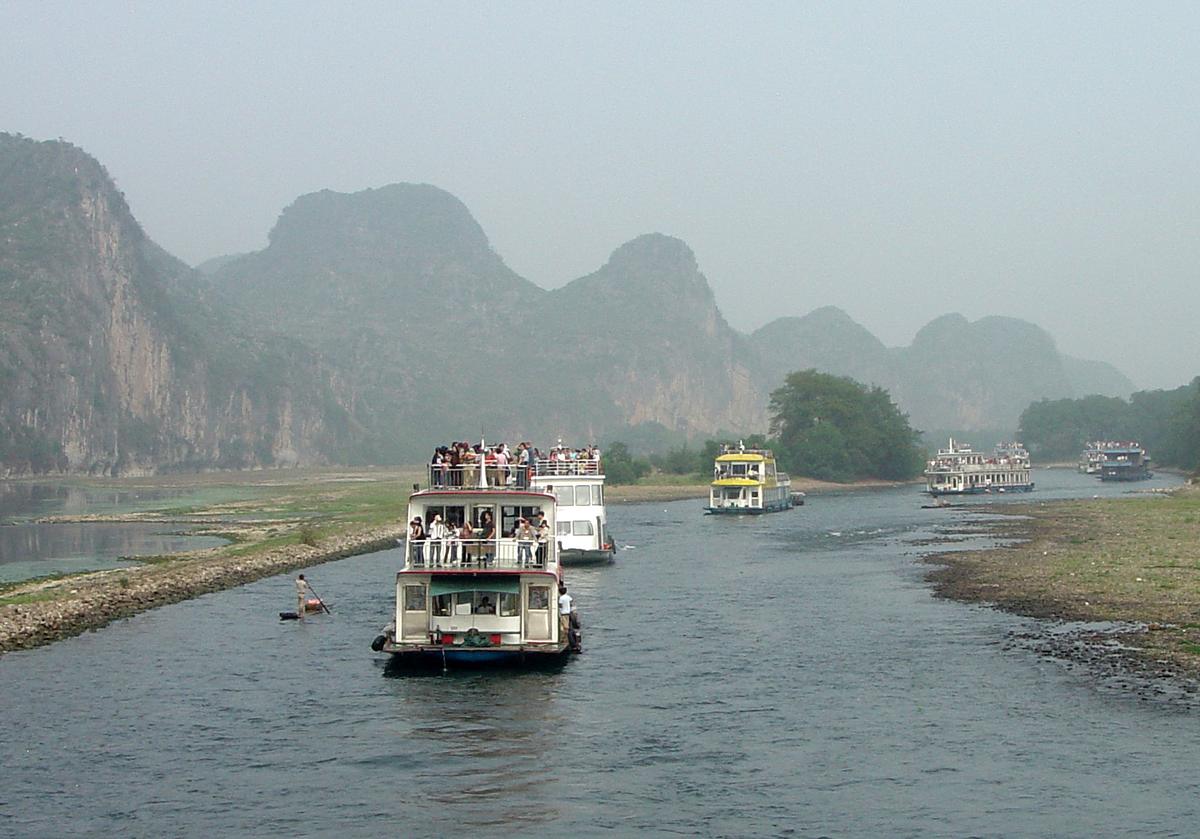
Each region demands its own itinerary. North China (the capital, Shanxi, Inner Mongolia) needs 7 to 10 days for imperial history, Great Wall sections, and arid steppe landscapes. East China (Shanghai, Jiangsu, Zhejiang, Anhui) needs 7 to 14 days for water towns, classical gardens, Huangshan mountain, and urban modernity. South China (Guangdong, Guangxi, Hainan) needs 10 to 14 days for the karst landscapes of Guilin and Yangshuo, Cantonese food culture, and tropical beaches. Southwest China (Yunnan, Guizhou, Sichuan, Chongqing) needs 14 to 21 days for Tibetan foothills, minority cultures, giant pandas, spicy cuisine, and high altitude trekking. Northwest China (Xinjiang, Gansu, Qinghai, Ningxia) needs 14 to 21 days for Silk Road ruins, deserts, high altitude lakes, and Uyghur and Hui cultures. Tibet requires a Tibet Travel Permit obtained through a registered tour operator before arrival and needs 7 to 10 days for the high altitude plateau, Tibetan Buddhism, and Mount Everest north base camp.
Day Trips Worth Taking
Day trips are possible if your base is right. Mutianyu Great Wall from the capital takes 1.5 hours by private car. The Terracotta Warriors from Xi'an take 1 hour by public bus 306. Zhujiajiao Water Town from Shanghai takes 1 hour by metro or bus. Longji Rice Terraces from Guilin take 2.5 hours by bus to Ping'an village. Tiger Leaping Gorge trailhead from Lijiang takes 2 hours by bus to Qiaotou. Macau from Hong Kong takes 1 hour by TurboJet ferry.
Who Should Travel in China and Who Should Skip it
China suits history and culture obsessives, adventurous solo travellers, food focused backpackers, photographers chasing epic landscapes, and business travellers extending a trip. The country does not suit travellers wanting a relaxing beach focused holiday, anyone unwilling to navigate language barriers and app based ecosystems, or anyone needing unrestricted internet or social media access without a VPN. English signage is limited outside international hotels and major airports. Crowd density at major sites is extreme during peak seasons. Altitude in the southwest and Tibet requires acclimatisation: Kunming sits at 1,890 m, Lhasa at 3,656 m, and Shangri La at 3,300 m. The country is vast, chaotic, and deeply rewarding, but demands constant logistical problem solving. Solve visa, payment, connectivity, and transport puzzles before you leave, and you experience one of the most efficient high speed rail networks on earth, a depth of history that is genuinely unparalleled, and food that reshapes what you thought a meal could be.
Common Questions
Do I need a visa for China?
It depends on your nationality. Passport holders from 54 countries, including France, Germany, Italy, Spain, Australia, New Zealand, Japan, and South Korea, can enter visa-free for up to 30 days under a policy extended from late 2024. The list changes annually. Check the current list published by the National Immigration Administration of China. For other nationalities, a tourist visa is required. 144 hour and 240 hour transit without visa programs are available at specific ports for passport holders from 54 countries.
What payment apps do I need in China?
WeChat Pay and Alipay. Cash is rarely accepted. Link a foreign Visa, Mastercard, or JCB card to both apps before you arrive. The process requires your passport and a verification code sent to your phone.
Can I use Google Maps, WhatsApp, and Instagram in China?
No. Google Maps, WhatsApp, Instagram, Facebook, X (Twitter), and YouTube are blocked. You must install a VPN before you leave to access them. Baidu Maps or Amap (Gaode) serve as mapping alternatives. WeChat replaces WhatsApp and Facebook Messenger.
Is it safe to use a VPN in China?
Personal VPN use is technically illegal but enforcement against travellers is inconsistent. Install and test your VPN before departure. A Hong Kong or regional eSIM with roaming data bypasses the firewall without a VPN. This is simpler and more reliable.
How far ahead should I book high speed rail tickets?
Tickets are released 15 days in advance. For popular routes, especially during holiday periods, they sell out within minutes. Book through a local platform or agent on the day tickets go on sale. Bring your passport to collect paper tickets at older stations.
What is the biggest mistake first time travellers make?
Underestimating the geographic scale and trying to visit the capital, Shanghai, Xi'an, and Guilin in a single week. You spend half the trip in transit and security lines. Pick two regions for a 10 day trip. The capital to Urumqi is a four hour flight.
What should I know about toilets in China?
Public toilets and train station toilets are overwhelmingly squat style. They lack toilet paper, soap, and doors. Carry your own toilet paper, hand sanitiser, and wet wipes at all times.
Read next
-
 Staying Connected in China Without Losing Access to Everything
The central tradeoff is this: a local physical SIM gives you the Chinese phone number you need for WeChat Pay, bike sharing, and public Wi-Fi login.
Staying Connected in China Without Losing Access to Everything
The central tradeoff is this: a local physical SIM gives you the Chinese phone number you need for WeChat Pay, bike sharing, and public Wi-Fi login.
-
 Best Time to Visit China by Region and Season
China's climate spans subtropical to subarctic. Here is what each season means region by region, from October's clear Beijing skies to August's Guangdong humidity.
Best Time to Visit China by Region and Season
China's climate spans subtropical to subarctic. Here is what each season means region by region, from October's clear Beijing skies to August's Guangdong humidity.
-
 China High-Speed Trains and Getting Around Without a Chinese App
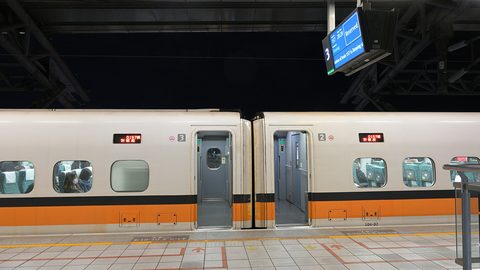
China's high-speed rail is fast and efficient, but booking as a foreigner is a puzzle.
China High-Speed Trains and Getting Around Without a Chinese App
China's high-speed rail is fast and efficient, but booking as a foreigner is a puzzle.
-
 China Visa Requirements and the Application Process Step by Step
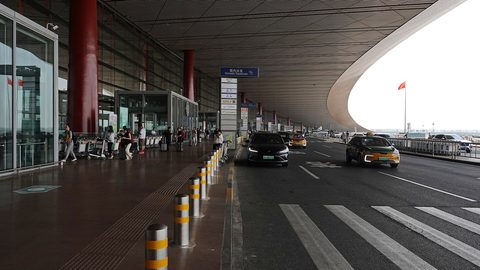
Most visitors need a Chinese tourist visa before departure. Here is who qualifies for visa-free entry, who does not, and exactly how the L-visa application works.
China Visa Requirements and the Application Process Step by Step
Most visitors need a Chinese tourist visa before departure. Here is who qualifies for visa-free entry, who does not, and exactly how the L-visa application works.
-
 How to Pay for Things in China Without Getting Stranded
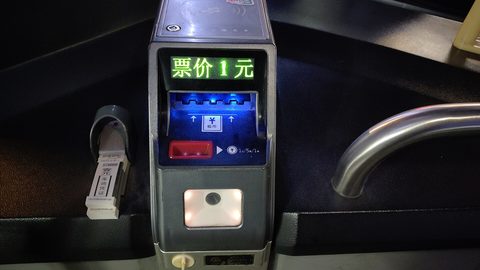
China runs on WeChat Pay and Alipay, and cash is often refused. Here is how to link a foreign card, what to do when it fails, and where renminbi notes still work.
How to Pay for Things in China Without Getting Stranded
China runs on WeChat Pay and Alipay, and cash is often refused. Here is how to link a foreign card, what to do when it fails, and where renminbi notes still work.
-
 Is China Safe for Travel and What Safety Advice Actually Applies
China is statistically safe from violent crime, but scams, air pollution, and digital surveillance are real concerns. Here is what to actually watch for.
Is China Safe for Travel and What Safety Advice Actually Applies
China is statistically safe from violent crime, but scams, air pollution, and digital surveillance are real concerns. Here is what to actually watch for.
-
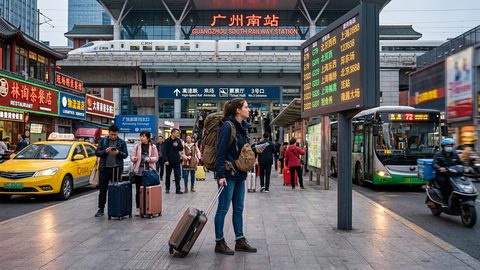 A Ground-Level Logistics Guide to Independent Travel in China
First-time independent travel in China: what you need to know about visas, rail booking, eSIMs, mobile payments, and power adapters.
A Ground-Level Logistics Guide to Independent Travel in China
First-time independent travel in China: what you need to know about visas, rail booking, eSIMs, mobile payments, and power adapters.
-
 How Solo Travelers Stay Ahead of Flight Delays and Cancellations
How solo travelers can track inbound aircraft, claim rebooking rights, and adjust ground transport when flights go wrong — step by step.
How Solo Travelers Stay Ahead of Flight Delays and Cancellations
How solo travelers can track inbound aircraft, claim rebooking rights, and adjust ground transport when flights go wrong — step by step.
-
 Why Your eSIM Might Not Work Abroad and How to Check Before You Go
Buying an eSIM doesn't guarantee signal abroad. Learn why coverage fails by location and how to verify reach before you commit to a plan.
Why Your eSIM Might Not Work Abroad and How to Check Before You Go
Buying an eSIM doesn't guarantee signal abroad. Learn why coverage fails by location and how to verify reach before you commit to a plan.