A Beijing Travel Guide to What the City Is, How Its Districts Differ, and How Long It Needs
Beijing is vast, flat, and organised by ring roads, not a walkable centre. This guide explains the districts, the scale, and why four full days is the minimum
- Flag
-
- ISO code
- CN
- Population
- 21,540,000
- Currency
- CNY
- Timezone
- Asia/Shanghai
Beijing is Not a Walkable City. Plan for That First.
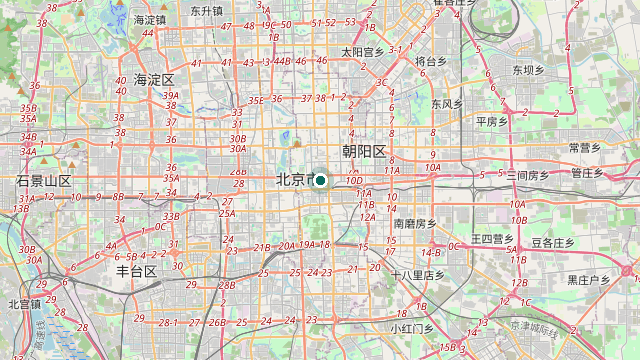
Beijing covers 16,410.5 square kilometres and its core urban area holds roughly 21.9 million people. The single most useful fact about this destination is that you cannot walk it. The city is flat, vast, and organised around ring roads rather than a walkable centre. Understand that logic or you will miss half the texture of the place. The ring roads define the districts, and the districts define how many days you need.
- Administrative divisions: 16 districts
- Core urban districts: 6 (Dongcheng, Xicheng, Chaoyang, Haidian, Fengtai, Shijingshan)
- Core urban population: Approximately 21.9 million (2020 census, National Bureau of Statistics of China)
- Total municipal area: 16,410.5 km²
- Metro lines in operation: 29 (2025, Beijing Subway official network map)
- Taxi flagfall rate: ¥13 for first 3 km (Beijing Municipal Commission of Transport rate schedule)
- Minimum viable stay for core sights: 2 full days
- Visa-free transit duration: 144 hours for eligible nationalities via Beijing airports (National Immigration Administration policy)
The Ring Roads Explain Everything
Beijing's ring roads are concentric motorways numbered from the centre out. The 2nd Ring Road traces the old city wall line. The 3rd Ring Road encloses the modern business zones. The 4th and 5th ring roads wrap the suburban commuter belt and technology campuses. The 6th Ring Road is a regional bypass. Understand this skeleton and you know where you are and what you are in for.
The imperial core sits inside the 2nd Ring Road in Dongcheng and Xicheng. Everything historic you came to see, the Forbidden City, Tiananmen Square, Jingshan Park, the hutong fragments, lies here. Outside the 2nd Ring Road the city turns radically modern. Chaoyang, the embassy and business zone, fills the space between the 2nd and 4th ring roads east of the centre. Haidian, the university and tech quarter, occupies the northwest quadrant between the 3rd and 5th ring roads. Fengtai stretches across the south between the 2nd and 4th ring roads with limited visitor appeal. The ring roads are not a suggestion. They are the only reliable mental map of a city that otherwise feels endless.
How the Ring Roads Shape a Visit
Every major sight requires a metro ride across at least one ring. The Forbidden City and Tiananmen Square sit inside the 2nd Ring Road. The Temple of Heaven lies just outside it to the south. The Summer Palace is in Haidian, between the 4th and 5th ring roads. The 798 Art District in Chaoyang sits between the 4th and 5th ring roads east. The Great Wall sections Badaling, Mutianyu, Jinshanling lie an hour or more beyond the 6th Ring Road. You cannot cluster these sights geographically. Cluster them by area and accept the transit time between them.

How Many Days in Beijing: the Minimum is Four
Two full days is the minimum to hit the Forbidden City and a Great Wall section. That is a checkbox trip. It skips the Summer Palace, the Temple of Heaven, the hutongs, the 798 Art District, the food streets, and any sense of the city as a lived place. Four full days lets you move beyond ticking. The first day belongs to the imperial core: the Forbidden City, Tiananmen Square, Jingshan Park, and a hutong walk. The second day goes to the Temple of Heaven and the Summer Palace. The third day is a Great Wall day. The fourth day is for the area you missed: Chaoyang for 798 and Sanlitun, or Haidian for the university campuses and the Old Summer Palace. Anything less than four days and you are spending half your time in transit.
Is Beijing Worth Visiting?
Yes, but only for the right traveller. Beijing is worth visiting if you want to stand in the geometric centre of imperial power that the Forbidden City represents, if you are willing to endure bureaucratic friction, physical stamina demands, and constant metro security scans for access to sights that have no equivalent anywhere else. It is not worth visiting if you want a gentle, walkable introduction to Asia, if you have significant respiratory issues, or if you rely on spontaneity. The air quality between November and March can be genuinely oppressive. The spontaneous exploration you expect in a European city is blocked by walls, fences, and passport requirements. Beijing rewards preparation and punishes improvisation.
Beijing Districts Explained: What Each Zone Actually Does
Beijing's 16 districts break into three categories: the historic core, the modern urban areas, and the commuter fringe. A first-time visitor needs to know the first four and can ignore the rest. Here is what each one does and what you will find there.
Dongcheng: The Imperial Core
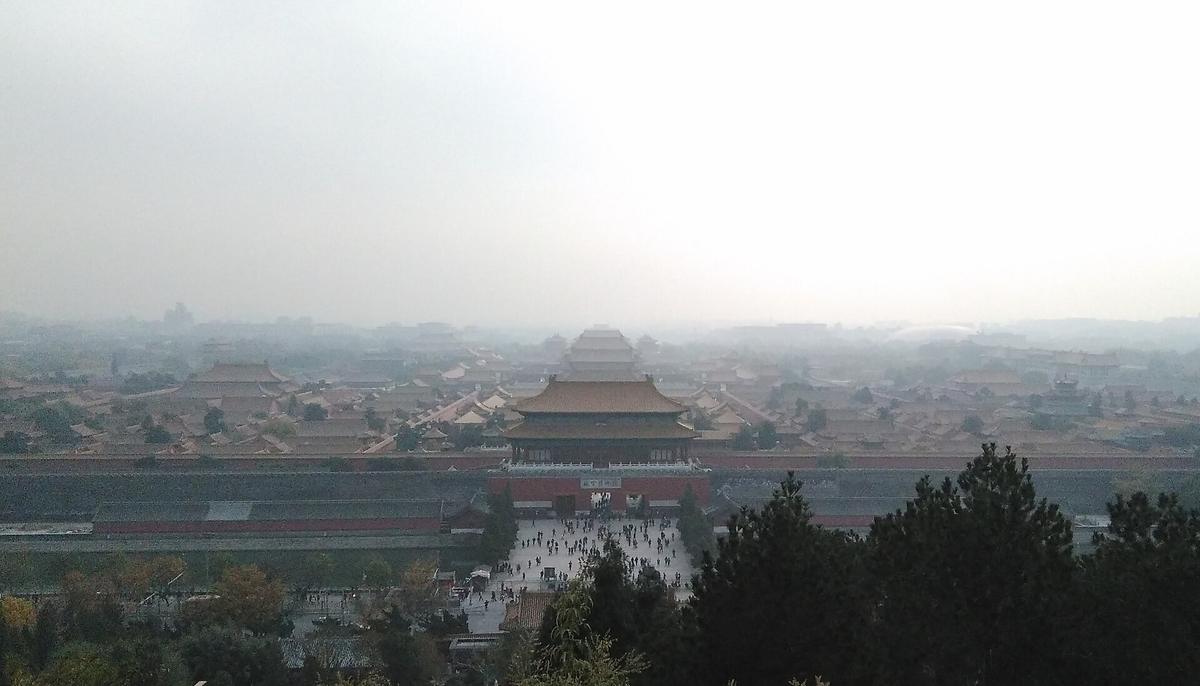
Dongcheng contains the Forbidden City, Tiananmen Square, Wangfujing shopping street, and the densest concentration of hutong fragments north of the Forbidden City. This is where you spend your first day and a half. Book the Forbidden City 7 days ahead through the Palace Museum official platform. It is closed Mondays except during national public holidays. Tiananmen Square requires a booking and a security screening. Jingshan Park, directly north of the Forbidden City, gives you the best rooftop panorama of the palace complex. The Drum and Bell Towers sit at the northern edge of the old city and offer hutong rooftop views after a steep climb.
Xicheng: Financial Quarter and Lakes
Xicheng sits west of the central axis and contains Beihai Park, the Houhai lake area, and Dashilar commercial street. Beihai Park is an imperial garden with a white pagoda on an island. The Houhai lakes are ringed with bars, restaurants, and older residential lanes that survived the demolition that cleared much of Dongcheng. Xicheng also holds the financial quarter, which means modern office towers alongside hutong pockets. The White Cloud Temple, an active Daoist temple, sits here and is a quieter alternative to the Lama Temple.
Chaoyang: Embassy Zone and Nightlife
Chaoyang is the wealthiest and most international part of the city. It holds the Central Business District, Sanlitun entertainment area, most foreign embassies, and the 798 Art District, a set of Bauhaus factory buildings converted into contemporary art galleries. This is where the expat infrastructure lives: international restaurants, craft beer bars, and the kind of nightlife that stays open past metro closing time. The 798 Art District is worth a half-day if you care about contemporary art. Sanlitun is worth an evening if you want dinner and drinks. Chaoyang is also where you find the Beijing Ancient Observatory, a Ming dynasty astronomical platform on a remnant of the old city wall.
Haidian: University Belt and Summer Palace
Haidian sits northwest of the centre and contains Peking University, Tsinghua University, the Zhongguancun technology hub, and the Summer Palace. The Summer Palace is a Qing lakeside retreat covering 2.97 square kilometres with the Long Corridor and Kunming Lake views. It takes a half-day to walk the full circuit of roughly 6 kilometres. The Old Summer Palace, destroyed in 1860, sits nearby with its ruined European-style palaces. Haidian also holds the Confucius Temple and Guozijian, the imperial academy, which offers quiet courtyards and stone steles. The atmosphere here is academic and green, a deliberate contrast to the imperial weight of Dongcheng.
Commuter Fringe: Fengtai, Shijingshan, Tongzhou, and Beyond
Fengtai is the sprawling southern residential zone with Beijing West Railway Station and limited visitor appeal. Shijingshan sits on the western edge with the Badachu temples and access to the Western Hills. Tongzhou has become the eastern administrative centre with the Universal Beijing Resort and Grand Canal Park, but much of it remains under construction. The remaining areas, Mentougou, Fangshan, Daxing, Shunyi, Changping, Pinggu, Huairou, Miyun, and Yanqing, are either mountainous fringe, commuter belt, or land for the international airport. Changping gives you access to the Ming Tombs. Huairou and Yanqing hold the most accessible Great Wall sections. You will visit them for day trips, not for their urban texture.
| District | Ring Road Zone | Primary Role | Key Sights |
|---|---|---|---|
| Dongcheng | Inside 2nd | Imperial core, heritage | Forbidden City, Tiananmen, Jingshan Park, Drum Tower, hutong fragments |
| Xicheng | Inside 2nd | Financial centre, lakes | Beihai Park, Houhai, Dashilar, White Cloud Temple |
| Chaoyang | 2nd to 4th (east) | Embassy zone, business, art | Sanlitun, 798 Art District, Ancient Observatory, Central Business District |
| Haidian | 3rd to 5th (northwest) | Universities, tech, parks | Summer Palace, Old Summer Palace, Confucius Temple, Peking University |
| Fengtai | 2nd to 4th (south) | Residential, transport | Beijing West Station, Marco Polo Bridge |
| Shijingshan | 5th (west) | Residential, mountain access | Badachu temples, Western Hills |
Beijing First Time Advice: the Frictions You Must Accept
Beijing first time advice always sounds like a list of warnings. That is because the city demands preparation that other destinations do not. Here is what a first visit actually involves.
Carry Your Physical Passport Every Day
Every major landmark requires your physical passport for entry. Digital copies and photographs are not accepted. The Forbidden City, Tiananmen Square, the National Museum of China, and the Great Wall sections all verify your passport against the booking. If you forgot it at the hotel, you are not entering. Keep it in a zipped interior pocket or a neck pouch. You will need it at every metro security scan as well, though the scan itself is for bags, not documents.
Install Alipay and a VPN Before You Arrive
WhatsApp, Google, Instagram, Gmail, and Google Maps are blocked without a VPN. Install and test a VPN on your phone and laptop before you leave home. Alipay with a linked foreign card works for metro QR codes, ride-hailing through Didi, and most vendors. Physical cash is increasingly refused. A Chinese SIM from China Unicom or China Mobile is cheap and avoids Wi-Fi dependency, but requires passport registration at purchase. Do this at the airport arrivals hall, not at a downtown shop where the process takes longer.
Understand the Metro Security Scan Routine
Every metro station entry has a security scan. Bags go through an X-ray machine. Bottles are tested or you are asked to drink from them. This adds roughly two minutes per entry. It does not sound like much until you are doing it eight times a day. Factor it into your schedule. The metro itself runs from approximately 05:00 to 23:30, varying by line. After 23:00 your only option is Didi ride-hailing, which can take 20 minutes or more to secure. Stay inside the metro window or accept the wait.
Exiting the Wrong Metro Gate Costs You 15 Minutes
Beijing metro station exits are numbered, and each number places you on a different side of a massive intersection. Exiting the wrong gate can leave you hundreds of metres from your destination with no quick way to cross the road. Check the station map before you swipe out. Baidu Maps and Gaode Maps show the exit number you need. Google Maps data is unreliable within China, so switch to Baidu Maps after arrival.
Book Everything in Advance During Peak Season
Peak season runs April to May and September to October. These months bring clear skies and manageable temperatures, but also domestic holiday surges. Labour Day in early May and National Day from 1 to 7 October flood every major site. The Forbidden City daily visitor cap is reached days ahead. Book the Forbidden City 7 days in advance through the Palace Museum official platform. Book the National Museum of China and the Great Wall sections at least 3 days ahead. During National Day week, book accommodation and intercity trains weeks ahead or avoid the window entirely.

Beijing Ring Roads Explained: How to Use Them as Your Compass
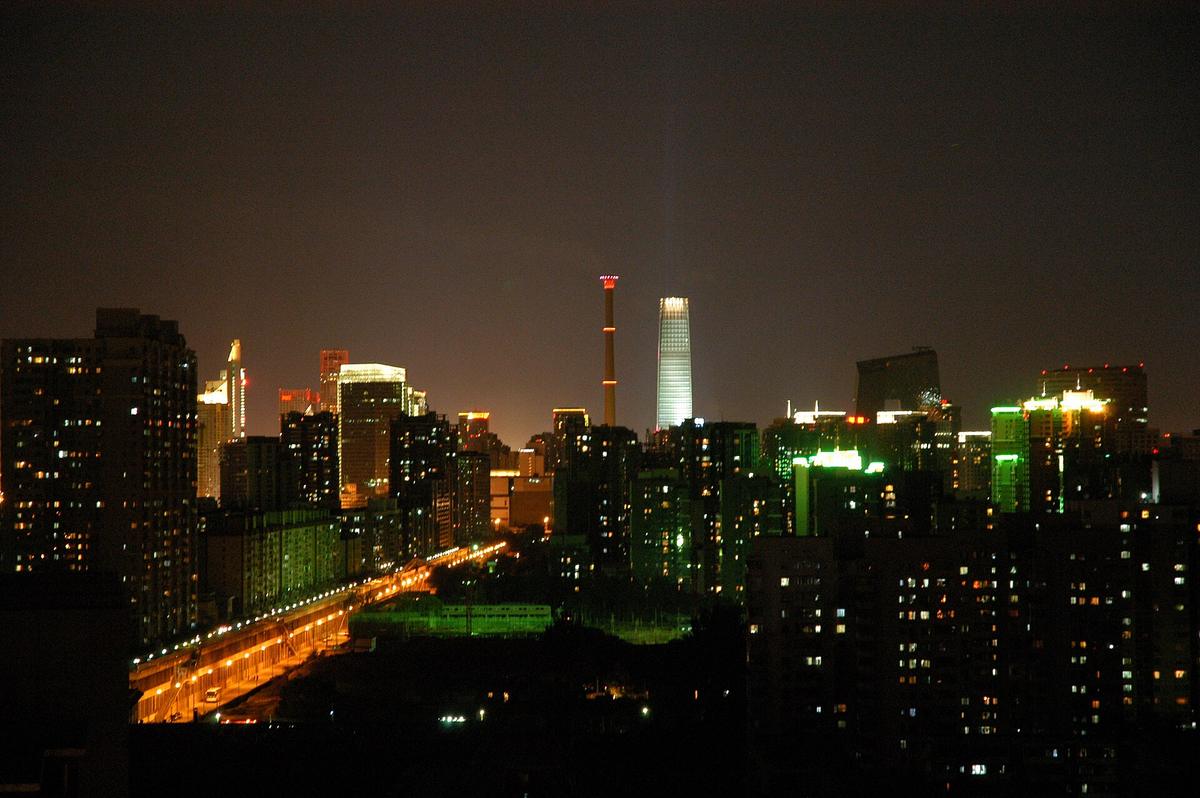
Beijing ring roads explained in a single sentence: the 2nd Ring Road is the old city, the 3rd is the business belt, the 4th is the commuter boundary, the 5th is the suburban edge, and the 6th is the regional bypass. Every address in Beijing can be located by its ring road. A hotel inside the 2nd Ring Road puts you in walking distance of the imperial core but costs more and means older buildings. A hotel between the 2nd and 4th ring roads in Chaoyang puts you near nightlife and restaurants but adds 30 minutes of metro to the Forbidden City. A hotel in Haidian outside the 4th Ring Road is cheaper but requires a 40-minute metro ride to reach the centre.
The driving restriction scheme known as the Beijing license plate lottery does not affect visitors who do not drive, but it explains why traffic inside the 5th Ring Road is structured. Vehicles are restricted one weekday per week based on the last digit of the licence plate. This keeps traffic moving but does not apply to taxis or ride-hailing cars. You will never need to know your plate number. You will need to know that a taxi from the 2nd Ring Road to the 4th Ring Road costs roughly ¥50 to ¥80 and takes 25 minutes in moderate traffic. A taxi from the 2nd Ring Road to the 5th Ring Road costs ¥100 to ¥150 and takes 40 minutes.
What to Eat and Where to Find it
Beijing cuisine is wheat based and mutton heavy. The signature dish is Beijing roast duck, a whole duck roasted in a wood-fired oven with the skin served separately, eaten with thin pancakes, spring onion, and sweet bean sauce. Quanjude is the old school benchmark. Siji Minfu offers quality without ceremony at a lower price. Zhajiangmian is hand-pulled wheat noodles topped with fermented soybean paste, minced pork, and shredded vegetables. It is the definitive Beijing noodle. Shuan yangrou is Mongolian style mutton hotpot cooked at the table in a charcoal heated brass pot with sesame dipping sauce. Donglaishun has been serving it for over a century.
For street food, Guijie, known as Ghost Street, near Dongzhimen is a kilometre long corridor of restaurants open late. Niujie, the Muslim Ox Street, surrounds the Niujie Mosque and serves lamb skewers, flatbreads, and sweet pastries. Wangfujing Snack Street operates as a daytime and evening food lane. Jianbing, a griddle cooked crepe with egg and crispy cracker, is best from street carts in the morning hours. Douzhi, a fermented mung bean drink that is sour and grey green, is a local test of palate served with pickles and fried dough rings. Yoghurt in ceramic pots is widely available from convenience stores across the city. Carry your own toilet paper and hand sanitiser. Public toilets in parks and hutongs are predominantly squat style and rarely stocked.
Who Beijing Suits and Who it Does Not
Beijing suits history obsessives who want to stand inside Ming and Qing power, food driven travellers willing to chase specific hutong addresses, architecture pilgrims focused on socialist realism and contemporary megastructures, solo travellers comfortable with apps and pre booking, and repeat China visitors ready for a dense urban challenge rather than a gentle introduction.
Beijing does not suit first time Asia travellers seeking a walkable introduction, people with significant respiratory issues, travellers who rely on spontaneity and dislike rigid pre booking, or anyone seeking a compact old town. Beijing's historic fabric survives in fragments, not continuous quarters. The city is harder than you expect: the sheer physical stamina required just to cross Tiananmen Square or exit the Forbidden City, the fact that spontaneous exploration is often blocked by walls and ID requirements, and the constant bureaucratic friction of ticket bookings and security checks. If that sounds like a challenge you want, Beijing will reward you with the historical weight of a capital that has held power from the Yuan dynasty through the Ming, Qing, Republic, and the modern state. If it sounds like a hassle, choose Xi'an or Shanghai instead.
Common Questions
How many days do I need in Beijing?
Four full days is the minimum to move beyond the Forbidden City and a Great Wall section. Two days lets you tick the checklist. Four days lets you experience the city.
Is Beijing safe for tourists?
Beijing is safe for tourists in terms of crime. The risks are bureaucratic and physical: lost passport, smog, exhaustion from walking distances that look short on a map.
Do I need a VPN for Beijing?
Yes. Google, WhatsApp, Instagram, and Google Maps are blocked. Install and test a VPN on your phone and laptop before you leave home.
Can I use my credit card in Beijing?
International credit cards are accepted in hotels and some larger chains. Most restaurants and vendors require Alipay or WeChat Pay linked to a foreign card. Cash is increasingly refused.
When is the best time to visit Beijing?
April to May and September to October offer clear skies and manageable temperatures. Avoid National Day week from 1 to 7 October and Chinese New Year when many businesses close.
Do I need to book the Forbidden City in advance?
Yes. Advance online reservation is required. No on site tickets are sold. Book 7 days ahead through the Palace Museum official platform. The Forbidden City is closed on Mondays.
How far is the Great Wall from Beijing?
Badaling is approximately 70 km from the city centre. Mutianyu is approximately 75 km. Both take 1.5 hours by pre booked car or bus. Jinshanling is 120 km and takes 2 to 2.5 hours by car.
Read next
-
 Staying Connected in China Without Losing Access to Everything
The central tradeoff is this: a local physical SIM gives you the Chinese phone number you need for WeChat Pay, bike sharing, and public Wi-Fi login.
-
 Best Time to Visit China by Region and Season
China's climate spans subtropical to subarctic. Here is what each season means region by region, from October's clear Beijing skies to August's Guangdong humidity.
-
 China High-Speed Trains and Getting Around Without a Chinese App
China's high-speed rail is fast and efficient, but booking as a foreigner is a puzzle.
-
 China Visa Requirements and the Application Process Step by Step
Most visitors need a Chinese tourist visa before departure. Here is who qualifies for visa-free entry, who does not, and exactly how the L-visa application works.
-
 How to Pay for Things in China Without Getting Stranded
China runs on WeChat Pay and Alipay, and cash is often refused. Here is how to link a foreign card, what to do when it fails, and where renminbi notes still work.
-
 Is China Safe for Travel and What Safety Advice Actually Applies
China is statistically safe from violent crime, but scams, air pollution, and digital surveillance are real concerns. Here is what to actually watch for.
-
 What a Trip to China Actually Costs and Where the Money Goes
A realistic breakdown of China travel costs, from G-train tickets and attraction entry fees to the hidden expenses of a cashless society.
-
 China Public Holidays and the Dates That Shut the Country Down
During Chinese New Year and Golden Week, the entire country moves at once. Here are the dates that shut China down, the ones that just make it crowded, and
-
 China Plug Type Voltage and What to Actually Pack for Charging
China runs on 220V with a mix of Type A, C, and I sockets. The real packing decision is your power bank capacity—train security confiscates anything over 20,000mAh.