A Central America Overland Travel Guide to Crossing the Isthmus
Central America is a chain of compact, wildly diverse nations stitched together by long bus rides and border crossings that eat half a day.
A Central America Overland Travel Guide to Crossing the Isthmus
You need 21 days minimum to cross the Central American isthmus overland, and that is still a rush that will leave you exhausted. The map deceives: Guatemala to Panama measures roughly the same as Florida to North Carolina, but winding mountain roads, half-day border crossings, and chicken buses that stop for anything turn a 200-kilometre journey into six to eight hours of travel. This Central America overland travel guide exists to tell you exactly what a multi-country journey demands and who should attempt it. The region delivers raw volcanoes erupting at night, empty Pacific lineups at dawn, Mayan ruins with a fraction of the crowds of Mexico, and Spanish schools where one-on-one immersion costs less than a hostel dorm in Europe. But it also delivers heat that hits first-timers hard, security vigilance required in certain urban zones, and logistical friction that will ruin a trip built on reliable schedules. This is a gazetteer section covering Belize, Costa Rica, El Salvador, Guatemala, Honduras, Nicaragua, and Panama. Every country is named here without ranking. The isthmus runs along the Pan-American Highway from the Guatemala, Mexico border through El Salvador, Honduras, Nicaragua, Costa Rica to Panama, then stops at the Darién Gap: no road crossing exists between Panama and Colombia. Vehicles must be shipped across that gap. If you plan island hopping in the Caribbean, those are separate propositions reached by flight or ferry, not overland.
- Countries Covered: Belize, Costa Rica, El Salvador, Guatemala, Honduras, Nicaragua, Panama
- Minimum Days: 21 days. Overland distances are short on a map, but border crossings and winding mountain roads turn a three-country sampler into a rushed blur.
- Peak Season: December through April. Dry-season weather across the Pacific side draws North American and European tourists escaping winter. Semana Santa (Easter week) is an intense secondary peak where entire countries move domestically and accommodation sells out.
- Avoid Window: September and October for the Caribbean side and hurricane risk. Avoid Semana Santa unless you have booked every bed and bus ticket months in advance.
- Arrival Hubs: Panama Tocumen (PTY) is the busiest hub, with a metro line to the city centre. San José Juan Santamaría (SJO) connects via official orange taxi. Guatemala City La Aurora (GUA) requires a pre-booked shuttle to Antigua. El Salvador Saint Óscar Arnulfo Romero (SAL) is 40 minutes from San Salvador by taxi. Check current fares with the official airport taxi desks before landing.
- Getting Around: Dominant mode is private shuttles or repurposed North American school buses called chicken buses. They require small-denomination local cash paid to the driver's assistant. A 200 km journey on these roads regularly takes six to eight hours.
- CA-4 Agreement: Guatemala, El Salvador, Honduras, and Nicaragua operate the Central America-4 Free Mobility Agreement, providing a single 90-day immigration period across all four countries for eligible visitors. Belize, Costa Rica, and Panama are not members; separate entry rules apply.
- Currency Reality: Outside Costa Rica and Panama City, ATMs are scarce and often empty on weekends. US dollars work as a parallel currency but must be in pristine, unmarked condition. Guatemala uses the quetzal, Honduras the lempira, Nicaragua the córdoba, Costa Rica the colón, Panama the balboa and US dollar, and Belize the Belize dollar pegged 2:1 to USD. El Salvador uses the US dollar.
- Connectivity: A Claro SIM bought in one country does not roam affordably into the next. Buy a new SIM at each border; registration requires a passport photocopy and a local unlocking code. In the Bay Islands and Bocas del Toro, internet collapses during heavy rain. Coworking spaces exist only in Antigua, San Juan del Sur, El Paredón, and Panama City.
Backpacking Central America Route
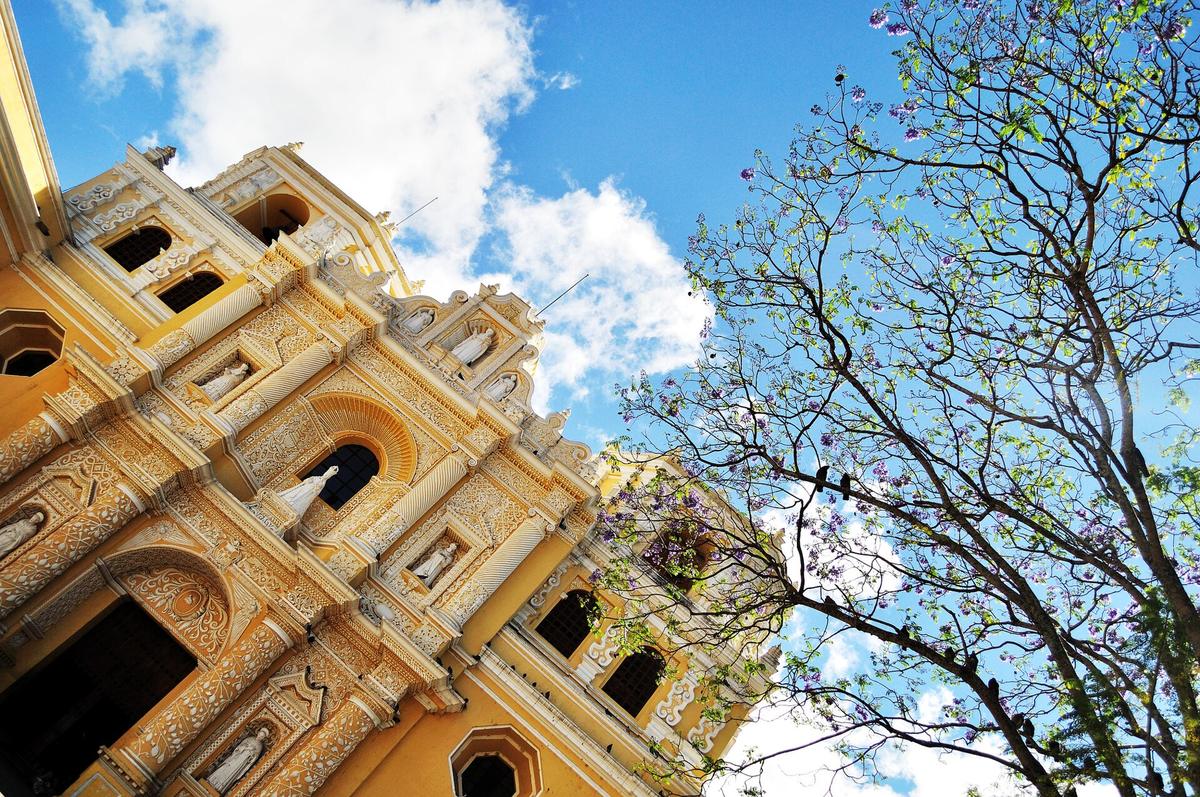
The standard backpacking Central America route runs south from Mexico or north from Panama, using the Pan-American Highway as a spine. From the Guatemala, Mexico border you cross into El Salvador, then Honduras, then Nicaragua, then Costa Rica, then Panama. The CA-4 agreement means you get a single 90-day immigration period for Guatemala, El Salvador, Honduras, and Nicaragua, which stops many travellers rushing. Belize sits apart: it is not in the CA-4 zone, English is the official language, and its border is entered separately, usually from Chetumal in Mexico or via a ferry from Puerto Barrios in Guatemala. Costa Rica and Panama also have separate entry rules requiring a passport valid for at least three months from entry and proof of onward travel.
Do not try to hit all seven countries in a single two-week trip. That is the common mistake that causes people to spend 40% of their trip on a bus. Build a route around two to three countries per three-week journey. One strong route: Guatemala for Tikal and Lake Atitlán, cross into Honduras for Copán Ruinas, then into El Salvador for the Ruta de las Flores and the surf coast. Another: Nicaragua for Granada and Ometepe, then Costa Rica for Monteverde and the Central Pacific coast, then Panama for the canal and Bocas del Toro. The Mosquito Coast of Honduras and Nicaragua remains genuinely off-grid, roadless, and accessible only by boat or small plane. Do not attempt it without weeks of margin.
.jpeg)
Central America Border Crossings Advice
Central America border crossings advice starts with one number: budget half a day per border. The process takes two to four hours on a good day, longer on a bad one. The open overland crossings are Guatemala, El Salvador, Guatemala, Honduras, El Salvador, Honduras, Honduras, Nicaragua, Nicaragua, Costa Rica, and Costa Rica, Panama. The Panama, Colombia border at the Darién Gap has no road crossing; you must ship your vehicle between the two countries.
Border-corruption shakedowns are real. Nicaraguan and Honduran officials sometimes demand spurious entry fees in cash, and the exact amount changes depending on the official and your nationality. Always carry small-denomination US dollars in pristine condition for these moments; marked or torn bills will be rejected. The US Department of State publishes annual travel advisories for every country on this isthmus: Guatemala, El Salvador, Honduras, Nicaragua, Belize, Costa Rica, and Panama. Check travel.state.gov for the current year's advisory before you cross any border. Yellow fever vaccination is required for entry to Costa Rica, Nicaragua, Honduras, El Salvador, and Guatemala if you arrive from a yellow fever endemic country; check the current list of those countries before departure.
Central America Dry Season Travel
Central America dry season travel runs December through April. This is peak season for a reason: the Pacific side stays dry, trails are passable, and the chance of rain disrupting your volcano hike or beach day drops significantly. The Caribbean side is less affected by this cycle; Bocas del Toro in Panama gets rain even during the dry season. Book accommodation and bus tickets months in advance for December and January, when the largest influx of North American and European tourists arrives. Semana Santa, the week before Easter, is a secondary peak where entire countries move domestically. Accommodation sells out, prices spike, and every beach town becomes crowded. Avoid this week unless you have every bed and bus ticket reserved.
September and October are the windows to avoid. Those are the rainiest months on the Caribbean side and the peak of Atlantic hurricane risk for the eastern coasts of Honduras and Nicaragua. The Atlantic hurricane season runs June through November, peaking August through October. The Pacific coast is less exposed to hurricanes, but heavy rain still causes road closures and ferry cancellations. If you travel in those months, build extra days into your itinerary for weather delays.
Is Central America Safe for Travel
The question is Central America safe for travel is answered by pointing you to the annual travel advisories published by the United States Department of State at travel.state.gov for every country on this isthmus. That body issues advisories for Guatemala, El Salvador, Honduras, Nicaragua, Belize, Costa Rica, and Panama, reflecting conditions that shift each year. Read them. Do not rely on a travel guide published in a previous year for security information.
Beyond government advisories, the practical safety picture for the backpacker route is manageable for those with street-smart caution. The primary risks are petty theft and opportunistic crime in certain urban zones, not widespread violence against tourists. Chicken bus luggage theft is routine: bags stored overhead or on the roof are rifled. A daypack on your lap is non-negotiable. Aggressive street dogs in rural and beach areas form large, unvaccinated packs that can turn hostile at night. Carry a headlamp and a stick or rock as a practical walking accessory. First-time solo female travellers on a very short timeline may find the constant attention and need for vigilance in cities exhausting. The region is not suited to those who want to let their guard down completely.
Central America Itinerary 3 Weeks
A Central America itinerary 3 weeks long should cover two countries, not three. The map makes three look doable, but border crossings, bus delays, and the sheer physical toll of travel on winding mountain roads turn a three-country sampler into a blur of waiting. Here is one workable three-week route that gives depth rather than distance.
Week One: Guatemala
Fly into Guatemala City La Aurora Airport, take a pre-booked shuttle to Antigua, and spend four nights there. Antigua is the tourist base for a reason: climb Volcán Acatenango on the overnight hike to watch Fuego erupt, visit the markets of the Western Highlands, and book a sunrise slot at Tikal's Temple IV. Book the park lodge at Tikal months in advance. On day six, cross the border into Honduras for Copán Ruinas, the under-visited Mayan site known for its intricate stelae. From Copán, cross into El Salvador on day eight.
Week Two: El Salvador and Nicaragua
Spend three days on El Salvador's Ruta de las Flores, eating pupusas at roadside comedores and surfing consistent Pacific swells. On day eleven, cross from El Salvador into Honduras, then into Nicaragua. Granada is your base for four nights: walk the León Cathedral roof for a whitewashed dome cityscape, take a taxi to Masaya Volcano lava lake at dusk, and eat vigorón on a banana leaf in the park. On day sixteen, cross into Costa Rica.
Week Three: Costa Rica or Panama
You have five days left. Choose Costa Rica's Monteverde Cloud Forest for suspension bridges and the resplendent quetzal, or go straight to Panama City for the Miraflores Locks between 9 and 11 am when the ships pass through. From Panama City, a 45-minute drive takes you to Gamboa Rainforest for the aerial tram and sloth sanctuary. Do not try to add both Costa Rica and Panama to the same three-week trip. You will spend half your time on a bus.


| District | What It Delivers | Best For |
|---|---|---|
| Guatemala Western Highlands | Indigenous markets, volcanic lakes, relentless altitude chill | Volcano trekkers, market hunters |
| Belize Cayes and Coast | Caribbean English Creole rhythm, snorkelling, staggering marine costs | Divers, slow travellers with budget |
| El Salvador Ruta de las Flores | Volcanic coffee towns, weekend pupusa crawls, sudden surf detours | Surfers, food travellers |
| Honduras Bay Islands | Dive-obsessed backpacker bubble, disconnected from mainland intensity | Scuba divers, travellers wanting island time |
| Nicaragua Pacific Lowlands | Colonial Granada, León's revolutionary heat, consistent beginner surf | Surf learners, budget backpackers |
| Costa Rica Central and South Pacific | Primary rainforest, ecotourism infrastructure, higher price floor | Nature travellers, flashpackers |
| Panama Chiriquí Highlands | Cloud-forest coffee estates, cool escape from canal humidity | Coffee enthusiasts, hikers |
| Mosquito Coast (Honduras/Nicaragua) | Vast, roadless, Indigenous territories, genuinely off-grid | Experienced off-grid travellers only |
What it Costs and What Goes Wrong
Cash economy dominance is the friction that catches most first-time visitors. Outside Costa Rica and Panama City, ATMs are scarce and often empty on weekends. US dollars serve as the de facto parallel currency across the isthmus, but they must be in pristine, unmarked condition; a torn bill or one with any writing will be refused. Carry a mix of small US dollars and local currency. Guatemala uses the quetzal, Honduras the lempira, Nicaragua the córdoba, Costa Rica the colón, Panama uses both the balboa and the US dollar, and Belize uses the Belize dollar pegged at 2:1 to the US dollar. El Salvador uses the US dollar, and Bitcoin is also legal tender there.
Water and power cuts are a weekly occurrence in Nicaragua and Honduras, even in mid-range accommodation. An afternoon without running water or a sudden evening blackout is normal. Pack a headlamp and keep a bottle of water in your room. Driving is on the right-hand side across all countries. Mains voltage is 110-120 V at 60 Hz with Type A and Type B plugs. A universal adapter with those prongs covers every country on the isthmus.
Street Food Worth Seeking
Food is a highlight that costs little. Pupusas in El Salvador and the Honduras border zone: thick corn cakes stuffed with loroco and cheese, eaten at roadside comedores. Rondón in the Bay Islands and Caribbean coast: coconut-milk seafood stew with green plantain cooked over driftwood fires. Gallo pinto with natilla appears in both Costa Rica and Nicaragua, but the sour cream and corn tortilla side defines the border difference. Tapado in Livingston, Guatemala: Garifuna seafood soup with whole crab and coconut broth. Vigorón in Nicaragua: yuca, chicharrón, and cabbage slaw on a banana leaf in Granada's park. Pan de coco on the Honduran north coast: sweet coconut bread baked by Garifuna communities. Raspados and licuados in Panama: shaved ice with condensed milk and tropical fruit sold from triciclo carts in David and Santiago.
Who This Route Suits and Who Should Skip it
The Central American isthmus suits budget backpackers and flashpackers who value experience density over luxury. It suits surfers chasing consistent Pacific swells and empty Caribbean breaks. It suits volcano trekkers and scuba divers who plan entire trips around geology or marine life. It suits Spanish learners wanting affordable one-on-one immersion schools. It suits travellers who have already done Southeast Asia or South America and want a grittier, less-homogenized circuit. The best day trips reward those with extra days: Antigua to Pacaya Volcano for a half-day hike, Granada to Masaya Volcano lava lake at dusk, or Panama City to Gamboa Rainforest for the aerial tram.
It is not for travellers who need reliable schedules, high-end dining, or smooth infrastructure. The chicken buses, ferry delays, and power outages will frustrate them. It is not for first-time solo female travellers on a very short timeline who may find the constant attention and need for street-smart caution exhausting. It is absolutely not for anyone seeking pristine, resort-enclosed beach holidays. Those travellers should stick to the Mexican Caribbean or islands further east. The isthmus delivers raw natural drama and logistical friction in equal measure. Come for the volcanoes, the empty lineups, and the ruins with fewer crowds, and budget for the half-days spent at borders.
Common Questions
How many days do I need for Central America overland travel?
21 days minimum. Overland distances are short on a map, but border crossings and winding mountain roads turn a three-country sampler into a rushed, exhausting blur. Two weeks is not enough to see any country deeply.
Which border crossings are open to overland travellers?
Guatemala, El Salvador, Guatemala, Honduras, El Salvador, Honduras, Honduras, Nicaragua, Nicaragua, Costa Rica, and Costa Rica, Panama. The Panama, Colombia border at the Darién Gap has no road crossing; vehicles must be shipped.
What is the CA-4 agreement and which countries are in it?
The Central America-4 Free Mobility Agreement gives eligible visitors a single 90-day immigration period for Guatemala, El Salvador, Honduras, and Nicaragua. Belize, Costa Rica, and Panama are not members and have separate entry rules.
What documents do I need to enter each country?
CA-4 countries require a passport valid for at least six months from entry and proof of onward travel may be required. Costa Rica and Panama require a passport valid for at least three months, proof of onward travel, and Panama also requires proof of sufficient funds. Belize requires a passport valid for length of stay; visa policy varies by nationality.
When is the best time of year to travel?
December through April is the dry season on the Pacific side, which is peak season. Book months in advance. September and October are the rainiest months on the Caribbean side and peak hurricane risk for eastern Honduras and Nicaragua. Avoid those months unless you have extra days for delays.
How do I get between countries?
Private shuttles and chicken buses are the dominant modes. A 200-kilometre journey takes six to eight hours on winding roads with unannounced stops. Chicken buses require small-denomination local cash paid to the driver's assistant.
Is it safe to travel alone as a woman?
First-time solo female travellers on a very short timeline may find the constant attention and need for street-smart caution in cities exhausting. The risks are primarily petty theft and opportunistic crime, not widespread violence against tourists. Keep a daypack on your lap on buses and check your government's current travel advisory for each country before crossing any border.
Read next
-
 A Ground-Level Logistics Guide to Independent Travel in China
First-time independent travel in China: what you need to know about visas, rail booking, eSIMs, mobile payments, and power adapters.
A Ground-Level Logistics Guide to Independent Travel in China
First-time independent travel in China: what you need to know about visas, rail booking, eSIMs, mobile payments, and power adapters.
-
 How Solo Travelers Stay Ahead of Flight Delays and Cancellations
How solo travelers can track inbound aircraft, claim rebooking rights, and adjust ground transport when flights go wrong — step by step.
How Solo Travelers Stay Ahead of Flight Delays and Cancellations
How solo travelers can track inbound aircraft, claim rebooking rights, and adjust ground transport when flights go wrong — step by step.
-
 Why Your eSIM Might Not Work Abroad and How to Check Before You Go
Buying an eSIM doesn't guarantee signal abroad. Learn why coverage fails by location and how to verify reach before you commit to a plan.
Why Your eSIM Might Not Work Abroad and How to Check Before You Go
Buying an eSIM doesn't guarantee signal abroad. Learn why coverage fails by location and how to verify reach before you commit to a plan.