Slovenia, from the Julian Alps to the Adriatic Coast
Slovenia packs alpine valleys, karst caves and a short Adriatic coast into a compact country best explored by car over seven to fourteen days.
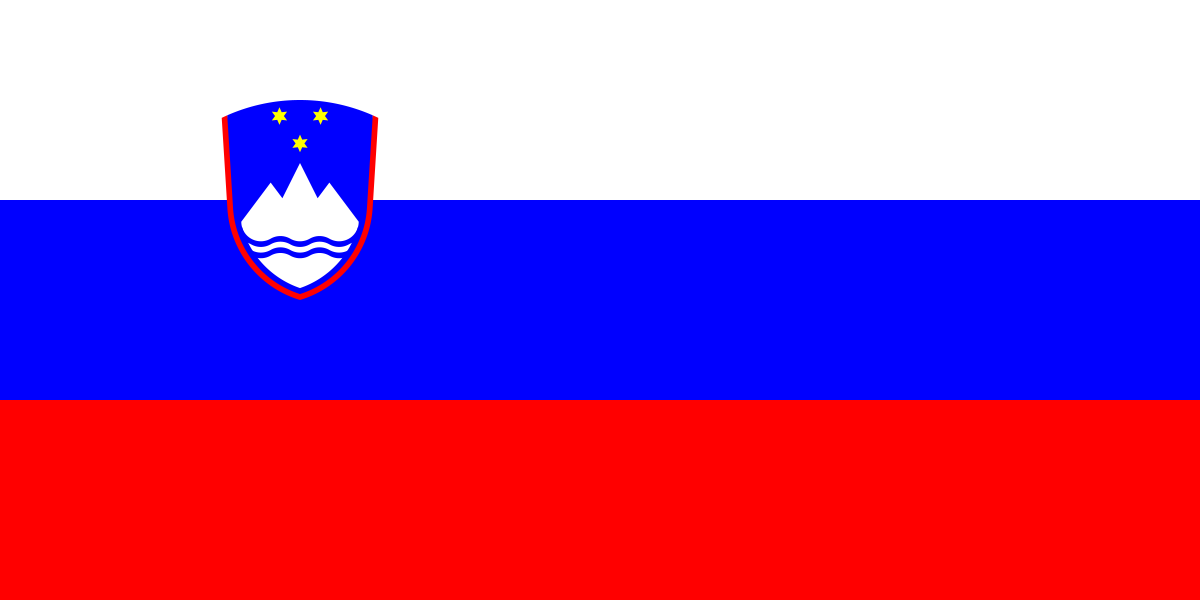
- Flag
-
- ISO code
- SI
- Population
- 2,067,372
- Currency
- EUR
- Dial code
- +386
Slovenia, from the Julian Alps to the Adriatic Coast
Slovenia is compact, green and unusually varied for its size, but it is not a quick checkbox destination. The best experiences are spread across alpine valleys, karst caves, a short Adriatic coast and a small capital. Visitors underestimate how much time is lost moving between regions on slow roads and how quickly mountain weather changes, even in summer. You need to know the regions and the practical trade-offs of basing in one place versus moving between bases before you plan a single day.
- Capital City: Ljubljana
- Population: 2.12 million (2025 estimate)
- Area: 20,271 km²
- Land Borders: Italy, Austria, Hungary, Croatia
- Coastline Length: 46.6 km
- Highest Peak: Triglav, 2,864 m
- Currency: Euro (EUR)
- EU / Schengen / NATO Member: Yes, Yes, Yes
- International Dialling Code: +386
- Emergency Number: 112
- Driving Side: Right
- Motorway Vignette Required: Yes, for vehicles up to 3.5 t
- Main International Airport: Ljubljana Jože Pučnik Airport (LJU)
- UNESCO World Heritage Sites: 5 (Škocjan Caves, Idrija mercury heritage, Ljubljana works of Jože Plečnik, beech forests, prehistoric pile dwellings)
- Number of Municipalities: 212
- Official Language: Slovene
- Recognised Minority Languages: Italian, Hungarian
- Time Zone: CET (UTC+1), CEST (UTC+2) late March to late October
- Maximum Motorway Speed: 130 km/h
- Blood Alcohol Limit for Drivers: 0.05% (0.00% for professional and novice drivers)
- National Railway Operator: Slovenske železnice (SŽ)
- Rail Network Length: 1,209 km
- Motorway Network Length: 625 km
- Triglav National Park Area: 838 km²
- Registered Karst Caves: Over 13,000
- Tap Water Potable: Yes, nationwide
- Plug Types: Type C (Europlug), Type F (Schuko)
Slovenia Regions Explained
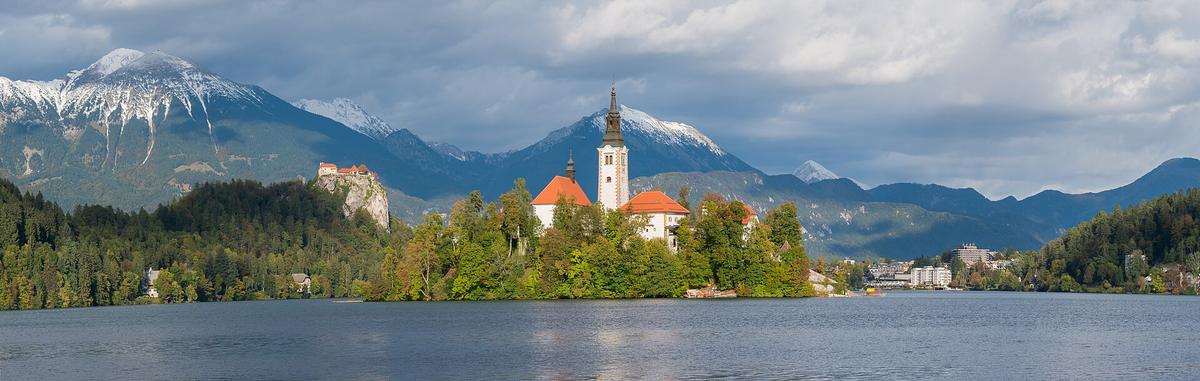
Slovenia divides into four tourism board regions, and you need to understand each to structure a trip. Alpine Slovenia covers the Julian Alps, Gorenjska, the Soča Valley and parts of the Karavanke range. This is where you find Triglav National Park, Lake Bled, Lake Bohinj, Vintgar Gorge, Kranjska Gora and the Soča River. The Mediterranean and Karst Slovenia includes the short Adriatic coast around Piran, Izola, Koper and Portorož, plus the Karst plateau with Postojna Cave, Škocjan Caves and Predjama Castle. Thermal Pannonian Slovenia spans Štajerska and Prekmurje in the east, with Maribor, Ptuj, wine roads and thermal spas. Ljubljana and Central Slovenia surrounds the capital, with small towns and castles reachable in under an hour by car.
Alpine Slovenia
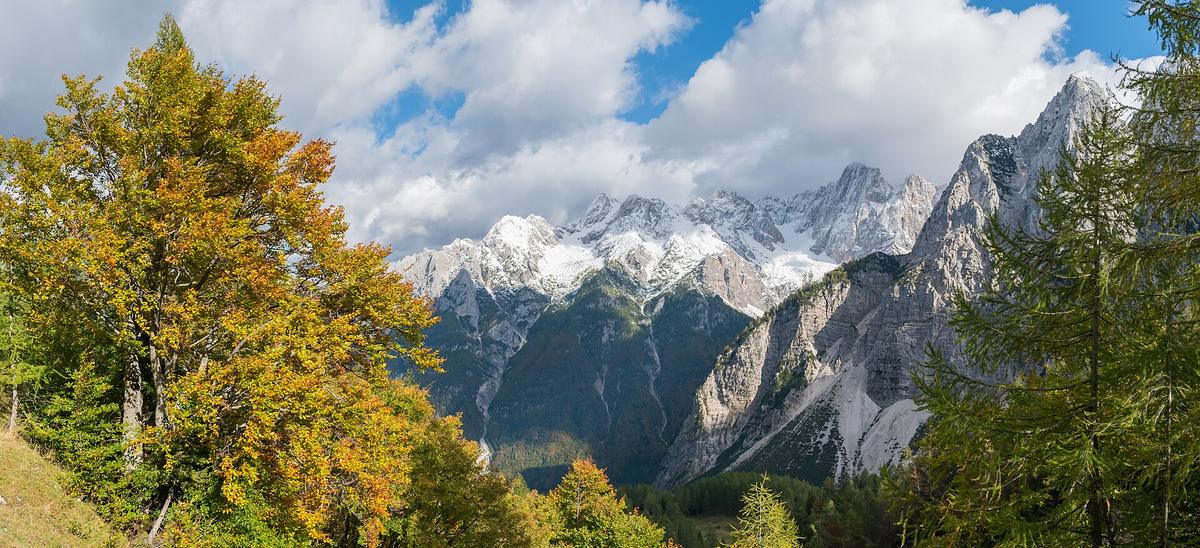
Give this region at least three to five days. The Julian Alps contain the highest peaks, with Triglav at 2,864 m. The Soča Valley runs south past the emerald Soča River, with rafting near Kobarid and the WWI history at the Kobarid Museum. Gorenjska holds Lake Bled, Lake Bohinj and Vintgar Gorge. Weather shifts rapidly here. Snow can persist on trails above 2,000 m into June. The Vršič Pass, with 50 hairpin turns, connects the Soča Valley to the upper Sava Valley but closes in winter. Book Postojna and Škocjan Caves in advance in July and August, even though those caves sit in the Karst region, not the Alps.
Mediterranean and Karst Slovenia
Two to four days is enough. The Karst region gave its name to karst topography worldwide. Over 13,000 registered caves exist, though only a handful are open to the public. Postojna Cave runs a 5 km tour partly by electric train. Škocjan Caves, a UNESCO site, takes visitors through a dramatic underground canyon with 500 steps. Predjama Castle is built into a cave mouth 123 m high. The coast runs only 46.6 km. Piran is a compact Venetian town with a car-free centre. Parking in Piran and Portorož is scarce and costly in summer. The Sečovlje Salt Pans are still worked by hand. Cave temperature sits at 8-10°C year-round. Bring a layer.
Thermal Pannonian Slovenia
Two to three days covers the essentials. Maribor, Slovenia's second city, and Ptuj, the oldest town, anchor the east. The Drava Cycling Route runs 710 km through the region. Wine roads in Podravje and Posavje produce styles rarely exported. Thermal spas in Pomurje and Štajerska are open year-round and busiest in winter. Prekmurje in the far east has flat farmland, storks, thermal baths and a distinct cuisine including Prekmurje layer cake. Driving time from Ljubljana to Murska Sobota is about 1 hour 50 minutes.
Ljubljana and Central Slovenia
Two to three days is normal. Ljubljana is a compact capital with a castle, river cafés, a food market and the alternative art squat Metelkova. Parking in the centre is restricted and expensive. The city works well as a single base for day trips because most of the country is reachable within two hours by car. The furthest drive is about two hours to Prekmurje, about 1.5 hours to the coast, and about an hour to the Julian Alps. Dolenjska, south of the capital, offers the Krka River, castles and forest.
.jpg)
How Many Days in Slovenia
The minimum is seven days. That gives you time for Ljubljana plus two contrasting regions. Ten to fourteen days is more realistic for the Julian Alps, the coast and the east. The common mistake is trying to see the whole country in three or four days while basing only in Ljubljana, then losing hours each day to out-and-back driving on slow roads. Google Maps times do not apply to narrow alpine and rural roads, especially on summer weekends. A single out-and-back from Ljubljana to Bovec in the Soča Valley costs you about four hours of driving in a day. Do that twice and half your trip is gone.
Seven-Day Option
Spend two days in Ljubljana, then three days in the Julian Alps region based in Bled or Bohinj, then two days on the coast based in Piran or Koper. You skip the east entirely. That is a valid trade-off: you see the three most distinct landscapes.
Ten-Day Option
Add three days for the east. Base in Maribor or Ptuj for two nights, visit a thermal spa and one wine road. Drive back to Ljubljana or to the airport on day ten.
Fourteen-Day Option
Move bases instead of doing day trips. Start in Ljubljana for two nights. Drive to the Soča Valley for three nights, using Bovec or Kobarid as a base. Move to Bled or Bohinj for three nights. Drive to the coast for three nights in Piran. Finish with two nights in the east at Ptuj or Maribor before flying out of Ljubljana. This cuts driving time per day to under 90 minutes and lets you hike in the morning and relax in the afternoon.
| Destination | Driving Time | Region |
|---|---|---|
| Bled | About 40 minutes | Julian Alps / Gorenjska |
| Bovec | About 2 hours | Soča Valley |
| Piran | About 1 hour 15 minutes | Coast |
| Koper | About 1 hour | Coast |
| Maribor | About 1 hour 20 minutes | Štajerska |
| Murska Sobota | About 1 hour 50 minutes | Prekmurje |
Slovenia Single Base Travel
Single base travel is feasible because most of the country is reachable within two hours by car from Ljubljana. The furthest drive is about two hours to Prekmurje. That makes Ljubljana a practical hub for a road trip itinerary that does not want to pack and unpack every night. But there is a trade-off. Out-and-back driving from Ljubljana to the Soča Valley costs four hours of road time. Out-and-back to Piran costs 2.5 hours. Out-and-back to Maribor costs 2 hours 40 minutes. If you do two of these in a week, you lose the better part of a day to driving. Visitors underestimate how much time is lost moving between regions on slow roads. The single base works best if you pick one region to explore deeply and use Ljubljana for day trips to nearby sights. For example, base in Ljubljana and do day trips to Lake Bled, Postojna Cave and Predjama Castle, and the Logar Valley. That keeps driving time per day under 90 minutes. Skip the Soča Valley and the coast if you are unwilling to move bases. If you want to see the Soča River in the morning and the Adriatic coast in the afternoon, you must change bases.
Moving Bases vs. Single Base
Moving bases adds one hour of packing and unpacking per move but saves two to four hours of out-and-back driving per day. A ten to fourteen day trip benefits from two or three bases. A seven day trip can work from Ljubljana alone if you accept you will miss the Soča Valley and the eastern wine regions. The Slovenian Mountain Trail, which runs 617 km, is accessible from multiple entry points if you move bases. Mountain huts charge around €30-50 for a bed, and many require advance booking in peak season. Triglav summit requires a permit and a hut bed reservation. Do not attempt that as a day trip from Ljubljana.
What Single Base Travel Costs You
Parking in Lake Bled, Piran and Ljubljana centre is scarce and paid. A day trip to Piran from Ljubljana means finding parking in Portorož and walking 20 minutes into the old town. A day trip to the Soča Valley from Ljubljana means crossing the Vršič Pass, which adds 50 hairpin turns each way. Mountain weather can close trails or make driving slow. Rural restaurants close between lunch and dinner. Some wine cellars and farm stays require advance booking rather than drop-in visits. These frictions add up faster than most visitors expect. The alternative is to spend two nights in the region, park once, and walk or use local transport for the rest of your time there.
Slovenia Road Trip Itinerary
A Slovenia road trip itinerary must account for the country's shape. The Alpine northwest, the Karst south-west, the coastal strip and the Pannonian east form a rough loop. The most efficient route runs Ljubljana to the Julian Alps, then over the Vršič Pass to the Soča Valley, then south to the Karst and coast, then east through Dolenjska to Štajerska and Prekmurje, then back to Ljubljana. Budget seven to ten days for it. Do not try it in four days.
Getting There and Getting Around
Ljubljana Jože Pučnik Airport is the main international gateway. A shuttle bus to Ljubljana bus station takes about 30 to 45 minutes and costs around €4 to 5. A taxi is roughly €35 to 45. Some travellers use Venice Marco Polo, Trieste, Zagreb or Graz and continue by bus, shuttle or rental car. Trieste to Ljubljana is about 1.5 hours by road. A rental car is the dominant practical mode for seeing the country as a whole. Public transport works best between Ljubljana and larger towns, but many trailheads, wine villages and karst sights have infrequent or no bus service. Rail travel from Ljubljana to Koper takes about 2.5 hours. Rail travel from Ljubljana to Maribor takes about 2 hours. The train network is limited in the west; buses are the main public transport there. Some rural bus routes run only on school days. Car rental is the most flexible way to cover all four regions. Buy a motorway vignette for vehicles up to 3.5 tonnes. Vignette enforcement on motorways is strict. Fines for missing vignettes are high. The maximum motorway speed limit is 130 km/h. Fuel prices are lower than in Italy and Austria but higher than in Croatia.
When to Go
Peak season is July and August. Lake Bled, Ljubljana and the coast are at maximum density and accommodation prices peak. Avoid 15 August around the coast and lakes if you dislike crowds. Avoid late October to early November in the mountains because many seasonal lodgings and lifts close. Avoid Easter Monday and 1 to 2 May for heavy domestic day-trip traffic. The Alpine hiking season runs June to September. The Adriatic swimming season runs June to September. The ski season runs December to March. Shoulder seasons offer fewer crowds but some mountain huts and coastal facilities close. Winter in Ljubljana is low season but Christmas markets draw crowds. Summer weekends bring heavy traffic from Ljubljana to the coast and Alps.
What to Eat and Drink
Bled cream cake is sold at Lake Bled. Bohinj trout is a local specialty. Soča Valley frika is a cheese and potato dish. Karst pršut air-dried ham is served with teran wine. Piran sea bass and salt-pan salt are coastal staples. Prekmurje layer cake comes from the east. Štruklji are rolled dumplings. Pumpkin seed oil goes on salads and soup. Slovenian wine is rarely exported; tasting on site is the main way to access it. Wine quality is high but portions are large. Some wine cellars and farm stays require advance booking. English is common in tourism but less so in rural shops and petrol stations. Cash is still needed at some mountain huts and small rural businesses.
.jpg)
Local Friction and Practical Reality
Parking in Lake Bled, Piran and Ljubljana centre is scarce and paid. Mountain weather can close trails or make driving slow. Many rural restaurants close between lunch and dinner. Some wine cellars and farm stays require advance booking rather than drop-in visits. English is common in tourism but less so in rural shops and petrol stations. Mobile coverage is good even in mountain valleys, but data can drop on high trails. EU roaming applies for most European visitors. Non-EU visitors can buy a local SIM at Hofer, Telekom Slovenije or A1. Some mountain huts have no Wi-Fi and limited charging. Cash is still needed at some mountain huts and small rural businesses. Tipping is not mandatory but rounding up is common. Many museums and castles close on Mondays. Some shops close on Sundays outside major tourist areas. Public holidays affect opening hours and transport frequency. Restaurant service can be slow by northern European standards.
The main underestimate across the board is the road network. Google Maps times do not apply to narrow alpine and rural roads, especially on summer weekends. The Vršič Pass has 50 hairpin turns and closes in winter. Winter road conditions require snow chains in Alpine areas. The bora wind can exceed 100 km/h in the Vipava Valley and Karst. Some border crossings with Croatia are local-only. Summer weekends bring heavy traffic from Ljubljana to the coast and Alps. The country is small enough for day trips but too large to see everything in one week. Shoulder seasons offer fewer crowds but some mountain huts and coastal facilities close. Winter in Ljubljana is low season but Christmas markets draw crowds. The Adriatic coast is the only part of Slovenia with a Mediterranean climate. The Pannonian east has a continental climate with hot summers and cold winters. The Alpine northwest has an Alpine climate with high precipitation. The karst region has a sub-Mediterranean climate with strong bora winds.
Who This Destination Suits and Who it Does Not
Slovenia suits road trippers who want alpine, karst and coastal scenery in one short trip. It suits hikers and lake swimmers. It suits food and wine travellers focused on small producers. It suits families wanting safe, manageable outdoor activity. It suits slow travellers who prefer villages and nature over big-city tourism. It does not suit big-city buzz seekers or nightlife-focused travellers. It does not suit those wanting tropical beach resorts or guaranteed hot summer weather. It does not suit travellers who prefer fast intercity rail and metro systems over car-based touring. The country has over 10,000 km of marked hiking trails, 181 managed mountain huts, and one of the highest levels of biodiversity per area in Europe. Over 60% of Slovenia is forested. The country has over 300 waterfalls. The Soča River is one of the few rivers with a distinct emerald colour. These are assets for one type of traveller and irrelevant for another. Be honest about which type you are before you book.
Common Questions
Is Slovenia safe for solo travellers?
Yes. Slovenia has low crime rates and well-marked trails. Tap water is potable nationwide. Emergency number 112 works throughout the country. The main risks are underestimating mountain weather, losing mobile signal on high trails, and driving on narrow alpine roads in summer traffic.
Do I need to book cave tours in advance?
Yes in peak season. Book Postojna and Škocjan Caves in advance in July and August. Škocjan Caves tours involve 500 steps and last about 2 hours. Postojna Cave tour is 5 km long, partly by electric train, and lasts about 1.5 hours. Cave temperature is 8-10°C year-round.
Can I use public transport instead of a car?
For Ljubljana and larger towns, yes. For trailheads, wine villages and karst sights, no. Rail and intercity bus networks connect major centres, but many rural bus routes run only on school days. The train network is limited in the west. Buses are the main public transport there.
What is the best base for a short trip?
Ljubljana. Most of the country is reachable within two hours by car from Ljubljana. The furthest drive is about two hours to Prekmurje. For a 7-day trip, base in Ljubljana and do day trips to Lake Bled, Postojna Cave and Predjama Castle.
How much does a mountain hut cost?
A bed in a managed mountain hut costs roughly €30 to 50 per night. 181 managed huts exist across the country. Some are cash-only. Book in advance for Triglav National Park huts in July and August.
Is the coast worth visiting?
It depends. The Adriatic coast is only 46.6 km long. Piran is a compact Venetian town with a car-free centre. Beaches are mostly rocky or concrete platforms, not sand. Coastal water is clean. Swimming season runs June to September. Parking in Piran and Portorož is scarce and costly in summer.
What should I pack for the Julian Alps in summer?
A warm layer, rain gear, sturdy hiking boots, and cash. Mountain weather changes rapidly. Snow can persist on trails above 2,000 m into June. Alpine lakes are cold even in summer, typically 18-22°C. Some mountain huts have no Wi-Fi and limited charging.
Read next
-
 Staying Connected in Slovenia Without the Roaming Panic
A practical comparison of eSIM, local SIM, and roaming for Slovenia, with notes on where coverage drops in the Julian Alps.
Staying Connected in Slovenia Without the Roaming Panic
A practical comparison of eSIM, local SIM, and roaming for Slovenia, with notes on where coverage drops in the Julian Alps.
-
 Best Time to Visit Slovenia by Season and What Actually Happens
Slovenia's seasons change what is open, how crowded the lakes and coast feel, and whether mountain passes and huts are accessible at all.
Best Time to Visit Slovenia by Season and What Actually Happens
Slovenia's seasons change what is open, how crowded the lakes and coast feel, and whether mountain passes and huts are accessible at all.
-
 Getting Around Slovenia by Car, Bus and the Gaps in Between
A rental car is the most practical way to see Slovenia, but rural roads, seasonal passes and limited public transport to trailheads change the map.
Getting Around Slovenia by Car, Bus and the Gaps in Between
A rental car is the most practical way to see Slovenia, but rural roads, seasonal passes and limited public transport to trailheads change the map.
-
 Slovenia Visa Requirements for Schengen and Non-Schengen Visitors
Slovenia is in the Schengen Area, so entry rules depend on your nationality and whether you are crossing from another Schengen country.
Slovenia Visa Requirements for Schengen and Non-Schengen Visitors
Slovenia is in the Schengen Area, so entry rules depend on your nationality and whether you are crossing from another Schengen country.
-
 Using Euros, Cards and Cash in Slovenia Without Friction
Slovenia uses the euro, and while cards work in cities and tourist hubs, rural guesthouses, mountain huts and small producers often prefer cash.
Using Euros, Cards and Cash in Slovenia Without Friction
Slovenia uses the euro, and while cards work in cities and tourist hubs, rural guesthouses, mountain huts and small producers often prefer cash.
-
 Slovenia Safety Advice Without the Overblown Warnings
Slovenia is a low-crime country, but mountain weather, steep trails, ticks and narrow alpine roads are the real risks to plan for.
Slovenia Safety Advice Without the Overblown Warnings
Slovenia is a low-crime country, but mountain weather, steep trails, ticks and narrow alpine roads are the real risks to plan for.
-
 A Ground-Level Logistics Guide to Independent Travel in China
First-time independent travel in China: what you need to know about visas, rail booking, eSIMs, mobile payments, and power adapters.
A Ground-Level Logistics Guide to Independent Travel in China
First-time independent travel in China: what you need to know about visas, rail booking, eSIMs, mobile payments, and power adapters.
-
 How Solo Travelers Stay Ahead of Flight Delays and Cancellations
How solo travelers can track inbound aircraft, claim rebooking rights, and adjust ground transport when flights go wrong — step by step.
How Solo Travelers Stay Ahead of Flight Delays and Cancellations
How solo travelers can track inbound aircraft, claim rebooking rights, and adjust ground transport when flights go wrong — step by step.
-
 Why Your eSIM Might Not Work Abroad and How to Check Before You Go
Buying an eSIM doesn't guarantee signal abroad. Learn why coverage fails by location and how to verify reach before you commit to a plan.
Why Your eSIM Might Not Work Abroad and How to Check Before You Go
Buying an eSIM doesn't guarantee signal abroad. Learn why coverage fails by location and how to verify reach before you commit to a plan.