What to Know Before You Go to the United States
The United States delivers extraordinary geographic and cultural variety, but its sheer scale, car dependency, and tipping economy surprise first-timers. Start here.
- Flag
-

- ISO code
- US
- Population
- 335,000,000
- Currency
- USD
- Timezone
- America/New_York
- Dial code
- +1
What to Know Before You Go to the United States
Driving from New York to Los Angeles is 2,800 miles. That is farther than London to Cairo. Most first-time visitors arrive expecting a single country they can cover in a week. The scale is the first thing that breaks the plan. This guide exists to replace the postcard image with the real set of rules: how the car dependency works, what tipping actually costs per meal, why the price you see on a shelf is never the price you pay, and what it means to travel through a country where distances are measured in states, not hours. If you want the polished brochure version, close this tab. If you want to plan a trip that survives contact with the ground, keep reading.
- Minimum Days Needed: 14 days to experience more than one region; anything less misrepresents the diversity.
- Peak Season: June through August, plus late December for ski regions.
- Avoid If Possible: Late August to early September on the Gulf Coast for hurricane risk; Thanksgiving week for the worst domestic air travel crush of the year.
- Major Gateways: New York JFK, Los Angeles LAX, Chicago ORD, Miami MIA, San Francisco SFO, Dallas DFW.
- Entry For UK Citizens: No visa required under the Visa Waiver Program; ESTA authorisation required.
- Entry For EU Citizens: No visa required under the Visa Waiver Program (most EU states); ESTA required.
- Entry For Indian Citizens: B-2 tourist visa required; application at a US consulate.
- Entry For Chinese Citizens: B-2 tourist visa required; application at a US consulate.
- Currency: United States dollar (USD).
- Time Zones (Contiguous US): Four: Eastern, Central, Mountain, Pacific. Total six including Alaska and Hawaii-Aleutian.
- Emergency Number: 911.
- Driving Side: Right.
- Alcohol Purchase Age: 21 in all 50 states.
- Sales Tax: Added at the register, not on shelf prices. Combined state and local rates exceed 10% in some areas.
The Single Biggest Trip Planning Decision You Will Make
Start with an honest answer to one question: how many regions can you actually reach in the time you have? Fourteen days gets you the Northeast Corridor and one other area with a connecting flight, or a single region by car. Three weeks lets you add a second region. Ten days means pick one place and stay there. The mistake that ruins budgets and itineraries is the assumption that you can fly between mid-sized cities quickly. The domestic air network is extensive, with over 500 commercial service airports. Boarding time, security, baggage fees, and the drive to a distant airport turn a two-hour flight into a half-day event.
Outside the Northeast Corridor, where Amtrak runs high-frequency service from Boston through New York, Philadelphia, Baltimore, and Washington DC, intercity rail is scenic, slow, infrequent, and often hours late. Amtrak serves 46 states. On long-distance routes you get one train per day per direction. Do not plan a trip around the train unless you have a romantic attachment to watching the country inch past at 50 miles per hour.
Car Dependency and What It Means For Your Budget
Outside New York, Chicago, San Francisco, Boston, Washington DC, and Philadelphia, the United States is built for the private automobile. You need a credit card to rent a car and a valid home country driving licence. Get an International Driving Permit if your licence is not in English. The minimum age to rent is 21, and a surcharge applies for drivers under 25. One-way fees can be high. Budget for it: a two-week rental with insurance, gas, and the reality that what looks like a short hop on a map is five to eight hours of highway driving through stretches with nothing in between.

What the United States Actually Costs: the Hidden Line Items
Costs that do not appear on the first quote are the ones that sink a budget. Sales tax is not included in displayed prices. The rate varies by state, county, and city. Five states charge no state-level sales tax: Alaska, Delaware, Montana, New Hampshire, and Oregon. Everywhere else, expect 4 to 7.25 percent at state level, plus local additions that push the combined rate above 10 percent in some jurisdictions. Lodging tax is separate, added on top. The price you see on a booking platform for a hotel room is rarely the price you pay at checkout.
Tipping is mandatory. At a sit-down restaurant, budget 18 to 22 percent of the pre-tax bill. Bartenders get 1 to 2 dollars per drink. Hotel housekeeping gets 2 to 5 dollars per night. Taxi and ride-hail drivers get 15 to 20 percent. Food delivery gets 15 to 20 percent or a minimum of 3 to 5 dollars. Some restaurants add an automatic service charge for parties of six or more; check the bill. Cash tips are preferred by service workers. The federal tipped minimum wage is lower than the standard minimum wage. When you skip the tip, you are not expressing dissatisfaction with the meal; you are withholding wages from the person who served it.
Get travel insurance with medical coverage. The United States has no universal healthcare system. A broken ankle without insurance can cost five figures. Check your policy covers medical evacuation. If you get hurt in the backcountry of a national park, the nearest trauma centre might be hours away by helicopter.
United States Practical Information: the Rules You Actually Need
The rules first-timers overlook fall into three categories: what you cannot do with alcohol, what happens to your phone in the mountains, and the fact that public restrooms are not public.
Alcohol Laws Are Strict and Enforced
The purchase age for alcohol is 21 in all 50 states. Open container laws in vehicles apply in all 50 states. The blood alcohol concentration limit for drivers aged 21 and over is 0.08 percent. State-level control of retail and wholesale varies: some states operate state monopoly liquor stores, others license private retailers. Sunday sales are permitted in most states but restrictions remain in some counties and municipalities. Do not assume that because one state sells beer in a grocery store, the next one does.
Connectivity Where It Matters
Free Wi-Fi is widespread in chain hotels and coffee shops but patchy in national parks and rural areas. Prepaid eSIMs from Airalo or Holafly work well; a physical US SIM from T-Mobile or AT&T bought at an airport or big-box store gives better rural coverage. Download offline maps before driving through the Mountain West or Great Plains. Mobile phone coverage has extensive 4G LTE and 5G in urban and suburban areas. Gaps in rural mountains, deserts, and remote public lands are real and can be hours apart.
The Bathroom Problem
Public restrooms are scarce in most cities. You are expected to buy something to use a cafe's facilities. Highway rest areas exist but can be spaced far apart. In national parks, facilities are concentrated at visitor centres and developed campgrounds. Plan your stops.
| Item | Northeast Corridor | Pacific Coast | Rocky Mountain West | Southwest Deserts |
|---|---|---|---|---|
| Sales Tax Rate (State + Local) | 8.875% in New York City | 7.25% to 10.25% in California | 2.9% to 8.5% varies by state | 5% to 8% varies by state |
| Typical Tipping On A $50 Meal | $9 to $11 | $9 to $11 | $9 to $11 | $9 to $11 |
| Car Rental Per Week (Economy) | $350 to $500 | $400 to $600 | $500 to $700 | $350 to $550 |
| Hotel Night (Mid-Range) | $200 to $350 | $200 to $400 | $200 to $350 | $150 to $300 |
| National Park Entry Per Vehicle | $35 | $35 | $35 | $35 |


When to Go and When to Stay Home
Peak season runs June through August, driven by school summer holidays. National parks are fully open. Coastal areas are at their warmest. Late December brings a secondary peak for ski regions and holiday travel. If you have flexibility, the shoulder months of May, September, and October offer lower crowds and moderate weather in most regions. Fall foliage in New England peaks in October.
Avoid the Gulf Coast states from late August to early September. Hurricane risk and peak humidity make it a miserable bet. Thanksgiving week, late November, brings the year's worst domestic air travel crush and price spikes. Avoid national parks on July 4th weekend and Labor Day weekend unless you have reservations booked months ahead. Spring break season, March through mid-April, pushes beach destinations and theme parks to high occupancy.
Climate Variation Within One State
California is Mediterranean in the south, alpine in the Sierra Nevada, and temperate on the north coast. Texas is larger than any European country and contains multiple climate zones. The Northern Plains and Upper Midwest routinely see winter lows below 0 degrees Fahrenheit, minus 18 degrees Celsius. Southwest desert summer highs routinely exceed 100 degrees Fahrenheit, 38 degrees Celsius, with low humidity. Pacific Northwest rain persists from October through May. Pack for the specific region and elevation you will be at, not for the country.
Who This Destination Suits and Who Should Skip it
The United States suits road trippers who do not mind eight-hour drives between points of interest. It suits national park collectors willing to book lodging twelve months ahead for the Grand Canyon South Rim, Yellowstone, and Yosemite Valley, and who will navigate timed entry reservation systems at parks like Zion Canyon, where permits for Angel's Landing require a lottery. It suits travellers who want big-city energy and can stack New York, Chicago, and San Francisco on separate trips rather than one. It suits sports and live music fans who will chase a Texas brisket lunch, a New Mexico green chile breakfast burrito, and a Louisiana gumbo dinner in different states on different days. It suits anyone who wants to change climates and cuisines without changing currency or language.
It does not suit travellers who prefer compact, walkable destinations with robust public transport. It does not suit those on a shoestring budget once you leave major cities. The hidden costs of tipping, sales tax, and car rental eat a 50-dollar daily budget in one meal. It does not suit anyone unwilling to drive long hours or fly repeatedly. Skip it if you find the absence of universal healthcare, widespread firearms, or tipping culture genuinely stressful rather than just different.
Book the trip for the scale. Budget for the hidden costs. Drive the distances. The geographic and cultural variety is extraordinary. The real picture is better than the postcard one. It just costs more, takes longer, and requires you to read the fine print.
Regions & cities in United States
-
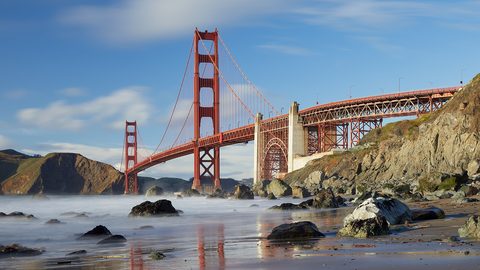 California
Eight hundred miles of desert, alpine range, and temperate coast in one state. The season that suits one part rules out another.
California
Eight hundred miles of desert, alpine range, and temperate coast in one state. The season that suits one part rules out another.
-
 Florida
 is 500 miles of peninsula where the fantasy of endless summer meets the logistics of long drives. Here is how to plan a trip that fits together.
Florida
Florida is 500 miles of peninsula where the fantasy of endless summer meets the logistics of long drives. Here is how to plan a trip that fits together.
-
 Maryland
 is built around the Chesapeake Bay, where steamed crabs and slow ferries set the pace and the two shores are close on a map but far apart by road.
Maryland
Maryland is built around the Chesapeake Bay, where steamed crabs and slow ferries set the pace and the two shores are close on a map but far apart by road.
-
 Nevada
 is a state of extreme contrasts: the 24-hour artificial fantasy of the Las Vegas Strip gives way to vast, silent desert where services vanish and the
Nevada
Nevada is a state of extreme contrasts: the 24-hour artificial fantasy of the Las Vegas Strip gives way to vast, silent desert where services vanish and the
-
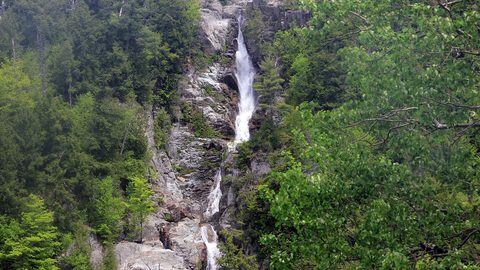 New York
 State is 54,555 square miles of mountains, lakes, and small towns where the drive from Manhattan to Niagara Falls takes seven hours.
New York
New York State is 54,555 square miles of mountains, lakes, and small towns where the drive from Manhattan to Niagara Falls takes seven hours.
Common Questions
Do I need a visa to visit the United States?
It depends on your citizenship. Citizens of Canada, the United Kingdom, Australia, most EU countries, and Japan do not need a visa for tourist visits under the Visa Waiver Program. They must apply for ESTA authorisation before travel. ESTA is valid for two years from approval or until passport expiry, whichever is sooner. The fee is set annually by US Customs and Border Protection. Citizens of India and China require a B-2 tourist visa, obtained at a US consulate before travel.
Can I use my home country driving licence to rent a car?
Yes, for short-term visitors. Some states require an International Driving Permit alongside the home licence. Obtain the IDP in your home country before travel.
Is tap water safe to drink?
Yes, in all municipal systems. In parts of the rural Southwest and Great Plains, the water tastes strongly of minerals or sulphur, but it is safe.
How much should I budget for tipping per day?
For a day that includes a sit-down lunch and dinner, two drinks, a taxi or ride-hail, and hotel housekeeping, budget an extra 25 to 35 dollars per person beyond the quoted cost of the services.
What is the fastest way to get from New York JFK to Manhattan?
Take AirTrain to Jamaica Station, then the Long Island Rail Road to Manhattan Penn Station. Total time is 50 to 70 minutes and costs roughly 15 to 20 dollars.
Do I need a rental car in New York or Chicago?
No. Public transit in New York, Chicago, San Francisco, Boston, Washington DC, and Philadelphia is extensive enough that a rental car is a liability. Save the car rental for the regions where you cannot function without one.
Can I see the Grand Canyon, a national park, and a major city in one week?
Not without spending more time in airports and rental cars than at the destinations. Minimum 14 days for one region and a connecting flight. For a parks loop in the Southwest, budget 7 to 14 days just for that region.
Read next
-
 Staying Connected While Traveling Through the United States
Prepaid eSIMs work well in US cities, but a physical T-Mobile or AT&T SIM bought at arrival gives better rural coverage for national parks and long highway drives.
Staying Connected While Traveling Through the United States
Prepaid eSIMs work well in US cities, but a physical T-Mobile or AT&T SIM bought at arrival gives better rural coverage for national parks and long highway drives.
-
 Best Time to Visit the United States by Region and Season
The United States spans so many climates that no single season works everywhere. Here is what each region delivers, and when to stay away.
Best Time to Visit the United States by Region and Season
The United States spans so many climates that no single season works everywhere. Here is what each region delivers, and when to stay away.
-
 Getting Around the United States Without Underestimating the Distances
Outside the Northeast Corridor, the United States runs on cars and domestic flights. Distances are enormous and Amtrak is scenic but slow.
Getting Around the United States Without Underestimating the Distances
Outside the Northeast Corridor, the United States runs on cars and domestic flights. Distances are enormous and Amtrak is scenic but slow.
-
 United States Visa Rules and the ESTA Process Explained Simply
Most visitors to the United States need either an ESTA authorization or a B-2 tourist visa. Here is who needs which and how the process runs.
United States Visa Rules and the ESTA Process Explained Simply
Most visitors to the United States need either an ESTA authorization or a B-2 tourist visa. Here is who needs which and how the process runs.
-
 Money in the United States, Cards, Cash, Tipping and That Extra Tax
The United States runs on cards, but sales tax is added at the register and tipping 18-22% is effectively mandatory. Here is how money actually works.
Money in the United States, Cards, Cash, Tipping and That Extra Tax
The United States runs on cards, but sales tax is added at the register and tipping 18-22% is effectively mandatory. Here is how money actually works.
-
 Reading United States Safety Advice Without Being Misled by It
Safety in the United States is hyperlocal, and the visible poverty in public spaces can jar first-timers. Here is how to read the advice without being misled.
Reading United States Safety Advice Without Being Misled by It
Safety in the United States is hyperlocal, and the visible poverty in public spaces can jar first-timers. Here is how to read the advice without being misled.
-
Nevada
Nevada is a state of extreme contrasts: the 24-hour artificial fantasy of the Las Vegas Strip gives way to vast, silent desert where services vanish and the
-
Maryland
Maryland is built around the Chesapeake Bay, where steamed crabs and slow ferries set the pace and the two shores are close on a map but far apart by road.
-
California
Eight hundred miles of desert, alpine range, and temperate coast in one state. The season that suits one part rules out another.