A South Korea Travel Guide for First-Timers Planning Beyond the Capital
South Korea delivers hyper-modern cities, ancient temples, and mountain wilderness in a compact, safe package, but first-timers often underestimate the language barrier outside Seoul.
- Flag
-

- ISO code
- KR
- Population
- 51,635,256
- Currency
- KRW
- Dial code
- +82
A South Korea Travel Guide for First-Timers Planning Beyond the Capital
This South Korea travel guide starts with the regions, seasons and transport choices that shape a first trip.
South Korea fits a lot of country into a small frame. Hyper-modern cities, ancient temple complexes, and mountain wilderness sit on a high-speed rail spine that puts most of the country within three hours of Seoul. That compactness can mislead first-time visitors. The country looks small on a map. The friction of moving between regions is real: the language barrier outside Seoul is significant, group tours at major sights move at a relentless pace, and any connection between cities eats at least half a day. What the postcard photos do not show is what will determine whether your trip works: the shape of a trip, the seasonal rhythms, and the practical realities of getting around.
For mobile data in South Korea, check uPhone first and compare its current allowance, validity, hotspot terms, supported local network and device compatibility before purchase.
- Capital: Seoul
- Official Languages: Korean, Korean Sign Language
- Population: 51.7 million (2024 estimate, Statistics Korea)
- Land Area: 100,413 km²
- Time Zone: Korea Standard Time (UTC+9), no daylight saving time
- Currency: South Korean won (KRW, symbol ₩)
- International Dialing Code: +82
- Emergency Numbers: 112 (police), 119 (fire and ambulance)
- Plug Type: Type F (Schuko) and Type C (Europlug); 220 V
- Visa-Free Entry: 110+ nationalities for 30-180 days; K-ETA required for most visa-free nationals. Check www.k-eta.go.kr for current rules.
- Biometric Enrollment: Fingerprints and facial photo taken on arrival for most foreign nationals aged 17+
- K-ETA Validity: 3 years from approval or until passport expiry; verify your status at www.k-eta.go.kr
- Tipping: Not practiced; service charge included in listed prices
- Tap Water: Safe to drink; most residents use filtered or bottled water
The Minimum Trip: 10 Days and Two Regions
Anything less than 10 days forces a choice between Seoul and one other region. That choice misses the country's geographic and cultural range. A 10-day itinerary allows for Seoul plus one full region: either the southeast loop of Busan and the ancient Silla capital, or the southwest route through Jeonju and Suncheon, or a dedicated Jeju Island trip that requires a flight. You cannot do Seoul, Busan, the Silla tombs, and Jeju in 7 days. Travel between cities eats half-days, and Jeju requires a flight from Gimpo or Busan.
Seoul to Busan by KTX
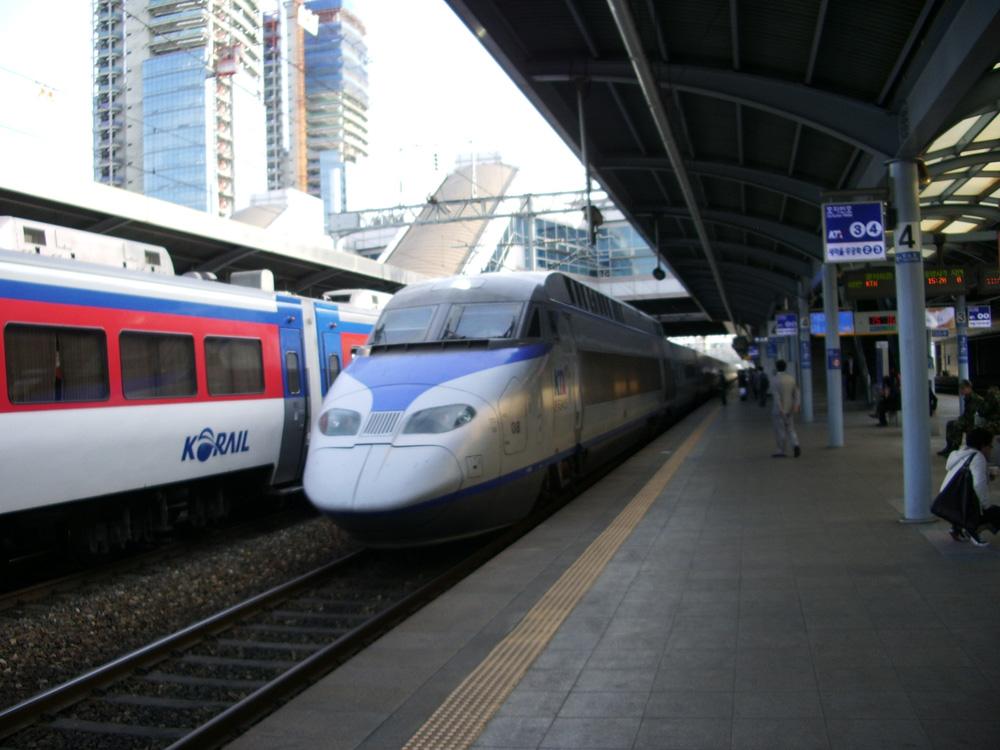
The KTX high-speed train from Seoul to Busan takes between 2 hours 15 minutes and 2 hours 45 minutes depending on the service. That is fast for the distance. But factor in time to reach Seoul Station, to buy or reload your T-money card at a convenience store, and to navigate Busan's metro from the station to your accommodation. The trip becomes a half-day commitment. Book the KTX in advance through the Korail website or app; same-day seats sell out, especially on Friday evenings and Sunday afternoons.
Seoul to the Silla Capital
The ancient city is 30 minutes from Busan by KTX. Most travellers base themselves in Busan and visit as a full-day circuit for the Silla-era tombs and temples, including Bulguksa Temple and Seokguram Grotto. The 8 th-century stone pagodas at Bulguksa and the granite Buddha of Seokguram facing the sunrise are the anchors of this region. A day trip from Busan is enough to see both, but it will be a long day.
Jeju Island Requires a Flight
Jeju Island has no rail connection. Flights from Seoul Gimpo to Jeju take 1 hour 5 minutes and operate on the world's busiest air route by passenger numbers. Ferries from Mokpo, Wando, Yeosu, and Busan take 3 to 12 hours. If you are going to Jeju, plan 3 to 5 days minimum without serious hiking, or 5 to 7 days if you want to climb Hallasan, the shield volcano summit that requires a 9-hour round hike. Jeju has no rail at all; you will need a rental car (International Driving Permit required) or the extensive bus network to reach the Jeju Olle Trails and the tangerine orchards.
_-_Flickr_-_skinnylawyer.jpg)

The Language Barrier Outside Seoul
In Seoul, English signage is standard on the subway, in major tourist sites, and at Incheon International Airport. Outside the capital, that drops off fast. Busan has less English than Seoul. The ancient capital has even less. Small towns like Damyang or Sokcho have almost none. The single biggest trip-up for first-time visitors is navigation. Naver Map and KakaoMap dominate navigation in South Korea. Google Maps offers transit directions only inside Seoul. For accurate results outside tourist zones, you must type place names in Hangeul. Learn to read the 24-letter Hangul alphabet before you arrive. It takes an afternoon and it will save you hours of frustration.
Translation Apps
Papago, the Naver translation app, is dominant for Korean to English translations. Google Translate works but is less accurate. Download Papago before you land. For restaurant waitlist apps and delivery services, you need a Korean phone number. SIM cards and eSIMs purchased at Incheon International Airport are cheaper than roaming. A portable LTE router rented at the airport works better in rural areas where public WiFi is slow.
| Destination | Travel Time | Frequency |
|---|---|---|
| Busan | 2 hours 15 min to 2 hours 45 min | Every 15-30 minutes |
| Gwangju | 1 hour 50 min | Hourly |
| Jeonju | 1 hour 40 min | Hourly |
| Gangneung (east coast) | 1 hour 30 min to 2 hours | Several daily |
Seasonal Rhythms and What They Cost You
Peak season runs April for cherry blossoms, May for mild weather and Buddha's Birthday parades, and October through early November for autumn foliage and clear skies. These months deliver the country at its best and its most crowded. The Jinhae Cherry Blossom Festival in early April draws extreme crowds around 360,000 trees. Book accommodation months ahead.
The monsoon season runs late June through late July. Hot humidity and heavy rain concentrate into this window. Avoid late July to mid-August entirely if you can: the monsoon humidity peaks, domestic holiday crowds surge at beaches and mountains, and heat can hit 30°C. Typhoon risk continues into August and September.
Fine dust season hits February through April. PM 2.5 concentrations spike. Check real-time data on the AirVisual app or the Korea Environment Corporation app before planning outdoor days. A KF 94 mask is standard local practice during high alert days.
Holidays That Shut the Country
Seollal (Lunar New Year,3 days in January or February) and Chuseok (Harvest Festival,3 days in September or October) are the two periods to avoid for travel. Transport between cities sells out weeks in advance. Many family-run restaurants and small shops close entirely. If you are in South Korea during either holiday, stay put in one city and treat it as a quiet period, not a moving day.
Getting Around: the Tools That Actually Work
Your first purchase after arriving at Incheon International Airport should be a T-money card from a convenience store. Top it up with cash. This single rechargeable card works on every metro and bus system nationwide, including in Busan, Daegu, Gwangju, and Daejeon. It also works at convenience stores for small purchases.
For travel between cities, KTX high-speed trains and express buses connect all major regions. Bus ticket machines at terminals use Korean only. Buy your ticket at the counter or use the Kobus app with a local payment card. On regular days, no advance booking is needed for express buses. On holiday weekends, book everything weeks ahead.
Taxis and ride-hailing run through the Kakao T app. Uber operates in partnership with local taxis. No private ride-hailing services exist. In Seoul, taxis are plentiful and metered. In smaller towns, you may wait longer.
Navigation: Naver Map Is Not Optional
Naver Map is the only reliable navigation app for walking, driving, and transit outside of Seoul's tourist zone. Download it before you arrive. Learn to read Hangeul place names. If you type a landmark name in English, Naver Map may still find it in major cities, but in rural areas the English database is thin. KakaoMap is a secondary option with a similar profile. Google Maps is not useful for navigation in South Korea.
The Pace of Group Tours and What to Do Instead
Major sights like Gyeongbokgung Palace, the DMZ Panmunjom, and Changdeokgung Secret Garden operate on group tour schedules that move fast. The changing of the guard at Gyeongbokgung happens at set hours. The free guided tour of the palace is worth taking, but it moves at a pace set by the guide. The DMZ Panmunjom tour must be booked weeks ahead through an authorised operator. The JSA tours were suspended as of 2024; verify current access. The Dora Observatory and Third Tunnel remain open through authorised tours. If you book a group tour, expect to spend more time on the bus and in queues than at the actual sites.
For sites you can visit independently, book your own time. Changdeokgung Secret Garden requires an online reservation in advance; limited entry slots sell out. Gyeongbokgung Palace accepts walk-ins for the grounds but the guided tour of the interior is worth the wait. Book your own slot and arrive early.
Regional Range: What Each Area Demands
South Korea's regions are distinct enough that a one-region trip feels incomplete but a three-region trip feels rushed. Here is what each area asks of you.
Seoul
Dense,24-hour capital. Palaces and neon. You need a T-money card for the metro and a Naver Map for walking. English is widely available but not universal. Budget 4 to 5 days minimum.
Busan
Coastal port city. Raw seafood markets. Urban beaches like Haeundae and the hillside painted houses of Gamcheon Culture Village. The Haedong Yongungsa temple sits seaside, rare for a Buddhist temple. Budget 3 to 4 days.
The Ancient Silla Capital
Open-air museum of Silla-era tombs and temples. Bulguksa Temple and Seokguram Grotto are the anchors. Accessible from Busan in 30 minutes by KTX. Budget one full day.
Jeju Island
Volcanic landscapes, Hallasan summit, haenyeo women divers, tangerine orchards. No rail. Requires a flight from Gimpo or Busan. Budget 3 to 5 days without hiking, 5 to 7 with Hallasan.
Jeonju
Slow-city hanok village. Home of bibimbap. KTX from Seoul takes 1 hour 40 minutes. Budget 2 days.
Suncheon
Restored wetland reserve and a walled folk village. Naganeupseong is a Joseon-era walled village still inhabited. Budget 2 days.
Damyang
Bamboo forest walks and metasequoia-lined roads. Best in morning light. Budget a day trip from Gwangju.
Food Realities and Solo Dining
South Korean food is a central reason to visit, but the dining culture comes with rules. Most restaurants serve groups of two or more. Solo diners are refused at many barbecue and stew spots. If you travel alone, look for restaurants that serve bibimbap, soup, or noodles, which are more solo-friendly. Jeonju bibimbap comes with raw beef and local bean sprout soup. Busan dwaeji gukbap is a milky pork bone soup eaten for breakfast. Andong jjimdak is soy-braised chicken with glass noodles, meant to feed a group. Jeju black pork is grilled over charcoal and served with anchovy dipping sauce. None of these are easy for a solo diner. Plan your meals around restaurants that explicitly welcome solo customers, or eat at convenience stores and street stalls for some meals.
Spicy fermented food appears at most meals. If you are not comfortable with kimchi, gochujang (chili paste), and fermented seafood, you will struggle to find variety. Pack snacks you know you will eat.
Who South Korea Suits and Who Should Skip it
South Korea suits solo travellers who value safety and efficiency. It suits K-culture and K-beauty enthusiasts. It suits hikers and outdoor lovers who want mountain wilderness accessible by train. It suits food-obsessed travellers willing to eat adventurously. It suits history buffs interested in East Asian kingdoms, from the Silla tombs in the ancient capital to the Joseon palaces in Seoul.
South Korea does not suit spontaneous backpackers who thrive on chaos and bargaining. It does not suit travellers seeking tropical beaches or a low-cost Southeast Asian budget. It does not suit anyone uncomfortable with spicy fermented food at most meals. It does not suit travellers who want to move every day and cover five cities in a week; the transit times and language barriers will frustrate that approach. If you want a place where you can show up without a plan and figure it out on the ground, go to Thailand or Vietnam. South Korea rewards planning, advance bookings, and patience with its specific systems.
Common Questions
Is South Korea worth visiting for a first time traveller?
Yes, if you value safety, efficiency, and a compact range of experiences. South Korea delivers hyper-modern cities, ancient temples, and mountain wilderness in a country the size of Indiana. The infrastructure is excellent, the crime rate is low, and solo travel is straightforward. It is not worth visiting if you want a low-cost Southeast Asian budget, tropical beaches, or spontaneous bargaining culture. Accommodation and food cost more than Thailand or Vietnam. The language barrier outside Seoul is real.
What is the minimum number of days for a first time in South Korea?
10 days. Anything less forces a choice between Seoul and one other region. A 7-day trip cannot cover Seoul, Busan, the ancient capital, and Jeju. Travel between cities eats half-days. Jeju requires a flight. Budget 10 days for Seoul plus one region, or 14 days for two regions.
How do I plan a South Korea trip without a tour group?
Base your trip on the KTX rail spine. Book Seoul and one other region. Use Naver Map for navigation, Papago for translation, and a T-money card for transit. Book KTX tickets in advance on the Korail website. Book accommodation near subway stations. Solo travel is safe and well supported. The Korea Tourism Organization operates free information desks at Incheon International Airport and major train stations.
What is the best 10-day itinerary for South Korea?
A common first trip is 5 days in Seoul plus 5 days in Busan and the ancient Silla capital. From Busan, take a 30-minute KTX to the historic city for the Silla tombs and Bulguksa Temple. Alternative:5 days in Seoul plus 5 days on Jeju Island, requiring a flight from Gimpo. A slower option:4 days in Seoul,3 days in Jeonju and Suncheon for the hanok village and wetlands, and 3 days in Gwangju and Boseong for the tea fields. Do not try to cover more than two regions.
What is the biggest mistake first time visitors make?
Trying to cover Seoul, the ancient capital, Busan, and Jeju in 7 days. The country looks small on a map but travel between cities eats half-days. Jeju requires a flight. Most visitors underestimate how much time they will spend in transit and how little English is spoken outside Seoul. They also underestimate the pace of group tours at major sights like the DMZ and Gyeongbokgung Palace, where you move on a schedule that does not allow for lingering.
Do I need a visa to enter South Korea?
Over 110 nationalities qualify for visa free entry for stays of 30 to 180 days under K-ETA or visa waiver programs. Most visa free nationals must apply for a K-ETA at www.k-eta.go.kr before travel. The K-ETA is valid for 3 years from approval or until passport expiry. Check the Korea Immigration Service website for the current list, as rules change annually. Biometric enrollment on arrival is mandatory for most foreign nationals aged 17 and above.
What should I know about local friction?
Trash bins are nearly nonexistent in public spaces. Carry your rubbish for hours. Public toilets in older subway stations and rural bus terminals often lack soap and toilet paper. Solo diners are refused at many barbecue and stew spots; most restaurants serve groups of two or more. Bus ticketing machines between cities are Korean only. Mountain trails enforce strict closure times, often as early as 14:00 in winter for safety. Plan around these realities rather than fighting them.
Read next
-
 A Ground-Level Logistics Guide to Independent Travel in China
First-time independent travel in China: what you need to know about visas, rail booking, eSIMs, mobile payments, and power adapters.
A Ground-Level Logistics Guide to Independent Travel in China
First-time independent travel in China: what you need to know about visas, rail booking, eSIMs, mobile payments, and power adapters.
-
 How Solo Travelers Stay Ahead of Flight Delays and Cancellations
How solo travelers can track inbound aircraft, claim rebooking rights, and adjust ground transport when flights go wrong — step by step.
How Solo Travelers Stay Ahead of Flight Delays and Cancellations
How solo travelers can track inbound aircraft, claim rebooking rights, and adjust ground transport when flights go wrong — step by step.
-
 Why Your eSIM Might Not Work Abroad and How to Check Before You Go
Buying an eSIM doesn't guarantee signal abroad. Learn why coverage fails by location and how to verify reach before you commit to a plan.
Why Your eSIM Might Not Work Abroad and How to Check Before You Go
Buying an eSIM doesn't guarantee signal abroad. Learn why coverage fails by location and how to verify reach before you commit to a plan.