The United Arab Emirates, Seven Emirates That Function as One Destination
A practical gazetteer for the United Arab Emirates covering the seven emirates, two major cities, and what to expect beyond the glossy brochures.
- Flag
-

- ISO code
- AE
- Population
- 9,630,959
- Currency
- AED
- Dial code
- +971
The UAE Operates on a Two-Airport, Two-City Axis
The United Arab Emirates is seven emirates that function as one destination, with a catch. Every trip funnels through Dubai International Airport (DXB), the primary entry point, or Abu Dhabi International Airport (AUH), Etihad's base. There is no rail link. A taxi between the two city centres costs AED 250-350 and takes at least 90 minutes on the E11. That distance, 140 kilometres with no train, shapes every itinerary. The UAE is hypermodern, air-conditioned, strict, and expensive. The glossy brochures skip the 45°C summer afternoons when you cannot step outside. They skip the fact that you cannot hail a taxi on the street in most of Dubai, you need the Careem or Uber app. And they skip the cultural formality that catches first-timers off guard.
- Capital City: Abu Dhabi
- Number Of Emirates: 7
- Emirates On The Arabian Gulf Coast: Abu Dhabi, Dubai, Sharjah, Ajman, Umm Al Quwain, Ras Al Khaimah
- Emirate On The Gulf Of Oman: Fujairah
- Primary Airport Hub: Dubai International (DXB)
- Secondary Airport Hub: Abu Dhabi International (AUH)
- Minimum Days For A First Visit: 7 days
- Peak Season: November to March
- Window To Avoid: July and August (45°C with extreme humidity)
- Currency / Peg: UAE dirham (AED), fixed at 1 USD = 3.6725 AED since 1997
- Personal Income Tax: 0%
- VAT On Goods And Services: 5%
- Official Language: Arabic
- Time Zone: Gulf Standard Time (UTC+4), no daylight saving
Is the UAE Worth Visiting?
Yes, if you fit the profile the destination was built for. The UAE rewards luxury seekers, architecture enthusiasts, families who want safe and predictable resort holidays, first-time Middle East visitors who want a sanitised introduction, and business travellers extending a trip. It is not worth visiting for hardcore backpackers on a shoestring budget. Nor for anyone who wants walkable historic urban chaos, or solo female visitors looking to party freely. If conspicuous consumption and strict laws on personal behaviour feel stifling, book elsewhere. If that sounds like a relief, the UAE delivers exactly what it promises.
The reality check: the summer heat is more oppressive than most visitors imagine. From May through September, outdoor activity from 10:00 to 16:00 is physically dangerous. The cost of spontaneity is high. Walking into a hotel without a reservation in peak season can cost you double the advance rate, or leave you without a room. The cultural formality is rigid. Public displays of affection beyond holding hands can attract police attention. Alcohol is only available in licensed hotel bars and restaurants; drinking in public or being intoxicated in public is a criminal offence. Photography restrictions are real. Photographing government buildings, military sites, palaces, or local people without permission can lead to arrest. The call to prayer five times daily is loud and pervasive. If you are a light sleeper, book a hotel room with soundproofed windows or bring earplugs. None of this makes the UAE a bad destination. It makes it a destination you should choose with open eyes.
_09.jpg)
UAE First Time Visitor Advice: Plan for the Two-City Reality
First-time visitors make the same mistake: they underestimate the geographic spread and assume Dubai and Abu Dhabi are a quick train ride apart. They are not. There is no national rail network. A private car or inter-city bus is the only option. The bus takes over two hours. Many visitors waste half a day on an unplanned commute. The fix is simple. Decide which emirate is your base and take a day trip to the other one. Or split your stay, three nights in Dubai, three nights in Abu Dhabi, and accept that moving between them costs you a morning. Do not try to sleep in both cities on the same night.
Minimum seven days allows a split between Dubai's spectacle, Abu Dhabi's culture, and a desert or mountain escape without constant repacking. In seven days you can do three nights in Dubai, two nights in Abu Dhabi, and two nights in Ras Al Khaimah or at a Liwa Oasis desert camp. That works. A five-day trip forces you to pick one city and skip the rest. Pick Dubai if you want the high-rise spectacle, shopping, and theme parks. Pick Abu Dhabi if you want the Louvre, the Grand Mosque, and quieter beaches. Do not try to do both in five days. You will spend a quarter of your trip in traffic.
Getting Around Inside The Emirates
Dubai's Metro is driverless, efficient, and connects DXB Terminals 1 and 3 to the city centre in about 25 minutes for roughly AED 8. You need a Nol card to use it. Abu Dhabi has no metro. You need a Hafilat card for Abu Dhabi's buses, and the two cards are not interchangeable. Taxis in both cities are metered, but you cannot reliably hail one on the street outside central Dubai. Use the Careem or Uber app. The inter-city bus network, operated by each emirate's transport authority, covers the main routes but does not serve all destinations. Getting from Dubai to Ras Al Khaimah without a car requires a bus to a border stop, then a local taxi, adding hours to the journey. If you plan to visit multiple emirates, renting a car is the practical choice. Your home-country driving licence is valid for a limited period for many nationalities; check the UAE Ministry of Interior list before you travel.
| Emirate | Best For | Minimum Stay | Key Drawback |
|---|---|---|---|
| Dubai | High-rise architecture, shopping, spectacle, theme parks | 3–4 days for the core city | Expensive, crowded, traffic-heavy |
| Abu Dhabi | Museums, culture, desert, mangroves | 2–3 days for city and cultural sites | Spread out, requires a car for most attractions |
| Sharjah | Museums, heritage, conservative culture | 1–2 days | No alcohol, strict dress code enforced |
| Ras Al Khaimah | Mountains, zipline, adventure, beach resorts | 2–3 days | Limited dining and nightlife |
| Fujairah | Diving, snorkelling, Indian Ocean coast | 1–2 days | Smaller hotel stock, less to do in the evening |
| Ajman | Budget accommodation, quiet beaches | Half-day to 1 day | Minimal tourist infrastructure |
| Umm Al Quwain | Mangroves, birdlife, water sports | 1 day | Least developed for tourism |
Dubai and Abu Dhabi Itinerary: How to Split Your Week
A seven-day trip split across Dubai and Abu Dhabi is the standard first-time itinerary. It works if you plan the move correctly. Do not try to see both cities from a single base. The distance is too far for a comfortable daily commute.
Start in Dubai. Land at DXB, take the Metro Red Line to your hotel in Downtown or Dubai Marina. Spend the first three days on Dubai's core experiences: the Burj Khalifa (book At The Top in advance, same-day tickets sell out), the Dubai Mall, the Museum of the Future (tickets sell out weeks ahead, book before your flight), and either a desert safari or a day at one of the beach clubs on Jumeirah Beach Residence. On day three, take an inexpensive abra across Dubai Creek for AED 1, walk the gold and spice souks in Deira, and spend an hour in the Al Fahidi Historic District. That gives you the old city contrast without a separate trip.
Move to Abu Dhabi on day four. The bus from Dubai takes over two hours and costs roughly AED 25-30. A taxi costs AED 250-350. Book a hotel on Saadiyat Island or near the Corniche. Day five: the Sheikh Zayed Grand Mosque in the morning (free entry, strict dress code, women must cover hair and arms, men must wear long trousers), then the Louvre Abu Dhabi in the afternoon. Book Louvre tickets online. Day six: choose a trip to Al Ain, a 90-minute drive to the UNESCO-listed oasis and Jebel Hafeet mountain road, or a desert camp at Liwa Oasis, a 2.5-hour drive south. Day seven: fly out of AUH, or drive back to Dubai if your flight is from DXB. Budget an extra 90 minutes for that drive.
If You Have Only Five Days
Pick one city. Five days in Dubai gives you time for the Burj Khalifa, Museum of the Future, a desert safari, a day at the beach, and a half-day in Old Dubai. Five days in Abu Dhabi gives you the Grand Mosque, the Louvre, Qasr Al Watan, a day trip to Al Ain, and a morning on Saadiyat beach. Trying to do both in five days means you spend a full day moving and arrive at every attraction rushed. Skip the second city. You will come back.
UAE Trip Planning: Seasonal Timing Rules Everything
The November-to-March window is the only season when outdoor dining, beaches, and desert activities are genuinely pleasant. Daytime temperatures sit from 24°C to 30°C. Hotel rates double and attractions are crowded, but the alternative is 45°C with extreme humidity from July through September. That makes any outdoor activity from 10:00 to 16:00 dangerous. Do not visit in July or August unless you have a specific indoor reason: business, a conference, family you must see. Even walking five minutes at midday from an air-conditioned car to an air-conditioned building is uncomfortable.
Ramadan shifts annually by about 10-12 days. During Ramadan, eating, drinking, and smoking in public during daylight hours is prohibited in all emirates. Enforcement is strictest in Sharjah, where the rules apply even inside cars. Restaurants close during the day. Nightlife shuts down. Hotel rates drop, but the experience is heavily restricted. If you want to eat and drink freely during the day, do not travel during Ramadan. Eid al-Fitr and Eid al-Adha holidays see roads jammed and hotels sold out at peak prices. Check the Islamic calendar before you book.
What Connectivity You Actually Get
SIM cards from du and Etisalat are available at both DXB and AUH on presentation of your passport. Tourist packs with generous data cost around AED 100-200. WhatsApp voice and video calls are blocked. FaceTime, Skype, and Snapchat calls do not work without a VPN, and using a VPN is technically illegal. You can send text messages and make standard voice calls. If you rely on video calls to stay in touch, this will frustrate you. Plan to use your hotel's Wi-Fi for video calls.


The Seven Emirates, One Destination
Abu Dhabi is the largest emirate at approximately 67,340 km², roughly 87% of the country's total land area. It contains the political capital, the cultural district on Saadiyat Island, the Empty Quarter dunes at Liwa Oasis, and the garden city of Al Ain. Dubai is the tourism and commerce hub at 4,114 km², with the Burj Khalifa, Palm Jumeirah, and the largest population of any emirate. Sharjah, at 2,590 km², is the cultural capital and a completely dry emirate. Its museums, particularly the Sharjah Museum of Islamic Civilization with its superb collection of scientific instruments and manuscripts, are worth a day trip from Dubai. Ajman, at just 259 km², is the smallest emirate and offers budget accommodation clusters and quiet beaches. Umm Al Quwain, at 777 km², is the least developed for tourism, with mangrove coastline and water sports. Ras Al Khaimah, at 1,684 km², has the Jebel Jais mountain summit, the UAE's highest peak at approximately 1,934 metres, and the world's longest zipline. Fujairah, at 1,450 km², is the only emirate on the Gulf of Oman, giving it Indian Ocean access, better snorkelling at Snoopy Island, and slightly cooler sea temperatures year-round.
What the UAE is Actually Like: the District Reality
Dubai Marina and Jumeirah Beach Residence deliver high-rise waterfront living with beach clubs and dense traffic. Downtown Dubai puts you at the base of the Burj Khalifa and the Dubai Mall, with the choreographed fountain spectacle every evening. Deira is Old Dubai: the gold and spice souks, chaotic creek crossings, and the cheapest eats in the city. Al Fahidi is the low-rise historic quarter with galleries and courtyard cafés. Each district feels like a different city. Do not stay in one and assume you have seen Dubai.
In Abu Dhabi, Yas Island clusters Ferrari World, Warner Bros World, and the F1 circuit into a single family-entertainment zone. Saadiyat Island is quieter, with the Louvre Abu Dhabi, pristine beaches, and the cultural district that will eventually include the Guggenheim Abu Dhabi and the Zayed National Museum. Al Ain, 160 kilometres inland, is a UNESCO-listed oasis city with the Jebel Hafeet mountain road and hot springs at the base. Liwa Oasis, 220 kilometres south, sits on the edge of the Empty Quarter with epic red dunes and date farms. Sharjah City is conservative, museum-dense, and alcohol-free. Ras Al Khaimah has the Jebel Jais mountain and adventure activities. Pick your district based on what you actually want to do, not on the hotel photographs.
Who This Destination Suits and Who it Does Not
The UAE is for visitors who want a hypermodern, air-conditioned, predictable holiday with high-end infrastructure and zero negotiation. It suits luxury seekers and high-end shoppers. It suits architecture and design enthusiasts who want to see what happens when unlimited capital meets starchitect commissions. It suits families who want safe, clean, resort-style holidays where the biggest problem is which pool to use. It suits first-time Middle East visitors who want a sanitised introduction. It suits business travellers extending a trip.
The UAE is not for hardcore backpackers on a shoestring budget. The country is expensive and designed to be consumed through paid experiences, not free wandering. It is not for anyone seeking walkable historic urban chaos; the historic districts are small and curated. It is not for solo female visitors who want to party freely; the nightlife is controlled and the social rules are real. It is not for anyone who finds conspicuous consumption and strict laws on personal behaviour stifling. If you need to drink a beer on a public beach at 11am, skip the UAE. If that sounds like a constraint you can live with for a week of superlative museums and architecture, the UAE is one of the most efficient and comfortable destinations on earth.
Common Questions
Do I need a visa to visit the UAE?
Nationals of approximately 80 jurisdictions, including the UK, all EU member states, the USA, Canada, Australia, New Zealand, Japan, South Korea, and Singapore, receive a visa on arrival for 30 or 90 days depending on nationality, with a 10-day grace period. The full list is published by the UAE Federal Authority for Identity, Citizenship, Customs and Port Security and is revised annually. Nationals not on that list must obtain a visa in advance through a UAE-based sponsor, hotel, airline, or licensed tour operator. Your passport must be valid for at least six months from your arrival date.
Read next
-
 Staying connected in the United Arab Emirates with eSIM, local SIM, or roaming
How to get mobile data across the UAE with eSIM, local SIM from du or Etisalat, or roaming, and why WhatsApp calls stay blocked regardless.
Staying connected in the United Arab Emirates with eSIM, local SIM, or roaming
How to get mobile data across the UAE with eSIM, local SIM from du or Etisalat, or roaming, and why WhatsApp calls stay blocked regardless.
-
 Best Time to Visit the UAE and What Each Season Actually Does
The UAE's seasons explained honestly: when outdoor dining and desert activities are pleasant, when the summer heat becomes dangerous, and how Ramadan affects travel.
Best Time to Visit the UAE and What Each Season Actually Does
The UAE's seasons explained honestly: when outdoor dining and desert activities are pleasant, when the summer heat becomes dangerous, and how Ramadan affects travel.
-
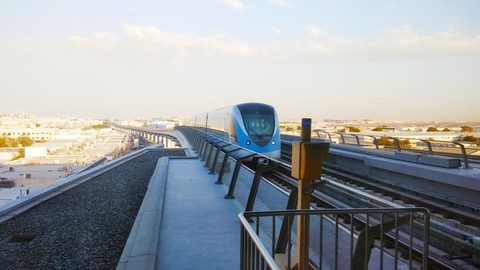 Getting Around the Emirates Without a Car
How to move between Dubai, Abu Dhabi, and the other emirates by bus, taxi, and ride-hailing app, and why there is no train network.
Getting Around the Emirates Without a Car
How to move between Dubai, Abu Dhabi, and the other emirates by bus, taxi, and ride-hailing app, and why there is no train network.
-
 UAE Visa Rules and Who Gets Entry on Arrival
Which nationalities get a UAE visa on arrival at Dubai or Abu Dhabi airports, who must apply in advance, and how the entry process actually works.
UAE Visa Rules and Who Gets Entry on Arrival
Which nationalities get a UAE visa on arrival at Dubai or Abu Dhabi airports, who must apply in advance, and how the entry process actually works.
-
 UAE Dirham, Cards and Where Cash Still Wins
How the UAE dirham works, where cards dominate in Dubai and Abu Dhabi, and the specific situations where you still need cash.
UAE Dirham, Cards and Where Cash Still Wins
How the UAE dirham works, where cards dominate in Dubai and Abu Dhabi, and the specific situations where you still need cash.
-
 UAE Safety Advice Without the Hype
Genuine safety concerns in the UAE: strict laws on photography, alcohol, and public behaviour, not violent crime, are what visitors need to understand.
UAE Safety Advice Without the Hype
Genuine safety concerns in the UAE: strict laws on photography, alcohol, and public behaviour, not violent crime, are what visitors need to understand.
-
 A Ground-Level Logistics Guide to Independent Travel in China
First-time independent travel in China: what you need to know about visas, rail booking, eSIMs, mobile payments, and power adapters.
A Ground-Level Logistics Guide to Independent Travel in China
First-time independent travel in China: what you need to know about visas, rail booking, eSIMs, mobile payments, and power adapters.
-
 How Solo Travelers Stay Ahead of Flight Delays and Cancellations
How solo travelers can track inbound aircraft, claim rebooking rights, and adjust ground transport when flights go wrong — step by step.
How Solo Travelers Stay Ahead of Flight Delays and Cancellations
How solo travelers can track inbound aircraft, claim rebooking rights, and adjust ground transport when flights go wrong — step by step.
-
 Why Your eSIM Might Not Work Abroad and How to Check Before You Go
Buying an eSIM doesn't guarantee signal abroad. Learn why coverage fails by location and how to verify reach before you commit to a plan.
Why Your eSIM Might Not Work Abroad and How to Check Before You Go
Buying an eSIM doesn't guarantee signal abroad. Learn why coverage fails by location and how to verify reach before you commit to a plan.