Switzerland Is Four Countries Connected by Tunnels and One Timetable
Switzerland delivers Alpine scenery with ruthless efficiency across four language regions connected by rail.
- Flag
-
- ISO code
- CH
- Population
- 8,516,543
- Currency
- CHF
- Dial code
- +41
Switzerland Travel Guide for People Who Value Punctuality Over Spontaneity
You will spend 7 to 10 days moving through four linguistic nations stitched together by 5,317 km of electrified rail. Arrive at Zürich Hauptbahnhof expecting a single unified travel experience and the country corrects you within an hour. This Switzerland travel guide exists to correct you before you land. The Swiss Confederation is not one place. It is a German-speaking economic engine around Zürich, a French-inflected wine arc along Lake Geneva, an Italianate lakeside culture in Ticino, and a Romansh-speaking network of remote valleys in Graubünden. A one-hour train ride lands you in what feels like a different nation. That is the point. The country delivers postcard-perfect scenery with ruthless efficiency, but the steep prices and a rigid social culture that can feel cold rather than welcoming catch visitors off guard. If you want chaotic street-food energy and spontaneous nightlife, this destination will frustrate you. If you value punctual infrastructure, alpine sport, and landscapes that require no filter, it rewards you only as much as you plan for it.
- Official Name: Swiss Confederation (Confoederatio Helvetica)
- Capital: Bern (de facto; no de jure capital)
- Currency: Swiss franc (CHF)
- Population: 8,960,800 (Federal Statistical Office, 2023 year-end estimate)
- Area: 41,285 km²
- Official Languages: German, French, Italian, Romansh
- Bordering Countries: Germany, France, Italy, Austria, Liechtenstein
- Driving Side: Right
- Rail Punctuality Rate: 92.5% (arrival within 3 minutes of schedule, SBB, 2023)
- Minimum Recommended Stay: 7 days for a multi-region trip
Swiss Rail Travel Planning: the Timetable is Your Itinerary
You plan a Swiss trip around the Swiss Travel Pass or a Half Fare Card, not around hotel locations. The Swiss Travel Pass gives unlimited consecutive-day travel on the SBB network, most private railways, lake steamers, and urban public transport in 75 towns, plus free entry to 500 museums and 50% off most mountain railways and cable cars. Validity durations run 3, 4, 6, 8, or 15 consecutive days. The Flex version lets you pick 3 to 15 freely chosen days within a month. The Half Fare Card runs a full year and cuts almost all rail, bus, boat, and mountain transport by 50%. Break-even between the two happens at 2 to 3 long-distance rail journeys plus 1 to 2 mountain excursions within the pass period.
Buy seat reservations for the Glacier Express and Bernina Express. The Swiss Travel Pass covers the route but not the seat, and those reservations sell out. The SBB Mobile app is essential for all tickets, platform changes, and live departures. Swiss rail defines on time as arrival within 3 minutes of schedule; the 2023 punctuality rate hit 92.5%. One of every 13 trains runs late. If you connect through a station like Bern or Zürich HB with a 5-minute window, you miss it. Build 10- to 15-minute buffers into every transfer.

Switzerland Regions Explained
The country splits into eight districts, each with a language, a climate, and a transport character that changes abruptly at the canton border. Choose two or three, not seven, for a 7- to 10-day trip.
Bernese Oberland and Valais
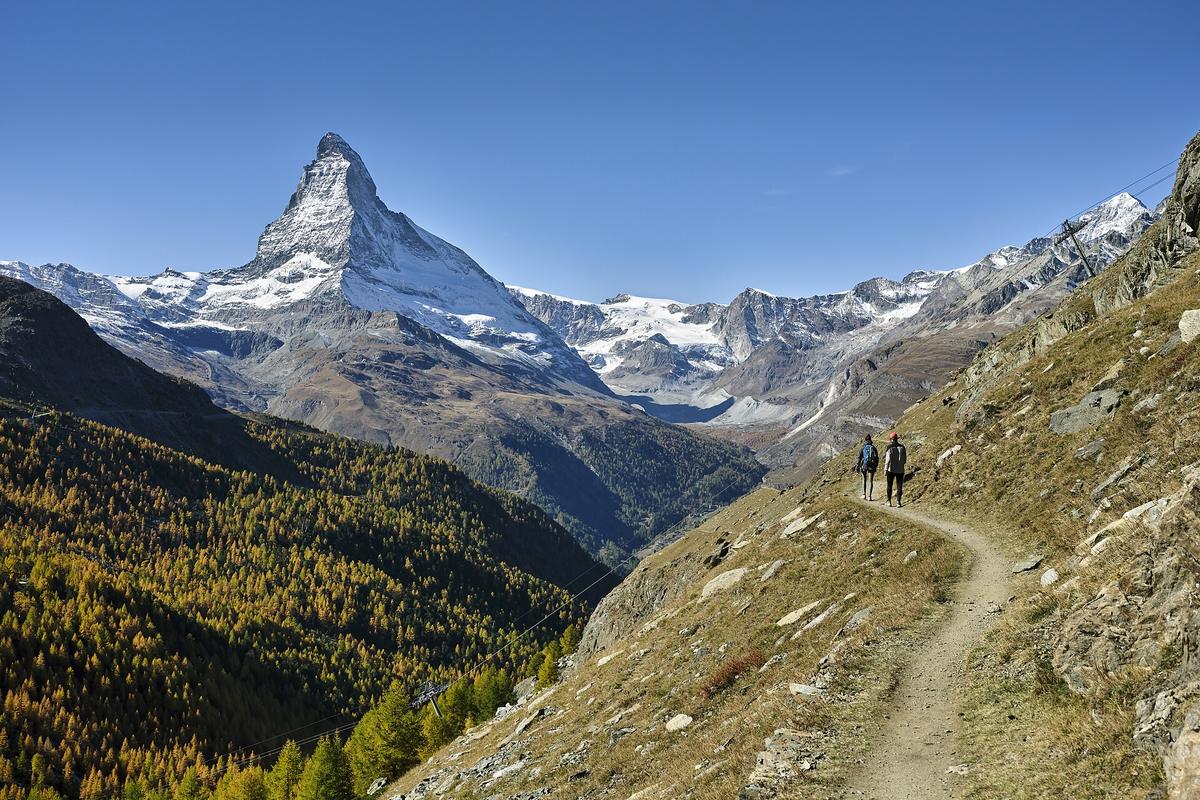
The Bernese Oberland gives you the dramatic triad of Eiger, Mönch, and Jungfrau. This is the region where the Jungfraujoch railway station sits at 3,454 metres. A return trip costs upwards of CHF 210, set by the Jungfrau Railways and adjusted seasonally; check the official timetable for the current fare. Book morning slots early. Valais is the sun-baked Rhône valley with the highest peaks and a dry climate where Zermatt, a car-free village, sits below the Matterhorn.
Graubünden and Ticino
Graubünden holds the remote Romansh-speaking valleys, the Engadine lakes, and the UNESCO-listed Rhaetian Railway Albula-Bernina line. Ticino is the Italian-speaking canton of palm-lined lakes, gelato, and granite, reached through the world's longest railway tunnel, the Gotthard Base Tunnel at 57 km.
Central Switzerland and Lake Geneva
Central Switzerland clusters around Lake Lucerne with mythic founding meadows and steep cogwheel railways. The Lake Geneva Region runs the Lavaux vineyard terraces and French-inflected waterfront cities like Lausanne and Montreux.
Zürich and the Jura
Zürich and around is the economic engine where the lake doubles as a public swimming pool. The Jura and Three Lakes offers watchmaking towns and rolling green hills. Pick one region for a 4- to 5-day in-depth stay. Pick two for a week. Pick three for 10 days and no more.
| Factor | Swiss Travel Pass | Half Fare Card |
|---|---|---|
| Validity | 3, 4, 6, 8, or 15 consecutive days; Flex version lets you pick days within a month | 1 year |
| Rail Discount | 100% on SBB network and most private railways | 50% on almost all rail, bus, boat, mountain transport |
| Mountain Railways | 50% off most cable cars and cogwheel lines | 50% off most |
| Lake Steamers | 100% covered | 50% off |
| Urban Transport | 100% in 75+ towns | Not covered |
| Museum Entry | Free entry to 500+ museums | Not covered |
| Best For | Multi-city itineraries with 3+ long journeys and 2+ mountain excursions | Long stay, single region, or light travel days |
Switzerland Trip Cost Reality
Switzerland consistently ranks highest in Europe for accommodation, dining, and transport costs according to Eurostat's annual comparative price level indices. The 2024 standard VAT rate is 8.1%, reduced to 3.8% for accommodation and 2.6% for food, non-alcoholic drinks, and books. These numbers translate into concrete shocks.
A single mountain excursion can cost more than a day's rail travel across the country. Cable cars, funiculars, and cogwheel railways to summits are not fully covered by the Swiss Travel Pass. You get 50% off. A return trip to Jungfraujoch from Interlaken costs over CHF 210, priced by Jungfrau Railways. Budget for it as an event, not as transport. Check the railway's own site for the exact fare before you book.
Food costs hit hard if you eat out. A kebab costs CHF 12 to 14. Coop and Migros supermarkets are the only reliable budget lunch option. Train station shops are open on Sundays when everything else is shut. Rivella, the carbonated milk-whey soft drink that is the national non-alcoholic beverage, costs about CHF 2 at a Coop and twice that at a restaurant. Tap water is free and safe throughout the country, but asking for it in a restaurant gets you a charged bottle of mineral water unless you specify "Hahnenwasser" (German), "eau du robinet" (French), or "acqua del rubinetto" (Italian).

Swiss Alps Itinerary Advice
Do not try to cover the whole country in 4 to 5 days by staying in a different town each night. That burns half the trip in transit and leaves no margin for the alpine weather that frequently blocks the very views you came for. The country is small on a map, a maximum 220 km north to south and 350 km east to west, but the terrain multiplies travel time. A 100 km journey can take 2.5 to 3 hours by rail in high areas.
The Minimum 7-Day Structure
Day 1 arrives in Zürich or Geneva. Days 2 and 3 cover one region, say the Bernese Oberland with a Jungfraujoch day trip from Interlaken. Days 4 and 5 move to a second region, Valais or Graubünden. Day 6 returns to the arrival city. Day 7 departs. That schedule gives you two full regions and two travel half-days. Add a third region and you need 10 days.
What You Underestimate About Altitude
Many visitors fly into Zürich at 408 metres and travel to Jungfraujoch at 3,454 metres within hours. Altitude sickness symptoms appear above 2,500 metres in unacclimatised individuals. The afternoon thunderstorms common in July and August shift weather in minutes. A sunny valley start guarantees nothing at 3,000 metres. Pack a waterproof layer in every bag, not in the hotel.
The Seasonal Trap
Mid-April to early June is the avoid window for high-altitude villages and passes. Lifts and railways shut for maintenance. Trails turn to mud or remain under snow. The winter peak runs late December to February for ski resorts, when accommodation hits peak rates and panoramic trains crowd up. July and August bring consistent hiking weather and the same price spikes. Shoulder seasons of late September to October offer lower prices and larch forests turned gold in Engadine, but first snow above 2,000 metres arrives from October. November to mid-December is low season when many cable cars close entirely and some resort hotels shut their doors.
Who Switzerland Suits and Who it Does Not
Switzerland suits hikers and alpine sport enthusiasts who treat a cable car schedule as reliable as a train timetable. It suits rail travel romantics who find beauty in a 92.5% punctuality rate and a network that is 100% electrified. It suits luxury seekers with deep pockets who will pay for a return trip to Europe's highest railway station and not flinch. It suits families wanting safe, clean outdoor holidays where the PostBus network reaches valleys no car can. It suits time-poor travellers who value punctual infrastructure over spontaneity, because a 5-minute delay is an anomaly, not a way of life.
Switzerland does not suit budget backpackers who expect a cheap meal or a cut-price dorm bed. It does not suit spontaneous nightlife seekers who find early closing times and Sunday closures frustrating. It does not suit travellers who prefer chaotic street-food energy over orderly quiet, because a kebab costs CHF 12 and there is no night market. It does not suit anyone who finds a rigid social culture cold, because the efficiency is the warmth, and if you need small talk with your train conductor, you are in the wrong country.
Common Questions
How many days do I need for a first trip to Switzerland?
A minimum of 7 days. The marquee sights are geographically scattered across the Alps and the Central Plateau, and alpine weather can wipe out a full day without notice. For two regions in depth, plan 7 to 10 days. For a city-only trip covering two cities like Zürich and Bern, 3 to 4 days is enough.
Is the Swiss Travel Pass worth the price?
Yes for multi-city itineraries that include 3 or more long-distance rail journeys and 2 or more mountain excursions. The break-even point against a Half Fare Card plus individual tickets is 2 to 3 long journeys plus 1 to 2 mountain trips within the pass validity period. For a single-region stay of 4 to 5 days, the Half Fare Card is cheaper.
Can I use Euros in Switzerland?
Some shops near borders accept Euros but give change in Swiss francs at unfavourable rates. The official currency is the Swiss franc (CHF). Use francs for all transactions. ATMs are widely available and most cards work, but carry cash for mountain huts and farm shops.
Why do shops close on Sundays in Switzerland?
Swiss law mandates Sunday closures for most retail. Only railway station shops, airport shops, and some outlets in tourist resorts stay open. Plan your grocery shopping for Saturday or before 18:30 on weekdays. Train station Coop and Migros branches are the only reliable Sunday option.
What is the best way to get mobile data in Switzerland?
Buy a prepaid eSIM or a Salt or Lebara SIM card at a mobile shop in any main station. Swisscom has the best coverage in the high Alps. Free Wi-Fi is sparse and often requires SMS verification, so do not rely on it. The SBB Mobile app needs data to work, and you need that app.
Do I need to book mountain railway tickets in advance?
Yes for the Jungfraujoch Railway, the Glacier Express, and the Bernina Express. Seat reservations are mandatory on the Glacier Express and Bernina Express and sell out in peak season. Book Jungfraujoch morning slots early. For most other railways, show up but expect queues in July and August.
Is Switzerland safe for solo travellers?
Yes. Violent crime is rare. The main risks are altitude-related and weather-related. Stay on marked trails in the Swiss National Park and on all hiking routes. Carry cash in remote areas. Emergency number is 112 for general help, 117 for police, 144 for ambulance, 118 for fire.
Read next
-
 Staying Connected in Switzerland With eSIM, Local SIM, or Roaming
Compare eSIM, local Swisscom or Salt SIM, and roaming for reliable mobile data across Swiss cities and high Alpine valleys.
Staying Connected in Switzerland With eSIM, Local SIM, or Roaming
Compare eSIM, local Swisscom or Salt SIM, and roaming for reliable mobile data across Swiss cities and high Alpine valleys.
-
 When to Visit Switzerland and What Each Season Actually Delivers
July and August deliver reliable high-alpine hiking at peak hotel rates. Mid-April to early June brings lift closures, mud, and snow-blocked passes.
When to Visit Switzerland and What Each Season Actually Delivers
July and August deliver reliable high-alpine hiking at peak hotel rates. Mid-April to early June brings lift closures, mud, and snow-blocked passes.
-
 Swiss Travel System Explained and What the Map Oversells
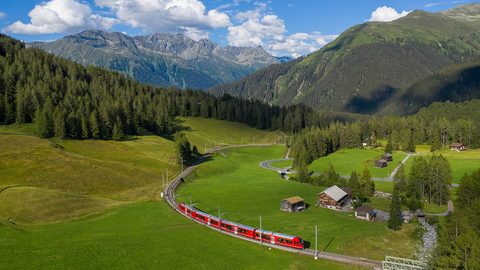
The Swiss Travel Pass covers most trains, buses, and boats, but not mandatory seat reservations on the Glacier Express and Bernina Express, which sell out in
Swiss Travel System Explained and What the Map Oversells
The Swiss Travel Pass covers most trains, buses, and boats, but not mandatory seat reservations on the Glacier Express and Bernina Express, which sell out in
-
 Switzerland Visa Rules for Schengen Travelers and Everyone Else
Switzerland is in Schengen but not the EU. Visa requirements depend on your passport, and the application process involves cantonal immigration offices.
Switzerland Visa Rules for Schengen Travelers and Everyone Else
Switzerland is in Schengen but not the EU. Visa requirements depend on your passport, and the application process involves cantonal immigration offices.
-
 Swiss Francs, Card Payments and Where Cash Still Wins in Switzerland
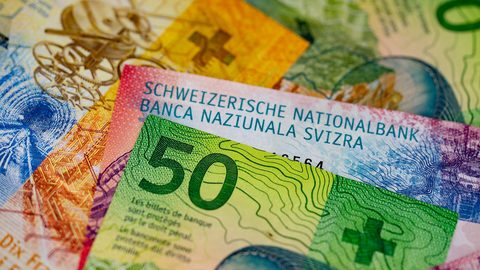
Switzerland uses the Swiss franc, not the euro. Cards work almost everywhere in cities, but mountain huts and small vendors often demand cash.
Swiss Francs, Card Payments and Where Cash Still Wins in Switzerland
Switzerland uses the Swiss franc, not the euro. Cards work almost everywhere in cities, but mountain huts and small vendors often demand cash.
-
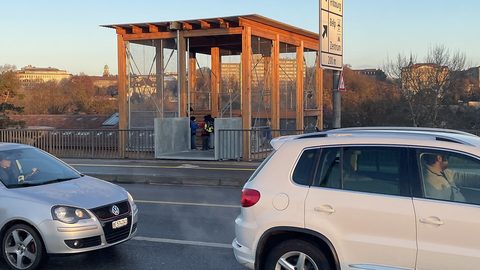 Switzerland Safety Advice Without the Hype
The train from Zurich Airport to Zurich HB takes 10 minutes. A one-way second-class ticket costs a few francs, set by SBB and updated on their website.
Switzerland Safety Advice Without the Hype
The train from Zurich Airport to Zurich HB takes 10 minutes. A one-way second-class ticket costs a few francs, set by SBB and updated on their website.
-
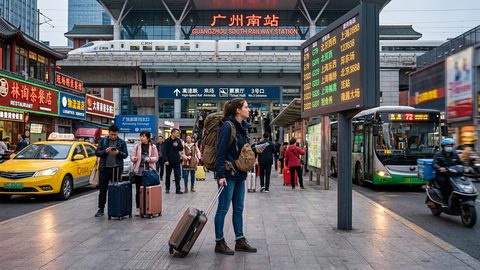 A Ground-Level Logistics Guide to Independent Travel in China
First-time independent travel in China: what you need to know about visas, rail booking, eSIMs, mobile payments, and power adapters.
A Ground-Level Logistics Guide to Independent Travel in China
First-time independent travel in China: what you need to know about visas, rail booking, eSIMs, mobile payments, and power adapters.
-
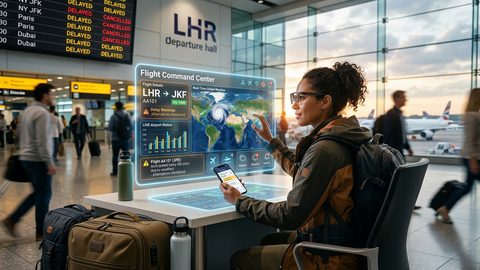 How Solo Travelers Stay Ahead of Flight Delays and Cancellations
How solo travelers can track inbound aircraft, claim rebooking rights, and adjust ground transport when flights go wrong — step by step.
How Solo Travelers Stay Ahead of Flight Delays and Cancellations
How solo travelers can track inbound aircraft, claim rebooking rights, and adjust ground transport when flights go wrong — step by step.
-
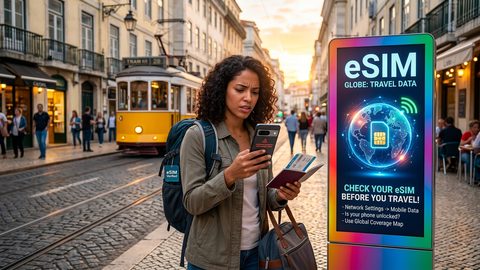 Why Your eSIM Might Not Work Abroad and How to Check Before You Go
Buying an eSIM doesn't guarantee signal abroad. Learn why coverage fails by location and how to verify reach before you commit to a plan.
Why Your eSIM Might Not Work Abroad and How to Check Before You Go
Buying an eSIM doesn't guarantee signal abroad. Learn why coverage fails by location and how to verify reach before you commit to a plan.