Mariahilf: Vienna's sixth district from the Naschmarkt to Mariahilfer Strasse
Mariahilf is Vienna's sixth district, built around the Naschmarkt food market and the long Mariahilfer Strasse shopping strip.
- Flag
-
- ISO code
- AT
- Population
- 31,381
- Currency
- EUR
- Timezone
- Europe/Vienna
Mariahilf: Vienna’s Sixth District from the Naschmarkt to Mariahilfer Strasse
The first thing most visitors do when they pick Mariahilf as a base is check the Naschmarkt hours and find it locked. Sunday closure at Vienna's most famous market catches everyone. The stalls run Monday through Saturday only. A weekend visit without a Saturday arrival leaves you with the architectural shell of the market and none of its produce. That is not a reason to skip Mariahilf. It is a reason to understand what the district actually provides. The real argument for Mariahilf is a dense, loud, high-utility corridor of budget accommodation sitting on three U-Bahn lines, a 20-minute walk from the Ringstrasse and a 10-minute walk from the MuseumsQuartier, at room rates that undercut the Innere Stadt by a measurable margin. You accept street noise and crowds as the trade-off for that location.
The Naschmarkt Vienna Stalls Sunday Problem
Saturday Flea Market Timing
Book the Saturday flea market at the western end of the market if you want the full Naschmarkt experience. Stalls appear along the Wienzeile from early morning and clear by mid-afternoon, selling second-hand goods, antique hardware, and oddments that bear no relation to the produce stalls further east. The fixed food stalls, olive vendors, tea importers, spice stands, operate within the main shed Monday through Saturday, roughly 06:00 to 18:00, with some restaurants serving later. Sunday is dead.
What to Do When the Stalls Are Closed
The solution is to treat the Naschmarkt as a daytime anchor for a Saturday arrival, not as the district's centrepiece. On Sunday, walk the market anyway. The architecture of the late 19th-century market hall, the tiled facade of the Art Nouveau Otto Wagner buildings at the northern edge, and the silence of the Wienzeile give you a different version of the same space. Then cross Linke Wienzeile into the 4th district for Karlskirche, or walk north into the 7th district's Neubau for its independent galleries and younger street culture. The Sunday gap is real. Plan around it.

Mariahilfer Strasse Vienna Shopping: the Main Arteries
Where to Shop
Mariahilfer Strasse is Vienna's largest shopping street, and it is not subtle. A partial pedestrian zone runs between Kirchengasse and Andreasgasse, creating a shared-space corridor of chain stores, department stores, and fast-food outlets that carry none of the independent character of Neubau's small boutiques two blocks north. This is where you buy practical things: shoes, electronics, pharmacy goods, a cheaper rain jacket than the one you packed. Not where you hunt for artisan craft. The section closest to the Ringstrasse carries Zara, H&M, and the usual European retail suspects. The further west you walk toward Westbahnhof, the more discount electronics and mobile phone shops appear.
Where to Eat on Gumpendorfer Strasse
Gumpendorfer Strasse runs parallel one block south and serves a different purpose entirely. The food and drink concentration here is the highest in the district outside the Naschmarkt itself. It is where Mariahilf residents eat. Mid-price Austrian restaurants, sushi places, Vietnamese pho shops, and a handful of traditional Beisl serving Beuschel and Tafelspitz at Innere Stadt prices minus the tourist mark-up. Book Gasthaus Wolf on this street for a genuine Beisl experience: veal lung ragout in cream sauce, served with dumplings, at a table shared with locals who will tut if you cross the road against a red light. Vienna's strict jaywalking culture applies here even on empty roads.
Mariahilf Vienna Budget Hotels: Value with a Noise Trade-Off
Room Selection Matters
Mariahilf's accommodation stock leans hard toward small to mid-size hotels, serviced apartments, and private apartment rentals. The concentration is highest along Mariahilfer Strasse itself and on the side roads between the U3 and U4 lines. A standard double room in a three-star hotel on the main thoroughfare runs roughly 30 to 40 percent below a comparable room in the Innere Stadt. The trade-off is audible. Rooms facing Mariahilfer Strasse or Gumpendorfer Strasse register high noise levels through the evening, with trams running until roughly midnight and street activity resuming well before 06:00. Book a courtyard room on the far side from the lift if the hotel offers one. Request a top-floor unit if it does not.
The Haus des Meeres Effect
Haus des Meeres, the converted World War II flak tower at Fritz-Grünbaum-Platz 1, sits inside the district and draws daytime crowds that spill onto the surrounding streets. The aquarium itself is worth an hour if you have children or a rainy afternoon, but the main reason to know its location is that the streets immediately around it are the busiest in the district. Choose accommodation two or three blocks further west, closer to the U6 station at Gumpendorfer Strasse, for noticeably quieter side roads that still sit within a five-minute walk of a tram or U-Bahn stop.
Vienna Sixth District Transport: Three Lines In, All Directions Out
Which Line to Use
The U-Bahn is the dominant mode in Vienna, and Mariahilf has three lines within its 1.48 square kilometres. U3 runs along Mariahilfer Strasse with stations at Neubaugasse and Zieglergasse. U4 runs along the Wienzeile with stations at Kettenbrückengasse and Pilgramgasse. U6 runs along Gumpendorfer Strasse with a station at Gumpendorfer Straße. Multiple tram lines cross the district along both main arteries. You reach the Innere Stadt in under ten minutes from any of these stops. The MuseumsQuartier is a ten to fifteen minute walk from the district centre. The Ringstrasse is twenty to twenty-five minutes on foot from the same point.
Ticket Rules That Cost You Money
Buy tickets from a station machine, a Tabak-Trafik shop, or the WienMobil app before you board. The critical trip-up for first-time visitors: tickets are not sold on trams or buses. A single ride requires a ticket validated in the machine on the platform or inside the tram before the first stop. Validation is not optional. Inspectors run regular checks, particularly on the U3 and U4 through Mariahilf, and the fine for an unvalidated ticket runs steep. Check the Wiener Linien website for current fares and penalty amounts before you travel. The other mistake new arrivals make is assuming Vienna is a compact walking city. Major sights like Schönbrunn Palace and the Belvedere sit far from each other. A ten-minute U-Bahn ride connects them. Walking between them eats half your morning.

Why Mariahilf Works for a Three-Day Vienna Trip
Evening Dining Options
Vienna demands a minimum of three full days. Less than that forces a brutal trade-off between core imperial sights, the Hofburg Palace, Schönbrunn Palace, the Kunsthistorisches Museum, the Belvedere, and any sense of the city's neighbourhood life. A Mariahilf base solves the timing problem by putting you within a ten-minute U-Bahn ride of all of them while keeping you outside the tourist quiet that descends on the Innere Stadt after 20:00. The district has its own evening life along Gumpendorfer Strasse and the streets around the Naschmarkt. You can return from a day of formal art museums and imperial apartments and still find a restaurant serving dinner past 22:00. The Innere Stadt restaurants close by 22:00 on weeknights. Mariahilf's food corridor does not.
Walking Radius to Major Sights
The green space ratio in Mariahilf is low. Esterházy Park, with its children's playground and open lawn, is the largest green area in the district. It is not a reason to choose the district. The trade-off for that density is the ability to walk to the MuseumsQuartier in ten minutes, the Naschmarkt in five, and the Theater an der Wien on the border with the 4th district in under fifteen. The Raimund Theater for musical theatre sits on Wallgasse, inside the district itself. The Secession building with its gold-leaf dome and Beethoven Frieze is a twenty-minute walk east along the Wienzeile. Everything a visitor who prioritises culture needs is within a comfortable radius, and the budget hotels absorb the demand that the Innere Stadt's expensive rooms cannot.
The Practical Details You Need Before You Arrive
Cash, Coins, and Connectivity
Public toilets in Vienna are sparse and cost €0.50 to €1, requiring exact coins or a contactless payment that sometimes fails. Keep a small stash of coins on you for this purpose. Many museums and shops in Mariahilf still operate on a cash-first basis. A "cards accepted" sign does not guarantee Visa or Mastercard. Carry enough cash for a day's meals and admissions. The free city WiFi network, Wien.at Public WLAN, covers many squares but requires re-registration frequently. The WienMobil app handles both ticket purchase and route planning and is the single essential digital tool for getting around the district.
Peak season runs April through May and September through October for mild weather, with December drawing crowds for the Christmas markets. July and August bring heat, peak tourist crowds, and the most daylight, but also un-air-conditioned museum queues. Avoid major trade fair periods by checking the Messe Wien calendar, which spikes hotel prices across the city. December weekends see the Innere Stadt Christmas markets packed to immobility, though Mariahilf's own residential lanes remain less affected. The character of the district is dense inner-city with a mix of shopping thoroughfares, residential side roads, and a concentrated hospitality corridor. It is not quiet, not green, and not romantic. It is functional, connected, and priced accordingly.
What Mariahilf Does Not Offer and Why That Matters
Neighbouring Districts Compared
Vienna is grand but not warm. Its beauty is formal and orderly, and visitors often find the famed Gemütlichkeit exists in specific pockets rather than as a quality that pervades the whole city. Mariahilf is not one of those pockets. The district is commercial, loud along its main arteries, and lacks the tucked-away courtyard restaurants that define the 8th district's Josefstadt or the student-tinged scale of Wieden. Do not come here expecting a romantic side-street discovery every block. Come here expecting a functional base that lets you spend your money on what matters: the imperial core, the art museums, the concert halls, and the efficient infrastructure that makes Vienna one of the best European cities for culture-first travellers, couples seeking a polished romantic break, solo travellers valuing safety, and older travellers who appreciate flat terrain and excellent public transport.
The district's neighbouring areas clarify its position. Margareten to the south, across the Wienzeile, is quieter, more residential, and less frequented by visitors. Neubau to the north, across Mariahilfer Strasse, has more independent boutiques and a younger arts-oriented reputation. Rudolfsheim-Fünfhaus to the west is more multicultural and lower-cost. Mariahilf sits in the middle: more central than Margareten, more commercial than Neubau, more gentrified than Rudolfsheim-Fünfhaus. Its population density of 21,004 people per square kilometre in 2024 is among the highest in the city on a land area of just 1.48 square kilometres. That density is the source of both its utility and its noise.
Your Next Saturday in Mariahilf
A Saturday to Sunday Itinerary
Arrive on Friday evening. Check into a courtyard room on a side street off Gumpendorfer Strasse. Saturday morning, walk to the western end of the Naschmarkt for the flea market before the crowds peak. Buy a coffee at one of the market's standing counters, browse the stalls until early afternoon, then walk west along the Wienzeile to the Theater an der Wien to check its opera programme for the evening. Saturday night means dinner on Gumpendorfer Strasse at a Beisl serving Frittaten Suppe and Tafelspitz, followed by a walk through the quietened Naschmarkt sheds after the restaurants close. Sunday morning, the market is shuttered. Walk instead to the MuseumsQuartier, enter the Kunsthistorisches Museum before the queue forms, and end the afternoon at Café Central for a Wiener Eiskaffee with vanilla ice cream in cold coffee. Sunday evening, cross back into Mariahilf for a standing supper at a Würstelstand. Order the Käsekrainer with sharp mustard and a beer. That is the Mariahilf rhythm. Accept the noise. Use the location. Book courtyardside.
Other areas in Vienna
Common Questions
Is the Naschmarkt open on Sunday?
No. The Naschmarkt operates Monday through Saturday. Sunday is a dead day for the stalls, though the architecture and some surrounding restaurants remain accessible.
How far is Mariahilf from the city centre?
Walking time to the Ringstrasse from the district centre is 20 to 25 minutes. The U-Bahn cuts that to under 10 minutes from any of the three lines that cross the district.
Is Mariahilf safe at night?
Yes. Vienna is one of the safest cities in Europe. Mariahilf's main streets are well-lit and busy until late. Side streets are quieter but still safe. The standard caution about late-night trams applies.
What is the best way to get from Vienna Airport to Mariahilf?
Take the ÖBB Railjet to Hauptbahnhof and transfer to the U1 or U3. Check ÖBB for current fares; the journey takes roughly 15 minutes. The City Airport Train to Wien Mitte is faster but pricier. A taxi costs around €45 to €55 and takes 20 to 30 minutes. Confirm all fares on the operator's website before you travel.
Is Mariahilf better than Neubau for accommodation?
Mariahilf has a higher concentration of chain retail and budget hotels. Neubau has more independent boutiques, galleries, and a younger arts-oriented reputation. For price, Mariahilf wins. For character, Neubau wins.
What is the noise level like in Mariahilf?
High along Mariahilfer Strasse and Gumpendorfer Strasse. Moderate to low in side streets. Book a courtyard room or a top-floor unit facing away from the main roads to reduce the issue.
Can I walk from Mariahilf to Schönbrunn Palace?
Technically yes, but it takes roughly 40 minutes. Take the U3 from Neubaugasse to Westbahnhof and switch to the U6 or a tram. The walk is not the time-efficient choice.
Read next
-
 Vienna Hotels What the Price Bands Actually Get You
Vienna hotel price bands deliver distinctly different experiences. Here is what each band actually gets you, from building type to seasonal pricing patterns.
Vienna Hotels What the Price Bands Actually Get You
Vienna hotel price bands deliver distinctly different experiences. Here is what each band actually gets you, from building type to seasonal pricing patterns.
-
 Where to Stay in Vienna District by District and What Each Costs You
Where to stay in Vienna depends on what you are willing to trade off. Each district costs you something different in time, money, and atmosphere.
Where to Stay in Vienna District by District and What Each Costs You
Where to stay in Vienna depends on what you are willing to trade off. Each district costs you something different in time, money, and atmosphere.
-
 Flying into Vienna airport and getting to the city without a mistake
Vienna airport offers four ways into the city, and the wrong choice can cost you time or money.
Flying into Vienna airport and getting to the city without a mistake
Vienna airport offers four ways into the city, and the wrong choice can cost you time or money.
-
 What to Do in Vienna Ordered by Whether It Is Worth the Time
Three full days is the minimum to see the core sights. Less forces a brutal trade-off between the imperial palaces and any sense of Vienna's neighbourhood lif
What to Do in Vienna Ordered by Whether It Is Worth the Time
Three full days is the minimum to see the core sights. Less forces a brutal trade-off between the imperial palaces and any sense of Vienna's neighbourhood lif
-
 When to Visit Vienna and What Each Season Does to the City
At 16:30 in mid-December, the Rathausplatz Christmas market is already shoulder to shoulder. You cannot move freely; you shuffle.
When to Visit Vienna and What Each Season Does to the City
At 16:30 in mid-December, the Rathausplatz Christmas market is already shoulder to shoulder. You cannot move freely; you shuffle.
-
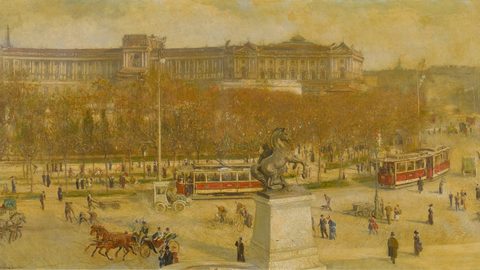 Getting Around Vienna Without Wasting Half Your Trip on Foot
Most visitors waste the first hour of their Vienna trip standing on a tram platform, ticketless, watching the doors close.
Getting Around Vienna Without Wasting Half Your Trip on Foot
Most visitors waste the first hour of their Vienna trip standing on a tram platform, ticketless, watching the doors close.
-
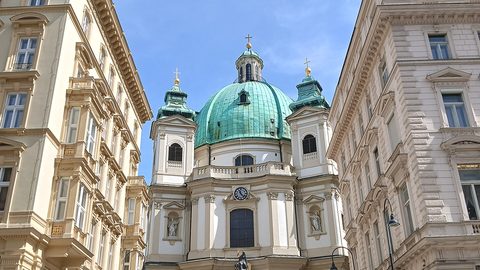 Innere Stadt
Vienna's first district holds the cathedral, the palace, and most of the postcard views inside the Ringstrasse.
Innere Stadt
Vienna's first district holds the cathedral, the palace, and most of the postcard views inside the Ringstrasse.
-
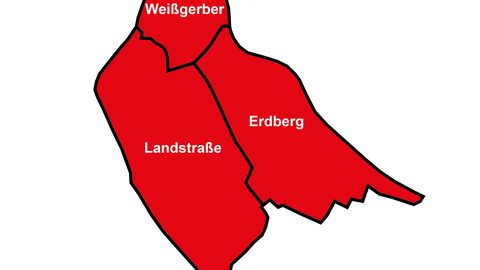 Landstrasse
 is Vienna's third district, home to the Belvedere palace and Klimt's The Kiss, the embassy quarter, and Wien Mitte station where the airport train
Landstrasse
Landstrasse is Vienna's third district, home to the Belvedere palace and Klimt's The Kiss, the embassy quarter, and Wien Mitte station where the airport train
-
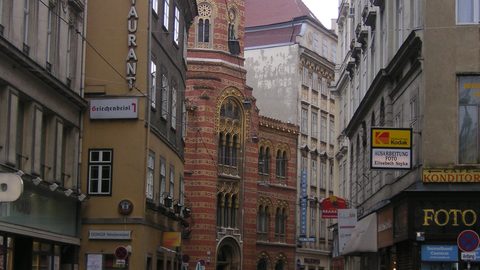 Leopoldstadt
 is Vienna's second district, home to the vast Prater park and the edgy Karmelitermarkt. It is the fastest-changing quarter in the city, and it feels it.
Leopoldstadt
Leopoldstadt is Vienna's second district, home to the vast Prater park and the edgy Karmelitermarkt. It is the fastest-changing quarter in the city, and it feels it.