What You Notice First When Planning a Trip to the Netherlands
The Netherlands is a compact, water-engineered country where bicycles rule, weather shifts without warning, and directness is a cultural norm, not rudeness.
- Flag
-
- ISO code
- NL
- Population
- 17,231,017
- Currency
- EUR
- Dial code
- +31
The Netherlands for Slow Travellers Who Notice the Rules Are Different Here
The bicycle is not a quaint detail in the Netherlands. It is the dominant species in a transport hierarchy that pedestrians misunderstand at their peril. 37,000 km of dedicated cycle paths, a modal share of 28% of all trips nationwide, and priority rules that give cyclists absolute right of way over motor vehicles at a raised Fietsrotonde. That is the system you enter when planning a trip here, and it is the organising metaphor for how everything works: rules-based, efficient, and unforgiving if you ignore the code. Arrive expecting a relaxed pastry tour and you will be flattened by an e-bike, fined by a train conductor for failing to check in on a separate card reader when transferring between operators, and left standing outside a museum whose timed tickets sold out six weeks ago. Arrive understanding the logic, and the Netherlands rewards you with a compact, water-engineered landscape that feels like a walkable, well-run village stretched across 12 provinces.
- Country area: 41,543 km², smaller than Switzerland, yet home to 18.2 million people
- Minimum days: 7, enough for a two-city split (e.g. Amsterdam plus Utrecht or Rotterdam) with one day trip
- Peak season: April, May (tulip peak, King's Day on 27 April) and July, August (warmest weather, highest hotel rates)
- Avoid window: Late Dec, early Jan outside cities; King's Day weekend if you dislike crowds; major trade fairs in March and September spike hotel prices
- Arrival airport: Amsterdam Schiphol (AMS), direct trains to Amsterdam Centraal (15 min, €5-6), Rotterdam Centraal (25 min, €11), Utrecht Centraal (30 min, €10)
- Rail network: NS operates the dominant intercity service; use OVpay with a debit or credit card to check in and out
- Bicycle network: Approx. 37,000 km of dedicated cycle paths; 28% modal share nationwide
- Tap water: Safe to drink nationwide
What the Netherlands Actually Feels Like Beyond the Postcard Images
The lived experience of moving through this landscape is constant negotiation with engineered order. The country is a delta engineered against the sea, and that engineering extends to how people move. You will board a train that arrives within 30 seconds of its scheduled departure. You will step onto a cycle path, hear a bell, and be expected to step aside immediately for an e-bike moving at 25 km/h in silence. The wind will surprise you. Even in July the force can knock a novice cyclist sideways, especially in coastal provinces and across bridges. The weather itself is more capricious than the postcards suggest: sudden rain and wind even in summer, an even rainfall distribution across all months, and no dry season.
Dutch Directness And How To Read It
Then there is the social climate. The famous directness of Dutch social interaction feels abrupt when you are on the receiving end. A shopkeeper will tell you the museum is closed without softening it. A stranger will point at your rental bike and say your lock is insufficient. This is not rudeness. It is the same efficiency that makes the railway work. The Netherlands is for slow travellers who enjoy cycling between small historic towns, who buy timed tickets weeks ahead, and who find pleasure in a system that functions because everyone follows it.
Why Seven Days Is The Floor
The minimal sensible stay is 7 days. That allows a two-city split, say the capital plus Rotterdam or Utrecht, with one day trip. Stay fewer days and you reduce the country to a single urban experience, which is the common mistake: booking accommodation in the main city and attempting to day-trip the entire country from it, wasting hours in transit and missing the distinct character of regions like Limburg, Friesland, and Zeeland.

Netherlands Travel Guide: What to Book, When to Move, How to Pay
This country runs on reservations. Many museums and restaurants require advance online booking even in smaller cities; walk-up culture is dying. The Anne Frank House releases tickets six weeks ahead and they sell out instantly. The Van Gogh Museum and Rijksmuseum require online booking. Keukenhof Gardens, open mid-March to mid-May, sells timed slots. The Efteling theme park, Europe's third busiest, needs tickets booked online. If you arrive without a slot for any of these, you will not get in.
Carry a debit or credit card with tap-to-pay. Cash is increasingly refused. Many businesses accept only Maestro, V PAY, or Mastercard and Visa with tap functionality; standard cards without it are sometimes rejected. Public toilets are scarce and paid, €0.50-1.00, even in train stations. Carry coins or a card you can tap.
Shops and supermarkets close by 18:00 on Saturdays and are mostly shut all day Sunday outside major city centres. Plan your grocery shopping for Friday or Saturday morning. The 9292 app is essential for integrated public transport planning across all operators. It understands the entire network, from NS trains to regional buses to waterbuses. The rail network itself is a single integrated system, which means a countrywide disruption halts movement across multiple provinces simultaneously. The main friction for visitors on the trains is failing to check in on a separate card reader when transferring between operators, say NS to Arriva, which can result in a fine or incorrect charge.
When The Netherlands Is Too Crowded To Enjoy
Peak season runs July and August, when school holidays in the Netherlands and neighbouring countries push accommodation prices to their highest and fill coastal resorts and the capital with visitors. April sees the tulip fields peak and King's Day on 27 April draws massive crowds that disrupt all public transport. The avoid window includes late December to early January outside the cities, when many attractions in smaller towns close for winter. Major trade fairs at Amsterdam RAI and Utrecht Jaarbeurs spike hotel prices unpredictably, especially in March and September. If you are on a tight budget, these are the dates that break it.
| Region | Character | Minimum Stay | Best For |
|---|---|---|---|
| Randstad (North Holland, South Holland, Utrecht, Flevoland) | Dense urban ring; cities 15–45 minutes apart by train; cycling infrastructure most intense; international gateways | 3 days | First time visitors wanting museums, canals, efficient connections |
| The North (Groningen, Friesland, Drenthe) | Lower population density; Wadden Sea islands; Frisian language and distinct identity; dark sky areas; cycling distances longer between villages | 3–4 days | Cyclists, sailors, travellers seeking quiet and the Frisian language area |
| The East (Overijssel, Gelderland) | Forested ridges of the Veluwe; Hanseatic towns along IJssel river; large inland water bodies; mixed cycling and walking terrain | 3–4 days | Hikers, art lovers at Kröller Müller Museum, family cycling trips |
| The South (North Brabant, Limburg) | Catholic cultural imprint; hill country in South Limburg with highest point 322.4 m at Vaalserberg; car centric outside cities; design clusters in Eindhoven | 3–4 days | Architecture enthusiasts, food and wine travellers, hikers wanting the only hills |
| The Delta (Zeeland, South Holland islands) | Storm surge barrier system (Delta Works); dune coasts; strong wind for water sports; quieter beaches; car or bicycle touring across dams and bridges | 2–3 days | Beach lovers, engineering buffs, seafood eaters wanting Zeeland mussels |
Visiting the Netherlands First Time: the Six Things That Surprise Everyone
First-time visitors consistently underestimate six things. One: the cost of accommodation relative to the modest size of cities. You pay capital-city prices for a room in a provincial town. Two: the force of wind when cycling. Three: that a countrywide rail disruption stops movement across multiple provinces simultaneously because the network is a single integrated system. Four: the speed and silence of e-bikes on cycle paths, and the expectation that pedestrians step aside immediately. A pedestrian walking on a red cycle path will get shouted at or hit. Five: the scarcity of public toilets outside major train stations and museums. Six: that many shops and services in smaller towns close for a full day on Sunday or Monday. Plan for all six and the Netherlands becomes easy.
Getting Around Without A Car
The national railway NS is the dominant intercity mode. Trains on main intercity corridors run every 10-15 minutes during daytime. Regional lines run every 30 minutes. Night trains (Nachtnet) connect Randstad cities on Friday and Saturday nights roughly hourly. The OVpay system now accepts Visa, Mastercard and Maestro debit and credit cards for check-in and check-out on most trains, trams and buses. Download the 9292 app before you arrive. It integrates all operators and tells you exactly which platform, which transfer, and which fare applies. Public Wi-Fi on NS trains is free but requires a one-time registration. The Netherlands has near-universal 4G and 5G coverage, including rural areas. eSIMs from uPhone work without a hitch.
What To Eat And Where To Find It
Dutch food is functional, not ornamental. Haring, raw herring with chopped onion and pickles, is eaten by lowering it into your mouth. Stroopwafels are best fresh from a street market stall, not from a supermarket packet. Bitterballen, deep-fried beef ragout balls, are the standard bar snack and come with mustard. Poffertjes are small fluffy buckwheat pancakes with butter and powdered sugar. Kibbeling is battered and deep-fried white fish chunks with garlic or tartar sauce. Oliebollen, Dutch doughnuts with raisins, appear at street kiosks from November to January. Zeeland mussels are in season from July to April, steamed with white wine and vegetables. Farmstead Gouda and Edam are best bought at a kaasmarkt or directly from a boerderij. Every bar serves bitterballen. Not every restaurant serves good Dutch food. Pick the market stalls and the specialist herring carts.
.jpg)
The Netherlands is for Slow Travellers, Not Spontaneous Road Trippers
The Netherlands suits slow travellers who enjoy cycling between small historic towns, art and design lovers chasing Vermeer and Rembrandt, first-time Europe visitors wanting an English-friendly entry point, families seeking safe and manageable cities with interactive museums, and tulip and flower-garden enthusiasts. English proficiency is exceptionally high. The train system is legible. The bicycle infrastructure is the best in the world. You can move efficiently between regions without a car.
The Netherlands is not for travellers seeking dramatic wilderness, mountains or untamed nature. It is not for those on a tight budget: accommodation and dining are consistently expensive. It is not for nightlife-focused visitors looking for a hedonistic late-night party scene outside the capital. It is not for people who prefer spontaneous unplanned road trips over structured ticketed itineraries. If you want to wake up and decide where to go that day, pick a different country. If you want a system that works because you respect it, the Netherlands will reward every minute of your planning.
Common Questions
How many days do I need for a first visit to the Netherlands?
7 days minimum. This allows a two-city split, for example Amsterdam plus Utrecht or Rotterdam, with one day trip. Fewer days reduces the country to a single urban experience.
Do I need to book museum tickets in advance?
Yes. The Anne Frank House releases tickets six weeks ahead and they sell out instantly. The Van Gogh Museum and Rijksmuseum require online booking. Many smaller museums also require timed slots. Walk-up culture is dying.
Can I use cash everywhere?
No. Cash is increasingly refused. Many businesses accept only Maestro, V PAY, or Mastercard and Visa with tap-to-pay. Some accept no cash at all. Carry a debit or credit card you can tap.
Is it safe to drink tap water?
Yes. Tap water is safe to drink nationwide. You do not need to buy bottled water.
What is the most common mistake visitors make?
Booking accommodation only in the capital and attempting to day-trip the entire country from it. This wastes hours in transit and misses the distinct character of regions like Limburg, Friesland, and Zeeland.
How do I pay for trains and buses?
Use OVpay with a debit or credit card, or mobile wallet. You must check in at the start of your journey and check out at the end. Failing to check in on a separate card reader when transferring between operators can result in a fine.
What should I pack for the weather?
Pack for all seasons. The weather is capricious with sudden rain and wind even in summer. The prevailing wind is south-westerly. Carry a waterproof jacket and layers. Daylight ranges from 7 hours 40 minutes in late December to 16 hours 50 minutes in late June.
Read next
-
 Staying Connected in The Netherlands With eSIM, Local SIM or Roaming
Compare eSIM, local SIM, and roaming options for The Netherlands, where 5G coverage is near-universal but NS train Wi-Fi has limits.
Staying Connected in The Netherlands With eSIM, Local SIM or Roaming
Compare eSIM, local SIM, and roaming options for The Netherlands, where 5G coverage is near-universal but NS train Wi-Fi has limits.
-
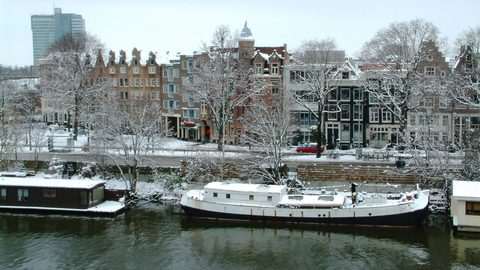 When to Visit the Netherlands and What Each Season Actually Does to Your Trip
April brings tulips and King's Day crowds. July and August are warmest but rainy. Winter closes many small-town attractions. Choose your season by the trade-offs.
When to Visit the Netherlands and What Each Season Actually Does to Your Trip
April brings tulips and King's Day crowds. July and August are warmest but rainy. Winter closes many small-town attractions. Choose your season by the trade-offs.
-
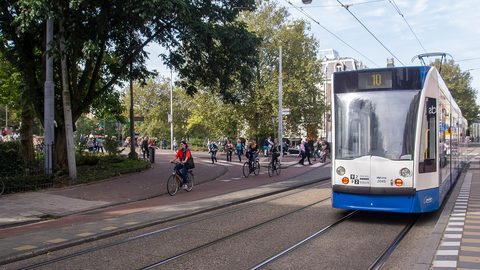 Moving Around the Netherlands by Train, Bike, and the Gaps the Map Oversells
Dutch trains are excellent, but checking in on the wrong card reader when changing operators can get you fined. Here is how the system works.
Moving Around the Netherlands by Train, Bike, and the Gaps the Map Oversells
Dutch trains are excellent, but checking in on the wrong card reader when changing operators can get you fined. Here is how the system works.
-
 Who Needs a Visa for the Netherlands and How the Application Actually Works
Whether you need a visa for the Netherlands depends on your passport. Here is the Schengen application process, required documents, and realistic timelines.
Who Needs a Visa for the Netherlands and How the Application Actually Works
Whether you need a visa for the Netherlands depends on your passport. Here is the Schengen application process, required documents, and realistic timelines.
-
 Paying for Things in the Netherlands Without Your Card Getting Declined
Many Dutch shops refuse Visa and Mastercard. Here is why, where cards work, where cash still matters, and how OVpay changes transport payments.
Paying for Things in the Netherlands Without Your Card Getting Declined
Many Dutch shops refuse Visa and Mastercard. Here is why, where cards work, where cash still matters, and how OVpay changes transport payments.
-
 Reading Safety Advice About the Netherlands Without Being Misled by It
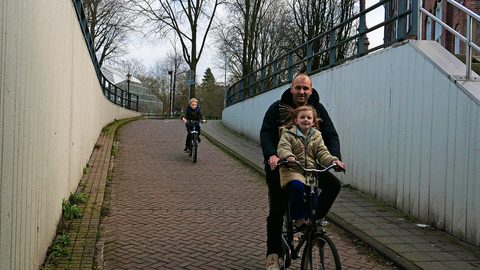
The Netherlands is safe by every statistic, but bicycle-path collisions and pickpocketing on Amsterdam trams are the real visitor risks to understand.
Reading Safety Advice About the Netherlands Without Being Misled by It
The Netherlands is safe by every statistic, but bicycle-path collisions and pickpocketing on Amsterdam trams are the real visitor risks to understand.
-
 A Ground-Level Logistics Guide to Independent Travel in China
First-time independent travel in China: what you need to know about visas, rail booking, eSIMs, mobile payments, and power adapters.
A Ground-Level Logistics Guide to Independent Travel in China
First-time independent travel in China: what you need to know about visas, rail booking, eSIMs, mobile payments, and power adapters.
-
 How Solo Travelers Stay Ahead of Flight Delays and Cancellations
How solo travelers can track inbound aircraft, claim rebooking rights, and adjust ground transport when flights go wrong — step by step.
How Solo Travelers Stay Ahead of Flight Delays and Cancellations
How solo travelers can track inbound aircraft, claim rebooking rights, and adjust ground transport when flights go wrong — step by step.
-
 Why Your eSIM Might Not Work Abroad and How to Check Before You Go
Buying an eSIM doesn't guarantee signal abroad. Learn why coverage fails by location and how to verify reach before you commit to a plan.
Why Your eSIM Might Not Work Abroad and How to Check Before You Go
Buying an eSIM doesn't guarantee signal abroad. Learn why coverage fails by location and how to verify reach before you commit to a plan.