Landstrasse: Vienna's third district of palaces, diplomats, and transit
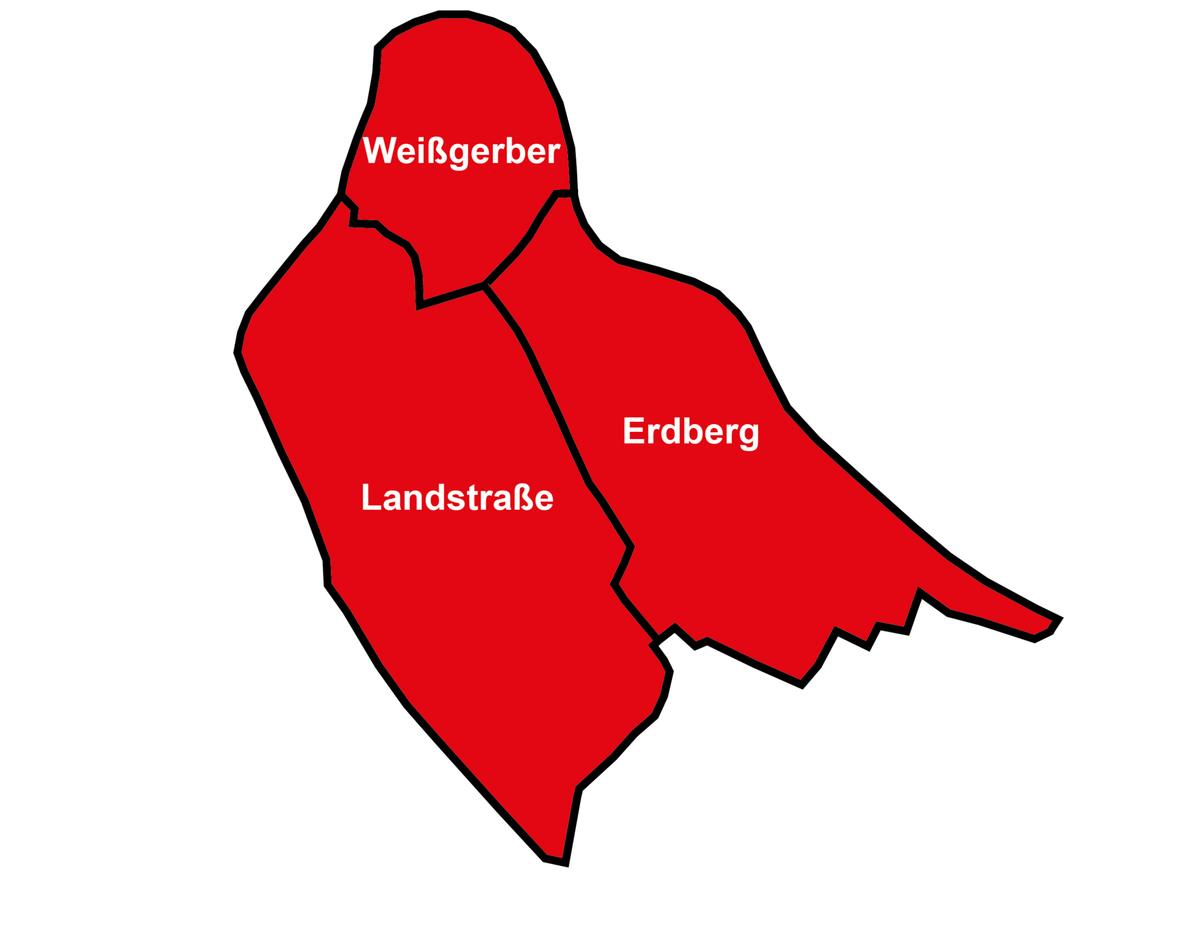
Landstrasse is Vienna's third district, home to the Belvedere palace and Klimt's The Kiss, the embassy quarter, and Wien Mitte station where the airport train
- Flag
-

- ISO code
- AT
Landstrasse: Vienna’s Third District of Palaces, Diplomats, and Transit
You land at Vienna International Airport, clear customs, and face a choice. The City Airport Train gets you to Wien Mitte in 16 minutes. The S-Bahn S7 takes longer and costs less. Pick the CAT and you step out into Landstrasse. That single fact frames this district as Vienna's arrival hall, but Landstrasse is more than a transit corridor. It is a stately residential quarter holding two of the city's essential experiences at opposite ends of a half-hour stroll. At the southern edge sits the Belvedere with Klimt's 'The Kiss'. Through the middle runs the diplomatic quarter, a grid of broad avenues lined with embassy buildings. At the northern edge, Wien Mitte station connects you to the airport, the historic core, and the rest of the city. Grasp that geography. It is the difference between treating Landstrasse as a place to sleep through and using it as a base that puts you inside the city's calm, formal dignity rather than outside it.
Belvedere Palace Vienna Landstrasse: Klimt, the Kiss, and the Queue Strategy
The Upper Belvedere sits inside Landstrasse, not on its border. You walk to it from the embassy quarter, from the S-Bahn stop at Quartier Belvedere, or from the residential streets south of Rennweg. The palace holds the world's most recognisable art nouveau painting. The queue for it snakes along the parterre on peak season mornings. Book your timed entry online before you arrive. Arrive by 08:45 for a 09:00 slot and you clear the rope line before the 10:30 tour groups land. The permanent collection goes far beyond Klimt. The nineteenth-century Austrian rooms in the upper palace hold Schiele and Kokoschka. The lower palace runs temporary exhibitions that rotate every few months. Allow two hours for the upper palace alone.
Why The Lower Palace Matters Less On A Short Trip
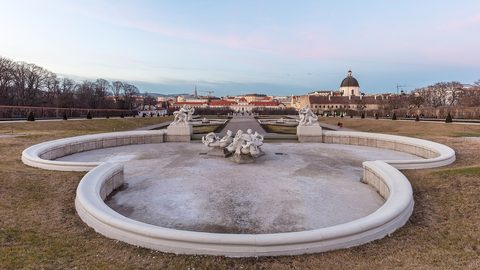
The Lower Belvedere and the Orangery host the rotating shows. If you have only one day for the district, skip them. Spend the saved time walking the formal gardens. The garden axis runs uphill from the lower palace to the upper. The view back toward the city from the upper terrace shows the baroque order that defines how Vienna arranges space. The hedge geometry is the point. Stand there for two minutes and you understand why Vienna feels formal rather than warm.

Wien Mitte Station Landstrasse: the Airport Connection and the Catch
Wien Mitte station sits at the northern edge of the district, inside the second district boundary at the platform level but accessible from Landstrasser Hauptstrasse on the third district side. The City Airport Train departs every 30 minutes and covers the 19 kilometres to the airport in 16 minutes. A single ticket costs around €15, set by the CAT operator; check their site for the current fare. That is the fast option. Take it if you are on a tight schedule or carrying luggage that makes the S-Bahn a hassle. The alternative is the S-Bahn S7 from the same station, which costs roughly €4.50, set by Wiener Linien, and takes longer because it makes intermediate stops. Both trains serve the same terminal. The CAT sells a premium on speed and a dedicated seat. Buy your ticket from the machine at the station, not on the train: tickets are not sold on board. The Wien Mobil app covers both options and lets you validate a digital ticket before you board.
The One Mistake Travellers Make At This Station
Wien Mitte is also a major S-Bahn junction on the Stammstrecke corridor, connecting to Hauptbahnhof in one stop, Praterstern in two, and the northern suburbs. If you arrive at the station and need to go to the Belvedere, do not walk. Take the S-Bahn one stop south to Rennweg or Quartier Belvedere. The walk along Landstrasser Hauptstrasse takes 25 minutes and crosses the railway corridor, which creates a physical barrier and a noise shadow that makes the route unpleasant. Tram lines 1 and 18 run the same route from Wien Mitte to the Belvedere stop in eight minutes.
Vienna Third District Embassies: Walking Through the Diplomatic Quarter
Landstrasse holds one of Vienna's highest concentrations of embassies, concentrated along Metternichgasse, Prinz Eugen Strasse, and Jacquingasse. The buildings are not open to the public. The quarter is worth a walk for its architecture and its quiet. The streets here are broad, lined with 19th-century perimeter blocks in cream and ochre stucco. Traffic is light because the diplomatic presence discourages through routes. Walk from the Belvedere gardens north along Prinz Eugen Strasse. You will pass the embassy of Germany, the embassy of Switzerland, and several smaller missions before you reach the residential grid around Fasangasse. The side streets between Rennweg and Ungargasse are where the district shows its character: older Viennese residents walking small dogs, young professionals heading to the U3 at Rochusgasse, the occasional official car pulling into a gated courtyard. It is quiet. It is orderly. It is not warm in the way a neighbourhood market in Naples is warm, but it is safe, clean, and walkable.
Landstrasse Vienna Residential Area: Where to Stay and What to Expect
The residential character of the district is its strongest argument as a visitor base. Landstrasse lacks the dense nightlife of Mariahilf or Neubau. It has no pedestrianised medieval core like the Innere Stadt. What it has is flat terrain, clean pavements, excellent public transport, and a ten per cent green space ratio that includes the Belvedere gardens, Arenbergpark, Schweizergarten, and the Botanical Garden of the University of Vienna. The building stock mixes 19th-century perimeter blocks, post-war infill, and contemporary residential developments around the railway corridor. The dominant street pattern runs along radial arterial roads like Landstrasser Hauptstrasse, Rennweg, and Ungargasse, with gridded side streets between them. The noise profile is elevated along those arterials and the railway corridor. It drops sharply in the side streets around Botanischer Garten and Fasangasse.
Choosing Your Accommodation Zone
Overnight accommodation in the district breaks into three bands. The hotels near Wien Mitte cater to business travellers and transit passengers; expect higher rates during Messe Wien trade fair periods, which spike prices across the district. The mid-range aparthotels along Landstrasser Hauptstrasse suit couples and solo travellers who want kitchen facilities and a residential feel. The boutique pensions in the side streets around Rennweg offer quieter rooms but require a walk to the U-Bahn. No large hostel clusters exist in the district. If you are a solo traveller valuing safety and efficient infrastructure, or an older traveller who appreciates flat terrain and clean streets, Landstrasse works better than the Innere Stadt. You pay less for more space and you sleep in silence. If you are a party-centric backpacker on a shoestring budget, stay in Margareten or Neubau. The nearest multiplex cinema is at Wien Mitte, just inside the second district boundary. The nearest indoor swimming pool is Amalienbad in the tenth district, a 15-minute U-Bahn ride away.
.jpg)
Getting Around Landstrasse: U-Bahn, Trams, and the Ticket Trap
The U-Bahn lines U3 and U4 serve the district, with stops at Landstrasse, Rochusgasse, Kardinal-Nagl-Platz, and Schlachthausgasse. The S-Bahn stops at Wien Mitte, Rennweg, and Quartier Belvedere. Tram lines 1, 18, 71, O, and D run the length of the district. The single critical trip-up: tickets are not sold on trams or buses. You must buy from a station machine, a Tabak-Trafik shop, or the Wien Mobil app before stepping aboard. The city's jaywalking culture is strict. Locals will glare or tut if you cross against a red pedestrian light, even on an empty street. Vienna is not a compact walking city. The Innere Stadt is walkable, but the Belvedere is a 25-minute walk from Stephansdom, and the walk from the Belvedere to the Prater takes half an hour. Use the U-Bahn. A ride costs the same single fare as a tram, and the U3 connects Landstrasse to the centre in four minutes.
Eating in Landstrasse: Beisl, Market, and the Wine Bar Shift
The restaurant concentration centres on Rochusmarkt, the district's permanent outdoor market with food stalls, florists, and prepared food stands. It operates weekdays and Saturdays, with a cluster of cafes and restaurants on the surrounding streets. The cuisine types run from traditional Viennese Beisl to Italian, Japanese, Vietnamese, and Levantine, plus a growing number of third-wave coffee and natural wine bars. For a classic Viennese meal, order Tafelspitz at a Gasthaus near the market, or a plate of Beuschel at a traditional Beisl. For a standing-only snack, Trzesniewski open-faced finger sandwiches are available at branches near Wien Mitte. For a late-night sausage, the nearest reliable Wurstelstand is at Bitzinger by the Albertina in the first district, a 15-minute walk. Restaurants in the district close by 22:00 on weeknights. Late dining options shrink dramatically after that hour. Budget for cash. Many smaller restaurants still operate on a cash-first basis, and a 'cards accepted' sign does not guarantee Visa or Mastercard.
Other areas in Vienna
Common Questions
How far is the Belvedere from Wien Mitte station?
The Upper Belvedere is 2 kilometres south of Wien Mitte station. The walk takes 25 minutes along Landstrasser Hauptstrasse, but the route crosses the railway corridor. Take the S-Bahn one stop to Quartier Belvedere or Rennweg, or ride tram 1 or 18 to the Belvedere stop. The journey takes 8 minutes.
Which is better for the airport: the CAT or the S-Bahn from Wien Mitte?
The City Airport Train costs around €15, set by the CAT operator, and runs non-stop in 16 minutes. The S-Bahn S7 costs roughly €4.50, set by Wiener Linien, and takes longer with intermediate stops. If you are on a tight schedule or carrying heavy luggage, pay for the CAT. If you are budget-conscious and have time, take the S-Bahn. Both trains depart from the same station.
Is Landstrasse a good base for seeing Vienna's main sights?
Yes, if you prioritise quiet accommodation and fast transit over being in the middle of the pedestrian zone. The U3 connects Landstrasse to Stephansplatz in 4 minutes. The walk to the Belvedere is under 10 minutes from most parts of the district. The Innere Stadt is a 15 to 20-minute walk from the Rochusmarkt area.
Can you walk from the Belvedere to Hundertwasserhaus?
Yes. The route is approximately 1.5 kilometres through residential side streets and the diplomatic quarter. It takes about 20 minutes and passes the embassy buildings along Metternichgasse. The Hundertwasserhaus is at the corner of Kegelgasse and Lowengasse, inside the district.
Why are there flak towers in Arenbergpark?
The two World War II anti-aircraft towers, a Leitturm and a Gefechtsturm, were built in 1943 to defend Vienna from air raids. They stand in the public park today. One is used for art storage. The other occasionally hosts exhibitions, but access status changes. Check the Wien Museum website for the current opening schedule.
Read next
-
 Vienna Hotels What the Price Bands Actually Get You
Vienna hotel price bands deliver distinctly different experiences. Here is what each band actually gets you, from building type to seasonal pricing patterns.
Vienna Hotels What the Price Bands Actually Get You
Vienna hotel price bands deliver distinctly different experiences. Here is what each band actually gets you, from building type to seasonal pricing patterns.
-
 Where to Stay in Vienna District by District and What Each Costs You
Where to stay in Vienna depends on what you are willing to trade off. Each district costs you something different in time, money, and atmosphere.
Where to Stay in Vienna District by District and What Each Costs You
Where to stay in Vienna depends on what you are willing to trade off. Each district costs you something different in time, money, and atmosphere.
-
 Flying into Vienna airport and getting to the city without a mistake
Vienna airport offers four ways into the city, and the wrong choice can cost you time or money.
Flying into Vienna airport and getting to the city without a mistake
Vienna airport offers four ways into the city, and the wrong choice can cost you time or money.
-
 What to Do in Vienna Ordered by Whether It Is Worth the Time
Three full days is the minimum to see the core sights. Less forces a brutal trade-off between the imperial palaces and any sense of Vienna's neighbourhood lif
What to Do in Vienna Ordered by Whether It Is Worth the Time
Three full days is the minimum to see the core sights. Less forces a brutal trade-off between the imperial palaces and any sense of Vienna's neighbourhood lif
-
 When to Visit Vienna and What Each Season Does to the City
At 16:30 in mid-December, the Rathausplatz Christmas market is already shoulder to shoulder. You cannot move freely; you shuffle.
When to Visit Vienna and What Each Season Does to the City
At 16:30 in mid-December, the Rathausplatz Christmas market is already shoulder to shoulder. You cannot move freely; you shuffle.
-
 Getting Around Vienna Without Wasting Half Your Trip on Foot
Most visitors waste the first hour of their Vienna trip standing on a tram platform, ticketless, watching the doors close.
Getting Around Vienna Without Wasting Half Your Trip on Foot
Most visitors waste the first hour of their Vienna trip standing on a tram platform, ticketless, watching the doors close.
-
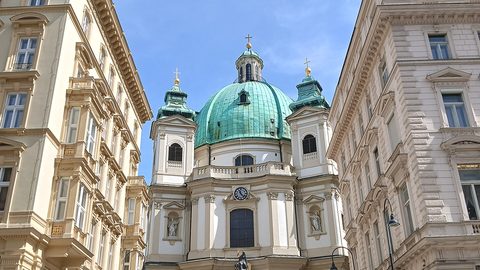 Innere Stadt
Vienna's first district holds the cathedral, the palace, and most of the postcard views inside the Ringstrasse.
Innere Stadt
Vienna's first district holds the cathedral, the palace, and most of the postcard views inside the Ringstrasse.
-
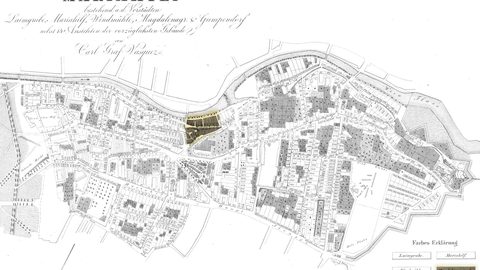 Mariahilf
 is Vienna's sixth district, built around the Naschmarkt food market and the long Mariahilfer Strasse shopping strip.
Mariahilf
Mariahilf is Vienna's sixth district, built around the Naschmarkt food market and the long Mariahilfer Strasse shopping strip.
-
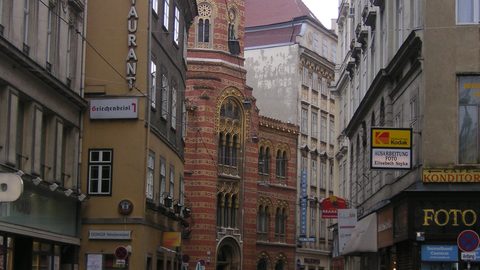 Leopoldstadt
 is Vienna's second district, home to the vast Prater park and the edgy Karmelitermarkt. It is the fastest-changing quarter in the city, and it feels it.
Leopoldstadt
Leopoldstadt is Vienna's second district, home to the vast Prater park and the edgy Karmelitermarkt. It is the fastest-changing quarter in the city, and it feels it.