What to Know Before You Go to Spain
Spain runs on a clock that surprises visitors: lunch at three, dinner at ten, and a working day built around the gap between.
- Flag
-
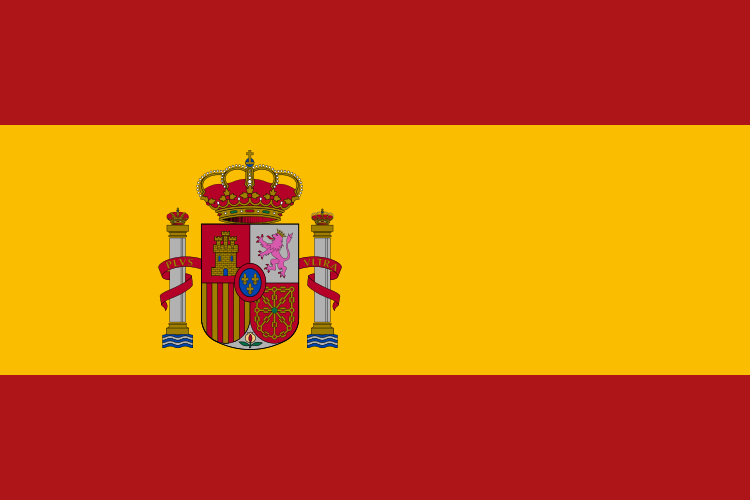
- ISO code
- ES
- Population
- 46,723,749
- Currency
- EUR
- Dial code
- +34
Spain Travel Guide for People Who Eat Dinner at 10pm
You land at Madrid Barajas airport at 2pm. By 3.30pm, you are in your hotel near Puerta del Sol, hungry and jetlagged, expecting lunch. What you find is a locked restaurant door, a shuttered pharmacy, and a street so quiet you wonder if you landed in the wrong city. This is not a malfunction. This is the Spanish day, and it runs on a clock that visitors consistently refuse to believe exists. This guide explains that clock so you stop fighting it by day two.
- Capital City: Madrid
- Population (2024 estimate): 48,610,458 (source: INE, Spain's National Statistics Institute)
- Area: 505,990 km²
- Autonomous Communities / Cities: 17 communities, 2 cities (Ceuta, Melilla)
- Official Languages: Spanish (Castilian) nationwide; co-official Catalan (Catalonia, Balearic Islands, Valencia), Basque (Basque Country, parts of Navarre), Galician (Galicia), Aranese (Val d'Aran)
- Time Zone: Mainland & Balearic Islands: CET (UTC+1) winter, CEST (UTC+2) summer. Canary Islands: WET (UTC+0) winter, WEST (UTC+1) summer
- Currency: Euro (EUR, €)
- Visa-Free Entry (90 days / 180 days): US, Canada, UK, Australia, New Zealand, Japan, South Korea passport holders
- Emergency Number: 112
- High-Speed Rail: AVE (Alta Velocidad Española), operated by Renfe
The Three Forces Shaping Every Trip
Three things will determine whether you love Spain or spend the whole trip frustrated. They are not the sights. They are the rhythm of the day itself.
The 10pm Dinner Is Not Negotiable
Dinner service rarely begins before 8.30pm. By 10pm, the dining rooms are full. Walk into a restaurant at 7pm in central Madrid or Seville and you will be offered drinks and maybe a tapa, but the kitchen will be closed. This is not rudeness. It is the schedule. Lunch is the big meal of the day, served from 2pm to 4pm. Dinner is lighter and later. If you arrive from a place where 6pm is dinner time, you have two choices: eat a large lunch and accept a small late dinner, or carry snacks for the gap between 4pm and 9pm. The alternative, eating a full dinner at 7pm, is not an option in most restaurants outside tourist strips. In the north, particularly in the Basque Country and Galicia, dinner may start closer to 9pm. In the south and in summer, 10.30pm is normal.
The Midday Shutdown Is Real and Selective
The siesta is a fading commercial reality in large cities and northern regions, but the afternoon closure is not. Between roughly 2pm and 5pm, these shut: many independent shops, pharmacies, butchers, bakeries, and smaller museums. In smaller towns and across Andalusia, the closure is near total. In central Madrid or Barcelona's Eixample, you will find chain shops and some supermarkets open, but the fabric of the street changes. Restaurants are serving lunch during these hours, not operating as cafes. If you need a pharmacy at 3pm, look for one marked with a green cross that says '24h' or 'guardia'. Schedule your walking between 9am and 2pm, then again from 5pm onward. The 2pm to 5pm block is for lunch, rest, and a cold drink in a shuttered square.
The Regional Fracture Is Not Decoration
Spain contains 17 autonomous communities and two autonomous cities. Signs in Barcelona are in Catalan first, then Castilian. In Bilbao, they are in Basque. In Santiago de Compostela, Galician. This is not a linguistic curiosity. It affects how you navigate, what you hear on the train announcements, and the reaction you get if you assume Castilian is universally preferred. In Catalonia, ordering in Castilian is accepted but ordering in English without attempting Catalan or Spanish is read as carelessness. In the Basque Country, the difference between the narrow gauge railway network operated by Euskotren and the mainline Renfe service matters for regional train travel. Plan your trip around regions, not around the nation as a single unit. A 10 day trip that tries to cover Madrid, Barcelona, Seville, and San Sebastian requires four train journeys and loses a full day to transit each time. You will spend more time in AVE carriages than in the places you came to see.
_Bastidors_d%27espelmes_votives_-_dissenyat_per_Antoni_Gaud%C3%AD_-_Sagrada_Familia.jpg)
Spain Trip Planning: What a Realistic Itinerary Looks Like
Minimum 10 days is the floor for two contrasting regions. Do not attempt four. Start with one region and add a second only if you have the days.
A 10 day route that works: fly into Madrid. Spend 3 days on the city, the Prado, and a day trip to Toledo by AVE train, which takes 30 minutes. Then take the AVE to Seville, 2.5 hours. Base yourself there for 7 days, using it to reach Granada and Cordoba. The Alhambra in Granada requires tickets booked weeks ahead. The Mezquita Catedral in Cordoba is walk in on a weekday morning. This gives you two distinct worlds: the capital and the heart of Andalusia. You see Moorish architecture, flamenco, and the scorching summer heat of the interior, which exceeds 40 degrees C in July and August. You do not see Barcelona, the Basque Country, or Galicia. Save those for another trip.
The High Speed Train Is Your Main Intercity Mode
For distances over 300km, the AVE network is dominant. Book via Renfe's website or app. The single biggest trip up is Renfe's online payment system, which frequently blocks non Spanish credit cards. Use PayPal or a card with strong 3D Secure authentication. The single biggest planning mistake is not booking in advance: the best fares are for fixed date, fixed time tickets bought weeks ahead. Spontaneous travel on AVE costs more and risks selling out on Friday afternoons and Monday mornings.
When You Cannot Take the Train
Coastal train coverage is patchy. The Mediterranean corridor still has gaps that force bus transfers between some coastal cities. Ferry connectivity to the Balearic archipelago runs from Barcelona, Valencia, and Denia with operators Balearia, Trasmed, and GNV. Ferry connectivity to the Canary archipelago runs from Cadiz and Huelva with Fred. Olsen Express and Naviera Armas. Domestic flights connect the mainland to the isles from Madrid Barajas and Barcelona El Prat hubs. For road trips within a region, autovias are free motorways. Autopistas are toll motorways, though many tolls have been removed or reduced since 2018.
| Region | Character | Minimum Stay | Key Challenge |
|---|---|---|---|
| Andalusia | Moorish architecture, flamenco, scorching summers | 7–10 days | Extreme heat July–August; siesta closures near total |
| Catalonia | Mediterranean energy, modernist architecture, separatist tension | 5–7 days | Language friction if Castilian assumed; crowded Barcelona peak season |
| Basque Country | Green hills, pintxos bars, a distinct language | 4–5 days | Narrow gauge rail network; metric gauge operated by Euskotren |
| Galicia | Misty Celtic coastline, seafood, the Camino endpoint | 5–7 days | Rainfall across all months; metric gauge narrow railway |
| Castile and Leon | Vast plains, Romanesque churches, roast meats | 5–7 days | Sparse population; long road distances between towns |
| Valencian Community | Paella origin, long beaches, Las Fallas fire | 4–5 days | Coastal train gaps; August coastal crowds |
| Balearic Islands | Turquoise calas, nightlife extremes, seasonal overtourism | 5–7 days Mallorca; 3–4 days Menorca/Ibiza | No rail link from Palma airport to city; bus Route A1 only |
| Canary Islands | Volcanic landscapes, year-round spring, Atlantic surf | 7–10 days Tenerife/Gran Canaria | Ferry from Cadiz/Huelva; microclimates vary by isle and altitude |
| Aragon | Pyrenean peaks, Mudejar towers, sparse population | 3–4 days | Limited intercity public transport |
| Extremadura | Conquistador history, Iberian ham, remote dehesa woodlands | 3–4 days | Lowest visitor numbers; rural English proficiency limited |
Visiting Spain Advice: What You Will Actually Encounter
You need to know four things before you arrive that no sightseeing list will tell you.
Pickpocketing Is a Professionalised Risk
This is not casual theft. It is organised. High risk zones include Barcelona's metro, Madrid's Puerta del Sol, and crowded festival streets during San Fermin in Pamplona, held 6 to 14 July annually, or Feria de Abril in Seville, usually two weeks after Easter. Do not keep a wallet in your back pocket. Do not put your phone on the table at a terrace bar. Use a zipped bag worn across your body. If someone creates a commotion near you, check your pockets immediately: that is the distraction.
Language Will Be a Friction Point in Rural Areas
In rural areas and smaller towns, limited English proficiency is the norm. Learn five phrases in Castilian: 'Hola, buenas', 'Por favor', 'Gracias', 'La cuenta', and 'Donde esta'. In Catalonia, add 'Bon dia' and 'Gràcies'. In the Basque Country, 'Kaixo' and 'Eskerrik asko'. The effort is noticed and rewarded. Assuming Castilian is universally preferred causes friction in Catalonia, the Basque Country, and Galicia, where regional identity strength is high.
Tap Water Is Safe Nationwide Except Some Coastal Areas
Tap water is safe to drink across Spain except in some coastal areas and on the archipelagos where bottled water is recommended locally. Inland cities like Madrid have excellent tap water. The Balearic and Canary Islands often recommend bottled water due to desalination taste and local mineral content. Carry a reusable bottle. Fill it at your hotel.
Semana Santa Changes Everything
Semana Santa, Holy Week, is the largest domestic travel period in Spain. Dates vary with the liturgical calendar each year. In Seville, Malaga, Granada, and Valladolid, accommodation prices triple and movement is restricted by processions. If you are not specifically attending the processions, avoid these cities during Semana Santa. The same applies to August: coastal towns are packed, inland cities bake above 40 degrees C, and many independent shops and restaurants in Madrid and Barcelona close for the month. August is the avoid window.
.jpeg)
Spain Cultural Norms: the Unwritten Rules of Eating, Drinking, and Moving
Spanish cultural norms revolve around a single fact: the day is structured around meals and rest, not around work hours. Adopt this rhythm. Do not fight it.
Meal Times Are Fixed
Lunch hours are 14:00 to 16:00. Dinner hours are 21:00 to 23:00, later in summer and earlier in the north. Restaurant kitchens close between 16:00 and 20:00. Arrive at 7.30pm expecting a full menu and you will be offered drinks and a bar menu of standing diners. The kitchen reopens at 8.30pm or 9pm. This is not a secret; it is published on the door. Read the hours before you sit down.
Tipping Is Not Obligatory
Rounding up the bill or leaving 5 to 10 percent in restaurants for exceptional service is common. Leaving nothing is not rude. Leaving 20 percent is unusual and may be returned to you. Cash is still king in smaller bars and rural areas. Cards are accepted in cities but some bars have minimum spends of 5 to 10 euros.
Smoking on Terraces Is Normal
Smoking indoors is banned. Smoking on outdoor terraces is widespread. If you have a respiratory condition or a low tolerance for smoke, request an indoor table when available. In summer, most seating is outdoors, so prepare for it.
The Electricity and SIM Card Practicalities
Electrical plug type is Type C, two round pins, or Type F, Schuko with earth clips. Mains voltage is 230V at 50Hz. A Spanish SIM from Movistar, Vodafone, or Orange requires passport registration. eSIMs from local operators are widely available. Download the Renfe app and local transport apps before arrival; station WiFi is unreliable. Major cities have extensive free municipal WiFi in plazas and libraries.
Driving: Right Side, IDP Required
Driving is on the right. An International Driving Permit is required for non EU/EEA licence holders unless a bilateral agreement exists. EU/EEA licences are valid without an IDP. Toll motorways, prefix AP, have been reduced or removed in some areas since 2018, but check each region. The Basque Country narrow gauge railway network, metric gauge, is operated by Euskotren. The Galicia narrow gauge network is operated by Renfe Cercanias AM.
Who Spain Suits and Who Should Skip it
Spain is for culture and architecture obsessives who want Moorish palaces and Romanesque churches. It is for late night social travellers who do not flinch at a 10pm dinner reservation. It is for second city explorers who prefer Seville or Bilbao over the capital. It is for road trippers wanting dramatic landscape shifts in a single day, from the Pyrenean peaks of Aragon to the Atlantic surf of the Canary Islands. It is for food focused travellers willing to build a day around a pintxos crawl on Calle San Juan in Pamplona or pulpo a la feira in Galicia.
It is not for travellers who want crisp, predictable schedules and early dinners. It is not for anyone seeking a quiet, low stimulus beach holiday in peak summer on the Mediterranean coast. And it is not for anyone who finds smoking on terraces and dense urban crowds overwhelming. If those are dealbreakers, choose a destination that runs on a different clock. This one runs on its own, and it is not changing for you.
Common Questions
What time should I eat dinner in Spain?
Eat dinner between 9pm and 11pm. Dinner service rarely begins before 8:30pm. Showing up at 7pm means a closed kitchen and a bar of standing diners. Lunch is the big meal of the day, served from 2pm to 4pm.
Is the siesta still observed in Spain?
The siesta is common in smaller towns and the south, but rare in large cities and northern regions. However, the afternoon closure of shops, pharmacies, and museums between roughly 2pm and 5pm is still common outside major city centres and malls. Plan sightseeing around it.
Do I need a visa to visit Spain?
US, Canadian, UK, Australian, New Zealand, Japanese, and South Korean passport holders do not need a visa for stays up to 90 days in any 180 day period within the Schengen Area. Schengen area nationals need only a national ID card. An ETIAS requirement for visa exempt non EU nationals is expected to become operational; check official EU sources for the launch date.
How do I get from Madrid airport to the city centre?
Take Metro Line 8 to Nuevos Ministerios, 15 to 20 minutes for about 5 euros. A flat rate taxi into the central zone costs 30 euros. The airport code is MAD.
Which regions of Spain should I visit on a 10 day trip?
Choose two contrasting regions. A recommended route is Madrid and Andalusia: 3 days in Madrid with a day trip to Toledo, then 7 days based in Seville to reach Granada and Cordoba. Do not attempt four regions; you will spend more time on trains than in the places.
Is tap water safe to drink in Spain?
Yes, tap water is safe to drink nationwide except in some coastal areas and on the islands where bottled water is recommended locally. Madrid has excellent tap water. Carry a reusable bottle.
What is the biggest mistake visitors make in Spain?
Trying to cover Madrid, Barcelona, Seville, and San Sebastian in a single week. The distances between major cities are underestimated: Madrid to Barcelona by AVE is 2.5 hours, Madrid to Seville is 2.5 hours, and Madrid to Galicia by road exceeds 5 hours. You will spend more time in transit than in the places you came to see.
Read next
-
 Staying Connected in Spain With eSIM, a Local SIM, or Just WiFi
Weighing an eSIM against a Spanish shop-bought SIM against free WiFi, with the passport-registration rule that makes airport SIM queues a grind.
Staying Connected in Spain With eSIM, a Local SIM, or Just WiFi
Weighing an eSIM against a Spanish shop-bought SIM against free WiFi, with the passport-registration rule that makes airport SIM queues a grind.
-
 Best Time to Visit Spain by Region and Season Reality
Spain has no single best month. Andalusia bakes in August while the north is mild, and the shoulder seasons deliver the sweet spot for most regions.
Best Time to Visit Spain by Region and Season Reality
Spain has no single best month. Andalusia bakes in August while the north is mild, and the shoulder seasons deliver the sweet spot for most regions.
-
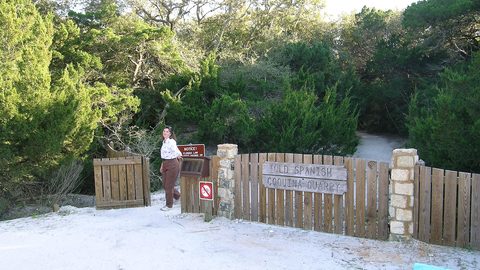 Getting Around Spain Without Believing the Distance Map
Spain's high-speed trains shrink the map, but the gaps between lines and Renfe's payment quirks can derail a tight itinerary.
Getting Around Spain Without Believing the Distance Map
Spain's high-speed trains shrink the map, but the gaps between lines and Renfe's payment quirks can derail a tight itinerary.
-
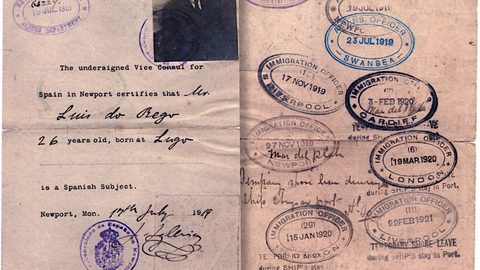 Spain Visa Requirements and the Schengen Short-Stay Rules
Whether you need a visa for Spain depends on your passport and how long you plan to stay. The Schengen 90-day clock trips up even experienced travellers.
Spain Visa Requirements and the Schengen Short-Stay Rules
Whether you need a visa for Spain depends on your passport and how long you plan to stay. The Schengen 90-day clock trips up even experienced travellers.
-
 Cash or Card in Spain and Where the Euro Still Demands Coins
Spain takes contactless almost everywhere, until it does not. Small bars, market stalls, and rural buses still run on coins. Here is what to carry and when.
Cash or Card in Spain and Where the Euro Still Demands Coins
Spain takes contactless almost everywhere, until it does not. Small bars, market stalls, and rural buses still run on coins. Here is what to carry and when.
-
 Spain Safety Advice Without the Overblown Warnings
Spain is safe by any measure of violent crime, but pickpocketing in Barcelona's metro and Madrid's tourist hubs is a professional operation. What to watch for.
Spain Safety Advice Without the Overblown Warnings
Spain is safe by any measure of violent crime, but pickpocketing in Barcelona's metro and Madrid's tourist hubs is a professional operation. What to watch for.
-
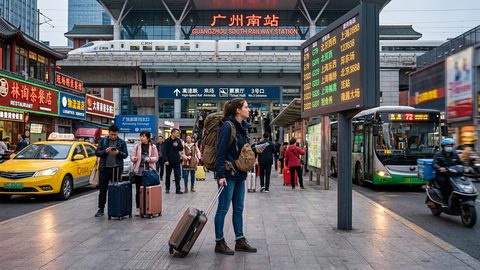 A Ground-Level Logistics Guide to Independent Travel in China
First-time independent travel in China: what you need to know about visas, rail booking, eSIMs, mobile payments, and power adapters.
A Ground-Level Logistics Guide to Independent Travel in China
First-time independent travel in China: what you need to know about visas, rail booking, eSIMs, mobile payments, and power adapters.
-
 How Solo Travelers Stay Ahead of Flight Delays and Cancellations
How solo travelers can track inbound aircraft, claim rebooking rights, and adjust ground transport when flights go wrong — step by step.
How Solo Travelers Stay Ahead of Flight Delays and Cancellations
How solo travelers can track inbound aircraft, claim rebooking rights, and adjust ground transport when flights go wrong — step by step.
-
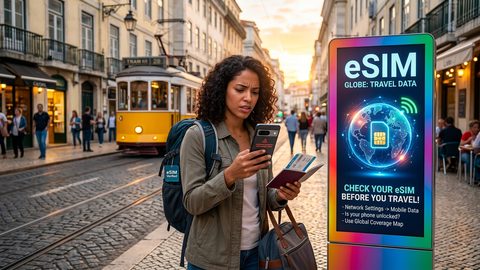 Why Your eSIM Might Not Work Abroad and How to Check Before You Go
Buying an eSIM doesn't guarantee signal abroad. Learn why coverage fails by location and how to verify reach before you commit to a plan.
Why Your eSIM Might Not Work Abroad and How to Check Before You Go
Buying an eSIM doesn't guarantee signal abroad. Learn why coverage fails by location and how to verify reach before you commit to a plan.