Brazil, for People Who Want to Know What It Actually Takes
Brazil is vast, loud, and intensely social. This guide covers the real scale, costs, seasons, and friction points before you commit to the trip.
- Flag
-

- ISO code
- BR
- Population
- 209,469,333
- Currency
- BRL
- Dial code
- +55
This is Not a Postcard
Brazil is 4,319 km wide and 4,395 km long. A continental nation demands a continental travel mindset. You will sweat through your shirt before 9am. You will queue for 90 minutes at an airport that is itself a 90-minute drive from the city you are leaving. For the first three days you will hear only Portuguese, until your ear adjusts. This is what you actually book against, not the Instagram reel.
The heat is real. The noise is a physical presence. Strangers will touch your arm in conversation. Getting between Rio and Iguazu Falls is not an afternoon trip; it is a full travel day with a domestic flight, a transfer, and a hotel checkout. Know that before you book anything.

- Continental Size: 4,319 km east to west; 4,395 km north to south; 3 time zones on the mainland (UTC−5, UTC−4, UTC−3)
- Minimum Days: 14 days. Less than that forces you to burn half the trip on internal flights and airport transfers.
- Peak Season: December to March. Carnival (February/March) and New Year's Eve send coastal accommodation prices up 200-400%.
- Avoid Window: Carnival week if you are not attending. The entire coast from Rio to São Paulo during New Year period. Amazon March, May floods trails and cancels boats.
- Main Arrival Hub: São Paulo, Guarulhos (GRU). Rio de Janeiro, Galeão (GIG) is the second. Brasília (BSB), Recife (REC) and Salvador (SSA) receive some international flights.
- Official Language: Portuguese. Outside luxury hotel front desks, you will hear almost no English.
- Currency: Brazilian Real (BRL). PIX instant payment system dominates but requires a Brazilian CPF and bank account.
- Visa Policy (2025): Visa-free for tourism for EU, UK, Japan, South Korea, Australia, United States, and Canada passport holders for stays up to 90 days. Verify your nationality against the official list.
- Yellow Fever: Vaccination proof required for entry from certain African and American countries. Recommended for all regions except parts of the Northeast coast. Required for some national parks.
Who Should Go and Who Should Skip
Brazil rewards specific travellers and punishes the wrong ones. It suits party-focused backpackers who want the world's biggest nightlife. It suits nature and wildlife obsessives who will endure logistics to see jaguars and macaws. It suits LGBTQ+ travellers looking for a huge and visible scene, second-time South America visitors who already know how long buses take and want depth over ease, and surfers chasing warm-water breaks that run year-round.
It does not suit nervous solo travellers who want quiet. It does not suit anyone on a tight fixed schedule. Plans change three times before noon. Germophobes will struggle: public bathrooms almost never provide toilet paper or soap, which is why locals carry both. Anyone who needs crisp infrastructure or predictable service should pick Chile or Uruguay instead. If you cannot handle loud noise, physical contact from strangers, or the certainty that something will not go as planned, skip Brazil.
First Time in Brazil Trip Planning: What Actually Works
Pick Two Regions and Stop
The single most common mistake is trying to see the Amazon, Rio, Iguazu Falls, Salvador, and the Pantanal in a two-week trip. The domestic flight distances are continental. You will spend 40% of your waking hours in airports or transit. Pick two regions and do them properly. Accept the alternative: five airports and five hotel lobbies.
For a first trip, choose Rio de Janeiro plus one other region. Five to seven days in Rio covers the city and the immediate coast. Add either Iguazu Falls (four days minimum including travel) or a Northeast beach city like Salvador or Recife (seven to ten days). That gives you a real experience of a region rather than a passport stamp.
Domestic Flights and the Time They Really Take
Domestic flights dominate long-distance travel. LATAM, Gol, and Azul cover the country. Pay with an international credit card on their apps or websites; airport ticket counters often refuse foreign cards. A two-hour flight does not mean a two-hour journey. Brazilian airports demand 90 to 120 minutes for check-in, and many cities have 60 to 90 minutes of traffic to reach the airport.
Budget for the Hidden Costs
Yellow fever vaccination proof is required for entry if arriving from certain countries in Africa and the Americas. The list is published annually by ANVISA. Even if you do not need it for entry, many national parks require proof of vaccination for access. Get it before you leave.
Pix dominates payments among Brazilian vendors. Visitors without a Brazilian CPF and bank account cannot use it. That forces reliance on cash or international credit cards that some small vendors refuse. Carry enough cash for markets, street food, and smaller restaurants, especially outside the Zona Sul or Boa Viagem hotel strips.
Free Wi-Fi is widespread in cafes and accommodation but often slow. A local SIM from Vivo or Claro costs R$30 to R$50 and in theory requires a CPF number, though some stores activate it with a passport. Download Uber or 99 for transport, iFood for food delivery, and Moovit for public transit navigation before you land.
| Region | Trip Types | Minimum Days | Common Underestimate |
|---|---|---|---|
| North (Amazon) | Manaus and the river meeting; Amazon and Lençóis loop | 3–4 days for Manaus area; 10–14 days for combined loop | Manaus to Santarém by fast boat takes about 30 hours |
| Northeast | Salvador and Recife/Olinda only; full coast Salvador to São Luís with Lençóis | 7–10 days for two cities; 3–4 weeks for the full coast | Rainy season April–July floods roads and closes Lençóis Maranhenses lagoons |
| Central-West | Pantanal wildlife viewing; Brasília plus Chapada dos Veadeiros | 4–5 days for Pantanal; 7–10 days for Brasília and Chapada | November–March flooding makes many Pantanal fazendas reachable only by small aircraft |
| Southeast | Rio de Janeiro city and coast; São Paulo city; Minas Gerais colonial circuit | 5–7 days for Rio; 3–4 days for São Paulo; 7–10 days for colonial towns | Rio to São Paulo is about 430 km by road, but traffic on Via Dutra makes it a long day |
| South | Curitiba, coast and Iguazu Falls; Serra Gaúcha wine region | 7–10 days for Curitiba and Falls; 5–7 days for wine region | Winter (June–August) overnight temperatures drop below 0°C and many lodgings lack heating |
Is Brazil Worth Visiting: the Honest Answer
Yes, if you want the most sensorily overwhelming trip in South America. The warmth of strangers and the sheer sensory overload of a São Paulo street market or a Salvador evening in Pelourinho, where live drumming spills from doorways into cobbled streets, make it addictive for those who surrender to the chaos.
But the question only matters if you are honest about what you can tolerate. Mosquito-borne illness risk is real and varies by region. Summer sun and heat hit 40°C with UV indexes of 11 or higher. Midday sightseeing is physically punishing. If you cannot handle those conditions, or if you need your plans to stay exactly as you made them, Brazil is not worth the frustration.
For everyone else, the payoff is direct. Snorkel in the crystal rivers of Bonito, where all visits must be pre-booked. Stand at the Brazilian side of Iguazu Falls for the panoramic view that the Argentine side cannot deliver. Eat acarajé from a baiana in white tabuleiros on a Salvador street, the black-eyed pea fritters split and stuffed with vatapá and dried shrimp. Watch the Rio Negro and Solimões run side by side without mixing, an hour by speedboat from Manaus.
Brazil is worth visiting. It is not worth visiting for a week, on a budget that cannot absorb a changed plan, or with an itinerary that assumes things will go smoothly.


The Practical Gear Before You Go
Carry two things most guidebooks forget: a reusable water bottle and a small pack of toilet paper. Tap water in major cities is treated and potable per municipal standards, but most residents drink filtered or bottled water. You should too. The toilet paper is for the public bathrooms that will not supply any.
Mains voltage varies by municipality between 127 V and 220 V. Many outlets accept both. The plug type is Type N with three round pins, also compatible with Type C Europlugs. Bring an adapter that handles both voltages.
Emergency numbers: police 190, ambulance (SAMU) 192, fire service 193. Save them before you need them.
Festivals That Change Everything
Carnival falls 40 days before Easter, movable between February and March. In Rio, the official parade runs for five days at the Sambódromo plus street blocos over about three weeks. In Salvador, street parties begin weeks before the six official days. In Recife and Olinda, the giant Galo da Madrugada parade on the Saturday before Ash Wednesday anchors four official days.
The effect on travel is severe. Domestic flight and bus tickets sell out weeks in advance. Hotel rates multiply. Many businesses close from the Friday before Ash Wednesday to midday Ash Wednesday. If you are not attending Carnival, avoid that week entirely. Whole cities shut down, intercity buses sell out, and prices triple.
Common Questions
What documents do I need to enter Brazil?
A passport valid for at least six months. United States, Canada, Australia, UK, EU, Japan and South Korea passport holders do not need a tourist visa for stays up to 90 days as of 2025 bilateral agreements. This is an annual policy; verify your nationality against the official list before booking. All visitors must show proof of onward travel and sufficient funds if asked.
How many days do I need for a first trip?
The minimum is 14 days. Anything less forces you to burn half the trip on internal flights and airport transfers while touching two regions poorly. If you only have ten days, pick one region and do it properly.
What is the best way to get around?
Domestic flights for long distances. LATAM, Gol and Azul carry over 90% of passengers across more than 100 airports. Book on their apps with an international credit card. Airport ticket counters often refuse foreign cards. Budget 90 to 120 minutes for airport check-in and another 60 to 90 minutes for traffic to reach the airport in most cities.
Do I need to speak Portuguese?
Yes. Outside hotel front desks in the Zona Sul in Rio or other luxury bubbles, English is absent. Download the Google Translate offline pack before you land. It is non-negotiable.
When is the best time to visit?
The dry season in your target region. For the Amazon, June through November. For the Northeast coast, October through February. For the Pantanal, April through October when wildlife viewing is best. For Rio and the Southeast, April through September. The Southeast rainy season runs October through March with heaviest rainfall in December and January.
How much cash should I carry?
Enough for markets, street food and informal vendors. Credit cards are widely accepted in cities and contactless is common. But small-town vendors and street sellers often accept cash or PIX only. Since visitors cannot use PIX without a Brazilian CPF and bank account, cash is your fallback. Public bathrooms almost never provide toilet paper or soap; carry both.
Is it safe to travel alone in Brazil?
The country suits confident solo travellers who handle noise, physical contact from strangers, and plans that change. It does not suit nervous solo travellers wanting quiet. Take standard precautions in cities: do not wear visible valuables, use ride-hailing apps not street taxis at night, and know which neighbourhoods to avoid after dark.
Read next
-
 Staying Connected in Brazil With eSIM, Local SIM, or Roaming
Getting a working data connection in Brazil means navigating CPF requirements, patchy store policies, and vast coverage gaps—here are the three real paths.
Staying Connected in Brazil With eSIM, Local SIM, or Roaming
Getting a working data connection in Brazil means navigating CPF requirements, patchy store policies, and vast coverage gaps—here are the three real paths.
-
 Best Time to Visit Brazil by Region, Season and What Actually Happens
Brazil's seasons invert by region. Coastal summer peaks December to March, Lençóis lagoons fill June to September, and Carnival rewrites all rules.
Best Time to Visit Brazil by Region, Season and What Actually Happens
Brazil's seasons invert by region. Coastal summer peaks December to March, Lençóis lagoons fill June to September, and Carnival rewrites all rules.
-
 Getting Around Brazil, Domestic Flights, Buses and Airport Reality
Domestic flights dominate long-distance travel in Brazil, but airport logistics turn a 2-hour flight into a 5-hour door-to-door journey. Plan accordingly.
Getting Around Brazil, Domestic Flights, Buses and Airport Reality
Domestic flights dominate long-distance travel in Brazil, but airport logistics turn a 2-hour flight into a 5-hour door-to-door journey. Plan accordingly.
-
 Brazil Visa Requirements and How the Application Process Works
Who needs a visa for Brazil, who does not, and how the application process runs. Includes the yellow fever certificate requirement for onward travel.
Brazil Visa Requirements and How the Application Process Works
Who needs a visa for Brazil, who does not, and how the application process runs. Includes the yellow fever certificate requirement for onward travel.
-
 Money in Brazil, the Real, Cards, Cash and the Pix Problem
Brazil runs on Pix instant payments, but visitors without a CPF cannot use it. Here is where cards work, where cash wins, and how to manage.
Money in Brazil, the Real, Cards, Cash and the Pix Problem
Brazil runs on Pix instant payments, but visitors without a CPF cannot use it. Here is where cards work, where cash wins, and how to manage.
-
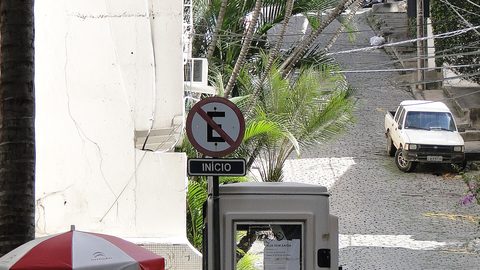 Safety in Brazil, Reading the Advice Without Being Misled by It
Brazil has real safety risks, but the advice is often sensationalised. Here is how to manage phone theft, neighbourhood choices, and street smarts.
Safety in Brazil, Reading the Advice Without Being Misled by It
Brazil has real safety risks, but the advice is often sensationalised. Here is how to manage phone theft, neighbourhood choices, and street smarts.
-
 A Ground-Level Logistics Guide to Independent Travel in China
First-time independent travel in China: what you need to know about visas, rail booking, eSIMs, mobile payments, and power adapters.
A Ground-Level Logistics Guide to Independent Travel in China
First-time independent travel in China: what you need to know about visas, rail booking, eSIMs, mobile payments, and power adapters.
-
 How Solo Travelers Stay Ahead of Flight Delays and Cancellations
How solo travelers can track inbound aircraft, claim rebooking rights, and adjust ground transport when flights go wrong — step by step.
How Solo Travelers Stay Ahead of Flight Delays and Cancellations
How solo travelers can track inbound aircraft, claim rebooking rights, and adjust ground transport when flights go wrong — step by step.
-
 Why Your eSIM Might Not Work Abroad and How to Check Before You Go
Buying an eSIM doesn't guarantee signal abroad. Learn why coverage fails by location and how to verify reach before you commit to a plan.
Why Your eSIM Might Not Work Abroad and How to Check Before You Go
Buying an eSIM doesn't guarantee signal abroad. Learn why coverage fails by location and how to verify reach before you commit to a plan.