Russia, Eleven Time Zones and the Rail Network That Crosses Them
Russia is eleven time zones wide and the rail network is still the honest way to cross them. Start here to plan a trip that respects the scale.
- Flag
-
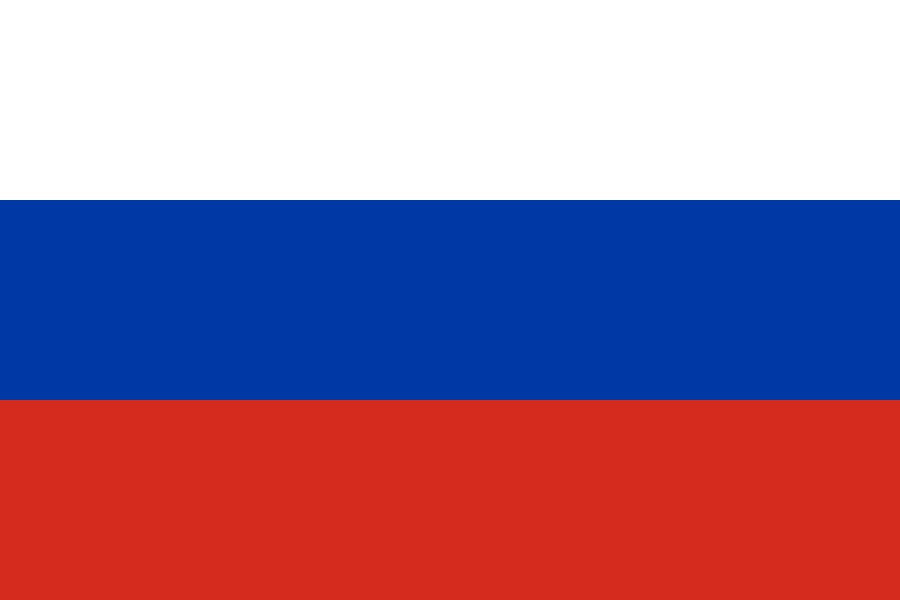
- ISO code
- RU
- Population
- 144,478,050
- Currency
- RUB
- Dial code
- +7
Russia, Eleven Time Zones and the Rail Network That Crosses Them
Russia spans 11 time zones, from Kaliningrad at UTC+2 to Kamchatka at UTC+12. That single fact determines everything about travelling here. This Russia travel guide exists to help you understand the scale before you book anything, because Russia rewards planning and punishes improvisation. First time visitors consistently underestimate how little English is spoken outside Moscow and St Petersburg, how much time gets lost to sheer distances, and how a cultural directness that feels brusque is simply normal. The rail network operated by Russian Railways is the backbone of any meaningful itinerary. A Trans Siberian Railway segment of 9,289 km from Moscow to Vladivostok takes six to eight days of continuous travel. Even the short hop from Moscow to St Petersburg on the Sapsan high speed train runs about four hours, not counting getting to and from stations on either end. If this sounds like work, it is. That is exactly why it works for the right traveller.
- Time Zones: 11, from UTC+2 (Kaliningrad) to UTC+12 (Kamchatka)
- Rail Network Operator: Russian Railways (RZD)
- Trans-Siberian Railway Length: 9,289 km (Moscow to Vladivostok)
- Rail Duration Moscow-St Petersburg: Approximately 4 hours (Sapsan)
- Rail Duration Moscow-Vladivostok: 6-7 days continuous
- Minimum Days for First Trip: 14 days (Moscow and St Petersburg only); 21-30 days for Trans-Siberian segment
- Peak Season: June to August
- Avoid Window: First week of January, first two weeks of May, spring and autumn rasputitsa mud seasons
Russia Trip Planning: the Logistics You Cannot Wing
Russia trip planning starts with the visa, and the visa process demands your attention first. Most non CIS nationals require a visa, and the invitation required to apply must come from a hotel or a registered tour operator. Processing takes ten to twenty working days. The migration card issued on entry must be retained and presented on exit; lose it and the replacement process is a bureaucratic trap. Registration of your visa within seven business days of arrival is mandatory. Hotels handle this automatically, but if you are staying in private apartments you must find a sponsor or agency to file the paperwork. Overstaying even by a day triggers a fine and a possible entry ban.
Money And Connectivity
Cash is still king in small towns and on regional buses. Mastercard and Visa acceptance in Russia has been suspended since 2022. Apple Pay and Google Pay were suspended the same year. The domestic Mir card network operates nationwide but issuing a Mir card to a foreigner is not straightforward. Bring enough rubles in cash for the provinces and rely on Mir linked cards in major cities. ATMs in rural areas accept only domestic cards, so withdraw cash at airport or city centre machines before heading east. Currency exchange for many foreign currencies has been restricted since 2022, so arrive with rubles or exchange at official counters at Sheremetyevo or Domodedovo before leaving the arrival hall.
Connectivity requires advance action. Purchase a local SIM from MTS, Beeline, or MegaFon at the airport on arrival; your passport is required to register the number. Mobile internet is fast and cheap in cities but vanishes for hours on Trans Siberian stretches between major stops. Install a VPN before departure. It remains essential to access Instagram, X, and many Western news sites, though the legal status of VPN use has been restricted since 2024 and you should verify the current position with your home government travel advisory before relying on it. The US Department of State, UK Foreign, Commonwealth and Development Office, Canadian government, Australian Department of Foreign Affairs and Trade, and German Federal Foreign Office all publish specific Russia advisories; check the most recent one before you commit to a ticket.
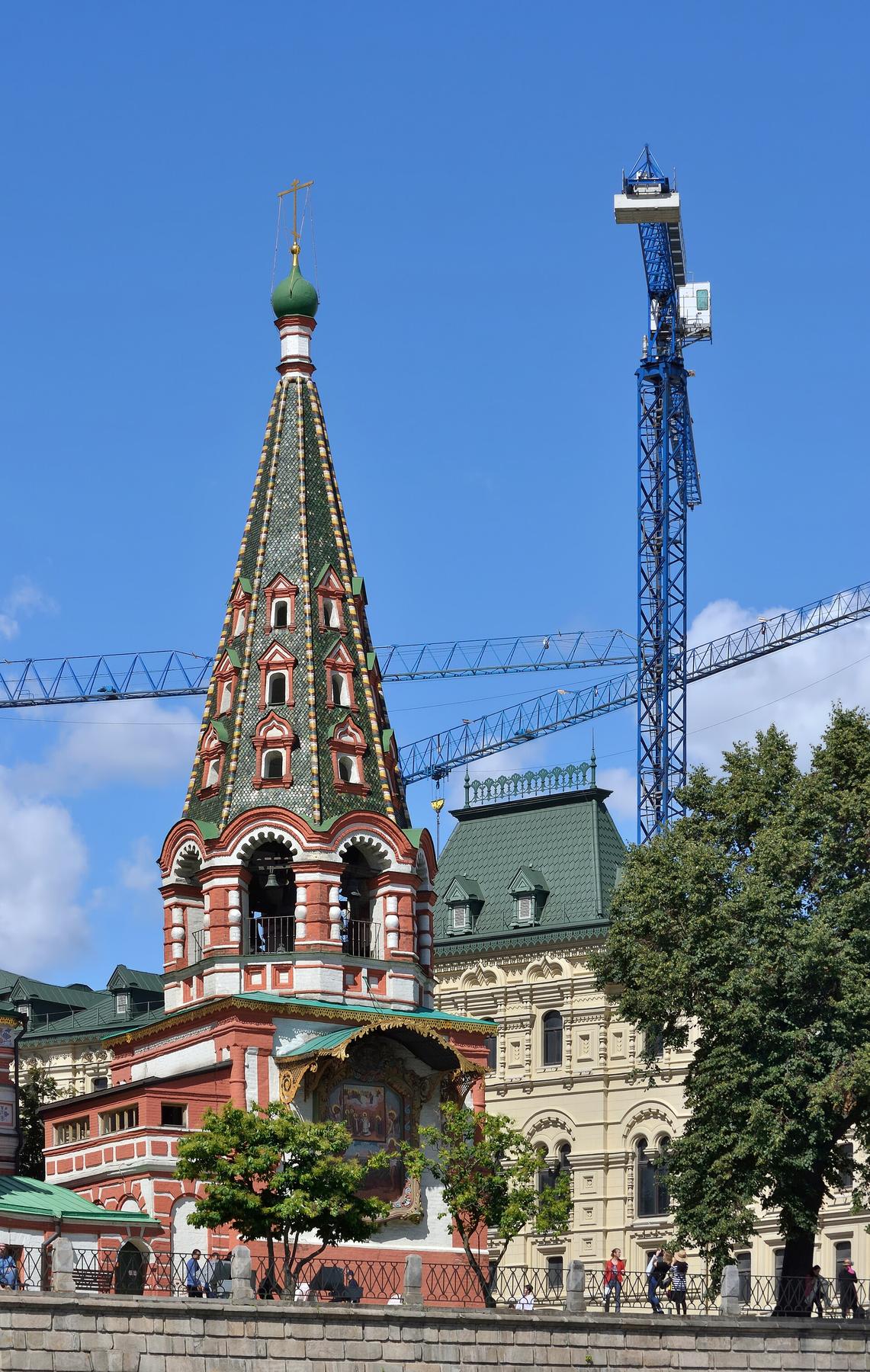

The Trans-Siberian Route: the Backbone of a Real Itinerary
The Trans-Siberian route is not one train but a corridor along which multiple services run. The longest single rail journey is train 001/002 Rossiya from Moscow to Vladivostok, covering 9,289 km. The full journey takes six to seven days. A meaningful segment, say Moscow to Irkutsk at about three and a half days or Moscow to Yekaterinburg at about twenty five hours, gives you the experience without the full endurance test.
Booking And Classes
Booking with Russian Railways requires a passport. The booking window opens ninety days in advance, and for popular summer departures you should buy as soon as it does. Ticket classes range from platzkart, an open dormitory carriage with 54 berths, to kupe, a four berth compartment with 36 berths, to SV, a two berth sleeper with 18 berths. Platzkart is cheaper, social, and a genuine Russian experience. Kupe offers lockable compartments and marginally more privacy. SV is for travellers who need sleep without neighbours.
The Time Zone Trap
The single biggest tripwire on the Trans-Siberian route involves time. All Russian Railways tickets print departure times in Moscow time, regardless of the station's physical location. When you board in Irkutsk, which is at UTC+8, the 14:00 departure printed on your ticket is 14:00 Moscow time, which is 19:00 local time. Miss this distinction and you miss the train. Station names on platforms and departure boards are in Cyrillic only, and public address announcements are rarely in English.
Stops at major stations last fifteen to forty minutes, giving you time to buy food from platform vendors. Stops at minor stations are two to five minutes. A dining car runs on most long distance trains, but the menu and stock can be unpredictable. Every carriage has a samovar dispensing hot water, so bring instant noodles and tea bags as a backup. Toilet conditions vary; carry your own toilet paper and hand sanitiser. Newer carriages on branded routes have showers and air conditioning, but much of the fleet still relies on coal heating and shared carriage end toilets.
The Trans-Mongolian and Trans-Manchurian Branches
The Trans-Mongolian route branches at Ulan-Ude toward Ulaanbaatar and Beijing. The Trans-Manchurian route branches at Chita toward Harbin and Beijing. Both require additional visas for Mongolia and China respectively and are covered in detail on those countries own pages. The Baikal Amur Mainline, the northern alternative to the Trans-Siberian, is a separate project for travellers with more time and tolerance for rough infrastructure.
| Station | Distance from Moscow | Approximate Duration |
|---|---|---|
| Nizhny Novgorod | 420 km | 4 hours |
| Yekaterinburg | 1,780 km | 25–26 hours |
| Novosibirsk | 3,335 km | 2 days |
| Irkutsk | 5,185 km | 3.5 days |
| Vladivostok | 9,289 km | 6–7 days |
Moscow to St Petersburg Train: the Essential Connecting Corridor
The Moscow to St Petersburg train route is the most travelled rail corridor in the country. The Sapsan high speed train covers the distance in approximately four hours, with departures from Leningradsky Station in Moscow and Moskovsky Station in St Petersburg. Buy your ticket as early as the ninety day booking window allows, especially for Friday and Sunday services when domestic travel peaks. A sitting class ticket in standard car is adequate for the journey; there is no need to pay for business class on a four hour trip. The Sapsan has onboard power sockets, a cafeteria car, and WiFi that works for most of the route.
A common mistake is planning to add a Trans-Siberian segment to a trip that already includes Moscow and St Petersburg in a single two week window. That combination burns at least four full days just on trains between the three nodes and leaves no time to actually experience any of them. If you have only fourteen days, commit to just Moscow and St Petersburg with the Sapsan day train between them. If you want a real Trans-Siberian segment, budget twenty one to thirty days minimum.
Navigating The Stations
At both stations arrive at least thirty minutes before departure. Boarding gates close promptly. Platforms are announced on digital boards about twenty minutes before departure and the text is in Cyrillic. Know the Cyrillic spelling of your destination station before you travel. Moscow is Москва. St Petersburg is Санкт-Петербург. Learn to recognise them.
.jpg)
Russia Independent Travel: Who it Works for and Who Should Stay Home
Russia independent travel is not for everyone, and saying so directly saves you a bad trip. It works for travellers who enjoy complex logistics: people who see a visa application as a puzzle rather than a chore, who find satisfaction in navigating Cyrillic only signage, who understand that a missed connection in Krasnoyarsk means waiting a full day for the next train. It works for history buffs focused on the Soviet era, the Tsarist empire, or WWII. It works for rail enthusiasts willing to spend days on trains and adventure motorcyclists and overlanders tackling the Trans-Siberian Highway. It works for second time Europe visitors seeking a destination that does not cater to mass tourism.
It does not work for beach resort seekers expecting Mediterranean infrastructure. It does not work for travellers who need spontaneous last minute changes without visa hassles. It does not work for anyone unwilling to navigate Cyrillic only signage in transit hubs. LGBTQ+ travellers should be aware that they may face legal risks and hostility outside liberal urban bubbles; current legislation and social attitudes make discretion essential and some areas genuinely dangerous. Check your home government travel advisory for the most recent legal situation before booking.
Your First Trip
The first trip to Russia should be Moscow and St Petersburg plus one additional element, not three. Fourteen days is the minimum just to cover Moscow and St Petersburg with a day train between them and see the Kremlin, the Hermitage, Peterhof, and the Church of the Saviour on Spilled Blood without rushing. Adding the Golden Ring towns of Vladimir, Suzdal, and Sergiev Posad as day trips from Moscow stretches the itinerary but remains manageable. If you are determined to see Lake Baikal, fly from Moscow to Irkutsk rather than taking the train there and back, which would consume a week of your trip for the round trip alone.
Bureaucracy And Practicalities
Bureaucracy eats hours. The FSB Border Service requires permits for many areas near international borders and the Arctic coast. Closed cities numbering approximately forty require special permits not available to ordinary tourists. Drone use is heavily restricted and permits from the Federal Air Transport Agency are required for most areas; do not bring a drone expecting to fly it. Photography of military installations, border zones, and some infrastructure is prohibited; when in doubt, do not take the photo.
Public toilets outside major cities are paid, squat style, and lack toilet paper. Carry 30 to 50 RUB coins and tissues. Tap water is not consistently potable; boil or filter in most regions. Road conditions vary enormously: approximately 70% of the 1.5 million km road network is paved, but the unpaved 30% includes the rural routes and the Golden Ring sections that become impassable during the spring and autumn rasputitsa mud seasons. The winter tyre requirement is mandatory from December through February in most regions. The alcohol limit for drivers is 0.16 mg/l breath, which is stricter than many European limits.
Arrival and Getting Around: Airports, Trains, and the Cyrillic Problem
Moscow Sheremetyevo, Moscow Domodedovo, and St Petersburg Pulkovo are the main Western entry airports. From Sheremetyevo, the Aeroexpress train reaches Belorussky Station in 35 minutes for 500 to 550 RUB. From Domodedovo, the Aeroexpress to Paveletsky Station takes 45 minutes for the same fare. From Pulkovo, city bus 39 or 39Ex to Moskovskaya metro station takes 30 to 40 minutes for 65 RUB. A Yandex Go taxi from any airport to the centre costs 1,500 to 3,000 RUB depending on demand. Vladivostok and Irkutsk serve eastern entry points if you are starting a Trans-Siberian journey from the Pacific side.
Apps And Domestic Flights
Yandex Go is the dominant ride hailing app and works across all major cities. Google Maps functions but 2GIS offers better public transport routing inside cities. WhatsApp and Telegram are widely used; Telegram is the dominant messaging app in Russia. Yandex Maps are more detailed than Google Maps for Russian addresses. Download 2GIS and Yandex Maps before you arrive.
Domestic flights become the primary mode for long distance travel beyond the rail corridors. Aeroflot, S7 Airlines, Rossiya Airlines, Ural Airlines, and the low cost carrier Pobeda serve over 200 airports with scheduled service. For journeys between Moscow and Vladivostok, flying saves a week of travel time. For journeys between Moscow and Yekaterinburg or Novosibirsk, the train remains competitive once you factor in airport transfer and security wait times. The domestic flight booking window opens six to twelve months in advance; book early for summer routes to Kamchatka, the Arctic coast, and Sakhalin.
The Exclave And The Far East
Kaliningrad, the Russian exclave wedged between Poland and Lithuania, requires a Schengen visa to transit by land or a direct flight from mainland Russia to bypass the land border entirely. Sakhalin is reachable by air or by ferry from Vanino to Kholmsk. The Kuril Islands require weather dependent air and sea connections and are not a first trip destination. Chukotka is accessible by air only for most visitors and requires a border zone permit from the FSB Border Service. The Northern Sea Route carries limited passenger traffic and requires separate permits for foreign vessels. These are specialist trips for repeat visitors, not for anyone planning a first encounter with Russia.
Common Questions
How many days do I need for a first trip to Russia?
Fourteen days is the absolute minimum, covering Moscow and St Petersburg with a day train between them. A meaningful Trans-Siberian segment needs 21 to 30 days. Trying to do all three in a two week trip burns four days just on trains and leaves no time to experience any destination.
Is English widely spoken in Russia?
English prevalence is low outside Moscow, St Petersburg, and major tourist sites. Cyrillic is used for all official signage. Learn to recognise the Cyrillic spellings of your destination stations and key words such as exit, entrance, and toilet before you arrive.
Can I use my Visa or Mastercard in Russia?
No. Visa and Mastercard acceptance in Russia has been suspended since 2022. Apple Pay and Google Pay were also suspended. The domestic Mir card network operates nationwide. Bring enough rubles in cash for the provinces and rely on Mir linked cards in cities.
What is the biggest mistake travellers make on the Trans-Siberian Railway?
Missing the time zone conversion. All Russian Railways tickets print departure times in Moscow time regardless of the station physical location. If your train departs Irkutsk at 14:00 Moscow time, that is 19:00 local time (UTC+8). Miss this and you miss the train.
Do I need a visa to visit Russia?
Most non CIS nationals require a visa. The application requires an invitation from a hotel or registered tour operator. Processing takes 10 to 20 working days. The e visa system has been suspended for many nationalities since 2022 and you should verify the current position.
Is it safe for LGBTQ+ travellers to visit Russia?
LGBTQ+ travellers may face legal risks and hostility outside liberal urban bubbles. Current legislation and social attitudes make discretion essential and some areas genuinely dangerous. Check your home government travel advisory for the most recent legal situation before booking.
What is the best time of year to travel?
June to August is peak season, when the White Nights illuminate St Petersburg and the Trans-Siberian has the most daylight hours. May and September are shoulder seasons with lower crowds and moderate weather. Avoid the first week of January and the first two weeks of May when domestic holiday logjams jam transport and hotels.
Read next
-
 Staying Connected in Russia With eSIM Local SIM or Roaming
How to get a working mobile connection in Russia, why a passport is required, and where the signal disappears on long train routes.
Staying Connected in Russia With eSIM Local SIM or Roaming
How to get a working mobile connection in Russia, why a passport is required, and where the signal disappears on long train routes.
-
 Best Time to Visit Russia by Season and Region
When to go to Russia and what each season actually does to transport, prices, and what you can see. Seasonal trade-offs, not a single month.
Best Time to Visit Russia by Season and Region
When to go to Russia and what each season actually does to transport, prices, and what you can see. Seasonal trade-offs, not a single month.
-
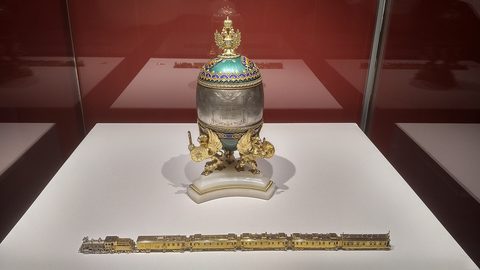 Getting Around Russia by Train Bus and Ride Hailing
Russian Railways, marshrutka, elektrichka, and Yandex Go. How Russia actually connects and what the map oversells for travellers.
Getting Around Russia by Train Bus and Ride Hailing
Russian Railways, marshrutka, elektrichka, and Yandex Go. How Russia actually connects and what the map oversells for travellers.
-
 Russia Visa Requirements and the Invitation Letter Process
Russia visa requirements, the invitation letter, and the registration rule that catches independent travellers out. What to do before and after arrival.
Russia Visa Requirements and the Invitation Letter Process
Russia visa requirements, the invitation letter, and the registration rule that catches independent travellers out. What to do before and after arrival.
-
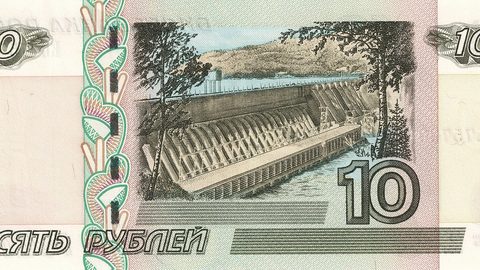 Paying for Things in Russia With Rubles and Cards
Russian rubles, Mir cards, and where cash still wins. What foreign visitors can and cannot pay with across Russia today.
Paying for Things in Russia With Rubles and Cards
Russian rubles, Mir cards, and where cash still wins. What foreign visitors can and cannot pay with across Russia today.
-
 Reading Russia Safety Advice Without Being Misled
Reading safety advice about Russia without being misled by it. Real risks, overstated fears, and what independent travellers should watch.
Reading Russia Safety Advice Without Being Misled
Reading safety advice about Russia without being misled by it. Real risks, overstated fears, and what independent travellers should watch.
-
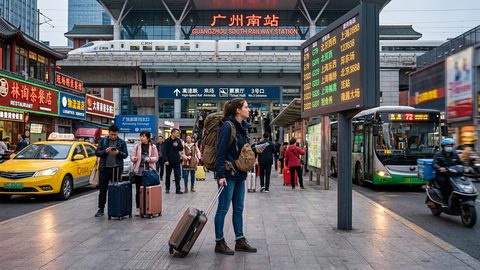 A Ground-Level Logistics Guide to Independent Travel in China
First-time independent travel in China: what you need to know about visas, rail booking, eSIMs, mobile payments, and power adapters.
A Ground-Level Logistics Guide to Independent Travel in China
First-time independent travel in China: what you need to know about visas, rail booking, eSIMs, mobile payments, and power adapters.
-
 How Solo Travelers Stay Ahead of Flight Delays and Cancellations
How solo travelers can track inbound aircraft, claim rebooking rights, and adjust ground transport when flights go wrong — step by step.
How Solo Travelers Stay Ahead of Flight Delays and Cancellations
How solo travelers can track inbound aircraft, claim rebooking rights, and adjust ground transport when flights go wrong — step by step.
-
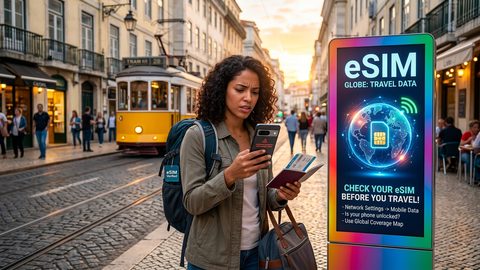 Why Your eSIM Might Not Work Abroad and How to Check Before You Go
Buying an eSIM doesn't guarantee signal abroad. Learn why coverage fails by location and how to verify reach before you commit to a plan.
Why Your eSIM Might Not Work Abroad and How to Check Before You Go
Buying an eSIM doesn't guarantee signal abroad. Learn why coverage fails by location and how to verify reach before you commit to a plan.