The United Kingdom, Four Countries in a Single Itinerary
The United Kingdom is four countries with different rules on everything from prescriptions to school terms, a rail network split across operators where the
- Flag
-
- ISO code
- GB
- Population
- 66,488,991
- Currency
- GBP
- Dial code
- +44
The United Kingdom, Four Countries in a Single Itinerary
The United Kingdom is four countries. That is not a trivia fact. It is the single most consequential piece of practical information for any trip, because those four countries set their own school holidays, issue their own banknotes, apply different prescription charges, and operate separate legal systems. A visitor who treats the UK as one undivided blob will book a train from London to Edinburgh expecting a simple three-hour hop and find it takes four hours twenty minutes on the fastest service, then arrive north of the border holding Bank of England notes that shops accept without enthusiasm and find that local school holidays mean a hotel in the Highlands costs triple the off-peak rate. The four-country structure is not abstract. It shapes every itinerary decision from the first day.
A guide to the United Kingdom must tell you what the place is as a travel destination and how its four countries fit together. It does not describe specific sights or recommend one region over another. That work belongs to the district pages. Here you get the skeleton: the distances, the costs, the friction points, the rules that change when you cross an invisible border. Think of it as a gazetteer that tells you what each place is and how you would go there. If you are visiting for the first time, start here. Then move to the regional pages for the detail.

- Countries: 4: England, Scotland, Wales, Northern Ireland
- Legal Systems: 3: England and Wales share one; Scotland separate; Northern Ireland separate
- Minimum Days: 10 days for a first visit covering more than one region
- Currency Issuers: Bank of England, 3 Scottish banks, 4 Northern Irish banks; Scottish and Northern Irish notes are not legal tender in England and Wales
- Peak Season: July and August; school summer holidays drive domestic demand across all four nations
- Arrival Airport Options: London Heathrow (LHR), London Gatwick (LGW), Manchester (MAN), Edinburgh (EDI)
- Distance Land's End to John o' Groats: Approximately 1,350 km by road
- London to Edinburgh Train Time: Approximately 4 hours 20 minutes by fastest service
Visiting the UK for the First Time: What You Actually Need to Know
A first-time visitor underestimates three things consistently: physical distance, weather variability, and the requirement to pre-book accommodation and major attractions in peak periods. The UK is small on a world map. It is not small on the ground. The road from Land's End in Cornwall to John o' Groats in Caithness runs approximately 1,350 kilometres, and a driver who tries to cover it in a week will spend most of the trip behind a steering wheel. The rail network is the backbone for intercity travel, but it is fragmented across 14 passenger train operating companies contracted by the government in Great Britain plus Translink in Northern Ireland. An advance single booked 8 to 12 weeks ahead can cost 80 percent less than a walk-up fare bought on the day. That is not a trick. It is the structural pricing model.
Weather changes within a single day across all regions. Four seasons in an afternoon is not a cliché. It is a forecast. Spring runs variable with rain possible everywhere and temperatures rising from cool to mild while daylight lengthens rapidly. Summer is mild to warm with long daylight hours reaching 18 or more in the far north at the solstice, but rain remains possible in all regions. Autumn cools and rain plus wind frequency increases, especially in the west and north, while daylight shortens rapidly. Winter brings cold, short daylight dropping under 7 hours in the far north at the solstice, snow on high ground and occasionally at low levels, and Atlantic storms at their most frequent. Dress for all four seasons every day from March to November. Carry a waterproof layer even when the morning is clear.
Accommodation and Attractions Must Be Booked Ahead
The requirement to pre-book accommodation and major attractions during peak periods applies across all regions. The peak domestic tourism period runs from late July to early September across England and Wales, late June to mid-August in Scotland, and July and August in Northern Ireland. A second peak hits during the two weeks around Easter, with dates varying by nation. Christmas and New Year form a third peak from late December to early January. During these windows, coastal villages and national parks fill to capacity and accommodation rates in Cornwall, the Lake District, and Edinburgh spike sharply. The quietest months by visitor volume are November, January, and February, excluding school holiday weeks. Book Stonehenge weeks ahead. Book the Tower of London in advance. Book Edinburgh Castle for a specific time slot. Book Windsor Castle and note that it is closed on Tuesdays and Wednesdays.
Visiting the UK for the First Time: Practical Friction Points
Carry less than £30 in cash. Contactless payment is near universal, and carrying more than that amount marks you as a tourist. Some businesses no longer accept cash at all. Oyster card validity covers Transport for London services and some National Rail services within London fare zones. Outside London, Oyster is not valid on National Rail services or on buses, trams, or metros in other cities. Contactless payment cards work on Transport for London services with the same geographic scope as Oyster. Use your contactless card or mobile wallet for everything from a single tube ride to a cross-country train ticket.
Pubs: order at the bar. Waiting to be seated at a pub table causes confusion. Trains have quiet coaches where phone calls are forbidden and enforced by fellow passengers. Tipping in restaurants runs 10 to 12.5 percent if a service charge is not already added to the bill. Rounding up a taxi fare is normal. Public toilets are scarce outside cities and many now charge a small fee, often contactless only. Plan toilet stops around coffee shop visits or motorway service stations. The emergency number is 999. The non-emergency police number is 101. The non-emergency medical number is 111 for NHS 111. All three work across all four countries.
Connectivity and Maps
4G covers most towns and motorways but vanishes in the Highlands, mid-Wales, and the Lake District valleys. Download offline maps before leaving Wi‑Fi. A UK SIM from giffgaff, EE, or Three costs from £10 for 20GB and works across all four nations. EU roaming is no longer free for UK networks, so EU visitors should check their own plan before arrival. The mobile network operators are EE, O2, Vodafone, and Three, and coverage varies by operator and geography with gaps in rural areas, especially in Scotland and Wales.
| Traveller Nationality | ETA Required | Application Method | Validity and Fee |
|---|---|---|---|
| EU/EEA nationals | Yes | UK ETA app or GOV.UK | 2 years or passport expiry; 6 months per visit; fixed fee per applicant, revised annually |
| US, Canada, Australia, Japan, South Korea, and others | Yes | UK ETA app or GOV.UK | 2 years or passport expiry; 6 months per visit; fixed fee per applicant, revised annually |
| Nationals of countries not eligible for ETA | No; must apply for Standard Visitor visa | Visa application via UK Visas and Immigration | Visa validity varies; must apply before travel |
UK Trip Planning Advice: How the Four Countries Actually Fit Together
The four countries are not a single itinerary unit. Sensible trip planning starts with a hard constraint: pick two regions maximum for a 7-to-10-day trip. Trying to do the whole United Kingdom in a week is the most common mistake first-time visitors make. London to Edinburgh is a 4.5-hour train each way. Cornwall to the Highlands is a full day's drive. London to Belfast via the Holyhead-to-Dublin ferry or Cairnryan-to-Belfast ferry takes 8 to 10 hours total. The suggested minimum visit duration for England alone runs 7 to 10 days for a multi-stop itinerary covering London, one other city, and a rural area. Scotland needs 7 to 10 days for Edinburgh, the Highlands, and one island group. Wales needs 5 to 7 days for the north coast, Snowdonia, and the south coast. Northern Ireland needs 3 to 5 days for Belfast, the Antrim coast, and one inland area. A visitor who tries to squeeze all four into a single week will spend more time in transit than on the ground.
The four nations set their own school term structures independently, and term dates differ by up to two weeks. Half-term dates also differ by up to two weeks. This matters because domestic tourism peaks when schools are closed, and a visitor who books for the last week of August may land in Cornwall during the English school holidays while Scottish schools have already returned. Check the school holiday calendar for each country you plan to visit. The late August bank holiday weekend should be avoided entirely. Roads to the coast seize up, seaside towns are heaving, and accommodation rates hit their annual peak. Also avoid the week of the Chelsea Flower Show in late May and Wimbledon fortnight from late June to early July if you want reasonably priced London rooms.
Getting Between England, Scotland, and Wales
The rail network in Great Britain is owned by Network Rail. Passenger services are run by 14 train operating companies contracted by the government, and the number changes annually. Rail ticket prices for the same seat on the same service can vary by operator, time of purchase, route, and ticket type. Three different prices for the same seat on the same service are structurally possible. An advance single booked early can cost a fraction of an anytime ticket. Off-peak tickets impose time restrictions. Anytime tickets carry no time restriction but cost the most. Some fares are regulated by the government while others are set commercially by operators. Book advance tickets as early as the 8-to-12-week window opens.
Coach services offer a cheaper alternative. National Express has the widest Great Britain coverage. Scottish Citylink covers Scotland. Translink runs Ulsterbus and Goldline services in Northern Ireland. Domestic flights operate between London and Scotland, London and Northern Ireland, regional airports in England and Scotland, and regional airports in England and Northern Ireland. For a traveller going from London to Inverness, the fastest direct rail service takes approximately 8 hours. A flight cuts that to under two hours but adds airport time at both ends. Choose based on your budget and your tolerance for transit.
Getting to Northern Ireland
Northern Ireland requires either a flight or a ferry. London to Belfast by rail and ferry combination via Holyhead to Dublin or Cairnryan to Belfast takes 8 to 10 hours total. Ferry routes to Northern Ireland run from Cairnryan to Belfast, Cairnryan to Larne, Holyhead to Dublin, Liverpool to Belfast, and Fishguard to Rosslare. For visitors coming from Scotland, the Cairnryan-to-Belfast crossing is the shortest. For those coming from England, Holyhead to Dublin or Liverpool to Belfast are the main options. Northern Ireland uses Translink for rail services rather than Network Rail, and the infrastructure is separate from the Great Britain network.

Travelling Between England Scotland Wales: What Changes at the Border
The borders between the three nations on the island of Great Britain are invisible on the ground. No passport check. No customs post. But a traveller moving between them will encounter differences that affect practical decisions. North of the border, three banks issue their own banknotes. Across the Irish Sea, four banks issue their own notes. All are legal currency, but Scottish and Northern Irish notes are not legal tender in England and Wales. In practice, shops in the southern two nations will accept Scottish notes, but some refuse. The safest strategy is to spend Scottish notes in Scotland and English notes south of the border. Use contactless payment whenever possible to avoid the issue entirely.
Prescription charges differ across the four countries. In England, there is a flat charge per item, revised annually. In the other three nations, prescriptions are free at the point of dispensing. This matters for a visitor only if you need emergency medication, but it illustrates the deeper point: these are separate policy jurisdictions. The speed limit in built-up areas is 30 mph nationally, but 20 mph zones are increasingly common in Wales and parts of Scotland. Driving is on the left. Motorway speed limit is 70 mph. Dual carriageways also run 70 mph. Single carriageways drop to 60 mph. Single-track roads with passing places are common in rural Scotland and the islands.
Public holiday names and dates differ. Some are shared across all four nations, while others are nation-specific. St Andrew's Day is a holiday in Scotland. St Patrick's Day is a holiday in Northern Ireland. Check the public holiday calendar for each country you plan to visit, because in rural areas and smaller cities, limited Sunday public transport schedules apply and some businesses close entirely on bank holidays. The right to roam also differs. Scotland's Land Reform Act of 2003 grants a statutory right of responsible access to most land and inland water. In England and Wales, access is limited to designated Open Access land and public rights of way. In Northern Ireland, the right to roam is limited to public rights of way and some designated areas with no general statutory right.
United Kingdom ETA Requirements: the Paperwork That Catches People Out
The Electronic Travel Authorisation scheme requires nationals of countries that do not need a visa for short stays to obtain authorisation before travel. This includes EU and EEA nationals, US citizens, Canadian citizens, Australian citizens, and others. The eligible nationalities list is revised annually by the Home Office. The ETA is issued by the UK government, applied for through the UK ETA app or online via GOV.UK. It is valid for 2 years or until the passport expires, whichever is sooner. The permitted stay is up to 6 months per visit. The cost is a fixed fee per applicant, revised annually. Visitors who never needed paperwork before must now apply before they travel. Nationals of countries not eligible for ETA must apply for a Standard Visitor visa before travel.
The ETA applies to travel to the whole United Kingdom. A traveller flying into London Heathrow and then taking a train to Edinburgh is covered by the same ETA. A traveller flying into Dublin and crossing the land border into Northern Ireland on a day trip should check whether the ETA applies at that land crossing. The UK government does not issue a domestic travel advisory for travel within the UK, but individual foreign governments issue advisories for their citizens travelling to the UK. Check the advisory from your own government before departure. Passport validity required for entry is valid for the duration of your stay with no minimum validity beyond the intended departure date for most non-visa nationals. Customs allowances for goods brought from outside the EU are set by HM Revenue and Customs, with alcohol, tobacco, and value limits revised annually.
The United Kingdom suits road trippers who enjoy linking villages and scenery, history buffs chasing castles, cathedrals, and stone circles, walkers seeking well-marked long-distance trails, literary and period-drama fans on pilgrimage, and first-time Europe visitors wanting a soft landing with no language barrier. It is not for travellers on a tight budget. Accommodation, dining, and intercity trains are among Europe's priciest. It is not for sun seekers wanting guaranteed heat, because the weather is unreliable even in summer. It is not for those wanting a single-base fly-and-flop holiday, because the country's rewards demand moving around. The place works for the traveller who treats its four countries as four separate destinations connected by a single landmass. Plan for that complexity. It is the only way to make the trip work.
What the United Kingdom Actually Costs and How to Navigate it
The United Kingdom is among Europe's priciest destinations for accommodation, dining, and intercity trains. Budget accordingly. A full English breakfast varies wildly in quality. A good one uses local sausage and black pudding. A cream tea means scones with clotted cream and jam. In Cornwall the jam goes first. In Devon the cream goes first. The Sunday roast in a country pub comes with Yorkshire pudding. Fish and chips eaten from a coastal chippy outdoors is a reliable cheap meal. Scottish smoked salmon and Cullen skink are worth the premium. Welsh rarebit and laverbread belong to Wales. Sticky toffee pudding was born in the Lake District.
Fuel at pumps uses unleaded petrol at E10 standard and diesel at B7 standard. LPG is available at limited stations. Electric vehicle charge point connectors include Type 2 for AC, CCS for DC rapid, and CHAdeMO in declining use. Tap water is potable throughout the country. The time zone is Greenwich Mean Time in winter and British Summer Time in summer. Clocks go forward the last Sunday in March and back the last Sunday in October. Midges bite in western Scotland and parts of Wales from late spring to early autumn, worst in still damp conditions near water. Carry repellent if you plan to be outdoors in the Highlands between May and September.
The United Kingdom has 33 UNESCO World Heritage Sites, a number that changes annually. England has 10 national parks. Wales has 3. Scotland has 2. Areas of Outstanding Natural Beauty are the designation used in England, Wales, and Northern Ireland. National Scenic Areas are the equivalent designation used in Scotland. The region with the densest public transport network is South East England and London. The region with the sparsest is the Scottish Highlands and Islands. In some communities in Wales, English is not the majority first language, particularly in Welsh-speaking areas in Gwynedd and Anglesey. Scotland has distinct Gaelic language communities in the Outer Hebrides, Skye, and parts of the Highlands, and a distinct Scots language tradition in the Lowlands and North East. Northern Ireland has an Ulster Scots tradition.
Common Questions
Do I need a visa or ETA to visit the United Kingdom?
Nationals of countries that do not need a visa for short stays, including EU/EEA, US, Canada, and Australia, must obtain an Electronic Travel Authorisation (ETA) before travel. The ETA is valid for 2 years or until passport expiry, costs a fixed fee revised annually, and permits stays up to 6 months per visit. Apply via the UK ETA app or GOV.UK. Nationals of countries not eligible for ETA must apply for a Standard Visitor visa before travel.
How long should I spend on a first visit to the United Kingdom?
A minimum of 10 days is recommended. Anything less forces you to choose between just London and one other region, or a rushed coach tour blur. The suggested minimum for England alone is 7 to 10 days for a multi-stop itinerary. Scotland needs 7 to 10 days for Edinburgh, the Highlands, and one island group. Wales needs 5 to 7 days. Northern Ireland needs 3 to 5 days.
What is the best way to travel between England, Scotland, and Wales?
The rail network is the backbone for intercity travel. The fastest London to Edinburgh service takes approximately 4 hours 20 minutes. London to Cardiff takes approximately 1 hour 50 minutes. London to Inverness takes approximately 8 hours. Book advance singles 8 to 12 weeks ahead for up to 80 percent savings. Coaches via National Express or Scottish Citylink are cheaper. Domestic flights also connect London to Scotland and Northern Ireland.
Why do Scottish banknotes cause problems in England?
Bank of England notes are issued for England and Wales. Three Scottish banks issue their own notes, and four Northern Irish banks issue their own notes. All are legal currency, but Scottish and Northern Irish notes are not legal tender in England and Wales. Some English shops accept them; some refuse. Use contactless payment to avoid the issue entirely.
When is the worst time to visit the United Kingdom for crowds and prices?
The late August bank holiday weekend is the worst period. Roads to the coast seize up and seaside towns are heaving. The peak season runs July and August across all four nations. Avoid the week of the Chelsea Flower Show in late May and Wimbledon fortnight from late June to early July for reasonably priced London rooms. November, January, and February are the quietest months.
Do school holidays in England, Scotland, and Wales happen at the same time?
No. School term structures are set by each of the four nations independently. Term dates and half-term dates differ by up to two weeks. A visitor who books for the last week of August may land in Cornwall during English school holidays while Scottish schools have already returned. Check the school holiday calendar for each country you plan to visit.
Is cash widely accepted in the United Kingdom?
Contactless payment is near universal. Carrying more than £30 cash marks you as a tourist. Some businesses no longer accept cash. Public toilets often charge a small fee and many are contactless only. Use a contactless card or mobile wallet for everything from tube fares to train tickets to pub meals.
Read next
-
 Staying Connected in the United Kingdom with eSIM, Local SIM or Roaming
How to stay connected across the United Kingdom, where mobile signal vanishes in the Highlands, mid-Wales and Lake District valleys regardless of your network.
Staying Connected in the United Kingdom with eSIM, Local SIM or Roaming
How to stay connected across the United Kingdom, where mobile signal vanishes in the Highlands, mid-Wales and Lake District valleys regardless of your network.
-
 Best Time to Visit the United Kingdom by What You Actually Want From It
When to visit the United Kingdom and what each season actually delivers: unreliable weather year-round, summer crowds in national parks, and specific weeks to
Best Time to Visit the United Kingdom by What You Actually Want From It
When to visit the United Kingdom and what each season actually delivers: unreliable weather year-round, summer crowds in national parks, and specific weeks to
-
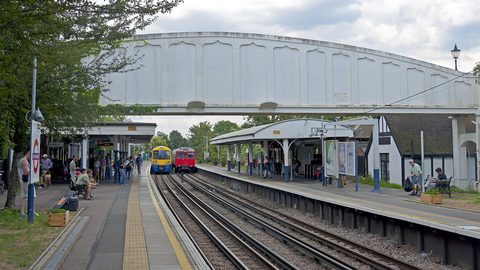 Getting Around the United Kingdom When the Map Lies About Distance
Moving around the United Kingdom by train, car and coach: why rail fares punish last-minute booking, and what the road map does not tell you about journey times.
Getting Around the United Kingdom When the Map Lies About Distance
Moving around the United Kingdom by train, car and coach: why rail fares punish last-minute booking, and what the road map does not tell you about journey times.
-
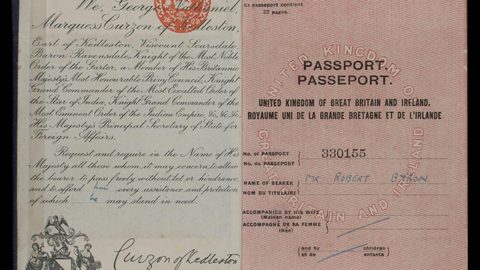 United Kingdom Visa and ETA Rules Without the Government Jargon
Who needs a visa or ETA for the United Kingdom, how the application process runs, and what to expect at the border e-gate.
United Kingdom Visa and ETA Rules Without the Government Jargon
Who needs a visa or ETA for the United Kingdom, how the application process runs, and what to expect at the border e-gate.
-
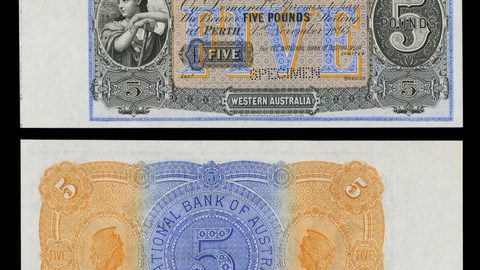 Paying for Things in the United Kingdom Without Carrying a Wallet of Cash
How to pay for things in the United Kingdom: pound sterling, contactless cards, where cash still wins, and why Scottish banknotes confuse English shopkeepers.
Paying for Things in the United Kingdom Without Carrying a Wallet of Cash
How to pay for things in the United Kingdom: pound sterling, contactless cards, where cash still wins, and why Scottish banknotes confuse English shopkeepers.
-
 United Kingdom Safety Advice Without the Overblown Warnings
Reading safety advice about the United Kingdom without being misled by it: real risks like phone-snatching and rip currents versus exaggerated fears about
United Kingdom Safety Advice Without the Overblown Warnings
Reading safety advice about the United Kingdom without being misled by it: real risks like phone-snatching and rip currents versus exaggerated fears about
-
 A Ground-Level Logistics Guide to Independent Travel in China
First-time independent travel in China: what you need to know about visas, rail booking, eSIMs, mobile payments, and power adapters.
A Ground-Level Logistics Guide to Independent Travel in China
First-time independent travel in China: what you need to know about visas, rail booking, eSIMs, mobile payments, and power adapters.
-
 How Solo Travelers Stay Ahead of Flight Delays and Cancellations
How solo travelers can track inbound aircraft, claim rebooking rights, and adjust ground transport when flights go wrong — step by step.
How Solo Travelers Stay Ahead of Flight Delays and Cancellations
How solo travelers can track inbound aircraft, claim rebooking rights, and adjust ground transport when flights go wrong — step by step.
-
 Why Your eSIM Might Not Work Abroad and How to Check Before You Go
Buying an eSIM doesn't guarantee signal abroad. Learn why coverage fails by location and how to verify reach before you commit to a plan.
Why Your eSIM Might Not Work Abroad and How to Check Before You Go
Buying an eSIM doesn't guarantee signal abroad. Learn why coverage fails by location and how to verify reach before you commit to a plan.