Mobile data in Austria: eSIM, prepaid SIM, and the coverage gaps that no plan can fix
Austrian mobile coverage vanishes in the places you need it most: deep Alpine valleys and high passes.
Mobile Data in Austria: ESIM, Prepaid SIM, and the Coverage Gaps That No Plan Can Fix
You can buy the most expensive eSIM on the market, register a HoT prepaid SIM with your passport at an Austrian supermarket, and still have zero signal within fifteen minutes of leaving the car park at the Grossglockner High Alpine Road. That is the reality this austria esim prepaid data guide has to address before it recommends anything. The dead zones are not minor. Deep Ötztal valleys, the Grossglockner High Alpine Road, and remote Salzkammergut trailheads all sit in terrain where no mobile operator maintains usable signal. The practical question is not which product delivers the fastest speed in Vienna. It is what you do when your phone shows "No Service" and the last offline map you downloaded was two countries ago.
Where the Signal Dies: the Coverage Gaps No SIM Can Fix
Austria has a universal service obligation that mandates basic mobile coverage for all populated areas. That phrase "populated areas" does the work. The moment you walk into a side valley of the Ötztal where no permanent settlement exists, the obligation ends. The same applies along large sections of the Grossglockner High Alpine Road, a toll road open only from May to October. You will drive through passes and tunnels where the phone searches for a network, finds nothing, and drains battery searching. At remote Salzkammergut trailheads, especially those reached by Postbus routes that terminate at a single hut, signal is unreliable even if a map shows a tower nearby. Trees, valley walls, and the curve of a mountain ridge all block it.
Download Before You Leave
Download offline maps before you leave your accommodation. Google Maps allows offline downloads for specific regions. The Organic Maps app uses OpenStreetMap data and works without a connection at all. ÖBB train tickets must be downloaded before boarding, not just saved as a passbook file, because the app requires a live connection to display the QR code in tunnels and valleys. The single thing that trips visitors up: Sparschiene discount tickets are non-refundable and tied to a specific train. If you miss it because your phone could not load the ticket at a station without WiFi, the ticket is worthless.
_-_Flickr_-_Sandor_Somkuti.jpg)
Best SIM Card for Austria Travel: Comparing ESIM Convenience Against Physical SIM Registration
The choice between eSIM and physical SIM in Austria comes down to one factor: how much inconvenience you accept at the start of the trip for better value and more reliable activation later.
eSIM: Convenience With Caveats
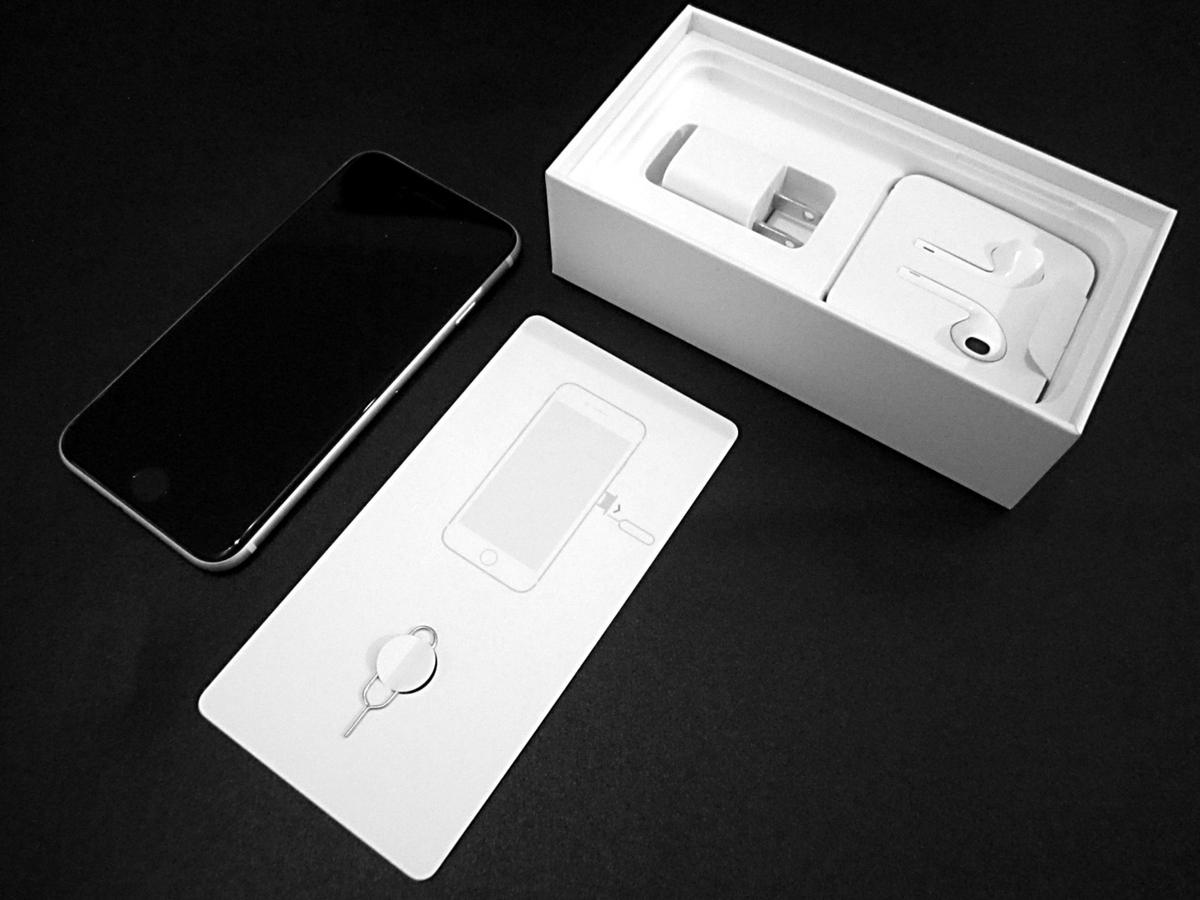
Austria supports eSIM on all three major networks: A1 (Telekom Austria), Magenta (T-Mobile Austria), and Drei (Hutchison). A1 offers the B.free eSIM. Magenta provides the Magenta Mobil eSIM. Drei offers a Drei eSIM, but prepaid activation may require an initial store visit. If you buy from a third party like Airalo or Holafly before departure, you pay a premium and receive full speed for a set data allowance. The downside: these third party eSIMs do not give you an Austrian phone number. You rely entirely on data. If a mountain hut, a rental car agency, or a Heurigen tavern needs a local number to confirm a booking, you are stuck.
Physical SIM: The Passport Rule
SIM registration in Austria is mandatory. You must present a government-issued photo ID at point of purchase. Accepted forms are a passport or an EU/EEA national ID card. The regulatory authority for broadcasting and telecommunications (RTR) enforces the law. You cannot buy a prepaid SIM from a vending machine. You cannot pick one up at a supermarket checkout without showing your passport. Purchase locations include operator stores, post offices, supermarkets, electronics retailers, petrol stations, and Vienna International Airport.
The upside of a physical SIM: you get an Austrian number. You can call ahead to confirm hut availability, receive SMS from booking systems, and use two factor authentication for bank apps. The downside: Sunday closures. If you land on a Sunday, supermarkets and most mobile stores are shut. Only railway station shops and some petrol stations remain open, and their SIM inventory is thin. Plan to buy at the airport or carry an eSIM backup.
HoT Hofer Prepaid Data Austria: the Best Value and the Registration Hurdle
HoT (Hofer, the Austrian Aldi) offers the best prepaid data value at €9.90 for 30GB. That price undercuts every operator and every eSIM reseller by a significant margin. The catch is the purchase process. HoT SIMs are sold at Hofer supermarkets. You take the SIM card from the display, bring it to the checkout, and present your passport for registration. The cashier scans the ID. The system registers the SIM immediately. You then activate it online or via the HoT app.
Two practical problems arise. First, Hofer supermarkets close by early evening and are shut entirely on Sundays. Second, the registration process has failed for travellers whose passport has a non Latin script name that the system cannot parse, or whose expiry date does not match the expected format. Bring a backup option. If you land on a Sunday and your accommodation has no WiFi, you have no way to activate a HoT SIM until Monday morning.
Austria Mobile Network Coverage Map: What to Expect Where You Are Going
All three operators A1, Magenta, and Drei provide 5G in major cities and towns, with expansion continuing along main transport corridors. 4G LTE is the standard outside city centres. 3G is being phased out. 2G remains available for basic voice calls and SMS. The coverage maps published by each operator show the truth only at a general level. Zoom into the Ötztal, the Grossglockner region, or any trailhead in the Salzkammergut, and you see the difference between "covered" on a map and "covered while standing still on a ridge" in real use. A1 has the strongest rural signal because of its legacy Telekom Austria infrastructure. Magenta and Drei are competitive in urban areas but lag in remote valleys.
Emergency Calls
Emergency calls work without a SIM on any network. That is required by law. If you are hiking and need help, your phone will connect to whichever operator has any signal, even if you have no credit, no SIM, and no roaming agreement. That does not mean you should rely on it. Carry a paper backup of your key information: accommodation addresses, emergency contact numbers, and a copy of your travel insurance policy.

ESIM vs Physical SIM Austria: Which One Matches Your Itinerary
No single connectivity product suits every Austrian traveller. The decision depends on where you go, how long you stay, and what you plan to do each day.
Choose eSIM if: you arrive on a Sunday, your trip is seven days or fewer, you stay in Vienna and Salzburg with one day trip into the Wachau Valley or to Hallstatt, and you can manage without a local phone number. The convenience of activation before departure outweighs the cost premium. Accept the downside: no Austrian number means you cannot call ahead to restaurants, huts, or car rental desks without incurring roaming charges on your home SIM.
Choose physical SIM, specifically HoT, if: you stay for two weeks or longer, you plan to road trip through Tyrol, Carinthia, and the Salzkammergut, and you need a local number for mountain hut bookings and two factor authentication. Accept the downside: you must buy it during supermarket hours, not on a Sunday, and you must have your passport ready. If the registration fails, you will spend time at an operator store.
Choose both eSIM and physical SIM if: you hike in remote areas, drive the Grossglockner High Alpine Road, or spend time in the Hohe Tauern National Park. Use the eSIM for instant activation on arrival. Buy a HoT SIM at the first opportunity for the Austrian number and the cheap 30GB data. Accept the downside: you pay twice. But data costs are low enough that the redundancy is worth the small expense.
How to Stay Connected on the Ground: WiFi, Offline Apps, and Cash
Hotel and café WiFi in Austria is fast and reliable in cities. In mountain huts, expect slow satellite connections or none at all. Heurigen wine taverns and small cafés may have no WiFi for customers. The broader friction: cash is still required in many mountain huts, Heurigen, and small cafés. Do not assume card acceptance. Public toilets are pay to use, with coin operated turnstiles. You need coins, and your phone cannot help you get them if there is no signal.
Mountain Apps
The Bergfex app provides mountain weather, cable car status, and trail conditions. Download it and its data before you ascend. Cable cars close in high winds. If you cannot load Bergfex at the base station because you have no signal, you do not know whether the lift is running until you queue for a ticket machine that may also be offline.
Common Questions
Can I use my home country eSIM in Austria without paying extra?
If your home eSIM provider includes EU roaming and Austria is within the EU data roaming zone, yes. Check your provider's fair use policy. Many European carriers allow roaming with the same plan. Non European carriers charge per MB.
Is a passport copy accepted for SIM registration, or do I need the physical document?
The physical passport or EU/EEA national ID card must be presented at point of purchase. A photocopy or digital scan is not accepted.
Do Austrian eSIMs work in the mountains on the Grossglockner High Alpine Road?
No. Signal drops to zero in tunnels, on high passes where no settlement exists, and in forested stretches. Offline maps are not optional for that drive.
What happens if I buy a HoT SIM and the registration fails at the checkout?
You cannot activate the SIM. Take it to a Hofer customer service desk during opening hours or visit an operator store like A1 or Magenta. The SIM itself is not wasted, but the time lost can derail a short trip.
Can I buy an eSIM for Austria after I arrive?
Yes. For A1 B.free eSIM and Magenta Mobil eSIM, you can buy and activate online after arrival. Drei eSIM for prepaid may require a store visit. Check the provider's website before you travel.
Read next
-

 Best Time to Visit Austria for Cities, Lakes and Skiing Without Crowds
Austria's seasons dictate what's open: Christmas markets end on 24 December, the Salzburg Festival consumes July and August, and many hotels close the first
Best Time to Visit Austria for Cities, Lakes and Skiing Without Crowds
Austria's seasons dictate what's open: Christmas markets end on 24 December, the Salzburg Festival consumes July and August, and many hotels close the first
-
 Getting Around Austria by Train, Bus and Car Without the Map Mistakes
Austria's ÖBB rail network is excellent but unforgiving: Sparschiene tickets are train-specific and worthless if missed, and motorways eat schedules.
Getting Around Austria by Train, Bus and Car Without the Map Mistakes
Austria's ÖBB rail network is excellent but unforgiving: Sparschiene tickets are train-specific and worthless if missed, and motorways eat schedules.
-
 Austria Visa Requirements and Schengen Entry Rules for Travellers
Austria is in the Schengen zone. Most short-stay visitors from wealthy countries enter visa-free, but passport validity and upcoming ETIAS rules still apply.
Austria Visa Requirements and Schengen Entry Rules for Travellers
Austria is in the Schengen zone. Most short-stay visitors from wealthy countries enter visa-free, but passport validity and upcoming ETIAS rules still apply.
-
 Cash or Card in Austria, Where Euros Still Rule and ATMs Save You
Austria runs on euros, but card acceptance collapses in mountain huts, Heurigen wine taverns, and small village cafés. Carry cash daily.
Cash or Card in Austria, Where Euros Still Rule and ATMs Save You
Austria runs on euros, but card acceptance collapses in mountain huts, Heurigen wine taverns, and small village cafés. Carry cash daily.
-
 Is Austria Safe, Reading the Advice Without the Anxiety Spiral
Austria is very safe for visitors. The real risks are mountain weather shifts and overestimating hiking ability, not street crime, though Vienna pickpocketing
Is Austria Safe, Reading the Advice Without the Anxiety Spiral
Austria is very safe for visitors. The real risks are mountain weather shifts and overestimating hiking ability, not street crime, though Vienna pickpocketing
-
 What a trip to Austria costs in real terms and where the money actually goes
Austria costs are shaped by rigid rules, not just choices: Sunday closures, cash-only huts, and non-refundable train tickets define the budget more than any
What a trip to Austria costs in real terms and where the money actually goes
Austria costs are shaped by rigid rules, not just choices: Sunday closures, cash-only huts, and non-refundable train tickets define the budget more than any
-
 Vienna
 is an imperial capital that kept the museums after losing the empire. Here is what the city is actually like beyond the postcard images, and who it
Vienna
Vienna is an imperial capital that kept the museums after losing the empire. Here is what the city is actually like beyond the postcard images, and who it
-
 A Ground-Level Logistics Guide to Independent Travel in China
First-time independent travel in China: what you need to know about visas, rail booking, eSIMs, mobile payments, and power adapters.
A Ground-Level Logistics Guide to Independent Travel in China
First-time independent travel in China: what you need to know about visas, rail booking, eSIMs, mobile payments, and power adapters.
-
 How Solo Travelers Stay Ahead of Flight Delays and Cancellations
How solo travelers can track inbound aircraft, claim rebooking rights, and adjust ground transport when flights go wrong — step by step.
How Solo Travelers Stay Ahead of Flight Delays and Cancellations
How solo travelers can track inbound aircraft, claim rebooking rights, and adjust ground transport when flights go wrong — step by step.