Shark Valley in Everglades National Park as a Miami Day Trip
Shark Valley is the closest Everglades National Park entrance to Miami, with a 15-mile tram or bike loop through alligator-dense sawgrass prairie.

Shark Valley in Everglades National Park as a Miami Day Trip
You have one day away from Miami and you want to see a real alligator, not one on a T-shirt. The problem is time. A full Everglades airboat tour takes most of the afternoon and costs over a hundred dollars for a family. The Shark Valley entrance is the closest Everglades access point to Miami, sitting 36 miles west of downtown, and it delivers the signature landscape of the park: sawgrass prairie stretching to the horizon, freshwater slough channels carved through the marsh, and alligators stacked on the banks like logs. You can do it in a half day without a guide. The question of whether a Shark Valley Everglades day trip is worth the drive answers itself: yes, if you pick the right season and know which loop to take.
- Distance from Downtown Miami: 36 mi (58 km) west, about 50 minutes by car
- Site Type: 15 mi (24 km) paved loop trail, tram road, observation tower
- Main Features: Freshwater slough, sawgrass marsh, alligators, wading birds, cypress domes
- Tram Tour: 2 hours, round-trip, narrated by a park concessioner
- Bicycle Loop: 2 to 3 hours at a casual pace; rentals available on-site
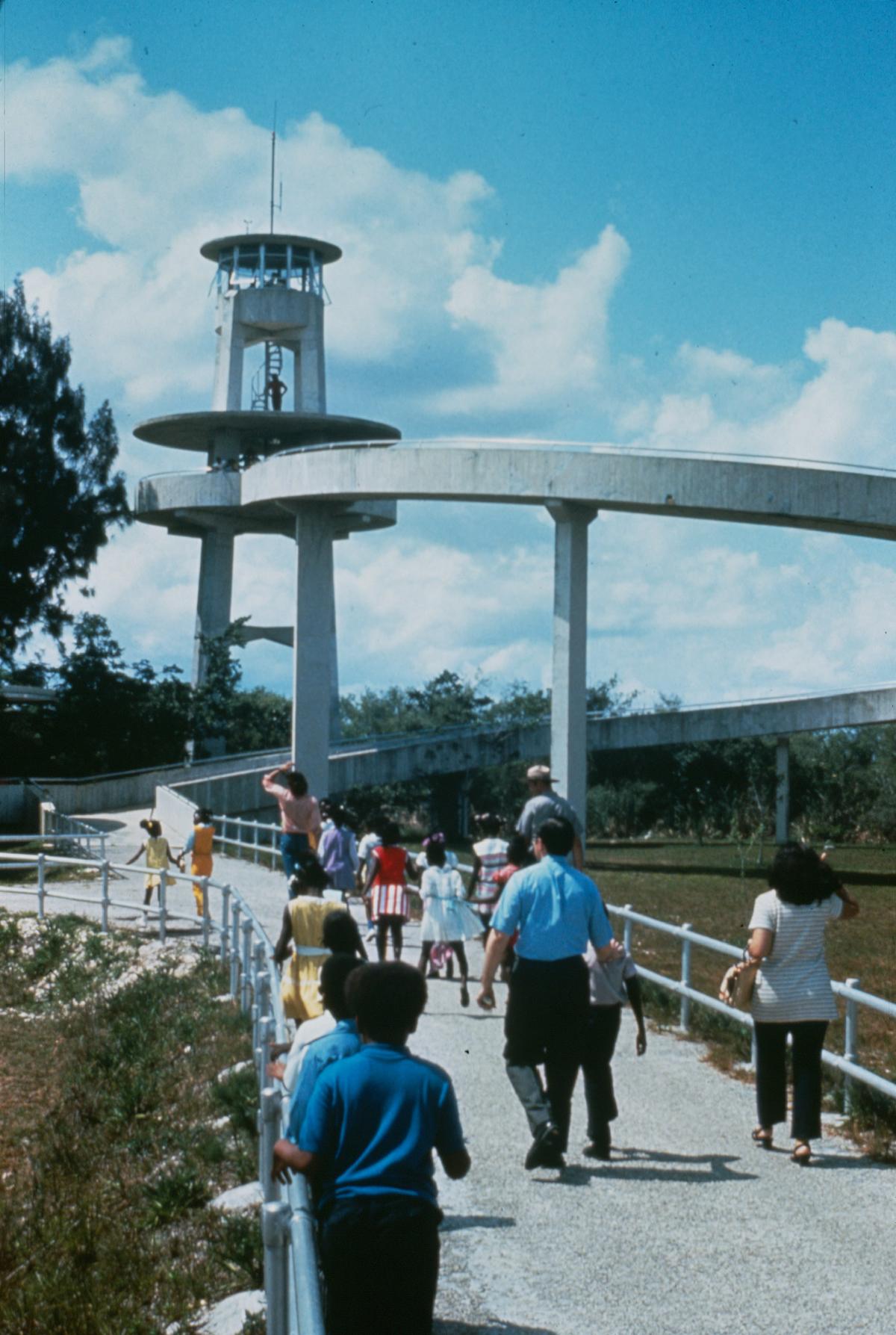
- Observation Tower: Halfway point, 7.5 mi (12 km) from the visitor centre, 45 ft (13.7 m) high
- Entry Fee: Per-vehicle or per-person; valid 7 consecutive days at all Everglades entrances
- Best Arrival Window: Before 10:00 AM in dry season (Nov, Apr); early morning in wet season (May, Oct)
Shark Valley Tram Tour from Miami Day Trip: the Easy Option
The tram tour is the default choice for anyone travelling with children, anyone who does not handle subtropical heat well, and anyone who wants to hear what they are looking at. The open-sided tram runs the full 15-mile loop in two hours with a naturalist driver who stops for animals. The narration explains the hydrology of the sawgrass marsh, the difference between a slough and a tree island, and why the alligators stay in the same spot for days during dry-season basking.
How to Book the Tram
Shark Valley Tram Tours is the official concessioner. Reservations open on a rolling window, which was approximately 60 days ahead in recent years; the park service publishes the exact schedule on nps.gov/ever. Walk-up tickets sell if space remains, but in the dry-season months of December through March the trams fill by mid-morning. Book online at sharkvalleytramtours.com before you leave Miami. The tram leaves roughly every hour from the visitor centre.
When the Tram Is the Wrong Choice
Spending two hours on a tram means you see the loop from the road, not from the shoulder. You stop for photos, but you do not pull over and sit. If you want to spend ten minutes watching a single alligator slide into the water, the tram keeps moving. The bike loop gives you that control, at the cost of direct sun and your own leg power.
Shark Valley Bike Loop Alligators: Freedom Under the Sun
Renting a bicycle is the better move for able-bodied adults who want to set their own pace. The loop is a flat, paved 15-mile road with no cars except the occasional park vehicle. The ride takes two to three hours at a casual pace, and the wildlife is the same density you get from the tram. Alligators block the road on winter mornings. Herons stand motionless in the slough. The cypress domes rise like islands from the grass.
Bicycle Rental and What You Need to Know
The on-site concession rents adult single-speed cruisers, child bikes, and a limited number of adult tricycles. Call ahead to confirm the current fleet. You can also bring your own bike. What the rental does not include: water. There is no potable water on the loop. The only water fountain is at the visitor centre. Bring at least one litre per person, and carry it in a bottle that clips to the frame. There is no shade on the loop except at the observation tower, so a hat, sunglasses, and sunscreen are non-negotiable. Cell reception on the loop is weak to none; download your map before you leave the visitor centre.
Walking the Loop: Do Not Do It
Walking the full 15-mile loop is possible but uncommon, and for good reason. The road has no shade, no water points between the visitor centre and the halfway tower, and no restrooms apart from composting toilets at the tower. In dry-season heat you will need five or six hours and serious water capacity. A short walk near the visitor centre, the accessible paved path, gives you a taste of the marsh in 30 to 60 minutes without committing to the full distance.
Everglades Shark Valley vs Anhinga Trail: Which Park Entrance to Pick
The main entrance to Everglades National Park, the Ernest F. Coe Visitor Centre near Homestead, is 50 miles south of Miami, about 15 minutes farther than Shark Valley. Its signature walk is the Anhinga Trail, a half-mile boardwalk through a sawgrass marsh that packs an extraordinary amount of wildlife into a short distance. If you have only two hours total, the Anhinga Trail is the better choice: you see alligators, anhingas, herons and turtles from a raised walkway, and you do not need a tram or bike to reach them.
If you have four hours, choose Shark Valley. The Anhinga Trail is a sample plate. Shark Valley is the full loop. The sawgrass prairie opens into a landscape you cannot see from the boardwalk, a horizon of grass broken only by the observation tower, with alligators scattered across miles of freshwater slough. The bicycle loop or the tram tour gives you the scale of the Everglades, not a close-up of one corner. The two entrances are not interchangeable; a serious Everglades trip visits both, but on separate days.
Shark Valley Observation Tower: the Halfway Reward
The observation tower stands at the midpoint of the loop, 7.5 miles from the visitor centre. It rises 45 feet above the marsh, giving you a view across the sawgrass prairie and the cypress domes that dot the landscape. This is the only point on the loop where you can see the full geometry of the Everglades: the slow sheet flow of water southward, the tree islands that form on slight rises in the limestone, the way the slough channels braid through the grass. On a clear winter morning the view is the reason to make the trip.
Seasonal Patterns: When to Go and What to Expect
The dry season, November through April, is the window for this trip. Water levels drop, and alligators concentrate in the remaining sloughs and canals. On sunny winter mornings they bask on the road and the banks, sometimes in groups of a dozen. The mosquitoes are moderate to low. The tram reservations sell out in these months, and the parking lot fills by 10:00 AM. Arrive before then.
The wet season, May through October, reverses the equation. Water spreads across the marsh, dispersing the wildlife. Alligator visibility drops. Mosquito intensity becomes extreme. Afternoon thunderstorms are a daily pattern from June through September, and the loop road can flood in a 20-minute downpour. Do not visit in August or September unless you are prepared to see very few animals and share the tram with people slapping their arms. The one advantage of wet season: fewer crowds and immediate tram availability.

Getting There and What You Need to Know
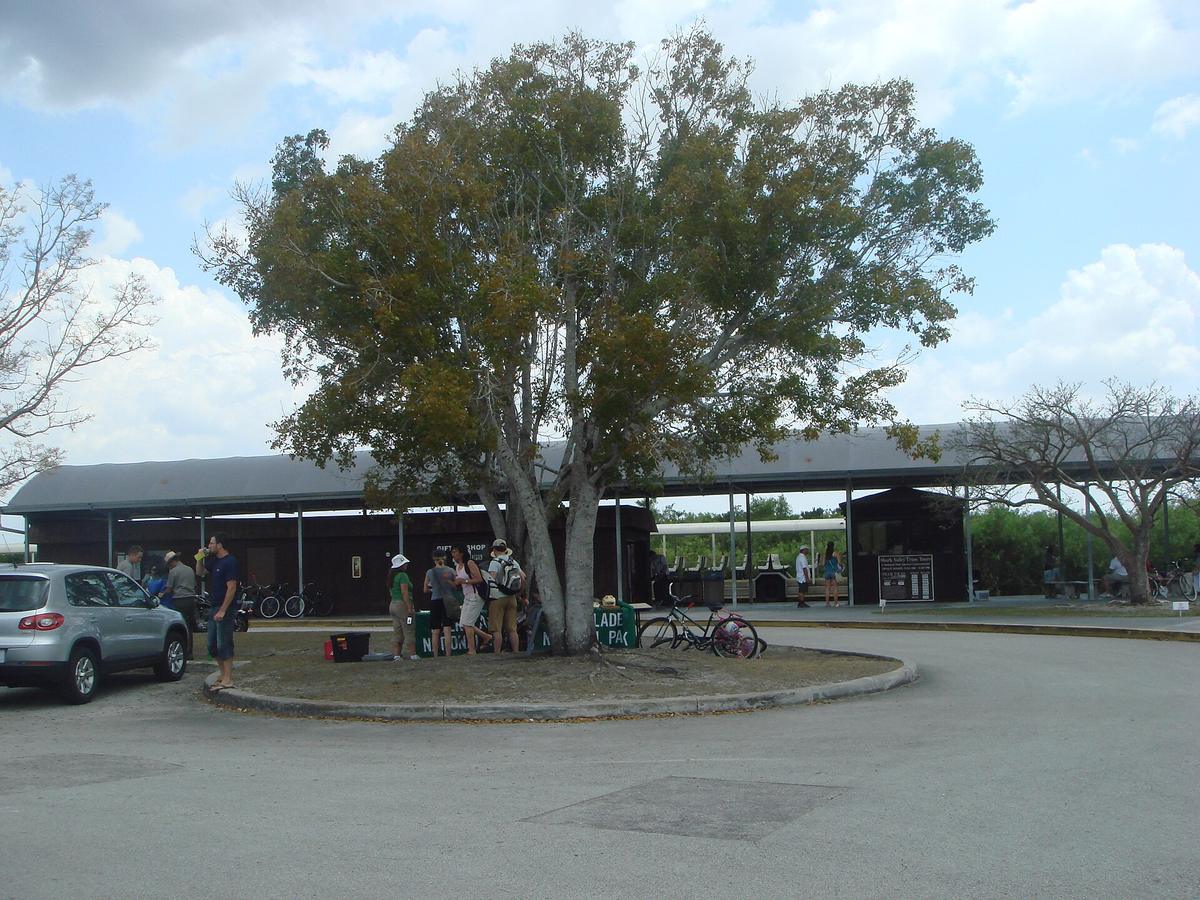
Shark Valley sits on US-41, the Tamiami Trail, 36 miles west of downtown Miami. Take the Dolphin Expressway west to Florida's Turnpike, then west on US-41. The drive takes about 50 minutes with normal traffic. Cell reception near the visitor centre is limited and drops to nothing on the loop. Download your directions before you leave Miami, and set your pickup point by the lifeguard tower number if you are using a rideshare.
The entry fee is per-vehicle and covers all Everglades National Park entrances for seven consecutive days. The America the Beautiful interagency pass is accepted. If you plan to visit the main entrance at Homestead later in your trip, keep your receipt.
This trip suits travellers who want a half-day nature experience that feels genuinely wild, not a theme park. It does not suit anyone with very limited mobility who cannot ride the tram, anyone visiting in August expecting abundant wildlife, or anyone who refuses to drive 50 minutes from Miami. The bike loop is not for families with very young children who cannot ride their own bike; the tram is the right call there.
Shark Valley is the closest Everglades entrance to Miami, but it is not the only one. The main park entrance at Homestead and the Anhinga Trail offer a shorter, walkable alternative. Big Cypress National Preserve lies north and west of Shark Valley, and the Miccosukee Indian Village sits 18 miles east on US-41. A full Everglades trip requires two days. A single Miami day trip to Shark Valley, done right, gives you the one view you cannot get anywhere else: the sawgrass prairie from the top of a 45-foot tower, with alligators in the slough below.
Common Questions
Do I need a reservation for the tram, or can I just show up?
Reservations are strongly recommended in the dry season, December through March, when trams sell out before noon. Walk-up tickets are subject to availability. Book at sharkvalleytramtours.com. The reservation window was 60 days ahead in recent years; confirm the current schedule on nps.gov/ever.
Can I bring my dog on the tram or the bike loop?
No. Pets are not permitted on the loop road or the tram. Leashed pets are allowed only in the parking area near the visitor centre. Leave your dog at your Miami hotel or boarding facility.
Is there food or water available once I leave the visitor centre?
No. There is a water fountain and a small bookstore at the visitor centre. The loop has no potable water, no food, and no restrooms except composting toilets at the observation tower. Pack everything you need for three to four hours.
Is the Shark Valley entrance accessible for someone who cannot walk the loop?
Yes, through the tram tour, which is wheelchair accessible with advance notice. There is also a short paved path near the visitor centre, separate from the main loop, that offers a view of the marsh. The observation tower has an elevator.
Read next
-

 Miami Hotels, What the Price Bands Actually Get You Across the City
Miami hotel prices swing wildly by season, and a resort fee can reshape the total. Here is what each price band actually delivers across the city.
Miami Hotels, What the Price Bands Actually Get You Across the City
Miami hotel prices swing wildly by season, and a resort fee can reshape the total. Here is what each price band actually delivers across the city.
-
 Where to Stay in Miami, Choosing a District That Matches Your Trip
Every Miami district forces a trade-off between beach access, walkability, nightlife, and budget. This guide matches neighborhoods to the trip you actually want.
Where to Stay in Miami, Choosing a District That Matches Your Trip
Every Miami district forces a trade-off between beach access, walkability, nightlife, and budget. This guide matches neighborhoods to the trip you actually want.
-
 Flying Into Miami MIA vs FLL and Getting Out of the Airport
The assumption most first time visitors make is that Miami International Airport serves Miami and Fort Lauderdale Hollywood International serves Fort
Flying Into Miami MIA vs FLL and Getting Out of the Airport
The assumption most first time visitors make is that Miami International Airport serves Miami and Fort Lauderdale Hollywood International serves Fort
-
 Things to Do in Miami, Ordered by Whether It Is Worth Your Limited Time
Not every Miami attraction earns its place on a four-day itinerary. This guide ranks what to do by how much of your limited time it deserves.
Things to Do in Miami, Ordered by Whether It Is Worth Your Limited Time
Not every Miami attraction earns its place on a four-day itinerary. This guide ranks what to do by how much of your limited time it deserves.
-
 When to Visit Miami and What Each Season Does to the City
Miami's seasons reshape everything: hotel rates, beach comfort, traffic, and whether you will need an umbrella at 3pm every day. Here is the pattern.
When to Visit Miami and What Each Season Does to the City
Miami's seasons reshape everything: hotel rates, beach comfort, traffic, and whether you will need an umbrella at 3pm every day. Here is the pattern.
-
 Getting Around Miami Without Wasting Half Your Trip in Traffic
Miami's transport mix confuses visitors: free Metromover, paid Metrorail, costly parking, and causeway gridlock. Here is how to move without losing half your day.
Getting Around Miami Without Wasting Half Your Trip in Traffic
Miami's transport mix confuses visitors: free Metromover, paid Metrorail, costly parking, and causeway gridlock. Here is how to move without losing half your day.
-
 Vizcaya Museum and Gardens
 is a Gilded Age bayfront estate in Miami. Book ahead with timed entry to avoid queuing at the gate and again at the house.
Vizcaya Museum and Gardens
Vizcaya Museum and Gardens is a Gilded Age bayfront estate in Miami. Book ahead with timed entry to avoid queuing at the gate and again at the house.
-
 Wynwood Walls
 is a ticketed outdoor street-art compound in Miami's Wynwood district. Advance timed entry is essential to avoid long queues or sell-outs.
Wynwood Walls
Wynwood Walls is a ticketed outdoor street-art compound in Miami's Wynwood district. Advance timed entry is essential to avoid long queues or sell-outs.
-
 Perez Art Museum Miami
The Pérez Art Museum Miami sits on Biscayne Bay with hanging gardens and a Latin American contemporary collection. It closes Wednesdays, so check before you go.
Perez Art Museum Miami
The Pérez Art Museum Miami sits on Biscayne Bay with hanging gardens and a Latin American contemporary collection. It closes Wednesdays, so check before you go.