Visiting the Pérez Art Museum Miami on Biscayne Bay
The Pérez Art Museum Miami sits on Biscayne Bay with hanging gardens and a Latin American contemporary collection. It closes Wednesdays, so check before you go.

Visiting the Pérez Art Museum Miami on Biscayne Bay
You book a Miami trip, map out three museums in one day, and only realize at the door that the one you planned for Wednesday is locked. That is the Pérez Art Museum Miami: a museum worth building a day around, but only if you do not arrive on a Wednesday. The rest of the week, PAMM delivers a contemporary art experience where the architecture and the bayfront setting matter as much as the collection inside. This guide tells you what to book, when to arrive, and how to avoid the one schedule trap that catches short itinerary visitors.
- Name: Pérez Art Museum Miami (PAMM)
- Address: 1103 Biscayne Blvd, Miami, FL 33132
- Museum Type: Modern and contemporary art museum
- Collection Focus: International art of the 20th and 21st centuries, with emphasis on the Americas, the Caribbean, and the African diaspora
- Permanent Collection Size: Approximately 3,000 works. The official figure is published by PAMM on its website. This count is approximate.
- Gallery Floors: 3
- Outdoor Features: Hanging gardens, waterfront terraces, sculpture garden overlooking Biscayne Bay
- On-Site Dining: Verde restaurant (waterfront, indoor-outdoor seating)
- Architect: Herzog & de Meuron
- Year Opened at Current Location: 2013
- Typical Visit Duration: 1.5 to 3 hours
- Ticket Requirement: Advance online booking recommended; walk up entry subject to capacity
- Best Arrival Time for Lower Crowds: Weekday mornings shortly after opening
- Free Admission: Second Saturday of each month (schedule is annual; confirm the current year's date on the museum website)
- Nearest Metromover Station: Museum Park (Omni Loop, direct access)
- Nearest Metrorail Station: Government Center (transfer to Metromover required)
- On-Site Parking: Paid museum garage; limited street parking nearby
- Neighborhood: Downtown Miami / Museum Park
- Website: pamm.org
Perez Art Museum Miami Pamm Guide: the Architecture and Collection
The Building as the First Exhibit
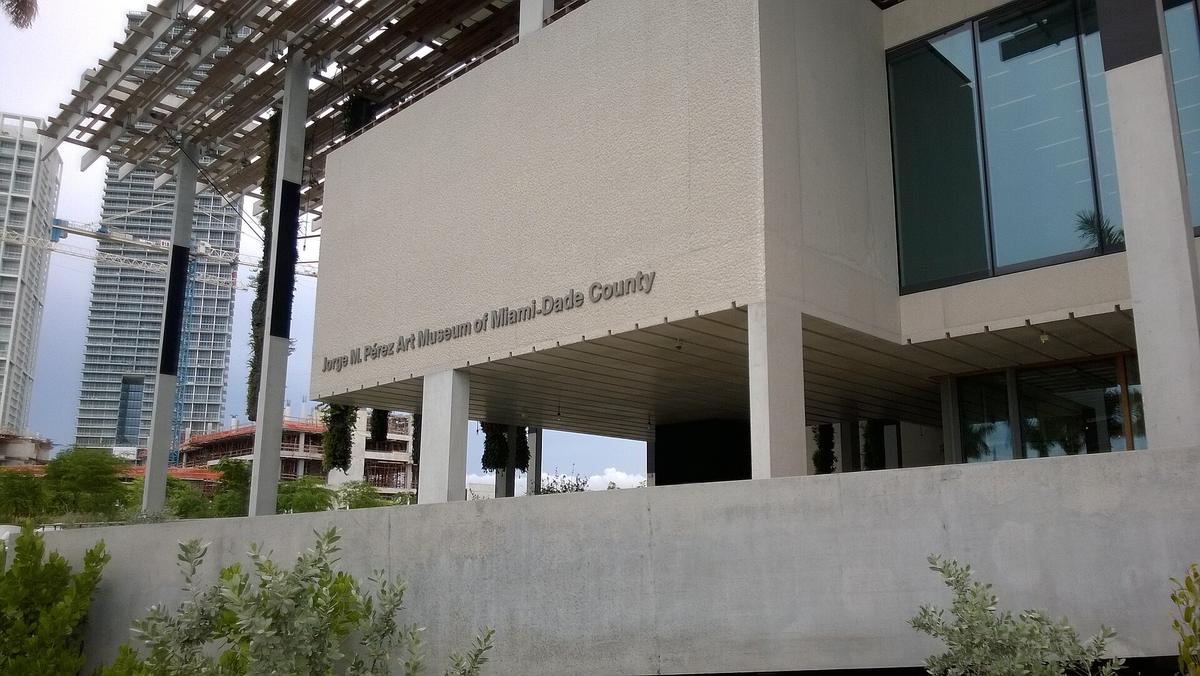
The building is the argument for visiting. Herzog & de Meuron designed a structure that sits lightly on its site: raised on slender columns, wrapped in a concrete lattice that filters subtropical light, and draped with the hanging gardens that have become PAMM's signature. Those gardens are not decorative. They are a working system of native epiphytes, bromeliads, and ferns that cool the interior and tie the museum to the climate outside. Miami is a subtropical city where humidity presses down from April through November, and the museum's broad verandas and shaded terraces turn that fact from a liability into a feature. You move between air conditioned galleries and open air walkways without ever feeling trapped.
What the Collection Holds
The permanent collection holds roughly 3,000 works. The exact count is posted on the museum's own site; this number is an approximation. The focus is on international art of the 20th and 21st centuries, with a deliberate emphasis on the Americas, the Caribbean, and the African diaspora. That curatorial choice sets PAMM apart from Miami's other contemporary spaces. Where the Rubell Museum leans toward emerging American artists and the Bass concentrates on global mid career names, PAMM gives you artists whose work speaks to the city's own geography: the Caribbean just ninety miles south, the Latin American capitals whose diaspora reshaped Miami, and the African diaspora routes that run through both.
How to Pace Your Visit
The three gallery floors are compact enough to cover in 90 minutes if you move. Budget two to three hours if you stop at the terraces, sit in the sculpture garden, and eat at Verde. The waterfront restaurant serves lunch with a view across Biscayne Bay toward the Port of Miami cruise ships. It is not cheap, and it is worth the price for the setting alone.
Pamm Miami Closed Wednesday: the One Day You Cannot Go
PAMM closes on Wednesdays. That is the operational detail that derails itineraries. If you arrive on a Wednesday, you face a locked door and a wasted trip across downtown Miami. The museum opens Tuesday through Sunday, with Mondays also closed. Wednesday is the only weekday closure that catches visitors who assume a Tuesday to Saturday schedule. Plan your cultural day around a Tuesday, Thursday, Friday, or weekend. If Wednesday is the only free slot on your calendar, redirect to the Rubell Museum or the Frost Museum of Science next door. Neither closes on Wednesdays.
The last entry is 30 minutes before closing time. Confirm the exact closing hour on pamm.org the day before your visit; seasonal hours shift between peak season (December through April) and the slower summer months. The busy periods are weekends, holiday weeks, and the final weeks of major temporary exhibitions. Arrive on a weekday morning shortly after opening; by 11:00 the queue reaches the road. December through April sees the highest attendance, driven by Art Basel in December and winter tourism. June through September attendance drops, partly because the humidity and hurricane risk keep visitor numbers low.
Perez Art Museum Biscayne Bay: the Setting and How to Get There
Museum Park and the Two-Museum Day
PAMM sits at 1103 Biscayne Blvd. The museum occupies Museum Park, a waterfront green space that also holds the Phillip and Patricia Frost Museum of Science. The two museums share a campus, and the combination is a full day. Start at PAMM in the morning, cross the park for lunch, then spend the afternoon at Frost Science. The park between them, Maurice A. Ferré Park, is a stretch of bayfront lawn with walking paths and a view toward the cruise channel. It is not a destination on its own, but it connects the two museums physically and visually.
Taking the Free Metromover
Getting there without a car is straightforward if you know the transit trick. The nearest Metromover station is Museum Park on the Omni Loop. The Metromover is free. That is the key fact about Miami public transit: the Metromover costs nothing, the Metrorail costs a fare, and tourists who board the wrong system without a ticket incur fines. Board at any downtown station, ride the Omni Loop to Museum Park, and step off directly at the museum entrance. If you arrive via Metrorail from Miami International Airport, get off at Government Center and transfer to the Metromover. The airport to museum journey runs about 25 minutes on the Orange Line plus a short free transfer. Total cost: $2.25 for the Metrorail, zero for the Metromover.
Driving and Rideshare
Driving works but costs. The museum garage charges for parking. Street parking nearby is limited and metered. If you park illegally in the surrounding downtown streets, expect a ticket. Rideshare drop off and pickup at the museum entrance is the simplest option if you are coming from South Beach or Brickell. The drive from South Beach across the MacArthur Causeway takes 15 to 20 minutes in non rush traffic.
Pamm Miami Hanging Gardens: What Makes the Building Unique
The hanging gardens are the first thing you notice. Vertical planters suspended from the concrete roof structure support a community of tropical species that cascade down the facade. The plants are not a decorative afterthought. They are part of the building's environmental strategy: shading the interior, absorbing stormwater, and reducing the heat island effect of the surrounding downtown. From the terraces on the second and third floors, you look out through the gardens toward Biscayne Bay. The view is the point. Miami's skyline rises to the south, the port activity moves to the east, and the museum's own sculpture garden occupies the ground level between the building and the water.
Photography for personal use is allowed in most galleries as long as you do not use flash. Restrictions vary by temporary exhibition; check the signage at each gallery entrance. Backpacks and large bags must be checked at the coatroom. Small purses are permitted. The museum shop sells design objects and art books, and the cafe is open to non ticket holders if you want to use the terrace without touring the galleries.

Maurice Ferre Park Miami Museums: Building a Full Day in Museum Park
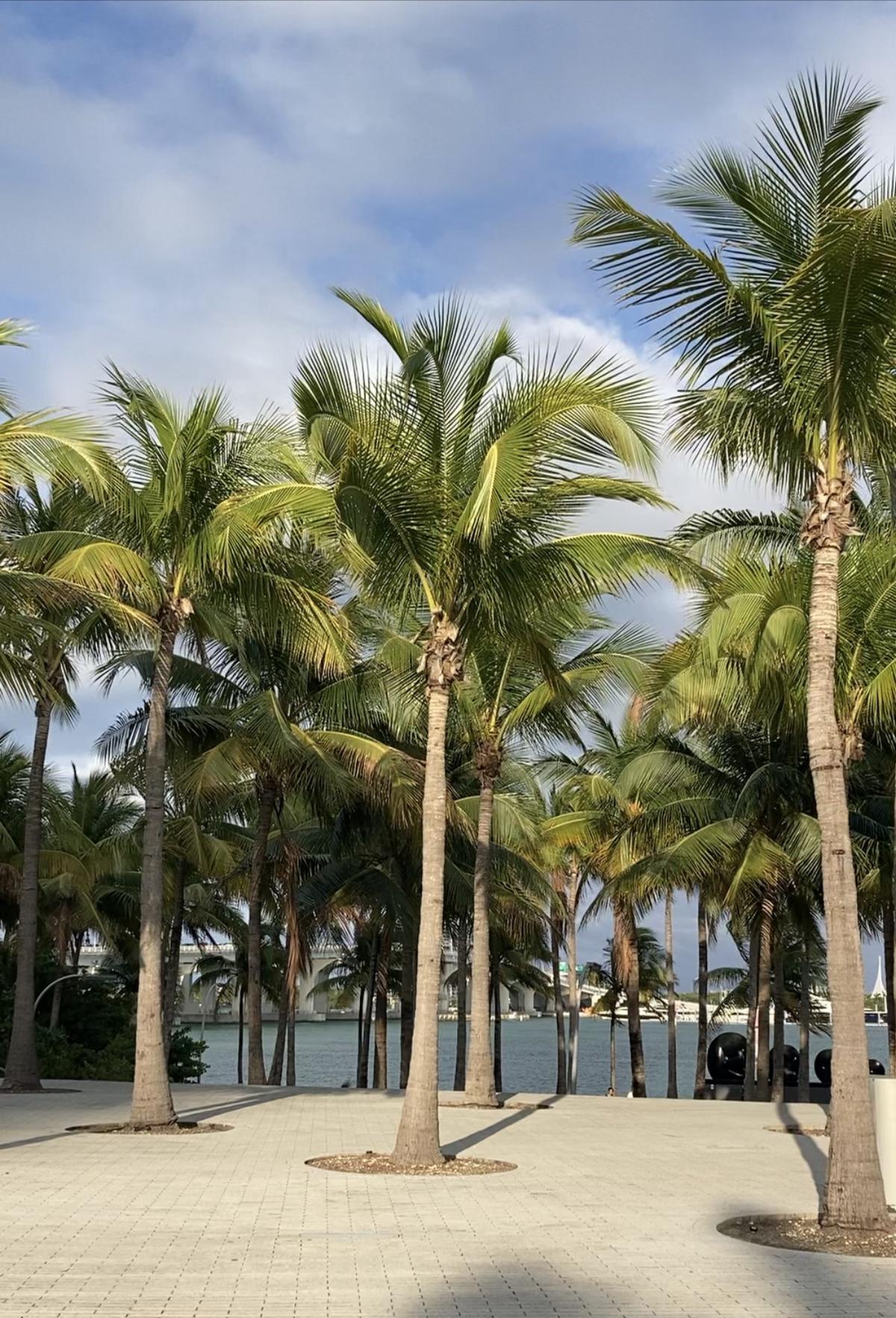
Maurice A. Ferré Park is the green space that connects PAMM and the Frost Museum of Science. You can visit both museums in a single day without rushing. PAMM takes 1.5 to 3 hours. Frost Science, with its planetarium and aquarium, takes 2 to 4 hours. The park between them has benches, bayfront walking paths, and shade. Pack a snack or eat at Verde inside PAMM for lunch, then cross the park to Frost Science for the afternoon. The Kaseya Center, home arena for the Miami Heat, is 0.5 miles south. Bayside Marketplace, the outdoor waterfront mall, is 0.7 miles south. The Freedom Tower, a landmark of Cuban exile history, is 0.6 miles south. All are walkable if the heat permits. In summer, take a rideshare for the half mile.
The common mistake visitors make is staying on South Beach and never crossing the causeways. That turns a complex, multi layered city into an overpriced strip of bars and souvenir shops. Museum Park on Biscayne Bay gives you a version of Miami that most beach tourists miss: the downtown skyline, the working port, the bayfront cultural campus. Spend one morning here and you understand why Miami is not just a beach town.
Common Questions
Is PAMM free on any day?
Yes, on the second Saturday of each month. This schedule is set annually. Confirm the exact date for the current year on pamm.org before planning your visit.
Can I bring a backpack into the museum?
Backpacks and large bags must be checked at the coatroom. Small purses are permitted. Check the bag policy on pamm.org before arriving.
How long does it take to see the whole museum?
1.5 to 3 hours. Allow closer to 3 hours if you plan to eat at Verde restaurant, sit on the terraces, and walk through the sculpture garden.
What should I do if PAMM is closed on Wednesday?
Visit the Rubell Museum in Allapattah or the Frost Museum of Science next door. Neither closes on Wednesdays. Both are reachable from downtown Miami by rideshare or Metromover.
Read next
-
 Miami Hotels, What the Price Bands Actually Get You Across the City
Miami hotel prices swing wildly by season, and a resort fee can reshape the total. Here is what each price band actually delivers across the city.
Miami Hotels, What the Price Bands Actually Get You Across the City
Miami hotel prices swing wildly by season, and a resort fee can reshape the total. Here is what each price band actually delivers across the city.
-
 Where to Stay in Miami, Choosing a District That Matches Your Trip
Every Miami district forces a trade-off between beach access, walkability, nightlife, and budget. This guide matches neighborhoods to the trip you actually want.
Where to Stay in Miami, Choosing a District That Matches Your Trip
Every Miami district forces a trade-off between beach access, walkability, nightlife, and budget. This guide matches neighborhoods to the trip you actually want.
-
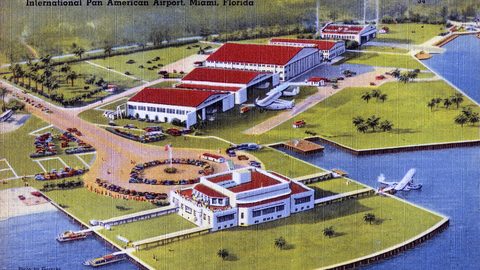 Flying Into Miami MIA vs FLL and Getting Out of the Airport
The assumption most first time visitors make is that Miami International Airport serves Miami and Fort Lauderdale Hollywood International serves Fort
Flying Into Miami MIA vs FLL and Getting Out of the Airport
The assumption most first time visitors make is that Miami International Airport serves Miami and Fort Lauderdale Hollywood International serves Fort
-
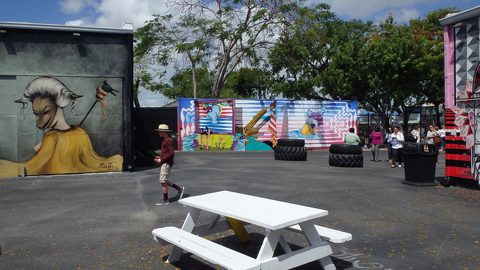 Things to Do in Miami, Ordered by Whether It Is Worth Your Limited Time
Not every Miami attraction earns its place on a four-day itinerary. This guide ranks what to do by how much of your limited time it deserves.
Things to Do in Miami, Ordered by Whether It Is Worth Your Limited Time
Not every Miami attraction earns its place on a four-day itinerary. This guide ranks what to do by how much of your limited time it deserves.
-
 When to Visit Miami and What Each Season Does to the City
Miami's seasons reshape everything: hotel rates, beach comfort, traffic, and whether you will need an umbrella at 3pm every day. Here is the pattern.
When to Visit Miami and What Each Season Does to the City
Miami's seasons reshape everything: hotel rates, beach comfort, traffic, and whether you will need an umbrella at 3pm every day. Here is the pattern.
-
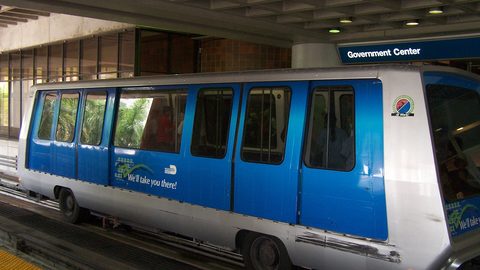 Getting Around Miami Without Wasting Half Your Trip in Traffic
Miami's transport mix confuses visitors: free Metromover, paid Metrorail, costly parking, and causeway gridlock. Here is how to move without losing half your day.
Getting Around Miami Without Wasting Half Your Trip in Traffic
Miami's transport mix confuses visitors: free Metromover, paid Metrorail, costly parking, and causeway gridlock. Here is how to move without losing half your day.
-
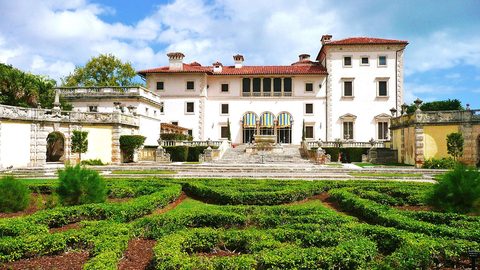 Vizcaya Museum and Gardens
 is a Gilded Age bayfront estate in Miami. Book ahead with timed entry to avoid queuing at the gate and again at the house.
Vizcaya Museum and Gardens
Vizcaya Museum and Gardens is a Gilded Age bayfront estate in Miami. Book ahead with timed entry to avoid queuing at the gate and again at the house.
-
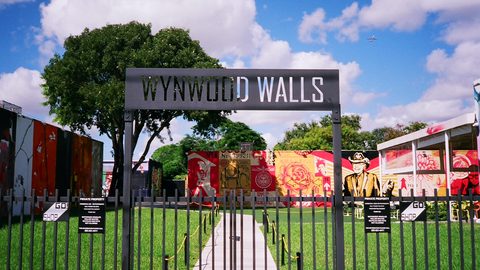 Wynwood Walls
 is a ticketed outdoor street-art compound in Miami's Wynwood district. Advance timed entry is essential to avoid long queues or sell-outs.
Wynwood Walls
Wynwood Walls is a ticketed outdoor street-art compound in Miami's Wynwood district. Advance timed entry is essential to avoid long queues or sell-outs.
-
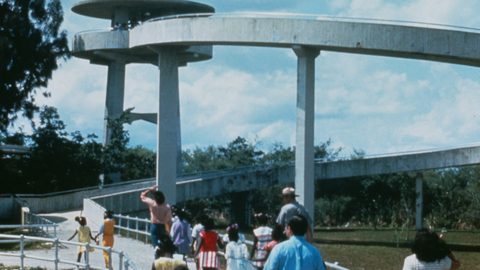 Everglades Shark Valley
Shark Valley is the closest Everglades National Park entrance to Miami, with a 15-mile tram or bike loop through alligator-dense sawgrass prairie.
Everglades Shark Valley
Shark Valley is the closest Everglades National Park entrance to Miami, with a 15-mile tram or bike loop through alligator-dense sawgrass prairie.