Miami Getting Around Without a Car and Keeping Your Sanity
Miami's transport mix confuses visitors: free Metromover, paid Metrorail, costly parking, and causeway gridlock. Here is how to move without losing half your day.
How to Move Around Miami with the Least Friction
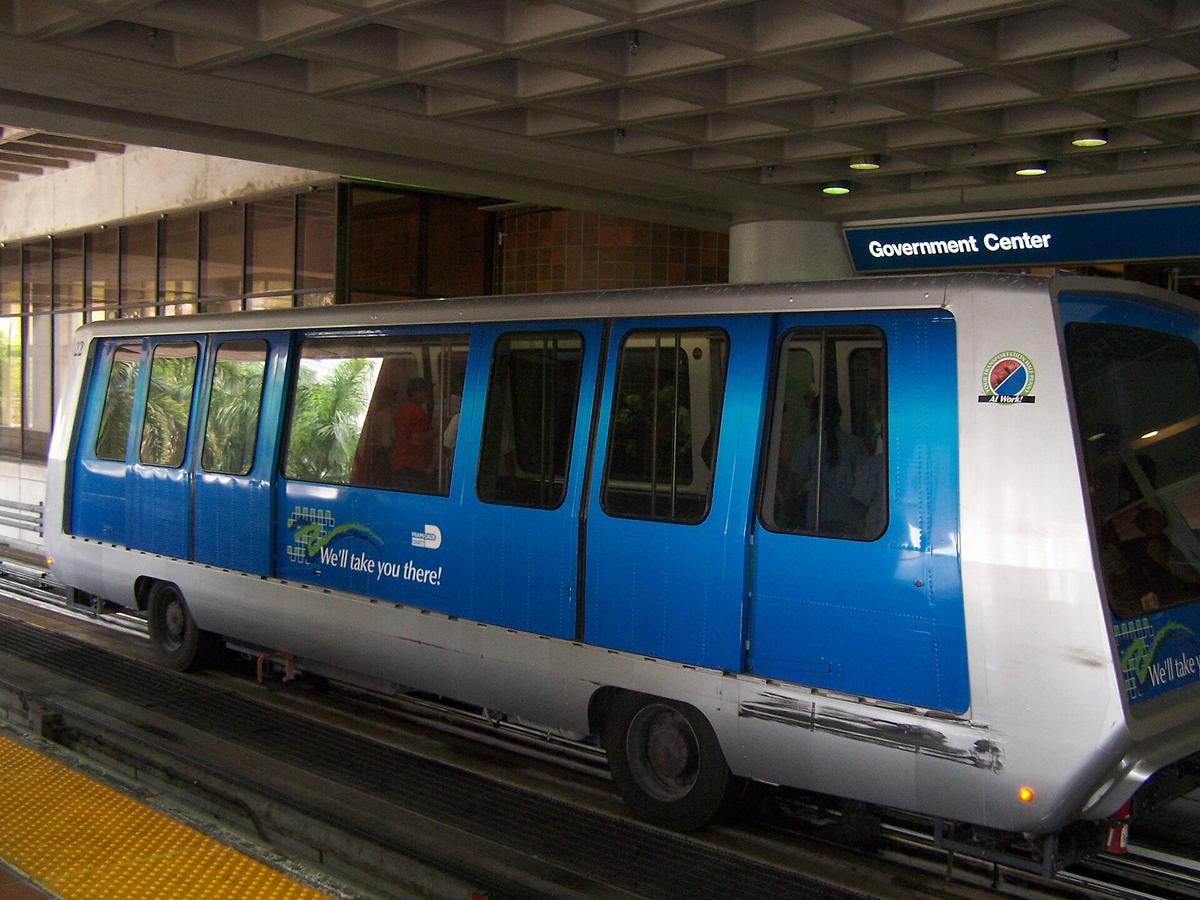
You are standing at the Government Center Metromover station staring at a fare gate. The train in front of you is the same silver train as the one you just rode, but this gate wants your credit card. That is the single most expensive mistake tourists make in Miami. That train is the Metrorail. The one you want, the free one, is the Metromover. It runs on the same elevated track for about half a block and then it splits away. Know which is which before you tap anything. Starting with that distinction is the only way to avoid a fine and a wasted hour.
Miami Metromover vs Metrorail: the Free Ride You Are Already Looking at
The Free Downtown Loops
The Metromover is an automated people mover. It is driverless, elevated, and covers 21 stations across three loops: the Inner Loop, the Omni Loop, and the Brickell Loop, plus a spur that reaches School Board station. It is free. No ticket, no tap, no app. You walk onto the platform, wait 90 seconds, and ride.
The Paid Rail System
The Metrorail is a heavy rail system with 23 stations and two lines: the Green Line and the Orange Line. It is not free. You need an EASY Card or the EASY Pay app to ride. Cash is not accepted onboard. Miss the tap and you risk a fine plus a recorded violation because the system checks by random fare enforcement officers who board without warning.
The confusion happens because both systems share the Government Center and Brickell stations. You descend the escalator at Government Center, see a train arrive, and board without looking at the signage above the doors. The Metrorail trains say Green Line or Orange Line with destination names on digital displays. The Metromover trains say Inner Loop, Omni Loop, or Brickell Loop. The transfer between them is free at Government Center and Brickell, but only if you pay the Metrorail fare first. If you board the Metrorail by mistake, you have committed a fare violation. Fix this by checking the sign on the platform floor: Metromover platforms are painted with a distinct yellow stripe at the edge. Metrorail platforms have none.
Where Each System Goes
The Metromover covers only downtown Miami, Brickell, and the Omni area. It does not reach South Beach. It does not reach Wynwood. It does not reach the airport. The Metrorail Orange Line runs from Dadeland South to the airport in about 40 minutes. The Green Line connects Palmetto to Dadeland South. That is the complete geography. If your destination is not on or within a 15-minute walk of one of those 44 stations combined, you need a bus, a trolley, or a rideshare.

Miami Beach Parking App Guide: Where Your Money Goes and How to Avoid a Ticket
Street Parking and Zones
Parking on South Beach is a predatory sport. Street parking requires the PayByPhone app plus a decoder ring for resident zones. The zones are color coded and change every few blocks. Park in a resident zone without a decal and the fine is steep, plus the possibility of a tow. The City of Miami Beach updates the zone map quarterly, and the app shows you which zone you are in if you enable location services. Do this before you put the car in park. The lifeguard towers along the beach have numbered addresses. You can type tower 18 into the app as a location if you are parking near the sand. It is not a guarantee that the zone is legal, but it is a reliable enough reference for a two hour session. Set a timer. Enforcement officers scan plates every 45 minutes in high season.
Hotel Parking and the Free Trolley
If you are staying on the barrier island and plan to drive to the mainland every day, ask at booking about the hotel's daily parking fee. Many South Beach hotels charge a separate fee that is not included in the room rate. The free option is the Miami Beach Trolley, which runs four routes across the island: the South Beach Local, the Collins Express, the Middle Beach Loop, and the North Beach Loop. All are free. The South Beach Local runs every 10 to 15 minutes on Washington Avenue and Collins Avenue between 5th Street and 41st Street. It is the fastest way to move the length of South Beach without a car. The trolleys look like vintage streetcars but run on rubber tires. They have bike racks.
Miami Rideshare vs Rental Car: the Honest Trade Off
The Daily Cost Question
The decision comes down to how many neighborhoods you visit per day and whether you cross a bridge more than twice. A rental car in Miami costs roughly $40 to $70 per day for a compact sedan in low season, more in winter. Insurance adds $15 to $25. Parking at your hotel adds $35 to $55. Parking at a museum or a restaurant adds $10 to $30 per stop. A round trip rideshare from South Beach to Wynwood costs about $18 to $25 each way. That equals the parking cost of the rental car alone, before you factor in the car rental fee itself. Rideshare wins if you make fewer than three paid parking stops per day. Rental car wins if you are visiting four or more neighborhoods in a single day, heading to the Everglades, or staying in a Doral hotel where restaurants and grocery stores are 2 miles apart and the sidewalk network is unreliable.
The Rickenbacker Toll Factor
One fact that tips the balance: the Rickenbacker Causeway toll. It is collected eastbound only, and cash is not accepted. You need a SunPass transponder or you pay by toll by plate, which means a bill mailed to your home address with an administrative fee added to each toll. If you are driving to Key Biscayne for a single beach day, the toll plus the processing fee makes a rideshare cheaper than the cost of a rental car for that trip. The tolls on the MacArthur, Julia Tuttle, and Venetian crossings are zero. Those bridges connect Miami to Miami Beach for free.
Miami Causeway Traffic Patterns: When to Cross and When to Wait
The four bridges that connect mainland Miami to the barrier island are your bottleneck. Traffic stacks on the MacArthur crossing inbound to South Beach between 10am and 2pm on Saturdays and Sundays from December through April. The reverse direction, outbound from South Beach, stacks between 4pm and 7pm. The Julia Tuttle crossing, which drops you at 36th Street on the beach, sees the worst congestion on weekday mornings between 8am and 10am heading east, and between 5pm and 7pm heading west.
The Walkable Crossing
The Venetian Causeway is the pedestrian friendly crossing. It has no toll, a bike lane on both sides, and a sidewalk wide enough for two people. It is a 10 minute walk from the Miami side at NE 15th Street to the beach side at 10th and West Avenue. It is the only crossing where walking is comfortable. The Rickenbacker traffic peaks on weekends between 11am and 3pm when families head to Bill Baggs Cape Florida State Park. A delay of 30 minutes is typical.
Rideshare Pickup Strategy
If you are using a rideshare, the pickup trick on South Beach is to set your pin at a numbered lifeguard tower. Towers run from 1 at South Pointe Park to 38 at 87th Terrace. Drivers cannot park on Ocean Drive to wait for you. They circle or idle in the middle lane, which is illegal. A tower number gives them a legal stopping zone at the beach access point. Tower 16 at 8th Street is the most reliable because it has a marked drop off zone. Tower 1 at South Pointe Park is good but congested on weekends.
What the Free Trolleys Actually Cover
Mainland Routes
The City of Miami runs 13 trolley routes on the mainland. They are free, rubber tired, and cover areas the Metrorail and Metromover do not reach. The Coral Way route connects downtown to Coconut Grove. The Wynwood route runs from the Omni Metromover station to the Wynwood Walls. The Little Havana route connects the Calle Ocho corridor with the downtown transfer points. These are not fast. A trip from downtown to Coconut Grove takes about 40 minutes by trolley versus 15 minutes by rideshare. But the trolley costs zero and runs every 20 to 30 minutes on weekdays. Schedule depends on real time arrivals, which you check through the Miami Trolley Tracker app. Weekend frequency drops to every 40 to 60 minutes on some routes.
When to Skip the Bus
If you are going from Little Havana to the Design District, the fastest public transit route is a Metrobus from Calle Ocho to the Metrorail at the Culmer station, then the Orange Line north to the Design District station, then a 15 minute walk east. That takes about 55 minutes. A rideshare takes 20 minutes. The Metrobus fleet of approximately 800 buses is large but headways are uneven outside the main East West corridors. Relying on a bus for a time sensitive reservation is a risk.
The Pedestrian Friendly Crossing: Venetian Causeway
The Venetian Causeway is a low bridge over Biscayne Bay with a series of small islands in the middle. It has a sidewalk on both sides and a speed limit of 30 mph. A walk from the mainland side at NE 15th Street to the beach side at 10th Street and West Avenue takes 10 to 12 minutes. The view includes the Venetian Islands mansions and the downtown skyline. It is the only crossing where you do not feel like a car is going to clip your shoulder. Bicycles use the same lane. If you are staying in the Design District or Edgewater and want to walk to the beach, this is your route. The drawback is the ends: the Miami side dumps you onto NE 15th Street in an industrial fringe a 10 minute walk from the nearest Metromover station at Park West. The beach side lands you on West Avenue at 10th Street, which is a 5 minute walk from the Art Deco Historic District. Use it once for the experience, then decide if the walk is worth repeating.
Failure Case: When the Normal Route Falls Apart
It is 1am. You are on Ocean Drive. The Metromover stopped running at midnight. The Metrorail stopped at midnight. The trolleys stopped at 11pm. Your only option is a rideshare, and surge pricing multiplies the fare by 2.5 to 4 times. A ride from South Beach to Brickell that costs $15 at noon costs $55 at 1am. Walking is not safe between neighborhoods at that hour. Rideshare drivers cancel frequently. The solution is to pre schedule a ride before the surge starts, or to stay in one neighborhood until 6am when transit resumes. The single thing that most often goes wrong on a Miami trip is the assumption that transit runs late. It does not.
Common Questions
Can I use the EASY Card on the Metromover?
No. The Metromover requires no payment of any kind. You walk on and off. The EASY Card is for Metrorail, Metrobus, and Tri Rail.
What happens if I ride the Metrorail without paying?
Fare enforcement officers board at random stations. The fine for a first offense is $100 plus a $25 administrative fee. Repeat violations can result in a citation and a mandatory court appearance.
Is the Miami Beach Trolley actually free or is there a catch?
It is free. No app, no ticket, no swipe. It is funded by the City of Miami Beach Parking Department. It runs year round, four routes, 7am to midnight on weekdays and 8am to midnight on weekends.
Do I need a SunPass for the Rickenbacker Causeway?
You need a SunPass transponder, a SunPass account with a license plate linked, or you accept toll by plate, which mails a bill to your home address with an administrative fee per toll event. Cash is not accepted at any Miami Dade toll facility.
How far apart are Wynwood and South Beach by rideshare?
About 15 to 20 minutes in normal traffic, 30 to 45 minutes during peak hours. The distance is 4.5 miles across the MacArthur Causeway. A rideshare costs $18 to $25 each way depending on demand.
Read next
-
 Miami Hotels, What the Price Bands Actually Get You Across the City
Miami hotel prices swing wildly by season, and a resort fee can reshape the total. Here is what each price band actually delivers across the city.
Miami Hotels, What the Price Bands Actually Get You Across the City
Miami hotel prices swing wildly by season, and a resort fee can reshape the total. Here is what each price band actually delivers across the city.
-
 Where to Stay in Miami, Choosing a District That Matches Your Trip
Every Miami district forces a trade-off between beach access, walkability, nightlife, and budget. This guide matches neighborhoods to the trip you actually want.
Where to Stay in Miami, Choosing a District That Matches Your Trip
Every Miami district forces a trade-off between beach access, walkability, nightlife, and budget. This guide matches neighborhoods to the trip you actually want.
-
 Flying Into Miami MIA vs FLL and Getting Out of the Airport
The assumption most first time visitors make is that Miami International Airport serves Miami and Fort Lauderdale Hollywood International serves Fort
Flying Into Miami MIA vs FLL and Getting Out of the Airport
The assumption most first time visitors make is that Miami International Airport serves Miami and Fort Lauderdale Hollywood International serves Fort
-
 Things to Do in Miami, Ordered by Whether It Is Worth Your Limited Time
Not every Miami attraction earns its place on a four-day itinerary. This guide ranks what to do by how much of your limited time it deserves.
Things to Do in Miami, Ordered by Whether It Is Worth Your Limited Time
Not every Miami attraction earns its place on a four-day itinerary. This guide ranks what to do by how much of your limited time it deserves.
-
 When to Visit Miami and What Each Season Does to the City
Miami's seasons reshape everything: hotel rates, beach comfort, traffic, and whether you will need an umbrella at 3pm every day. Here is the pattern.
When to Visit Miami and What Each Season Does to the City
Miami's seasons reshape everything: hotel rates, beach comfort, traffic, and whether you will need an umbrella at 3pm every day. Here is the pattern.
-
 Miami Itinerary How to Spend Two or Three Days Without Rushing
How to spend two or three days in Miami with a plan that crosses the causeways and balances beach time with neighbourhoods, arts, and evenings.
Miami Itinerary How to Spend Two or Three Days Without Rushing
How to spend two or three days in Miami with a plan that crosses the causeways and balances beach time with neighbourhoods, arts, and evenings.
-
 United States Travel Guide for First-Timers Who Want the Real Picture
The United States delivers extraordinary geographic and cultural variety, but its sheer scale, car dependency, and tipping economy surprise first-timers. Start here.
United States Travel Guide for First-Timers Who Want the Real Picture
The United States delivers extraordinary geographic and cultural variety, but its sheer scale, car dependency, and tipping economy surprise first-timers. Start here.
-
 Staying Connected While Traveling Through the United States
Prepaid eSIMs work well in US cities, but a physical T-Mobile or AT&T SIM bought at arrival gives better rural coverage for national parks and long highway drives.
Staying Connected While Traveling Through the United States
Prepaid eSIMs work well in US cities, but a physical T-Mobile or AT&T SIM bought at arrival gives better rural coverage for national parks and long highway drives.
-
 Best Time to Visit the United States by Region and Season
The United States spans so many climates that no single season works everywhere. Here is what each region delivers, and when to stay away.
Best Time to Visit the United States by Region and Season
The United States spans so many climates that no single season works everywhere. Here is what each region delivers, and when to stay away.