Vienna Shopping Local Products and the Streets Where You Find Them
Most of what you see sold to tourists in the Innere Stadt is not from Vienna. The Mozartkugeln in the gift shops are mass produced in Germany.
Vienna Shopping: Where to Find What is Made Here and What is Not
Most of what you see sold to tourists in the Innere Stadt is not from Vienna. The Mozartkugeln in the gift shops are mass produced in Germany. The Dirndl in that window is from a factory in Bangladesh. To find goods actually made in the city, leave the cathedral square. Enter the workshops, the manufacturers with a Vienna address, and the markets where the sellers grow or make what they sell. Here is which goods are produced inside the city limits, where to find them, and how to tell the real from the souvenir rack.
Vienna Markets and Streets Shopping: Where to Go and What to Skip
Vienna has two distinct shopping zones. One is the historic core and its pedestrian streets. The other is a ring of neighbourhood markets and local streets where residents buy their food and clothes. Use both, but for different reasons.
Naschmarkt: The Food Market That Shuts on Sunday
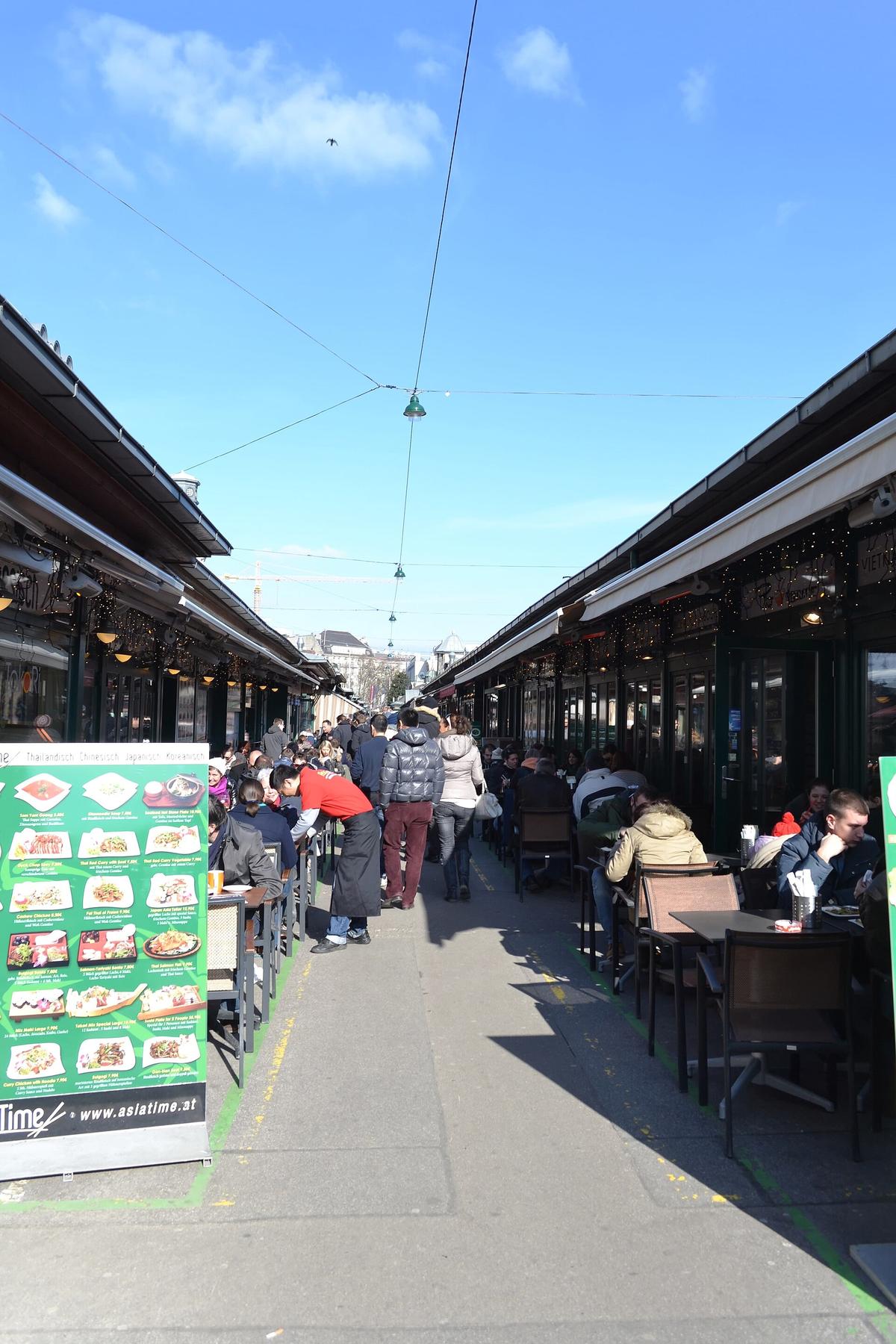
Naschmarkt, along the Wienzeile in the 6th district, is Vienna's main daily food and produce market with approximately 120 fixed stalls. It runs Monday to Friday and Saturday. It is closed on Sunday. Arrive before 10:00 on a Saturday to get through before the flea market crowds arrive. The Saturday flea market runs at the same site. For food stalls and restaurants, this is the place: Fisch Gruber at Stand 45-48 for fish from Austrian waters, Urbanek at Stand 46-51 for Viennese delicacies, and the Gegenbauer vinegar stand (Stand 111-114) for oil and vinegar made in Vienna. The sit down restaurants at the Naschmarkt are expensive for what you get. The cooked food stalls are a better deal.
Mariahilfer Straße: Mainstream and Dense
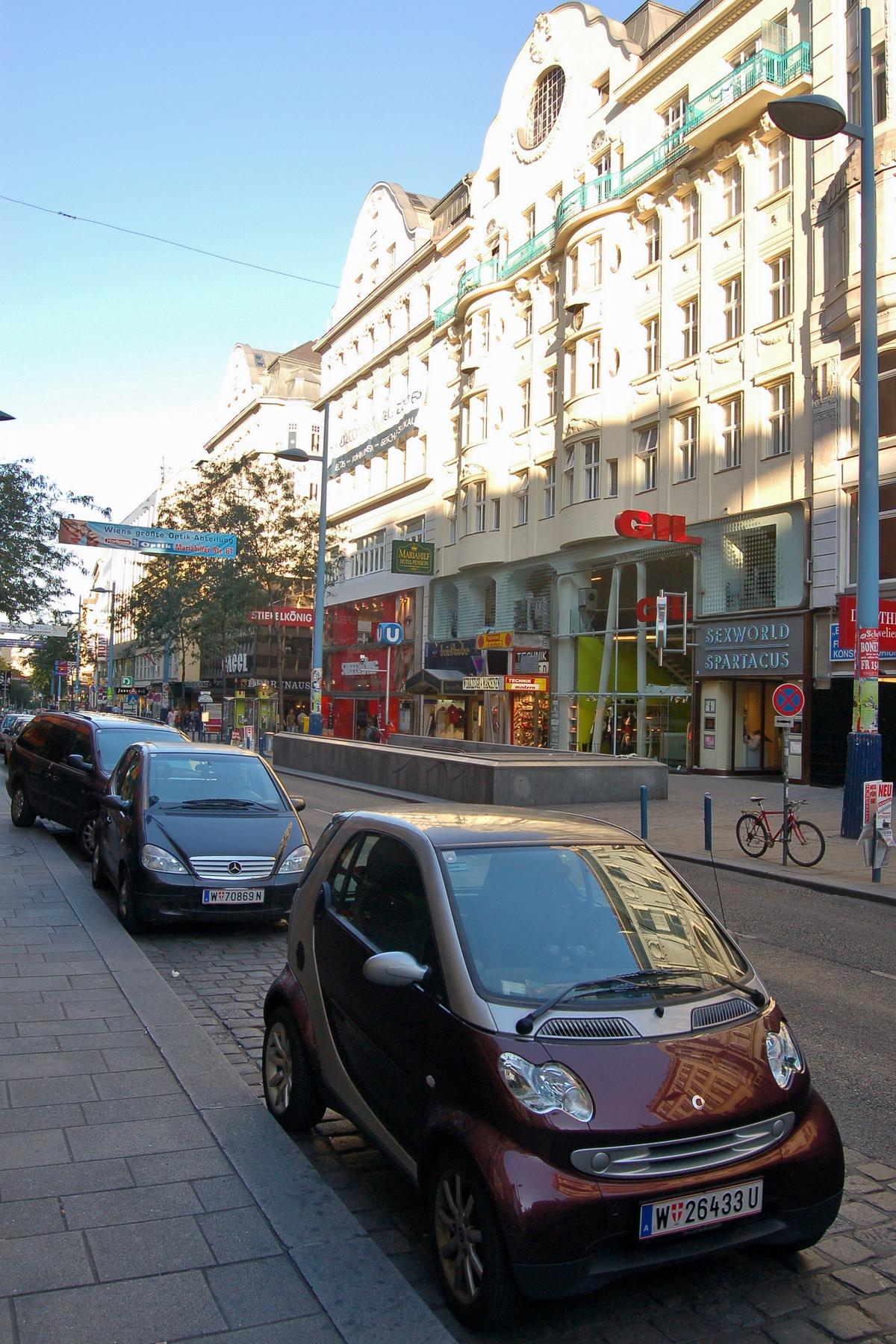
Mariahilfer Straße, running through the 6th and 7th districts, has the highest concentration of international fashion chains in the city. It is dense, noisy, and uncompromisingly commercial. You come here for Zara, H&M, and the department stores Gerngross and Peek & Cloppenburg, not for anything local. The street is pedestrianised for most of its length. Walk between the U-Bahn stations Zieglergasse and Neubaugasse in about 15 minutes. The noise and crowd density is worse on Saturday afternoons. Tuesday morning is quietest.
Neubau: Design Shops and Independent Galleries
The 7th district (Neubau) around Kirchengasse, Lindengasse, and Zollergasse is Vienna's concentration of independent boutiques and designers from Austria. Here you find Petar Petrov, Schella Kann, and Femme Maison, each with a Vienna flagship store and design studio. For contemporary design stores focused on Austrian designers, go to Die Werkbank at Breite Gasse 1 and Österreicherin at Kirchengasse 19. The concept stores Park (Mondscheingasse 20) and S/GHT (Lindengasse 14) carry Austrian fashion and design. Franz Schulz at Neubaugasse 34 makes leather goods and saddlery in its Vienna workshop. The area also hosts the Spittelberg Christmas market in December, which focuses on artisan crafts. Neubau's shop hours tend to run 11:00 to 19:00, later than the Innere Stadt.
Innere Stadt: Tradition at a Premium
The 1st district holds the luxury brands on Kohlmarkt and Graben and the galleries around Dorotheergasse and Spiegelgasse. This is also where you find the traditional workshops that have operated for centuries. But the markup on goods sold here runs roughly 20 to 30 percent above what the same item costs at an address outside the centre. Kirchtag at Plankengasse 4 makes umbrellas on site. Handschuhmanufaktur St. Anna at Annagasse 3 makes gloves on site. Mühlbauer at Seilergasse 10 makes hats on site. Scheer at Bräunerstraße 4 has been making bespoke shoes since 1816. These workshops do not discount and do not carry gift packaging. You are paying for work that happens one street away, not for a factory in China. Book a few days ahead for bespoke fittings at Scheer or Mühlbauer.

What to Buy in Vienna: Goods Actually Produced in the City
The single most useful question when shopping in Vienna: was this made in Vienna? If the shop cannot answer, assume no. Here is what is produced within the city limits.
Augarten Porzellanmanufaktur has been making porcelain in Vienna at the Augarten palace since 1718. In house production means every piece is painted here. A teacup starts in the region of €50 and a dinner plate around €80. No seconds shop, no online discount.
J. & L. Lobmeyr on Kärntner Straße 26 has been making glassware and chandeliers since 1823. The chandeliers at the Metropolitan Opera in New York are Lobmeyr. A single glass starts around €30. The shop is in the 1st district but the factory is in Vienna; the retail staff can tell you which pieces are made here versus imported stock.
Wiener Silber Manufactur, founded 1882, produces silverware and tableware in Vienna. The flagship store is at Kärntner Straße 18. A teaspoon runs roughly €45. The pattern catalog goes back to the 1880s and they will still make a piece from a discontinued mould if you wait 10 weeks.
Wiener Werkstätte design heritage lives at the MAK museum and at the few shops that carry licensed reproductions from the original archives. Look for the Wiener Werkstätte stamp on metalwork and textiles. Die Werkbank in Neubau carries a selection.
Frey Wille enamel jewellery is produced in Vienna. The flagship store at Stephansplatz carries the full collection. The enamel process is done by hand in Vienna. A brooch starts around €120.
Original Wiener Schneekugelmanufaktur on Schumanngasse 87 in the 17th district has been making snow globes since 1900. The workshop is open for visits by appointment. A globe costs between €25 and €80. These are not the plastic globes sold at the souvenir stand at Stephansdom.
Altmann & Kühne on Graben 30 has been making confectionery in Vienna since 1928. The tiny chocolates are hand dipped and sold by weight, roughly €4 for 100 grams. The shop is the size of a hallway.
| Market | District | Focus | Days Open | Stalls |
|---|---|---|---|---|
| Naschmarkt | 6th | Food, produce, restaurants, Saturday flea market | Mon-Sat, closed Sun | ~120 fixed |
| Karmelitermarkt | 2nd | Organic and regional produce | Fri-Sat | ~30 |
| Rochusmarkt | 3rd | Organic and regional produce | Mon-Sat | ~40 |
| Brunnenmarkt | 16th | Regional produce, prepared foods | Mon-Sat | ~170 |
| Kutschkermarkt | 18th | Regional produce, Viennese specialities | Mon-Sat | ~25 |
| Viktor-Adler-Markt | 10th | Regional produce, flowers | Mon-Sat | ~60 |
Vienna Design Shops Neubau: Where Vienna’s Independent Designers Sell
The Neubau area (7th) is where you find what Vienna makes in this decade. The design shops here carry fashion, jewellery, and home goods from living designers with workshops in the city, not heritage brands that closed their factories decades ago.
Key Neubau Addresses
Die Werkbank at Breite Gasse 1 is a design store focused on Austrian designers. It carries limited edition furniture, lighting, and ceramics. Prices run from €50 for a ceramic mug to €2,000 for a chair. The shop has a catalogue of around 40 active Austrian designers.
Österreicherin at Kirchengasse 19 focuses on Austrian designers exclusively. It carries fashion, accessories, and home goods. The staff can tell you whether each item is made in Vienna or elsewhere in Austria. The selection changes quarterly with new designer submissions.
Song at Praterstraße 11 (2nd district but a short walk from the 7th) is a concept store carrying Austrian fashion and design. It has a cafe inside. Park at Mondscheingasse 20 and S/GHT at Lindengasse 14 are similar concept stores. All three carry Austrian labels that cannot be found in the department stores on Mariahilfer Straße.
Why Neubau Instead Of The Innere Stadt
The same designer piece you find on Kirchengasse costs roughly 20 percent more in a 1st district boutique. The Neubau shops also stay open later, typically 11:00 to 19:00 Monday through Saturday, while the Innere Stadt tends to close by 18:00. The exception is the Christmas market season when the 1st district stays open later.
For bespoke leather goods made in Vienna, Franz Schulz at Neubaugasse 34 has been operating since 1873. A custom leather satchel starts in the region of €400 and takes 8 weeks. The workshop is visible from the showroom.
.jpg)
What is Actually Local: Identifying Genuinely Viennese Products
Three rules separate a Viennese product from a souvenir that was dropped off by a delivery truck. First, ask where the item is produced. If the answer is "in our workshop" or "at our factory in Vienna", you are at a real producer. If the answer is "designed in Vienna", the production is likely elsewhere. Second, check the price. A hand made Augarten porcelain teacup cannot cost €15. A genuine Lobmeyr champagne flute cannot cost €8. The cheap version is the imported version. Third, look at the packaging. A real Viennese manufacturer puts a street address on the box, not a website. The Altmann & Kühne box says Graben 30. The Mühlbauer hat box says Seilergasse 10. The Kirchtag umbrella box says Plankengasse 4.
For food products, the same rule applies. The Julius Meinl coffee sold at the flagship store on Graben 19 is roasted in Vienna. The Julius Meinl coffee sold at a souvenir stand on Kärntner Straße may not be; check the label for the roasting address. The same goes for honey from Wiener Honig, which keeps apiaries in Vienna districts 13, 19, 21, 22, and 23 but also sources honey from outside the city. The jar labelled "Wiener Honig" with a district address is the local one.
For wine, the designation is clear. Any wine labelled Wiener Gemischter Satz DAC was grown within the city limits. Vienna has approximately 600 hectares under vine and roughly 140 wine estates inside the city boundary. The Heurigen in districts 19 (Grinzing, Sievering, Nußdorf), 21 (Stammersdorf, Strebersdorf), 23 (Mauer), and 16 (Ottakring) sell estate grown Vienna wine direct. A glass at a Heuriger costs about €3 to €4, a bottle about €10 to €15. These are the only places you can be certain the wine travelled less than 10 kilometres from vine to glass.
Common Questions
What is the best day to shop at Naschmarkt?
Saturday. The food stalls are open and the flea market runs at the same location. Arrive by 10:00 to avoid the worst crowds. Naschmarkt is closed on Sunday.
Which Viennese porcelain is actually made in Vienna?
Augarten Porzellanmanufaktur, founded 1718, produces everything at the Augarten palace in Vienna. Any other porcelain sold in Vienna is imported from outside the city.
Where should I go for Austrian designer fashion in Vienna?
Neubau in the 7th district, specifically Kirchengasse, Lindengasse, and Zollergasse. Petar Petrov, Schella Kann, and Femme Maison have flagship stores and design studios there.
Is it worth buying Mozartkugeln in Vienna?
Not unless you buy from a specific Viennese producer like Altmann & Kühne or Xocolat, which produce their chocolate in Vienna. The generic Mozartkugeln sold in souvenir shops are mass produced in Germany.
Can I visit Viennese workshops to see production?
Some. The Original Wiener Schneekugelmanufaktur on Schumanngasse 87 accepts visitors by appointment. Kirchtag and Mühlbauer have visible workshops on site. Scheer requires a booking for bespoke shoe fitting.
Read next
-
 Vienna Hotels What the Price Bands Actually Get You
Vienna hotel price bands deliver distinctly different experiences. Here is what each band actually gets you, from building type to seasonal pricing patterns.
Vienna Hotels What the Price Bands Actually Get You
Vienna hotel price bands deliver distinctly different experiences. Here is what each band actually gets you, from building type to seasonal pricing patterns.
-
 Where to Stay in Vienna District by District and What Each Costs You
Where to stay in Vienna depends on what you are willing to trade off. Each district costs you something different in time, money, and atmosphere.
Where to Stay in Vienna District by District and What Each Costs You
Where to stay in Vienna depends on what you are willing to trade off. Each district costs you something different in time, money, and atmosphere.
-
 Flying into Vienna airport and getting to the city without a mistake
Vienna airport offers four ways into the city, and the wrong choice can cost you time or money.
Flying into Vienna airport and getting to the city without a mistake
Vienna airport offers four ways into the city, and the wrong choice can cost you time or money.
-
 What to Do in Vienna Ordered by Whether It Is Worth the Time
Three full days is the minimum to see the core sights. Less forces a brutal trade-off between the imperial palaces and any sense of Vienna's neighbourhood lif
What to Do in Vienna Ordered by Whether It Is Worth the Time
Three full days is the minimum to see the core sights. Less forces a brutal trade-off between the imperial palaces and any sense of Vienna's neighbourhood lif
-
 When to Visit Vienna and What Each Season Does to the City
At 16:30 in mid-December, the Rathausplatz Christmas market is already shoulder to shoulder. You cannot move freely; you shuffle.
When to Visit Vienna and What Each Season Does to the City
At 16:30 in mid-December, the Rathausplatz Christmas market is already shoulder to shoulder. You cannot move freely; you shuffle.
-
 Getting Around Vienna Without Wasting Half Your Trip on Foot
Most visitors waste the first hour of their Vienna trip standing on a tram platform, ticketless, watching the doors close.
Getting Around Vienna Without Wasting Half Your Trip on Foot
Most visitors waste the first hour of their Vienna trip standing on a tram platform, ticketless, watching the doors close.
-
 Austria Travel Guide, Imperial Cities and Alpine Valleys by Train
Austria pairs baroque imperial cities with Alpine valleys close enough to reach by train, making a week the minimum to experience both.
Austria Travel Guide, Imperial Cities and Alpine Valleys by Train
Austria pairs baroque imperial cities with Alpine valleys close enough to reach by train, making a week the minimum to experience both.
-
 Staying connected in Austria with eSIM, local SIM, or just hotel WiFi
Austrian mobile coverage vanishes in the places you need it most: deep Alpine valleys and high passes.
Staying connected in Austria with eSIM, local SIM, or just hotel WiFi
Austrian mobile coverage vanishes in the places you need it most: deep Alpine valleys and high passes.
-
 Best Time to Visit Austria for Cities, Lakes and Skiing Without Crowds
Austria's seasons dictate what's open: Christmas markets end on 24 December, the Salzburg Festival consumes July and August, and many hotels close the first
Best Time to Visit Austria for Cities, Lakes and Skiing Without Crowds
Austria's seasons dictate what's open: Christmas markets end on 24 December, the Salzburg Festival consumes July and August, and many hotels close the first