What the East Side Gallery in Berlin Is and Whether It Is Worth the Time
What the East Side Gallery in Berlin is really like, whether the 1.3km Wall mural stretch is worth your time, and how to pair it with the Oberbaumbrücke.

What the East Side Gallery in Berlin is and Whether it is Worth the Time
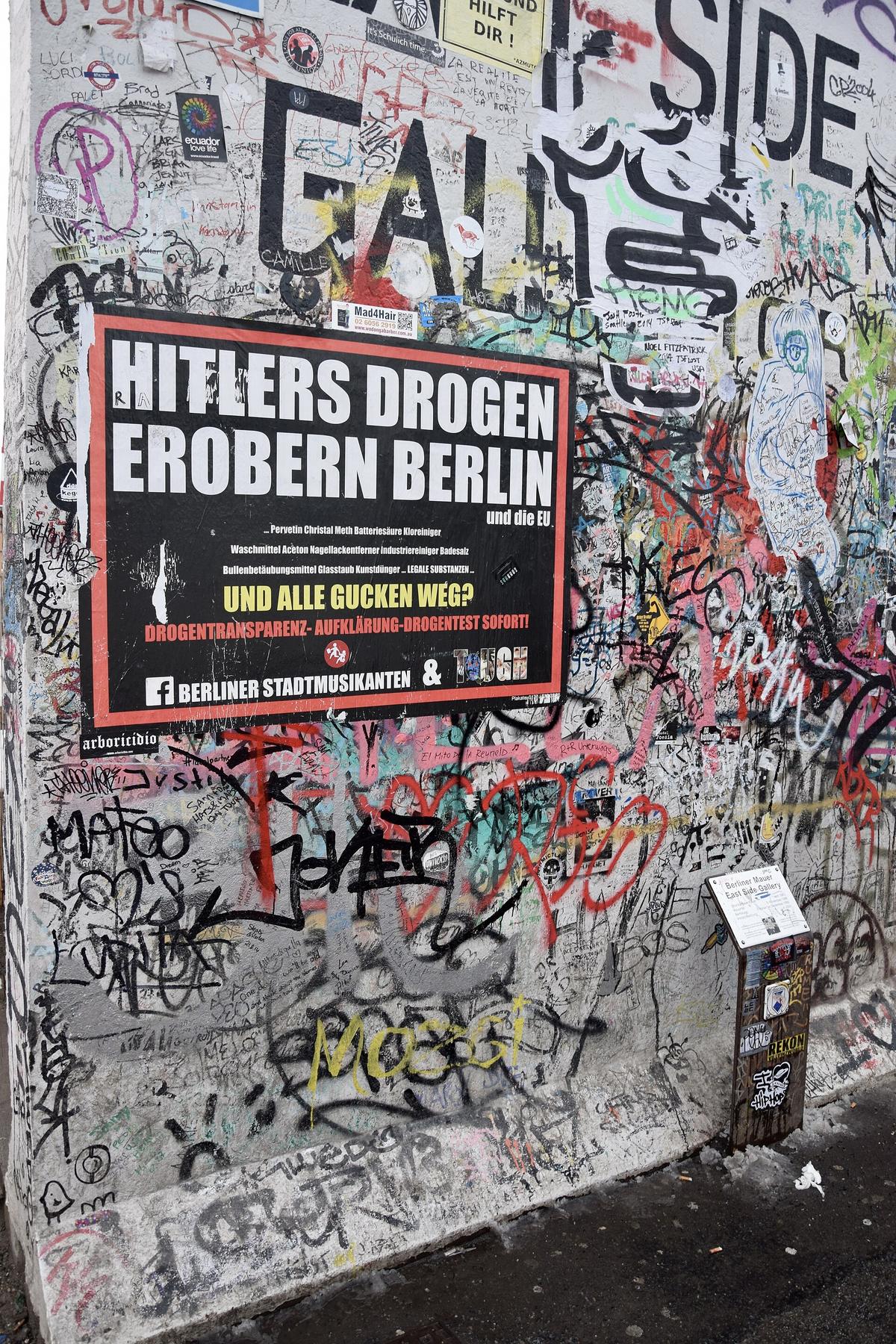
Tour buses idle along Mühlenstraße by 09:30. Passengers pour out, take a photo of the Fraternal Kiss mural, and climb back aboard believing they have seen the Berlin Wall. They have not. The East Side Gallery Berlin is a 1.3 km remnant of the Wall. But the 106 murals painted across it were created in 1990 by 118 artists from 21 countries as a deliberate art project after the Wall fell. They were not Cold War graffiti written while East German guards watched from watchtowers. That distinction matters. Visitors who expect raw, authentic Wall surfaces leave disappointed. Those who arrive knowing what it is, a free open-air monument that documents a single moment of post-reunification hope, will find it one of the most accessible and photogenic historical sites in the city.
- Location: Mühlenstraße, between Berlin Ostbahnhof and Oberbaumbrücke, Friedrichshain-Kreuzberg
- Length: 1,316 m (1.3 km)
- Murals: 106, painted in 1990 by 118 artists from 21 countries
- Walking time end-to-end without stops: 15-20 minutes
- Typical visit duration with photo stops: 45-90 minutes
- Entry fee: Free; open-air public monument
- Best time for light on murals: Morning, when sun illuminates the painted eastern face
- Best time for lower crowds: Before 09:00
- Nearest S-Bahn: Berlin Ostbahnhof (S3, S5, S7, S9)
- Nearest U-Bahn: U1 Warschauer Straße
- Restoration: Murals restored in 2009 with a protective coating applied
- Management: Stiftung Berliner Mauer (Berlin Wall Foundation); verified details at stiftung-berliner-mauer.de
- Annual visitors: Approximately 3 million (Berlin Senate Department for Economics, Energy and Public Enterprises, 2019 report; verify the current figure with their latest data)
East Side Gallery Berlin Visit: What the Physical Experience is Actually Like
Walking the Riverfront Spine
Stand at the Ostbahnhof end and you face a long, grey concrete spine running alongside the Spree riverbank. The murals are painted on the eastern side of the Wall segment, the side that faced East Berlin and therefore was inaccessible during the division. That orientation means the painted surface catches direct morning light. Arrive before 09:00 and you get the colours at their strongest and the path at its emptiest. Arrive at 11:00 and you share the 1.3 km with tour-bus groups moving in clusters, selfie sticks, and the audible hum of the East Side Mall ventilation system.
The walk itself is straightforward. The surface underfoot is a paved riverside path and adjacent pavement, step-free along the full length. You move between the wall on your right and the river on your left. The experience is narrow physically. The corridor between the concrete and the water is tight, and the Spree is right there, brown and working. You will pass the Oberbaumbrücke at the far end, the historic double-deck bridge that connects Friedrichshain to Kreuzberg. That crossing is the natural finish line for the walk. Cross the bridge into Kreuzberg for Turkish food at the Markthalle Neun or a drink at the riverside bars of Holzmarkt.
Beyond the Wall
Behind you, perpendicular to the wall, the Mercedes-Benz Arena looms. Ahead, the riverside path continues west past YAAM, the Young African Art Market beach bar about 200 m west of Ostbahnhof. Keep going another kilometre to reach Holzmarkt, an urban village of pop-up bars and music venues built on the Spree bank. None of that requires a ticket. None of it closes at night. The East Side Gallery is accessible at all hours. No gate, no guard.
East Side Gallery Berlin Murals: What You Actually See and What is Missing
The Murals That Survive
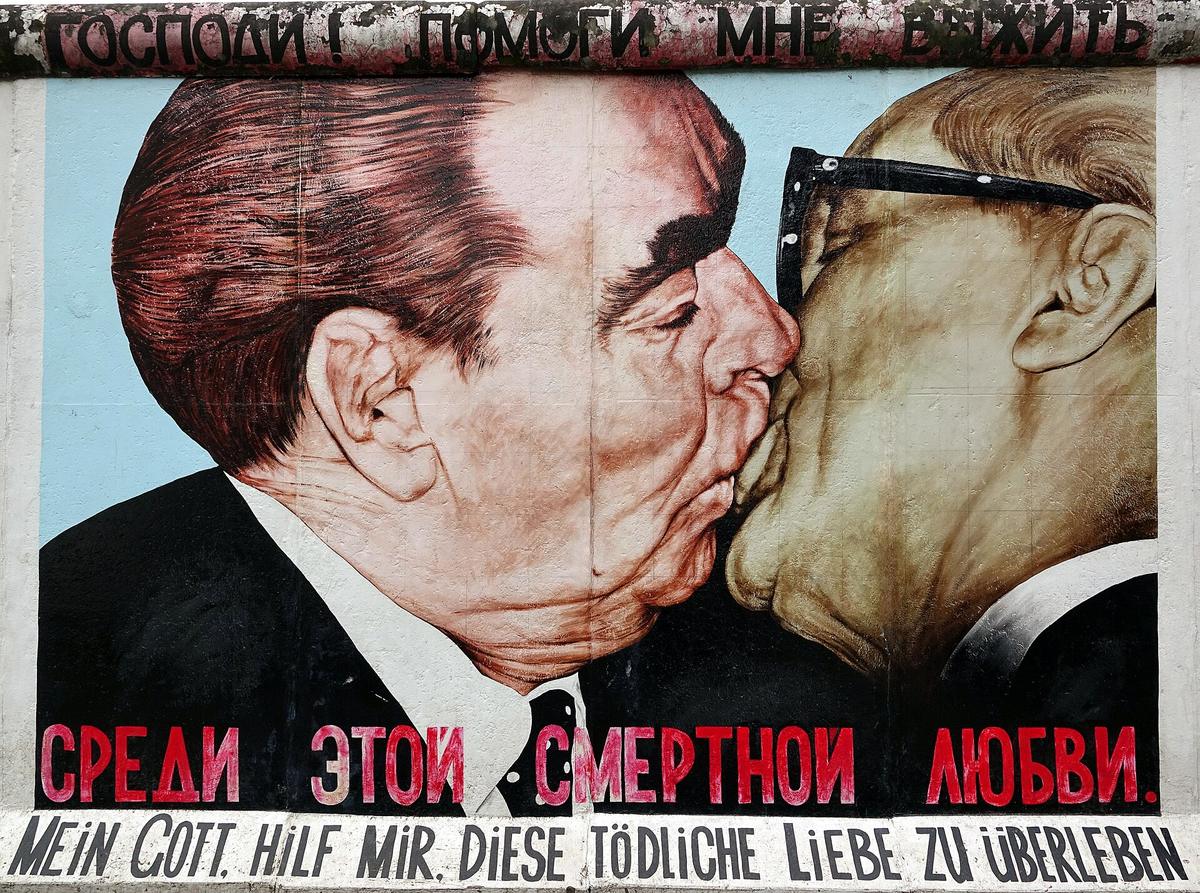
The most famous image is Dmitri Vrubel's Fraternal Kiss, the Brezhnev-Honecker kiss reproduced on a thousand postcards. It sits near the Oberbaumbrücke end. Walk from Ostbahnhof and you pass a sequence of murals that range from the politically pointed to the purely decorative: cartoon astronauts, abstract colour fields, slogans in German, Spanish and Russian. Read the small plaques near the wall or use the BVG FahrInfo app to locate specific works. The numbering on the wall itself is inconsistent.
The Tag Problem
The restoration in 2009 applied a protective coating to the murals. That coating has yellowed unevenly. Some sections look clean; others have a faint beige cast. And a significant portion of the wall, particularly the lower half along the stretch closest to the East Side Mall, is covered in modern tag graffiti. This is the source of most visitor disappointment. The tags are not art-historical graffiti from 1989. They are the work of contemporary writers who treat the wall as an active surface. The Berlin Wall Foundation, which manages the site, has not found a solution that satisfies both preservationists and the street art culture that Berlin's identity depends on. Accept the tags as part of the site's living nature. Or visit the preserved segment at the Gedenkstätte Berliner Mauer on Bernauer Straße, where the Wall is maintained without modern overlay.
East Side Gallery Berlin Worth It: Who Should Walk it and Who Should Skip
Who Should Go
If you have four days in Berlin, the minimum recommended for a proper trip, you have time for this walk. It takes 15-20 minutes moving end to end without stops and 45-90 minutes with photo stops. It pairs naturally with crossing the Oberbaumbrücke into Kreuzberg and with the RAW-Gelände, an alternative cultural centre 600 m from Warschauer Straße that has its own street art, clubs, and a flea market on Sundays. If you are a contemporary history buff, you will value seeing the physical length of the Wall in a single view. If you are a creative or artist, the murals and the overlay of tags document a city that argues with its own public surfaces. If you are a budget-conscious traveller, the entry fee is zero.
Who Should Skip
Skip it if you want a compact, instantly pretty old town. Berlin is not that city, and the East Side Gallery is not that sight. Skip it if you are pressed for time and have already booked the Topography of Terror and the Gedenkstätte Berliner Mauer. Those give you a more sober, more complete historical account of the Wall's function. The East Side Gallery is an open-air monument to the post-1990 artistic response, not to the division itself. Skip it on a rainy day. The murals lose their colour under grey cloud and there is no shelter along the full 1.3 km. Skip it on a trade fair day when hotel prices spike and the tour groups multiply. Being shunted along the narrow path between a wall and a river is not improved by shoulder-to-shoulder crowds.
The Wall Museum East Side Gallery is a private museum at Mühlenstraße 78-80 with Wall history and escape stories. It charges an entry fee and sits right on the path. If you want the deeper historical context after the walk, it is there. If you want the atmospheric walk alone, you do not need it.

East Side Gallery Berlin Crowds: When to Go and What to Expect
Peak Season and the Daily Wave
Summer months from May through September push the site to its peak. The 2019 figure of three million annual visitors means the path is packed from mid-morning to late afternoon. Tour-bus groups disgorge at the Mühlenstraße end in waves, timed to coincide with the 10:00 and 14:00 slots at the nearby DDR Museum or the Reichstag booking times. The narrow path becomes a slow-moving queue.
The Best Hours
Arrive before 09:00 and you share the space with joggers, dog walkers, and the occasional photographer who knows the light. The morning sun hits the murals directly. By 11:00 the buses arrive. By 14:00 the selfie density is at its highest. Evenings after 19:00 in summer thin out again, though the light is behind the wall by then, leaving the murals in shadow. Winter months from November through February see the lowest crowds. A cold Tuesday in January gives you the wall nearly to yourself. You lose colour intensity from the low sun and grey sky. You gain the ability to stand and read the murals without being jostled.
Night access is unrestricted. The path is not lit specifically for the murals, but the ambient light from the East Side Mall and the surrounding streets is enough to walk. Not enough to photograph the paintings well. If you want the wall as a quiet riverside promenade after a beer in Holzmarkt, night works. If you want to see the art, go early.
Common Questions
Do I need to book a ticket to see the East Side Gallery?
No. The East Side Gallery is a free, open-air public monument. No ticket is required. Walk onto Mühlenstraße at any hour.
Where do I start the walk for the best experience?
Start at the Ostbahnhof end, S-Bahn lines S3, S5, S7, S9. Walk east toward the Oberbaumbrücke. The Fraternal Kiss mural is near the bridge. If you start at the Warschauer Straße end, you walk it in reverse. Either direction takes 15-20 minutes moving. The morning light works best starting from Ostbahnhof.
Why are there so many graffiti tags on the murals?
The wall is an active urban surface. Modern tag graffiti is painted over the 1990 murals by contemporary artists. The site's managers have not found a way to prevent this without sealing the wall entirely. The tags are not original to the Cold War. If you want a preserved, untagged Wall segment, visit the Gedenkstätte Berliner Mauer on Bernauer Straße.
Is the wall wheelchair and stroller accessible?
Yes. The full 1.3 km length is step-free with a paved riverside path and adjacent pavement. There is no curb or staircase anywhere along the route.
Where are the toilets near the East Side Gallery?
Pay toilets are available inside the East Side Mall at Mühlenstraße 73 and inside Ostbahnhof. There are no public toilets on the wall path itself.
Read next
-
 Berlin Hotels What the Price Bands Actually Get You
Berlin hotel prices cluster into distinct bands, and what you get for your money varies more by district and timing than by star rating.
-
 Where to Stay in Berlin by District and What Each Costs You
Where you stay in Berlin defines your trip more than in most cities. Each district has a distinct personality, price band, and real trade-off.
-
 Berlin Flights Flying Into BER Airport and Getting to the City
Berlin Brandenburg Airport is Berlin's sole airport. Here are the rail options—FEX, RE7, and S9—and the ticket rules for reaching the city centre.
-
 Berlin Things to Do Ordered by Whether It Is Worth the Time
Berlin's sights range from free and life-changing to time-consuming and skippable. Here is how to sort them by what actually repays the visit.
-
 When to Visit Berlin and What Each Season Does to the City
Berlin's seasons change more than the weather. They determine whether you get lakeside bars and street life or trade fair crowds and closed independent venues.
-
 Getting Around Berlin Without Wasting Half the Trip
Berlin is too sprawling to walk, and the BVG network is the only way to move efficiently. The catch is ticket validation, and getting it wrong costs you.
-
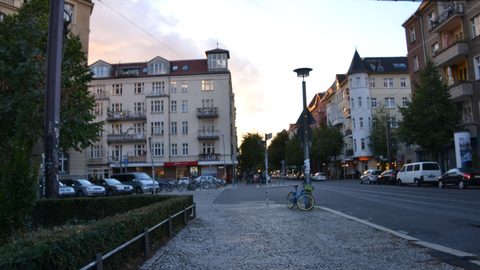 Friedrichshain
 is Berlin's gritty-cool student district, home to the East Side Gallery, the RAW-Gelände club cluster, and denser street art than Kreuzberg.
-
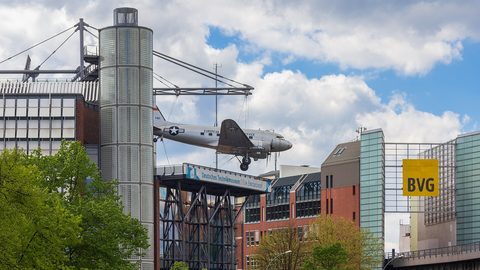 Kreuzberg
 balances its punk past with gentrified present, dense with Turkish food, late-night bars, and a split between leafy Bergmannkiez and loud Oranienstraße.
-
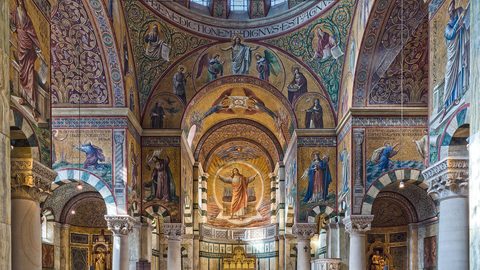 Prenzlauer Berg
 is Berlin's most polished residential district, dense with restored buildings, organic cafes, and families—beautiful but far from gritty