A Ground-Level Logistics Guide to Independent Travel in China
First-time independent travel in China: what you need to know about visas, rail booking, eSIMs, mobile payments, and power adapters.
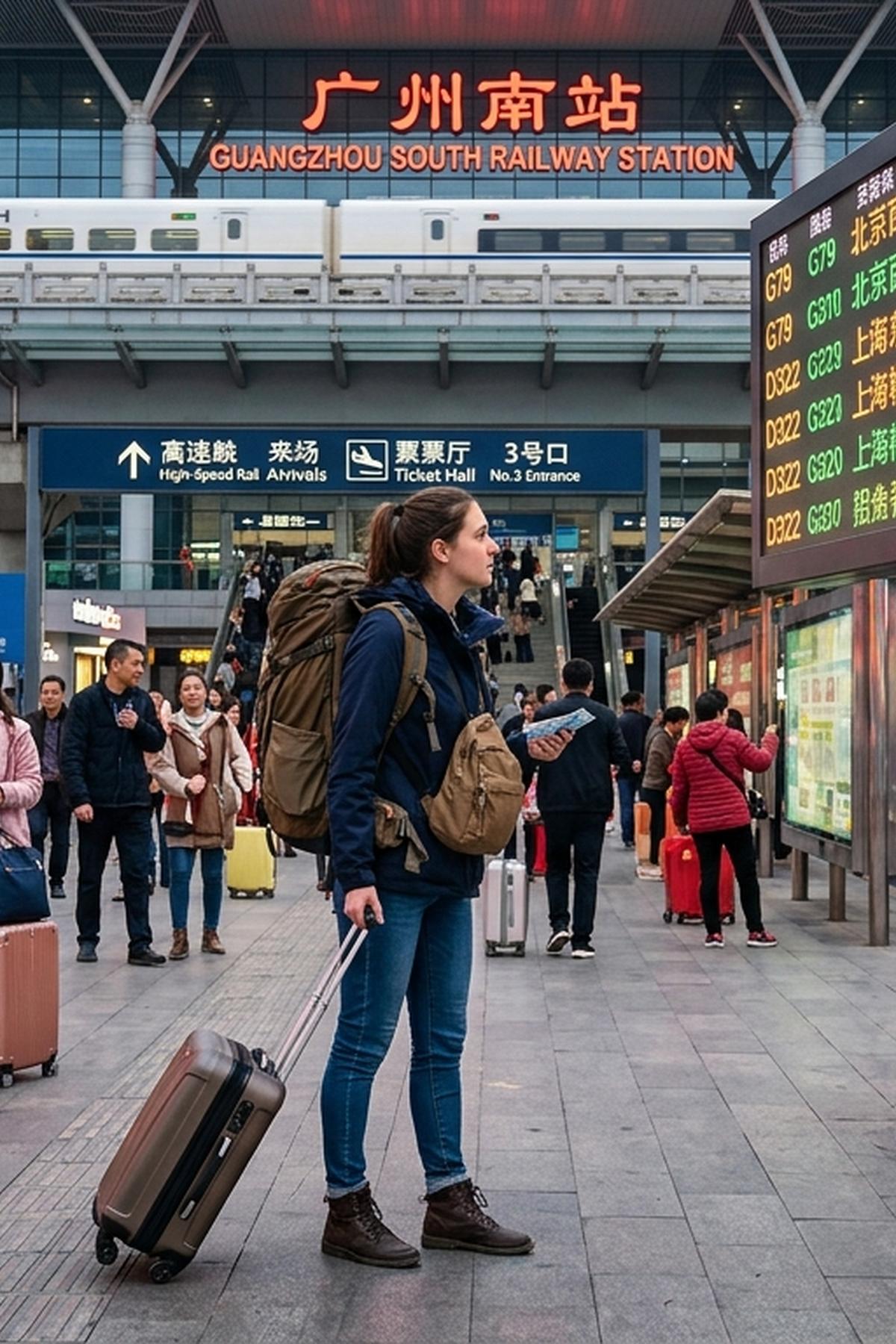
China gets talked out of people's itineraries before it deserves to be. The assumption runs that independent travel there requires a tour guide, a Chinese-speaking companion, or years of dedicated preparation. That assumption is wrong. The logistics are genuinely different from what most Western travelers expect, but different is not the same as impossible. China's transport network is world-class. Its payment systems have opened to foreign cards. Connectivity problems are solvable before you board. The work sits in the prep, not in the trip itself.
Pre-Trip Decision Checklist
Independent travel in China succeeds when you address five layers before departure: visa category, transport booking, connectivity plan, payment setup, and power adapter. Each layer feeds the next. Get your eSIM sorted and your Alipay linked to a foreign card, book your first few train legs before you arrive, confirm your plug adapter matches your accommodation type, and most of what could go wrong is already handled before you board.
Visas and Entry: Sorting Out Who Needs What
China's visa landscape has shifted considerably in the past two years. The government expanded its visa-free access policy in 2023 and 2024, allowing nationals from a growing list of European and Asia-Pacific countries to enter for short stays without applying in advance. The eligible nationalities, permitted stay durations, and conditions change frequently, so verify the current position well before you commit to flights. Checking your government's official travel advisory for current entry requirements is worth doing close to your departure date, since the rules update more often than most travel blogs reflect.
If you need a tourist visa, the relevant category is the L visa. The application requires a completed form, a recent passport photo, and supporting documentation that includes proof of onward or return travel and accommodation bookings for at least your first few nights. Processing typically runs four to seven business days through a Chinese consulate, though timelines vary by country and consulate workload. Some countries have authorized visa application centers that handle submissions on behalf of applicants, which adds a small fee but reduces the friction of dealing directly with a consulate. Apply early. Rushing a visa application is how people make avoidable errors.
One common mistake is submitting the application before flight and accommodation bookings are confirmed. The consulate wants to see a coherent itinerary, and a half-formed application often leads to rejection or requests for additional documents that push your processing window out further. Have all the paperwork ready before you start the application, not during it.
Getting Across the Country Without a Guided Group
China's high-speed rail network is genuinely one of the best in the world. It connects most major cities with fast, reliable, punctual service. Beijing to Shanghai takes under four and a half hours by high-speed train. Comparable city pairs across the country are similarly well served. Trains are the preferred option for most intercity travel, and for good reason: they run on time, the stations are centrally located, and the fares are predictable well in advance.
Booking tickets is the main friction point for foreign travelers. The official 12306 platform requires a Chinese ID or a passport verification process that can be cumbersome with a foreign-issued document. Third-party platforms like Trip.com handle the verification steps on your behalf and present the booking interface in English. You pay a small service fee, but the process is considerably smoother. Book popular routes at least a few days in advance, particularly around national holidays like Golden Week in early October and the Chinese New Year period, when seats sell out across the entire network.
City transport is excellent across China's major urban centers. Metro systems in Beijing, Shanghai, Shenzhen, Guangzhou, and Chengdu run frequently, cover most areas that travelers visit, and are inexpensive. English signage is standard at most stations in larger cities. For journeys the metro does not cover, Didi, which is the dominant ride-hailing app, works effectively once you have a local payment method configured. The app requires a Chinese phone number for registration, which ties directly back to having your connectivity sorted before anything else.
Connectivity and the Firewall: Getting Online Before You Land
China's internet environment is the single biggest infrastructure surprise for first-time independent travelers. Google Maps, WhatsApp, Instagram, Gmail, and most Western news sites are blocked by the national firewall. This is not a minor inconvenience. If you plan to rely on Google Maps for navigation or WhatsApp to coordinate with travel companions, you need a working VPN installed before you arrive. VPN apps are blocked on Chinese app stores, so downloading one after landing without a pre-installed option becomes circular and genuinely frustrating.
An eSIM from an international provider is the cleanest connectivity solution. These plans route data through Hong Kong or other regional servers, which often provides more reliable access to Western apps than a standard Chinese SIM card. You activate the eSIM before departure, and it is live the moment your phone connects after landing. No hunting for a SIM card vendor in an unfamiliar arrival hall, no language barrier at the counter. Several providers cater specifically to travelers with short-term China data plans, and activation is typically a straightforward QR code process.
Install WeChat before you leave home, regardless of your data plan choice. WeChat is not optional in China. It handles messaging, payments, booking confirmations, restaurant ordering, and customer service inquiries. Set it up with your home phone number, familiarize yourself with the interface, and connect at least one payment method to it before departure. The app runs fully in English and is available on both iOS and the Google Play Store outside China.
Money and Payments: How the Cashless Economy Works for Foreign Visitors
China is further along the cashless transition than most countries in the world. Small food stalls, street vendors, local restaurants, and markets frequently accept only QR code payments through Alipay or WeChat Pay. Foreign bank cards on Visa and Mastercard networks are accepted at international hotels, larger department stores, and some chain restaurants, but you cannot rely on them for everyday spending at smaller businesses.
Both Alipay and WeChat Pay now accept foreign bank cards linked through their international-facing versions. The setup requires a foreign phone number, a valid international card, and a few minutes of configuration in the app. This changed significantly from 2023 onward and has made self-funded independent travel in China far more practical than it was previously. Set both apps up before you travel. Test that a payment goes through while you still have reliable home connectivity. Do not assume the setup will be seamless at the other end.
Cash has a residual but genuine role. Some ATMs in smaller cities accept only UnionPay cards, and rural areas can be less reliably connected to card-based infrastructure. Carrying the equivalent of two or three days of cash expenses as a buffer is a sensible precaution without overcomplicating your currency situation. Banks and authorized exchange counters convert major currencies, though rates vary and you will always do better exchanging at a bank than at an airport kiosk.
Power Outlets and Electricity: Why "Universal Adapter" Is a Misleading Label
China runs on 220 volts at 50Hz. Before you pack any device, check its charger or power supply label. If it reads "100-240V," the device handles dual voltage and you need only a plug adapter to physically fit the socket. If it reads "120V only," you need a voltage converter, not just an adapter. Most modern laptop power bricks, phone chargers, and camera batteries are dual voltage. Older hair dryers, some electric shavers, and certain small appliances sometimes are not, and running a 120V device on 220V supply will destroy it quickly.
The outlet situation is more nuanced than most travelers expect. China officially recognizes three socket types. Type A has two flat parallel pins, the same format used in the US, Canada, and Japan. Type I has two pins in a V shape, as used in Australia and Argentina. Type C has two round pins, as used across much of continental Europe. Newer hotels and apartment buildings often have combination outlets that physically accept all three. Older guesthouses and budget accommodation in smaller cities may have only one socket type, and it may not be the one you packed for.
Reviewing specific details about China power plugs before you pack helps you identify which adapter your specific accommodation type is likely to need, rather than grabbing a generic product off a rack that may not actually fit the socket in your room. US-plug travelers will find that many Chinese outlets accept Type A plugs without any adapter at all. European round-pin travelers should pack a Type C adapter as a minimum starting point. A compact multi-socket power strip with a single Chinese-compatible plug is worth adding to your bag, since it lets you run multiple devices from one outlet regardless of which type is installed.
The Decision You Make at Home Shapes the Trip You Have in China
Independent travel in China is not about tolerating chaos. It is about sequencing your preparation correctly. The visa requires a confirmed itinerary before you submit, so book transport and accommodation first. Transport booking is easier once you have a working payment method, so configure Alipay before you book. The payment method works better once you have a local data connection, so sort your eSIM before anything else. The eSIM activates at home. The plug adapter is the last thing in the bag, chosen based on where you are actually staying rather than a best guess at the border.
Each decision feeds the next. Get the sequence right and the trip runs on its own logic. The complexity that puts people off self-guided travel in China is real, but it is almost entirely front-loaded. Address it during the planning stage, and by the time you are on a high-speed train watching flat farmland give way to city skylines at 300 kilometers per hour, the logistics are already behind you.
Read next
-
 How Solo Travelers Stay Ahead of Flight Delays and Cancellations
How solo travelers can track inbound aircraft, claim rebooking rights, and adjust ground transport when flights go wrong — step by step.
How Solo Travelers Stay Ahead of Flight Delays and Cancellations
How solo travelers can track inbound aircraft, claim rebooking rights, and adjust ground transport when flights go wrong — step by step.
-
 Why Your eSIM Might Not Work Abroad and How to Check Before You Go
Buying an eSIM doesn't guarantee signal abroad. Learn why coverage fails by location and how to verify reach before you commit to a plan.
Why Your eSIM Might Not Work Abroad and How to Check Before You Go
Buying an eSIM doesn't guarantee signal abroad. Learn why coverage fails by location and how to verify reach before you commit to a plan.