Friedrichshain Berlin: What the Gritty-Cool District Is Like and Who It Suits
Friedrichshain is Berlin's gritty-cool student district, home to the East Side Gallery, the RAW-Gelände club cluster, and denser street art than Kreuzberg.
- Flag
-
- ISO code
- DE
- Currency
- EUR
- Timezone
- Europe/Berlin
Friedrichshain Berlin: What the Gritty-Cool District is Like and Who it Suits
A Friday night at Warschauer Straße, 11:45 p.m. The S Bahn doors slide open and the platform fills with a crowd sorting itself into queues: one for Berghain, one for the tram, one for the späti on the corner. The air smells of sweat, cheap beer, and diesel from the night bus idling at the curb. This, in one frame, is Friedrichshain Berlin. It is Kreuzberg's rawer sibling across the Spree, a district that swapped the Turkish grocer for the club queue and the courtyard garden for the graffiti layer. It does not try to charm you. It dares you to keep up.
What the Berlin Friedrichshain District Actually Looks Like
The Berlin Friedrichshain district covers 9.78 square kilometres, home to roughly 140,000 people packed at a density of around 14,300 per square kilometre. Those numbers matter because they explain the texture of the place: this is not a leafy suburb or a curated historic quarter. It is a dense, working class tenement district that absorbed the chaos of the Cold War border and the party that followed the Wall's fall. The 19th century Altbau blocks on Simon Dach Straße and around Boxhagener Platz still carry shrapnel scars and post war infill where bombs left gaps. The Plattenbau slabs along Karl Marx Allee, a protected Stalinist boulevard anchored by the still operating Kino International cinema, mark the eastern edge of the district's ideological front line.
Volkspark Friedrichshain, 49 hectares of green space between the S Bahn lines and the river, is the largest park in the district. Green space accounts for roughly 14 percent of the area. That number is low by Berlin standards. You do not come to this part of town for lawns. You come for the density of things happening on the pavement, in the courtyards, and behind the unmarked steel doors of the RAW compound.
How It Differs From Kreuzberg
Friedrichshain and Kreuzberg share a borough administrator and a riverbank, but they are not the same place. The eastern district has fewer Turkish and Arabic groceries and eateries, more concentrated street art, and slightly more German born residents. Kreuzberg's nightlife scatters along Oranienstraße and the Landwehrkanal. Friedrichshain's clubs cluster hard in the Warschauer Brücke to Ostkreuz corridor, with the RAW site and Revaler Straße as the core. Kreuzberg gentrified around its punk past. Friedrichshain still wears the grit unwashed.
Street Art and the East Side Gallery
The East Side Gallery runs 1.3 kilometres along Mühlenstraße between Ostbahnhof and the Oberbaumbrücke. It is the longest preserved segment of the Berlin Wall and the most visited open air display in the city. Paint it as you find it: the murals change, fade, and get repainted on a schedule that no authority controls. What makes Friedrichshain different from other districts with Wall remnants is the graffiti density that extends beyond the Gallery itself. Side streets off Revaler Straße, the underpass at Warschauer Straße station, and the hoardings around construction sites carry layers of paste ups, tags, and stencils that turn the whole district into a rotating exhibition. The street art is not curated here. It is territorial.

Staying in Friedrichshain Berlin: What it Costs and Who Should Book
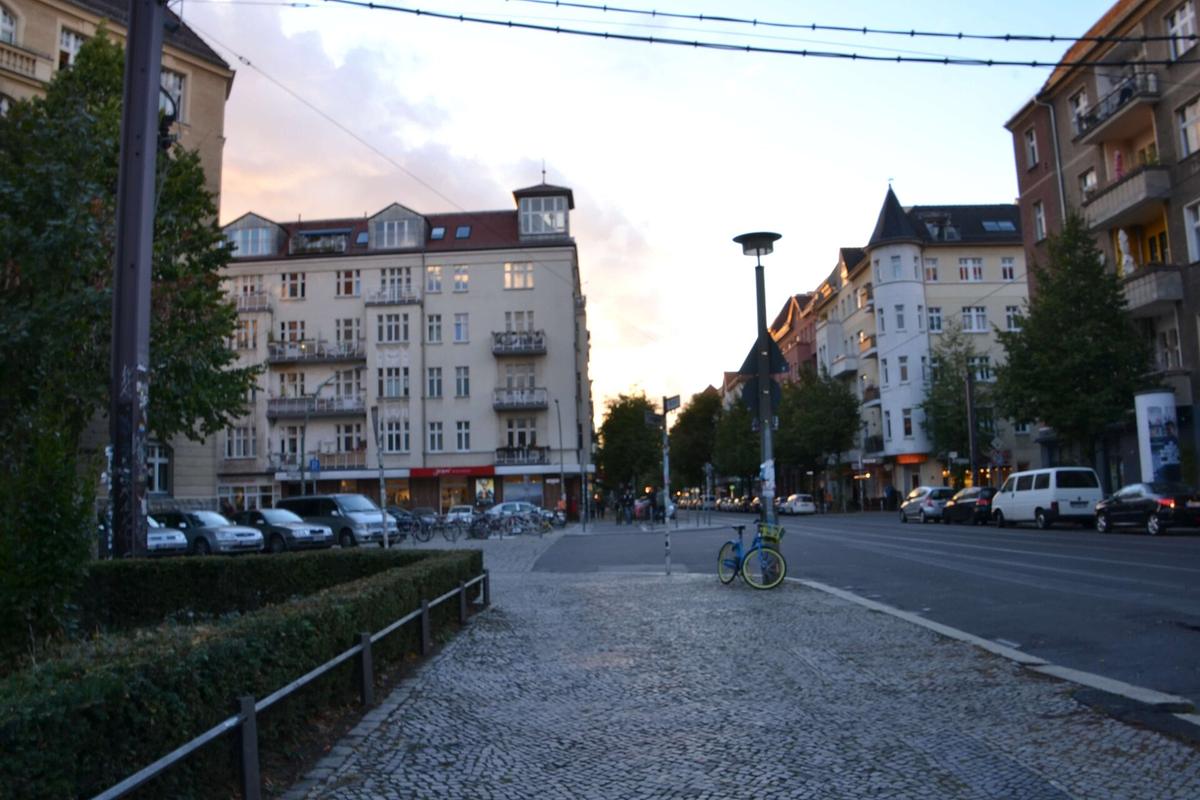
Staying in Friedrichshain Berlin suits a specific traveller profile: budget conscious, nightlife focused, and comfortable with weekend noise. The accommodation stock reflects the resident profile. Student heavy. Young professional. Alternative. You will find hostels in converted factories near the RAW site, budget hotels along Frankfurter Allee, and a scattering of short term apartments in the Altbau blocks off Boxhagener Platz. The Mercedes Benz Arena at the eastern edge near Ostbahnhof draws concert crowds that spike room prices on event nights. Check the arena schedule before you book.
The walkable radius from Boxhagener Platz is the best argument for basing yourself in this pocket. A 15 minute walk reaches Ostkreuz station, Warschauer Straße, the Volkspark Friedrichshain, the RAW compound, and the Spree riverside at Stralau. That kind of concentration means you can leave your luggage in the room for four days and not miss a thing. Book a room on the courtyard side of any building on Simon Dach Straße. The street side is loud Thursday through Saturday. Not politely loud. Chaotically loud.
Who Should Not Stay Here
Travellers seeking a compact old town with instant appeal or a highly polished formal European capital experience should book Mitte or Charlottenburg instead. Friedrichshain's beauty is fragmented. Its service style is famously blunt, the Berliner Schnauze that sounds rude until you realise it is just direct. Cash is still mandatory in many of the spätis and smaller bars around Boxhagener Platz. Free public Wi Fi is patchy and unreliable. If these frictions sound like problems, this is not your district.
Friedrichshain Berlin Nightlife: Where to Go and How to Get in
Friedrichshain Berlin nightlife is not a scene you stumble into. It is a destination you plan for. The district has among the highest club densities in Berlin, concentrated along the Warschauer Brücke to Ostkreuz corridor. The RAW compound alone holds ://about blank, Cassiopeia, Suicide Circus, and Else, plus a rotating set of pop up venues in the former railway repair sheds. Simon Dach Straße runs as a pedestrian priority restaurant and bar strip where seating density peaks Thursday through Saturday evenings. The atmosphere is rowdy, young, and fuelled by cheap beers from the surrounding spätis.
Berghain sits on the Friedrichshain side of its border with Kreuzberg, at Am Wriezener Bahnhof. Its door policy is intentionally undocumented. Entry is at the discretion of the door staff and no official rules exist to game. Arrive early Friday evening if you want a shorter queue. Arrive Sunday morning if you want the full weekend marathon. The club does not publish a schedule of events worth gaming; check their website for the weekly programme and arrive knowing who is playing. The crowd that queues without knowing the DJ is the crowd that waits longest.
Getting Around on the Transport Backbone
The U Bahn U5 runs through the district. Warschauer Straße station handles roughly 85,000 passengers daily according to BVG's 2024 count. Ostkreuz, at the eastern edge, handles approximately 230,000 daily passengers per Deutsche Bahn's 2023 figure. These are the two spines of the district's public transport. Night buses radiate 24 hours from both stations, so you never need a taxi. The S Bahn lines S3, S5, S7, and S9 connect the area to Mitte in under ten minutes and to BER airport in roughly 55 minutes on the S9. Validate your paper ticket in the red or yellow boxes on the platform before you board. Plain clothes inspectors issue fines on the spot for unvalidated tickets; check the BVG website for the current penalty amount.
Friedrichshain Berlin Street Art: Where the Paint Lives
Friedrichshain Berlin street art is not a museum display. It is the district's primary visual language. The concentration of legal and illegal surfaces between Warschauer Straße and the RAW compound makes every walk a visit to an exhibition. The East Side Gallery is the formal address, but the real density lives on the side streets off Revaler Straße, the underpass at Ostkreuz, and the blank walls of the post industrial buildings along the river. The art changes month to month. A mural you photograph on Tuesday may be painted over by Friday. That is the point. It is transient, territorial, and uncurated.
The Oberbaumbrücke, the double decker bridge carrying U1 trains, pedestrians, and cyclists across the Spree, marks the boundary between Friedrichshain and Kreuzberg. Cross it on foot for the framing view of both districts. The span is also a canvas: paste ups and murals climb the bridge's brick pillars on the eastern side. Do not look for a map of where the best pieces are. Walk the grid between the S Bahn arches and the river. You will find them.
Boxhagener Platz: the Residential Pocket You Want
Boxhagener Platz is the district's quiet heart, a square that hosts a Sunday flea market year round and a scattering of cafe terraces the other six days. The weekend market draws vintage hunters, record diggers, and families picking through bric a brac and second hand clothes. Arrive before 10 a.m. for the best selection and the least crowd. The surrounding streets hold the district's most liveable addresses: quieter than Simon Dach Straße, greener than Warschauer Straße, and within that 15 minute walkable radius that covers everything you need.
The RAW site flea market also runs Sundays with a vintage and crafts focus. You can hit both in a morning if you start early. The district has a second notable shopping corridor on Karl Marx Allee, where the Computerspielemuseum on the boulevard offers a permanent exhibition on video game history. It is a short walk from the U5 line and worth an hour if the club queues feel too long.

Practical Frictions and How to Work Around Them
Finding a table at a popular restaurant on Simon Dach Straße without a reservation is impossible Thursday through Saturday. Book two days ahead for any place with outdoor seating. The Berliner Schnauze in service interactions can feel rude if you are not expecting it. It is not personal. It is the local register. Respond with the same directness and you will get along fine.
The district's scale means a "quick" trip between two points often takes 40 minutes on public transport. Download the BVG FahrInfo app before you arrive. Buy a prepaid SIM from a discounter like Aldi Talk for navigation and ticket apps; free public Wi Fi is patchy and unreliable. The U5 and the S Bahn lines S3, S5, S7, and S9 cover the district well, but bicycle infrastructure on Warschauer Straße and Petersburger Straße includes protected lanes that are faster than the trains during peak hours.
Friedrichshain Versus Kreuzberg Versus Prenzlauer Berg: the Decision
Friedrichshain is not a better version of Kreuzberg. It is a different one. Kreuzberg has better Turkish food and a more established left wing political history. Friedrichshain has larger clubs and higher graffiti density. Prenzlauer Berg, north of the district, is more renovated, quieter, and dominated by upmarket family oriented cafes. Friedrichshain retains more unvarnished Altbau, has a louder nightlife scene, and charges lower prices across the board.
Compare the three on a Friday night. You are in Prenzlauer Berg if you hear strollers and coffee grinders. You are in Kreuzberg if you hear Turkish radio and punk guitars. You are in Friedrichshain if you hear the bass from a club you cannot see yet and the hiss of a späti door opening for the tenth time that hour. Choose accordingly.
| District | Vibe | Nightlife Core | Typical Room Type | Best For |
|---|---|---|---|---|
| Friedrichshain | Gritty cool, student heavy | RAW compound, Warschauer Straße | Hostels, budget Altbau apartments | Nightlife seekers, budget travellers |
| Kreuzberg | Gentrified punk, Turkish quarter | Oranienstraße, Landwehrkanal | Mittelklasse hotels, short term flats | Food travellers, political history buffs |
| Prenzlauer Berg | Affluent, family friendly | Kollwitzplatz, Helmholtzplatz | Boutique hotels, renovated Altbau | Families, cafe hoppers |
The One Thing to Do Before You Arrive
Download the BVG FahrInfo app, buy a prepaid SIM card for data, and check the Berghain schedule for the weekend you plan to visit. If you skip the app and the SIM, you will stand at a tram stop with a paper ticket you cannot validate and no way to route around the next S Bahn delay. If you skip the schedule check, you will queue for a club that is running a private event you cannot enter. Friedrichshain rewards preparation. It punishes assumption.
Other areas in Berlin
Common Questions
Is Friedrichshain safe at night?
Yes, with the same street awareness you would use in any dense European capital. Warschauer Straße and the RAW area are busy until the early morning hours, which means crowds and visibility. The main risk is petty theft in packed club queues. Keep your phone in a front pocket and your wallet secured.
How do I get from BER airport to Friedrichshain?
Take the S9 S Bahn directly to Warschauer Straße or Ostkreuz. The journey takes roughly 55 minutes. Buy a single ABC zone ticket and validate it in the red or yellow box on the platform before boarding; check the BVG website for the current fare. The FEX and RE7 regional trains reach Berlin Hauptbahnhof in about 30 minutes, but then you need to transfer to the S Bahn or U Bahn to head east.
What is the best time of year to visit Friedrichshain?
May through September, when the weather is warmest, street life explodes, and open air clubs and the riverside at Stralau are active. Club queues are longest Friday and Saturday nights year round, so the weather mainly affects the pre club bar scene and the flea markets.
Does the East Side Gallery cost money?
No. The East Side Gallery is a free open air display along Mühlenstraße. You walk the full 1.3 kilometre stretch at no cost, any time of day. The murals are visible at all hours, though lighting is poor after dark.
Can I pay by card in Friedrichshain?
Not reliably. Cash is mandatory in many smaller bars, spätis, and restaurants. Some of the larger clubs and the Kino International cinema accept card, but carry enough cash for a full night out. ATMs are common on Warschauer Straße and around Boxhagener Platz.
Is Friedrichshain suitable for families?
The Boxhagener Platz area is the most family friendly pocket, with cafes, the weekend flea market, and proximity to Volkspark Friedrichshain. The area around Warschauer Straße and the RAW site is loud and nightlife oriented and less suitable for young children, especially on weekends.
How far is Friedrichshain from the main museums?
Museum Island is about 15 minutes by U Bahn from Warschauer Straße. The journey uses the U5 line directly to Unter den Linden. Friedrichshain itself has no museum island functions, which is part of its appeal: you separate the cultural tourism from the nightlife.
Read next
-
 Berlin Hotels What the Price Bands Actually Get You
Berlin hotel prices cluster into distinct bands, and what you get for your money varies more by district and timing than by star rating.
-
 Where to Stay in Berlin by District and What Each Costs You
Where you stay in Berlin defines your trip more than in most cities. Each district has a distinct personality, price band, and real trade-off.
-
 Berlin Flights Flying Into BER Airport and Getting to the City
Berlin Brandenburg Airport is Berlin's sole airport. Here are the rail options—FEX, RE7, and S9—and the ticket rules for reaching the city centre.
-
 Berlin Things to Do Ordered by Whether It Is Worth the Time
Berlin's sights range from free and life-changing to time-consuming and skippable. Here is how to sort them by what actually repays the visit.
-
 When to Visit Berlin and What Each Season Does to the City
Berlin's seasons change more than the weather. They determine whether you get lakeside bars and street life or trade fair crowds and closed independent venues.
-
 Getting Around Berlin Without Wasting Half the Trip
Berlin is too sprawling to walk, and the BVG network is the only way to move efficiently. The catch is ticket validation, and getting it wrong costs you.
-
 Kreuzberg
 balances its punk past with gentrified present, dense with Turkish food, late-night bars, and a split between leafy Bergmannkiez and loud Oranienstraße.
-
 Prenzlauer Berg
 is Berlin's most polished residential district, dense with restored buildings, organic cafes, and families—beautiful but far from gritty
-
 Charlottenburg
 is the old West Berlin centre—bourgeois, spacious, and built around the Ku'damm shopping boulevard and the palace, not club culture.