Charlottenburg Berlin: What the Old West Berlin Centre Is Like and Who It Suits
Charlottenburg is the old West Berlin centre—bourgeois, spacious, and built around the Ku'damm shopping boulevard and the palace, not club culture.
- Flag
-

- ISO code
- DE
- Currency
- EUR
- Timezone
- Europe/Berlin
Charlottenburg Berlin: What the Old West Berlin Centre is Like and Who it Suits
Spend a few days in Charlottenburg and you see a version of Berlin most visitors miss entirely. This is the old centre of West Berlin, and it still operates like one. The axis is the Kurfürstendamm, a broad shopping boulevard lined with department stores and flagship boutiques, not a stretch of techno clubs or street art. The residential streets south of the Schloss are quiet after ten at night. The hotel stock is dense because the district serves Messe Berlin, the city's major trade fair grounds, not the backpacker hostels of Friedrichshain. If the Berlin you imagine runs on coffee, graffiti, and thirty-hour parties, Charlottenburg is not for you. If you want a base that is spacious, bourgeois, and oriented around a proper palace, a leafy park edge, and some of the best Asian food in the city, it fits better than any eastern district.
Berlin Charlottenburg District: What it Actually is
The district covers 10.6 square kilometres and holds roughly 130,000 residents, making it one of the most established localities in the city. The architectural signature is Wilhelminian era Gründerzeit buildings: five to seven storeys, stucco facades, high ceilings, spacious apartment layouts that the eastern districts cannot match because they were bombed differently or rebuilt later. Roughly 60 percent of the building stock predates 1914. Where war damage did hit, mostly in the northern and eastern parts of the locality, the infill from the 1950s and 1960s sits beside the older blocks without pretending to match them. That is the look of Charlottenburg: solid, unapologetic, unconcerned with being trendy.
Where To Stay For Quiet
South of the palace and west of the square around Savignyplatz, the streets go very quiet. North of Bismarckstraße and along the S-Bahn viaduct, traffic noise picks up. The pattern is predictable and easy to read. Book a serviced apartment on a side street off the Kantstraße restaurant corridor and you will hear the dinner-hour buzz, then silence by 23:00. Book on the Ku'damm itself and expect moderate traffic noise through the evening. The only real noise problem in the district comes from the S-Bahn viaduct. No hotels are pressed against it.

Staying in Charlottenburg Berlin: Who Should Book Here
Staying here suits a specific set of travellers. Couples over thirty. Solo travellers who want a quiet evening in a restaurant that takes reservations. Business visitors using the Messe Berlin fairgrounds. Families who need space that a Prenzlauer Berg apartment cannot provide at the same price. It also suits repeat visitors who have already done the East Side Gallery and the Reichstag and want a base that does not feel transient. The hotel density is highest around the Zoologischer Garten station on the eastern border of the locality and along the food spine of Kantstraße. Most properties are mid-range to upscale, with a strong serviced apartment sector and a thin hostel offering.
The group it does not suit is backpackers on a tight budget, first-time visitors chasing the Instagram version of Berlin, and anyone who thinks a good night out means walking out of their door into a crowd. If you are under twenty-five and travelling on a shoestring, book a hostel in Kreuzberg or Neukölln. Come to Charlottenburg for the palace and the Asian food. Do not sleep here.
Charlottenburg Berlin Palace: the City’S Largest Hohenzollern Residence
The palace is the single reason many visitors cross into this district at all. It is the city's largest Hohenzollern residence, built from 1695 and expanded through the early 1700s into a baroque and rococo ensemble with a formal garden, a belvedere, a mausoleum, and a new pavilion. The original core dates to 1699. The gardens reach full bloom between May and September, and that is also when the annual visitors concentrate. Come from November through March and the palace is open but the garden is muted. You will share the rooms with far fewer people.
Tickets And Timing
Buy your ticket online before you go. The walk from Savignyplatz to the palace is roughly 2.5 kilometres, about thirty minutes on foot through the western edge of the Tiergarten, or one stop on the S3 to Westend plus a short walk. Combine it with the three museums opposite the palace entrance. The Museum Berggruen holds Picasso, Klee, and Matisse. The Sammlung Scharf-Gerstenberg covers surrealist and fantastic art in a villa that is itself worth seeing. The Bröhan Museum handles Art Nouveau and Art Deco. All three are small enough to visit in a single morning if you start at opening time.
Charlottenburg Berlin Shopping: Ku’Damm Versus the Quiet Streets
For shopping, you have two distinct options. The first is the eastern section of Kurfürstendamm, where luxury brands and flagship retail sit above the U-Bahn line. The Kaiser Wilhelm Memorial Church at Breitscheidplatz marks the eastern boundary of the shopping stretch; its damaged tower ruin is the most photographed war remnant in West Berlin. The Bikini Berlin concept mall across the street does curated pop-ups and smaller labels. For mid-range chains and department stores, the pedestrianised Wilmersdorfer Straße is the primary shopping street, and it draws a local crowd rather than tourists.
The Savignyplatz Alternative
The second option is the square at Savignyplatz. The square itself is a restaurant cluster with a weekly market, but the side streets hold independent bookshops, the Stilwerk design centre, and boutiques that do not have window displays screaming for attention. This is where the bourgeois character of Charlottenburg shows best. Walk south from the S-Bahn station, not toward the Ku'damm, and you will see the difference.
Savignyplatz and Kantstraße: the Real Centre of the District
The pocket around Savignyplatz is the best place to base yourself. The S-Bahn station there sits on lines S3, S5, S7, and S9, putting the rest of Berlin within 20 minutes without a transfer. Zoologischer Garten station is a one-kilometre walk east, and from there you have the U2, U9, regional trains, and long-distance connections. The walk from the square to the palace is 2.5 kilometres, and it goes through the western edge of the Tiergarten, the city's central park, which is worth the walk on its own.
Eat On Kantstraße
Kantstraße is the food spine of the district. It runs from the Savignyplatz area west toward Wilmersdorfer Straße with a concentration of East Asian, Southeast Asian, and Middle Eastern restaurants that is the best in Berlin for its density. These are not tourist traps. They serve a local and student crowd from the Technische Universität Berlin and the Universität der Künste Berlin, both within walking distance of Ernst Reuter Platz. The dining corridor is busiest Thursday through Saturday between 19:00 and 21:00. If you do not have a reservation at a place you really want, you will wait or be turned away.

What Charlottenburg is Not
Charlottenburg is not where the edgy Berlin of imagination lives. It has no significant nightlife within its boundaries. The Deutsche Oper Berlin on Bismarckstraße does opera and ballet, and the Theater des Westens on Kantstraße does major musical productions. Both finish early. After the curtain comes down, the streets go quiet. The student population that uses university buildings during the day goes home to other districts. If you want bars that stay open past 02:00, take the S-Bahn or U-Bahn to Kreuzberg, Neukölln, or Friedrichshain.
What To Expect
It is also not a compact medieval old town. Berlin as a whole has no single walkable centre, and Charlottenburg spreads along its axes like the rest of the city. Do not expect everything to be within a ten-minute stroll. The tram network does not reach the district. Night buses run from the Zoologischer Garten hub. The BVG FahrInfo app is essential for routing. Carry cash. Many of the smaller restaurants on the food corridor and the spätis that sell you a bottle of water at 23:00 do not take cards.
Green Space and Quiet Corners in the Old West Centre
Roughly 20 percent of the district area is parkland, gardens, or water. The Schlossgarten Charlottenburg is the largest and most formal, but the Lietzenseepark west of the palace is where locals go on a Sunday afternoon. Its outdoor café opens from late spring to early autumn. The northern boundary of the locality is the Spree river, with a pedestrian and cycle path along the south bank that connects to the Tiergarten edge and the city centre.
The quietest residential streets are south of Kantstraße, around the Luisenkirche on Gierkeplatz, and west of the Lietzensee. Book a private apartment rental in that zone and you will hear almost nothing after dark. The trade-off: restaurant and shop density drops considerably. You will walk fifteen minutes to reach dinner. For some travellers, that is exactly the point. For others it becomes a frustration by day three.
The Practical Next Step
Book a room with a kitchen or a kitchenette on a side street between Savignyplatz and Lietzenseepark. Use the kitchen for breakfast and one dinner, and spend the other meals on Kantstraße without a reservation at the places that take walk-ins by 18:30. Buy a validated BVG ticket before you board, keep cash in your pocket, and save the eastern districts for the evenings. That arrangement gives you a Berlin that actually works: a quiet base, excellent food within walking distance, and the palace and the Tiergarten as your daytime neighbours.
Other areas in Berlin
Common Questions
Is Charlottenburg safe at night?
Yes. The district is quiet and residential, with minimal street crime. The main risk is the same as the rest of Berlin: keep your wallet out of a back pocket on the U-Bahn. The streets around the palace and Savignyplatz are well lit and pedestrian friendly until late.
How far is Charlottenburg from Brandenburg Airport?
The S9 S-Bahn runs directly from the airport to Zoologischer Garten station on the eastern edge of the district in about 55 minutes. The FEX regional train reaches Berlin Hauptbahnhof in 30 minutes, and from there it is another 10 minutes on the S5 or S7 to Savignyplatz. A single ABC zone ticket costs 4.40 euros.
Can I walk from Charlottenburg to the Reichstag?
It is a 40-minute walk from Savignyplatz through the Tiergarten to the Reichstag building. The route is pleasant, entirely through parkland after you cross the Spree. The alternative is the S-Bahn to Hauptbahnhof and a 10-minute walk, which saves time but loses the walk.
What is the best way to get to the Messe Berlin trade fair ground?
From northern Charlottenburg near Richard Wagner Platz the walk is about 2 kilometres. From Savignyplatz take the S3, S5, or S7 one stop to Messe Nord ICC. The U2 also reaches Kaiserdamm station, a 5-minute walk from the fairgrounds.
Is Charlottenburg cheaper than Mitte or Kreuzberg?
Hotel prices are similar to Mitte during trade fair periods and slightly lower in low season. Restaurant prices on Kantstraße are below the Mitte average. Apartment rentals are cheaper per square metre than Prenzlauer Berg but more expensive than Neukölln.
Read next
-
 Berlin Hotels What the Price Bands Actually Get You
Berlin hotel prices cluster into distinct bands, and what you get for your money varies more by district and timing than by star rating.
-
 Where to Stay in Berlin by District and What Each Costs You
Where you stay in Berlin defines your trip more than in most cities. Each district has a distinct personality, price band, and real trade-off.
-
 Berlin Flights Flying Into BER Airport and Getting to the City
Berlin Brandenburg Airport is Berlin's sole airport. Here are the rail options—FEX, RE7, and S9—and the ticket rules for reaching the city centre.
-
 Berlin Things to Do Ordered by Whether It Is Worth the Time
Berlin's sights range from free and life-changing to time-consuming and skippable. Here is how to sort them by what actually repays the visit.
-
 When to Visit Berlin and What Each Season Does to the City
Berlin's seasons change more than the weather. They determine whether you get lakeside bars and street life or trade fair crowds and closed independent venues.
-
 Getting Around Berlin Without Wasting Half the Trip
Berlin is too sprawling to walk, and the BVG network is the only way to move efficiently. The catch is ticket validation, and getting it wrong costs you.
-
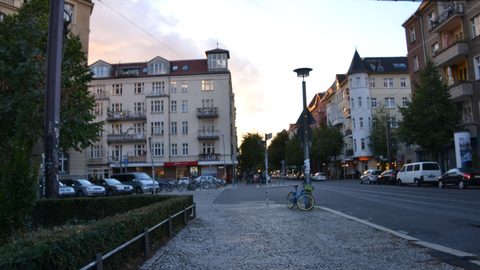 Friedrichshain
 is Berlin's gritty-cool student district, home to the East Side Gallery, the RAW-Gelände club cluster, and denser street art than Kreuzberg.
-
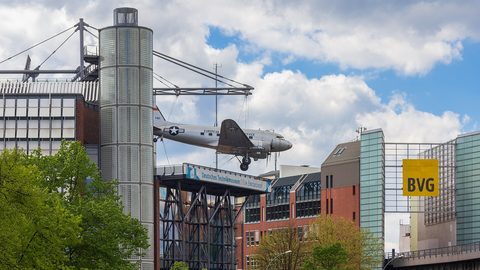 Kreuzberg
 balances its punk past with gentrified present, dense with Turkish food, late-night bars, and a split between leafy Bergmannkiez and loud Oranienstraße.
-
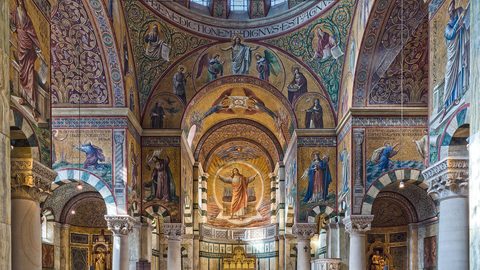 Prenzlauer Berg
 is Berlin's most polished residential district, dense with restored buildings, organic cafes, and families—beautiful but far from gritty