What Neukölln, Berlin Is Like and Who It Suits
What Neukölln, Berlin is actually like: who it suits, who it frustrates, and what daily life feels like in the city's hipster epicentre.
- Flag
-
- ISO code
- DE
- Currency
- EUR
- Timezone
- Europe/Berlin
What Neukölln, Berlin is Like and Who it Suits
At 10:45 PM on a Tuesday in May, a line of people snakes out of a späti on Weserstraße. Not for a club with a bouncer. For a plastic cup of beer from the chill cabinet. A man in overalls sips next to someone who looks like they just finished a shift at a gallery. A Turkish bakery on the corner still has its lights on, selling borek to students who live in the Wilhelmine perimeter blocks above the shops. This is Neukölln in its natural state: loud, layered, and utterly indifferent to whether you planned to be here. The neighbourhood does not sell itself as a destination. It does not need to. What it offers is a version of Berlin that is lived in, not curated, and that suits specific travellers well and frustrates others thoroughly.
Neukölln Berlin Neighbourhood Guide: the Street Level Reality
North and South of the Tracks
Neukölln splits cleanly along the Ringbahn. North of the rail line, the built form is the classic 5 to 6 storey Wilhelmine perimeter block with rear courtyards. Dense, imposing, noisy. South of it, the area shifts to single family houses, allotment gardens, and the massive Gropiusstadt housing estate constructed between 1962 and 1975 with roughly 18,000 dwellings. For a visitor, the north is where almost everything happens. The U7 and U8 subway lines serve the area, and staying within a ten minute walk of a U Bahn station on either line is the practical requirement for getting anywhere without a car.
Two Walks That Explain the Area
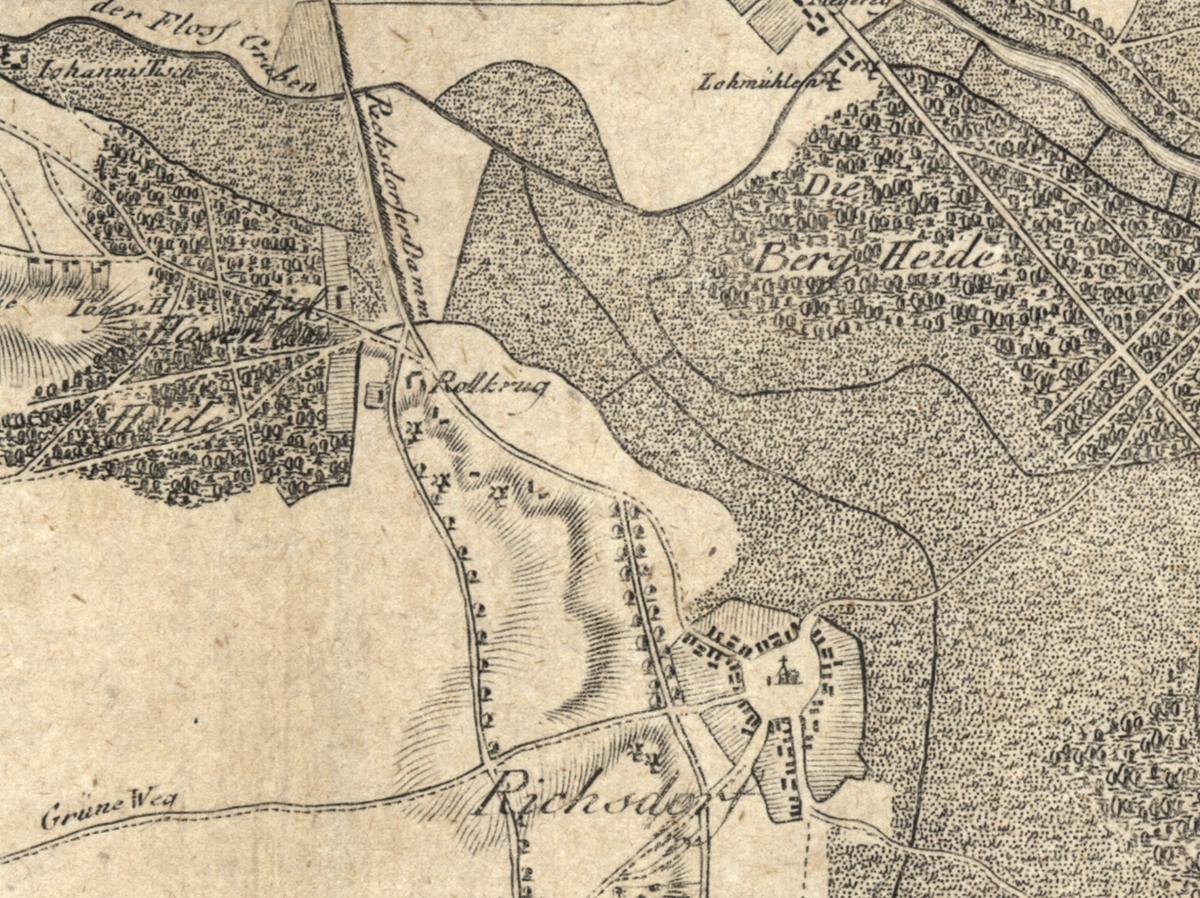
Walk from S+U Neukölln to the Oderstraße entrance of Tempelhofer Feld. It is about 1.5 km, a flat twenty minute walk across a former runway that is now the city's most improbable public park. Then walk from Weserstraße to Richardplatz. About 1.0 km, crossing from the heart of the bar scene into the historic village core of Rixdorf, a medieval Anger village first documented in 1360. The contrast within that single kilometre tells you more about Neukölln than any paragraph could. One end has late night bars spilling onto the pavement. The other has a Bohemian settlement colony founded in 1737 and a quiet square with a pond.

Staying in Neukölln Berlin: Accommodation and the Noise Trade Off
Where You Sleep and What You Hear
Overnight accommodation north of the Ringbahn is mostly small private apartments offered through booking platforms, a few hostels, and mid range hotels. Large full service properties do not exist here. The typical room sits in a residential block whose ground floor houses a späti, a Turkish greengrocer, or a bike repair shop. That means you hear everything. The U Bahn rumbling under Karl Marx Straße, the crowd on Sonnenallee, the conversations from the courtyard. Noise levels north of the Ringbahn stay elevated past midnight, especially along Weserstraße, Sonnenallee, and Karl Marx Straße. If you want quiet residential streets after 22:00, book south of the Ringbahn instead. Accept the trade off: you will then be a 25 minute U Bahn ride from the bars and restaurants you came for.
The Southern Option and the Airport Factor
South of the Ringbahn, accommodation is limited. A small number of budget hotels near the A100 and A113 motorway junctions, and private rooms. Parts of Buckow and Rudow lie under the approach corridor to Berlin Brandenburg Airport, so aircraft noise is a factor there. Check the noise contour maps published by Flughafen Berlin Brandenburg GmbH before booking anything south of the Ringbahn if sleep matters to you.
Neukölln Berlin Bars, Things to Do, and the Texture of Daily Life
Weserstraße and the Späti Life
Weserstraße has the highest restaurant and café density in the area. On a warm evening, footpaths on both sides are thick with people moving between bars that do not try hard to look like anything. The scene is self selecting. If you need a menu in English or a cocktail list with categories, the bar culture here will feel thin. If you want to sit on a curb with a bottle from a späti and have a conversation, it is the best street in Berlin for that purpose. Späti culture is central to Neukölln's identity. These late night shops sell beer, wine, snacks, and phone credit. They stay open well past normal retail hours and function as informal living rooms for the blocks they serve.
Tempelhofer Feld
Tempelhofer Feld occupies the eastern edge of the neighbourhood, with its main entrance at Oderstraße. It was a working airport until 2008. Now it is a public park where people run, cycle, fly kites, and argue about whether it should be partially developed for housing. On a day with wind in spring or summer, the field fills with kite flyers. The paths along the former runways are the best flat cycling routes within the city. The Radweg Berlin Leipzig, a long distance cycle route, traverses the area partially along a former railway path. A bike is a legitimate alternative to the U Bahn if you are confident in city traffic.
Sonnenallee and the Maybachufer Market
Sonnenallee, the section between Hermannplatz and S Bahn station Neukölln, is the street for Middle Eastern food businesses. Bakeries selling fresh pide, shops with barrels of olives, butcher counters where you can buy lamb for a weekend grill. The Maybachufer market on Tuesdays and Fridays is a food and fabric market on the canal about 1.2 km from Hermannplatz. Go for the produce, the noise, and the specific energy of a market that serves a multilingual residential area rather than tourists.
Körnerpark, the Schillerkiez, and Who Lives Here
Körnerpark and the Schillerkiez operate at a smaller scale. A neoclassical park with a cascading fountain, a neighbourhood pocket where the gentrification of Neukölln is most visible. The Schillerkiez has some of the highest concentration of new cafes and concept stores, but also the clearest evidence of displacement. That tension between long time Turkish families, recent immigrants, and international students is what makes staying in Neukölln interesting and what makes it uncomfortable for some visitors. The area's share of residents with a migration background was roughly 47% according to the Amt für Statistik Berlin Brandenburg in the most recent data. The median age is around 39 years. It is a younger, denser, and more ethnically diverse place than Tempelhof Schöneberg. It has less forest and water access than Treptow Köpenick, but a much higher share of pre 1914 building stock.
Karl Marx Straße: The Unpretty Backbone
Karl Marx Straße, the main commercial street renamed from Berliner Straße in 1947, is not pretty. It has retail vacancies in ground floor units, discount stores, and transport hubs. It is the real backbone of the area, not a leisure strip. The Heimathafen Neukölln in the Saalbau Neukölln programmes theatre and music year round, with a reduced schedule in mid summer. If you need a library, the Stadtbibliothek Neukölln has four locations including the Helene Nathan Bibliothek near Karl Marx Platz.
Other areas in Berlin
Common Questions
Is Neukölln safe at night?
Neukölln is a dense residential area, not a dangerous one. The streets around Weserstraße, Sonnenallee, and the U Bahn stations are busy until late. Standard city awareness applies: secure your phone, stay on lit streets, and do not wander alone down unlit side streets after 2 AM. The elevated activity levels north of the Ringbahn mean you are rarely alone, which is its own form of safety.
How do I get from Berlin Brandenburg Airport to Neukölln?
Take the FEX or RE7 regional train to Berlin Hauptbahnhof, then the U55 to Brandenburger Tor, then the U5 to Hermannplatz. That takes about 50 minutes. Alternatively, take the S9 S Bahn directly to S Neukölln station in roughly 55 minutes. A single ABC zone ticket costs €4.40. Validate it in the red or yellow box before boarding.
Can I pay by card in Neukölln bars and restaurants?
Not reliably. Many smaller bars, spätis, and restaurants on Weserstraße and Sonnenallee operate cash only. Carry enough euros for a night out. Card works in larger supermarkets and chain stores on Karl Marx Straße but do not assume it works anywhere else.
What is the best time of year to stay in Neukölln?
May through September. Street life on Weserstraße and at Tempelhofer Feld peaks in warm weather. Outdoor dining and the späti culture on the pavement only really function above 18 degrees. Avoid the period between Christmas and New Year when many independent venues shut, and check if major trade fairs like ITB Berlin in early March or IFA in early September inflate hotel prices across the area.
Is Neukölln suitable for families with children?
It depends on where you stay. The Schillerkiez and the area around Körnerpark have families and playgrounds. The north of Neukölln near Weserstraße is not ideal for young children due to noise levels until late. The Kombibad Gropiusstadt offers indoor and outdoor public swimming facilities south of the Ringbahn. The area has a higher proportion of families with children than Friedrichshain Kreuzberg, so it is not a student monoculture.
How does Neukölln differ from Kreuzberg?
Neukölln has a lower proportion of students and tourists than Friedrichshain Kreuzberg, and less nightlife infrastructure concentrated in clubs. It has more retail vacancies, more families with children, and a higher share of pre 1914 building stock. The density of bars is similar, but Neukölln feels more residential and less like a curated experience.
What is the Berliner Schnauze and will I experience it here?
The Berliner Schnauze is the local bluntness in service. A bar tender in Neukölln may not smile. A baker may respond to your order with a grunt. A späti owner may count your change without looking up. It is not rudeness. It is efficiency. If you arrive expecting the service style of a Parisian café, you will misread the interaction. Accept it as the local code and it fades into background noise within a day.
Read next
-
 Berlin Hotels What the Price Bands Actually Get You
Berlin hotel prices cluster into distinct bands, and what you get for your money varies more by district and timing than by star rating.
-
 Where to Stay in Berlin by District and What Each Costs You
Where you stay in Berlin defines your trip more than in most cities. Each district has a distinct personality, price band, and real trade-off.
-
 Berlin Flights Flying Into BER Airport and Getting to the City
Berlin Brandenburg Airport is Berlin's sole airport. Here are the rail options—FEX, RE7, and S9—and the ticket rules for reaching the city centre.
-
 Berlin Things to Do Ordered by Whether It Is Worth the Time
Berlin's sights range from free and life-changing to time-consuming and skippable. Here is how to sort them by what actually repays the visit.
-
 When to Visit Berlin and What Each Season Does to the City
Berlin's seasons change more than the weather. They determine whether you get lakeside bars and street life or trade fair crowds and closed independent venues.
-
 Getting Around Berlin Without Wasting Half the Trip
Berlin is too sprawling to walk, and the BVG network is the only way to move efficiently. The catch is ticket validation, and getting it wrong costs you.
-
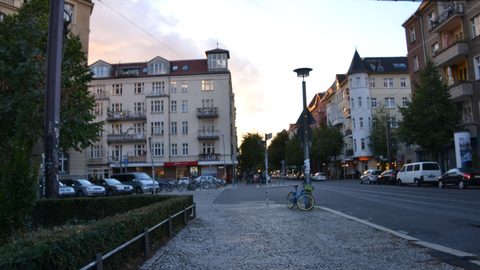 Friedrichshain
 is Berlin's gritty-cool student district, home to the East Side Gallery, the RAW-Gelände club cluster, and denser street art than Kreuzberg.
-
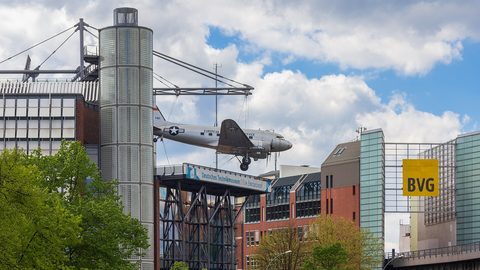 Kreuzberg
 balances its punk past with gentrified present, dense with Turkish food, late-night bars, and a split between leafy Bergmannkiez and loud Oranienstraße.
-
 Prenzlauer Berg
 is Berlin's most polished residential district, dense with restored buildings, organic cafes, and families—beautiful but far from gritty