How Solo Travelers Stay Ahead of Flight Delays and Cancellations
How solo travelers can track inbound aircraft, claim rebooking rights, and adjust ground transport when flights go wrong — step by step.
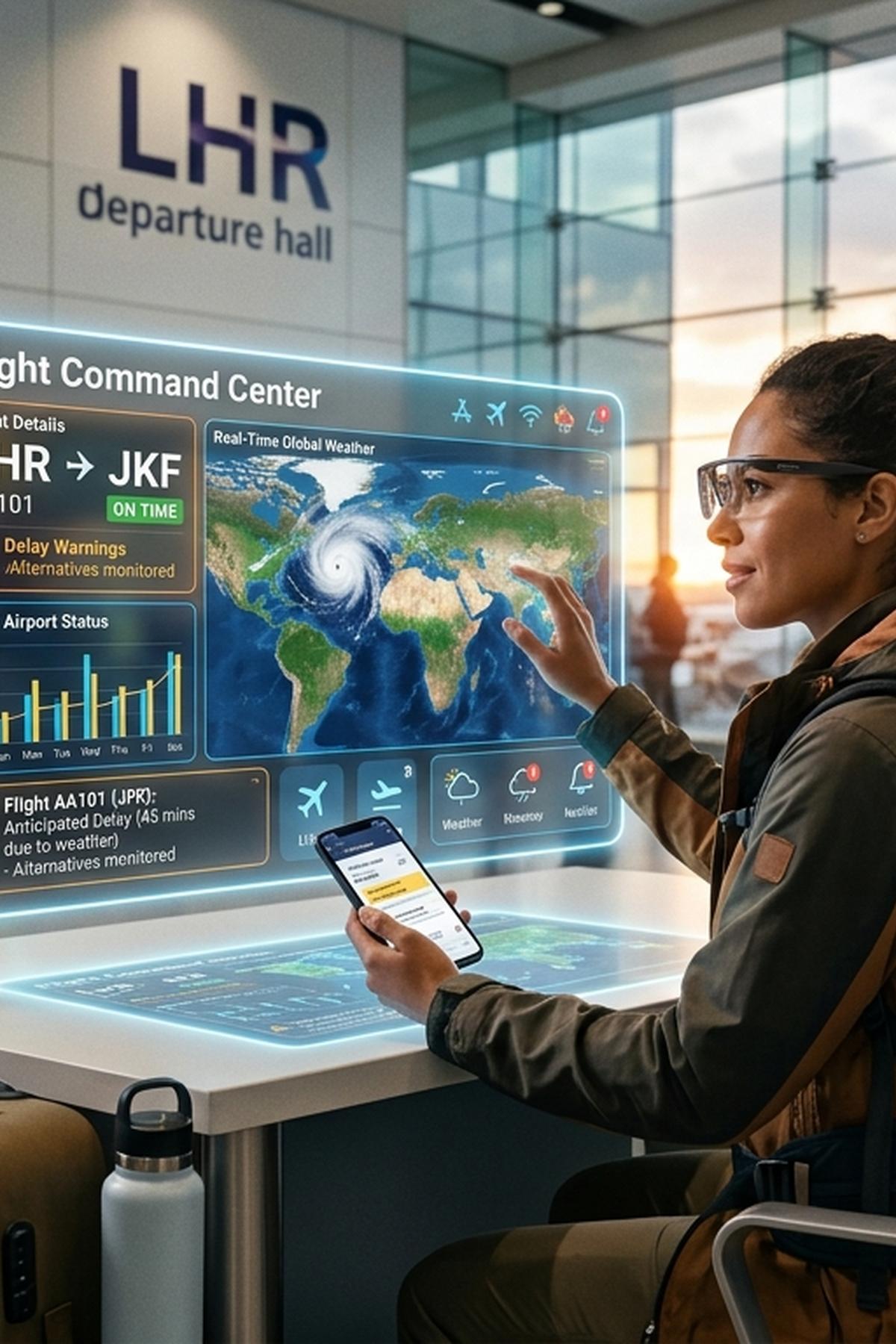
When a flight goes sideways, tour group travelers have a safety net. Someone in a vest is already on the phone, sorting alternatives, and herding people toward a solution. Solo travelers don't get that buffer. Every call, every queue, every decision lands on you. That sounds stressful until you realize the flip side: you're not waiting for forty-three other people to agree on anything. With the right sequence of actions, a solo traveler can move faster than any group tour ever could. The key is knowing what that sequence looks like before the disruption starts.
The solo traveler's advantage is speed, but only if you know what to do before the airline tells you anything.
- Track your inbound aircraft before the gate agent knows there's a problem.
- Understand your legal rights to free rebooking before you reach the desk.
- Line up alternative ground transport options before you even land.
Why Disruptions Hit Differently Without a Support Layer
A tour operator absorbs friction on your behalf. They have pre-negotiated hotel blocks, relationships with airline desks, and staff trained to handle exactly these moments. Strip that away and you're left with raw airline procedures, call center queues, and gate agents simultaneously managing forty other passengers.
That friction is real. But it cuts in both directions. Without a group to coordinate, you can make a decision and act on it in seconds. You can join a rebooking queue while others are still waiting for a group huddle. You can take the last seat on an alternate flight while a tour manager is still counting heads.
The solo traveler's job is to convert that raw speed into actual outcomes. That requires preparation, not panic.
Reading the Sky Before the Gate Agent Does
Most flight delays are visible long before the airline announces them. The aircraft operating your flight has almost certainly flown several legs that day. If the inbound plane is sitting on a tarmac two cities away and hasn't pushed back yet, your departure is going to slip regardless of what the departure board says.
You can check this in real time. A live flight map shows you exactly where aircraft are in the air, their altitude, speed, and estimated arrival time at your airport. Cross-reference that with your flight number and you'll often know about a delay twenty to forty minutes before the airline updates its systems or makes any announcement.
That window matters enormously. Use it to get in line at the gate, call the airline's loyalty desk (usually faster than the main customer service line), or open the airline's app and start reviewing alternatives yourself. By the time other passengers react to the board announcement, you've already assessed your options.
What the Airline Actually Owes You
Your rights depend heavily on where your flight is departing from and which airline is operating it. Knowing your jurisdiction changes your negotiating position at the desk.
European regulations are among the strongest in the world. Under EU air passenger rights rules, specifically EC 261/2004, passengers on flights departing from EU airports (or arriving into the EU on an EU carrier) are entitled to care, rebooking, and in many cases financial compensation. Compensation thresholds scale with flight distance and delay length, reaching up to €600 per passenger.
In the United States, the rules work differently. Federal air passenger protections require airlines to provide full refunds for cancelled flights and significant changes when the passenger chooses not to travel, but they do not mandate cash compensation for delays the way EU rules do. What you get often depends on the airline's own customer service policies rather than a federal floor.
Screenshot or download a copy of the relevant rules before you travel. A gate agent who sees you holding a reference document tends to respond more precisely than one dealing with a passenger who is simply upset.
EU vs. US Passenger Rights at a Glance
| Situation | EU (EC 261/2004) | USA (DOT Rules) |
|---|---|---|
| Flight cancelled | Rebook or full refund, plus compensation up to €600 | Full refund if you choose not to travel |
| Delay over 3 hours at destination | Meals, hotel if overnight, possible cash compensation | No federal mandate for delay compensation |
| Denied boarding (oversale) | Compensation plus rebook or refund | Compensation up to 4x the fare (max $1,550) plus rebook or refund |
| Right to meals and hotel | Yes, for longer delays based on flight distance | Varies by airline; no federal requirement |
How to Handle the Rebooking Conversation
The rebooking desk is not where you work out your options. It's where you present the option you've already decided on. Before you reach the front of the queue, you should know exactly what you're going to ask for.
- Identify the next available flight to your destination on the same carrier, including any alternate routing through different hubs.
- Check whether a partner airline has seats on a more direct or faster option the original carrier can endorse you onto.
- Confirm what time the last viable connection departs, so you know whether same-day arrival at your final destination is still possible.
- Decide in advance whether you'd rather take a full refund and book independently on a faster or cheaper route.
Use the airline's app or website while you're still in queue. Call the loyalty desk if you hold any status with the carrier. Both routes often give you access to the same seat inventory as the gate agent. The more specific your ask, the faster the agent can fulfill it. Vague requests get vague results.
Protecting Your Onward Connection
If your disrupted flight is the first leg of a connection, the stakes are higher. Missing a connection can end your travel day entirely, and whether the airline is responsible for fixing it depends on how you booked.
Key facts to carry before any connecting itinerary:
- If all legs sit on a single booking reference, the airline must rebook you through to your final destination at no additional cost.
- If you booked two separate tickets, the second carrier has no obligation to hold the plane or waive rebooking fees, regardless of why you're late.
- Minimum connection times published by airports are operational minimums, not comfort margins. A forty-minute connection at a large hub is aggressive under normal conditions and nearly impossible during a disruption.
The moment you see a delay that threatens your connection, contact the onward airline directly. Even if you can't reroute the first leg, you may be able to protect a seat on a later departure on the second ticket before it sells out entirely. Acting early gives you options that disappear once the disruption ripples through the booking system.
Ground Transport Adjustments While You're Still in the Air
A delayed arrival changes everything downstream. A car rental desk that closes at 10 pm does not care that your flight landed at 10:20. A hotel with a strict cancellation policy will not bend simply because the airline was late.
The window between learning about a delay and actually landing is your most valuable planning time. Use it well:
- Call or message your car rental provider and ask whether they have 24-hour desks or can hold your booking without a no-show penalty.
- Check whether your hotel has late check-in procedures and confirm them in writing through the app or by email, so you have a record.
- If ground transport has collapsed entirely, check alternative modes. A train or long-distance bus may still run on a timetable that works for a late arrival.
Most of this is far easier to resolve while you still have inflight WiFi than when you're standing at an empty rental desk at midnight with a dead phone battery. The information you gather in the air translates directly into faster decisions on the ground.
The Traveler Who Moves First Gets the Seat
Flight disruptions are zero-sum in the short term. There are a fixed number of seats on the next available flight. Every passenger who moves faster than you reduces your options. Solo travelers hold the natural advantage here. No one to consult. No shared itinerary to negotiate. Just you, your phone, and a decision you've already thought through.
The preparation required is not complicated. Know your route's inbound aircraft and how to monitor it. Understand your rights for the airports you're passing through. Have your airline's app ready to rebook independently. Keep your ground transport providers' contact details somewhere accessible offline. And check the actual position of your inbound plane before the departure board even flickers.
None of that is overcaution. It's what independent travel looks like at its sharpest, and it's the clearest edge a solo traveler carries over every group on the same disrupted flight.