Germany Train Travel Guide, Tickets, Passes and the DB App
How to use Germany's train system, avoid a €60 fine for the wrong ticket, and understand the difference between flexible and advance fares.
How German Trains, Tickets, and the DB Navigator App Actually Work
You buy a flexible ticket because you are not sure of your schedule and end up paying three times the advance price. Or you board an ICE with a regional-only ticket and get handed a penalty fare. Both are standard Deutsche Bahn tripwires, and both are avoidable once you understand what Flexpreis and Sparpreis actually mean.
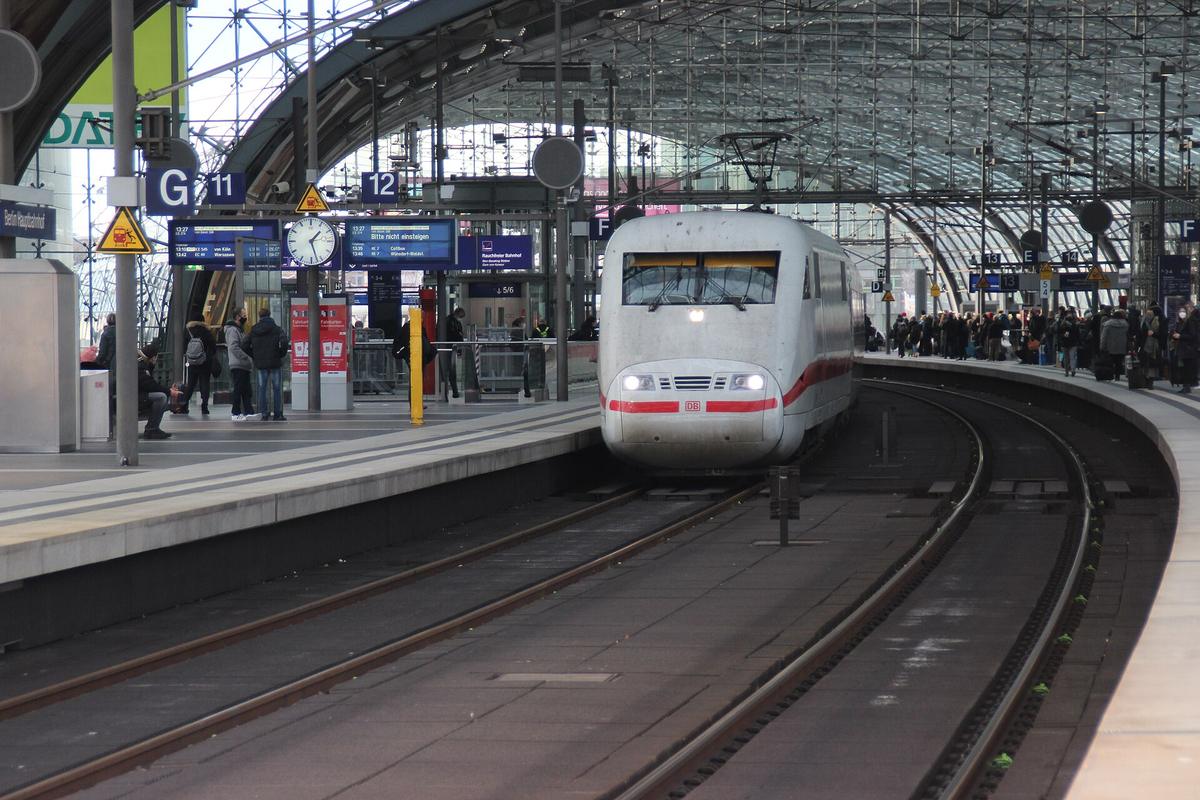
Deutsche Bahn runs two distinct rail networks. The long-distance network uses ICE (Intercity-Express), IC, and EC trains that operate at up to 300 km/h on dedicated high-speed rail corridors such as Hamburg, Frankfurt, Munich and Berlin, Munich. The regional network uses RE (Regional-Express), RB (Regionalbahn), and S-Bahn trains that stop at more stations and cover shorter distances. The critical rule: a regional-only ticket is not valid on any long-distance train. Boarding an ICE with one is fare evasion, and the penalty is set by DB.
.jpg)
Flexpreis vs Sparpreis: the 3x Price Difference
The Two Fare Worlds
A Flexpreis ticket costs roughly three times what a Sparpreis costs on the same route. The Flexpreis is dated but valid on any train that day on the booked route. If your plans change last minute, you can jump on an earlier or later ICE without penalty. That flexibility carries a premium.
A Sparpreis or Super Sparpreis is an advance-purchase, train-specific ticket. You must take the exact train listed. Miss it and the ticket is worthless, or at best partially refundable depending on the fare rules. The Super Sparpreis is non-refundable and even stricter.
When to Lock In the Lower Fare
The saving is substantial enough that you should book Sparpreis whenever your schedule is locked in, which is most of the time for most travellers. Book Sparpreis at least a few days ahead on the DB Navigator app or at bahn.de. Same-day purchase usually leaves only Flexpreis availability, and that is how tourists pay far more for a Berlin, Munich trip than they needed to.
Deutsche Bahn Ticket Types Explained
The Deutschland-Ticket
The Deutschland-Ticket is a monthly subscription for unlimited travel on all regional and local public transport. It costs a fixed monthly fee and is valid on RE, RB, S-Bahn, U-Bahn, trams, and buses nationwide. It is not valid on ICE, IC, or EC long-distance trains. It works for long stays and trips that stick to one region per day.
BahnCard Discounts
BahnCard discount cards reduce fares. BahnCard 25 gives 25% off both Flexpreis and Sparpreis. BahnCard 50 gives 50% off Flexpreis and 25% off Sparpreis. BahnCard 100 gives unlimited travel on all DB trains. All three are annual subscriptions that auto-renew. If you are making multiple long-distance journeys within a month or two, buying a BahnCard 25 can pay for itself quickly.
City Transport and Validation
City public transport runs on integrated transport associations called Verkehrsverbünde. Each covers a city and its surrounding region with single tickets, day passes, and group tickets. You must validate most tickets before travel at platform or vehicle entrance machines. An unvalidated ticket is treated as no ticket, and the fare evasion penalty is set by each transport association.
Germany Public Transport: What Actually Runs
Germany's public transport is dominated by rail, but the coverage is uneven. The network is dense in the west and south, around the Ruhr Valley, the Upper Rhine Plain, and Bavaria's main corridors. It is sparser in the rural northeast and parts of Bavaria outside major lines. The Moselle Valley and Harz Mountains have limited connections. Check schedules before basing yourself there without a car.
Long-distance coaches operated by FlixBus and BlaBlaCar Bus serve many towns without rail stations. They are slower than rail and used as a price-sensitive fallback. Domestic air routes exist where distance forces it: Berlin, Munich, Hamburg, Munich, Düsseldorf, Munich, Cologne, Berlin, and Hamburg, Stuttgart. Flight time is 60-90 minutes gate-to-gate on Lufthansa or Eurowings. Factor in airport transit times and the train often wins door-to-door.
Ferries connect the Baltic Coast islands Rügen, Usedom, and Fehmarn, plus the North Sea islands and Lake Constance. Schedules shrink in winter. Bicycles are allowed on most regional trains with a bicycle ticket. On ICE trains they require a reservation and designated spaces. Folded folding bikes travel free.
ICE vs Regional Train Germany: When to Take Each
Time Versus Cost
The ICE versus regional train decision comes down to time versus cost. An ICE from Berlin to Munich takes about four hours. A sequence of regional trains takes eight to nine hours with connections. If you have a Deutschland-Ticket, you must use the regional-only route. If you have a Flexpreis or Sparpreis, you can take the ICE.
For distances under about 100 kilometres, regional trains are often competitive on time because they run frequently and stop at city-centre stations that ICE trains skip. The S-Bahn from Berlin to Potsdam takes 25 minutes. The RE from Nuremberg to Rothenburg ob der Tauber takes 1 hour 10 minutes. Both are covered by the Deutschland-Ticket or a regional day pass.
Where the ICE Wins
For longer journeys, the ICE saves hours. The Hamburg, Frankfurt corridor runs in about 3 hours 30 minutes on the high-speed line. The Cologne, Frankfurt stretch takes just over an hour. The trade-off is price: regional routes cost a flat monthly subscription or cheap day tickets, while ICE tickets are distance-based and surge with demand.
Germany Rail Pass Options: Which One Saves You Money
The Deutschland-Ticket for Regional Travel
The Deutschland-Ticket, a fixed monthly subscription for regional travel only, is the best value if you are staying ten days or more and moving between regions by RE and RB trains, or basing yourself in one city and doing day trips. It is personal and non-transferable, bought via the DB Navigator app or participating transport associations, and auto-renews monthly. Cancel before the 10th of the month to avoid the next charge.
BahnCard and Interrail for Long-Distance
For multiple long-distance journeys, a BahnCard plus individual Sparpreis tickets usually beats any flat-rate pass. The Interrail Germany Pass or Eurail Germany Pass gives four to ten travel days within a month on all DB trains including ICE. It works for intensive multi-city itineraries like Berlin, Hamburg, Cologne, Munich, but calculate the per-day cost before buying. On most routes, booking Sparpreis tickets individually costs less than a pass unless you are taking a long-distance train every single day.
City day passes from the local Verkehrsverbund cover all S-Bahn, U-Bahn, tram, and bus travel within that city and its zone. They cost roughly €8 to €12 for a single adult and cover nothing outside the zone. Buy them at station machines or on the app.
_Deutschland_und_seine_Reichsautobahnen_nach_dem_Plan_der_Reichsregierung_Mai_1934_Pictorial_map_of_Nazi_Germany_90_x_118_cm_id.smb.museum_569177_CC_BY-NC-SA_4.0.jpg)
How the DB Navigator App Works for Payments
Setup and Ticket Purchase
Download the DB Navigator app, create an account, and save a credit or debit card. You can search routes, compare Flexpreis and Sparpreis prices, and buy tickets that load directly into the app as a digital barcode. No printing, no machine queue.
The app also handles regional tickets, the Deutschland-Ticket subscription, and BahnCard purchases. It shows real-time platform changes and delay information. For local transport in cities that support it, you can buy a day pass or single ticket within the same interface.
When You Still Need Cash
Cash is not required for the app, but keep some for the failure cases: rural ticket machines that do not accept cards, bus drivers who refuse card payments, and coin-operated public toilets. Sundays close nearly all retail, including supermarkets. If you land on a Sunday, get cash from a station machine before heading to your accommodation.
When the System Fails
Delays and Strikes
German rail punctuality in 2024 saw about 65-75% of long-distance trains arrive on time, defined as less than six minutes late. Delays spike in winter, especially in southern Bavaria and low mountain ranges. Strikes by the EVG and GDL unions happen with advance notice, 24-48 hour warning strikes. Check the DB app or news before travel.
If your train is delayed 60 minutes or more, you can claim 25% of the fare back. For 120 minutes or more, it is 50%. This applies regardless of ticket type. File the claim through the DB website or app.
Connectivity Black Spots
Mobile data black spots are common on intercity trains and in rural areas. Download your ticket before boarding. Free public Wi-Fi is scarce; do not rely on it. A local SIM from Telekom, Vodafone, or O2 requires passport registration by law.
Who Germany’s Rail System Suits and Who it Does Not
Germany's rail system suits road-trippers who want to leave the car behind for city days, history buffs tracing medieval and Cold War layers between compact historic towns, outdoor cyclists and hikers using signposted trails accessible from regional stations, and business travellers extending a trip who already understand the Flexpreis trap.
It does not suit spontaneous nightlife seekers expecting 24/7 cities where trains run hourly past midnight. It does not suit travellers on ultra-tight budgets in the south where connections are sparse and accommodation spikes during Oktoberfest weeks. It does not suit anyone frustrated by cash-only payments and limited digital infrastructure who will find themselves stuck at a rural bus stop with a card that is not accepted.
The single thing that most often goes wrong: tourists buy a Flexpreis because they want flexibility, then pay triple the Sparpreis on a route where their schedule was actually fixed. Book Sparpreis. Validate your regional ticket. Never board an ICE without a long-distance ticket. That is the entire system in three instructions.
Common Questions
What happens if I board an ICE with a regional-only ticket?
You are charged a fare evasion penalty (erhöhtes Beförderungsentgelt). The ticket inspector treats it as riding without a valid ticket. Buy an upgrade from the conductor if possible before they check, but many conductors will still issue the fine.
Can I use the Deutschland-Ticket on an ICE?
No. The Deutschland-Ticket is valid only on regional services: RE, RB, S-Bahn, U-Bahn, trams, and buses. It is not valid on ICE, IC, or EC long-distance trains. Boarding an ICE with a Deutschland-Ticket triggers the same penalty fare.
Is a Flexpreis refundable?
A Flexpreis is dated but not refundable. You can cancel it before the travel date and receive a voucher, not a cash refund. After the travel date it is worthless. Sparpreis is partially refundable only if you bought the refundable version; Super Sparpreis is non-refundable.
Do I need to validate my ticket before boarding?
For regional and city transport, yes. Tickets bought at machines or on the app are often pre-validated, but paper tickets from machines must be stamped at platform or vehicle entrance machines. An unvalidated ticket counts as no ticket. DB long-distance tickets are dated and do not require stamping.
Read next
-

 Staying Connected in Germany With eSIM, Local SIM, or Roaming
Mobile data in Germany means navigating rural black spots, scarce free Wi-Fi, and mandatory passport registration for local SIM cards.
Staying Connected in Germany With eSIM, Local SIM, or Roaming
Mobile data in Germany means navigating rural black spots, scarce free Wi-Fi, and mandatory passport registration for local SIM cards.
-
 When to Visit Germany and What Each Season Actually Delivers
Germany's travel seasons are defined by school holidays, trade fairs, and Christmas markets. Here is when to go and when to avoid.
When to Visit Germany and What Each Season Actually Delivers
Germany's travel seasons are defined by school holidays, trade fairs, and Christmas markets. Here is when to go and when to avoid.
-
 Who Needs a Visa for Germany and How the Application Actually Works
A clear breakdown of who needs a visa to enter Germany, who is exempt, and the step-by-step process for a Schengen visa application.
Who Needs a Visa for Germany and How the Application Actually Works
A clear breakdown of who needs a visa to enter Germany, who is exempt, and the step-by-step process for a Schengen visa application.
-
 Cash Is King in Germany and Your Card Will Often Be Useless
Germany remains a cash-first economy where many restaurants and shops refuse cards. Here is exactly where you need physical euros.
Cash Is King in Germany and Your Card Will Often Be Useless
Germany remains a cash-first economy where many restaurants and shops refuse cards. Here is exactly where you need physical euros.
-
 Is Germany Safe for Travelers and What Are the Actual Risks
Germany is a safe country, but petty theft at markets and fines on trains are real risks. Here is what to actually watch for.
Is Germany Safe for Travelers and What Are the Actual Risks
Germany is a safe country, but petty theft at markets and fines on trains are real risks. Here is what to actually watch for.
-
 How Much a Trip to Germany Actually Costs, Shaped by Region and Season
Germany trip costs split along regional lines, with Bavaria and trade-fair cities operating on a different budget logic than the Harz or Baltic Coast.
How Much a Trip to Germany Actually Costs, Shaped by Region and Season
Germany trip costs split along regional lines, with Bavaria and trade-fair cities operating on a different budget logic than the Harz or Baltic Coast.
-
 A Ground-Level Logistics Guide to Independent Travel in China
First-time independent travel in China: what you need to know about visas, rail booking, eSIMs, mobile payments, and power adapters.
A Ground-Level Logistics Guide to Independent Travel in China
First-time independent travel in China: what you need to know about visas, rail booking, eSIMs, mobile payments, and power adapters.
-
 How Solo Travelers Stay Ahead of Flight Delays and Cancellations
How solo travelers can track inbound aircraft, claim rebooking rights, and adjust ground transport when flights go wrong — step by step.
How Solo Travelers Stay Ahead of Flight Delays and Cancellations
How solo travelers can track inbound aircraft, claim rebooking rights, and adjust ground transport when flights go wrong — step by step.
-
 Why Your eSIM Might Not Work Abroad and How to Check Before You Go
Buying an eSIM doesn't guarantee signal abroad. Learn why coverage fails by location and how to verify reach before you commit to a plan.
Why Your eSIM Might Not Work Abroad and How to Check Before You Go
Buying an eSIM doesn't guarantee signal abroad. Learn why coverage fails by location and how to verify reach before you commit to a plan.