Flying Into Berlin: BER Airport Flights and Getting to the City Centre
Berlin Brandenburg Airport is Berlin's sole airport. Here are the rail options—FEX, RE7, and S9—and the ticket rules for reaching the city centre.
Flying Into Berlin: BER Airport Flights and Getting to the City Centre
Berlin has one airport. That single fact changes how you plan your arrival. Cities like London or Paris force you to pick an airport before you even book a flight; pick wrong and your transfer doubles. Berlin funnels every scheduled passenger flight through Berlin Brandenburg Airport (BER). That simplifies the airfare search. It also creates a single choke point for ground transport. This page covers which flights land where at BER, which carriers use each terminal, and the rail services that get you from the terminal into the city. One of those services involves a speed-versus-frequency trade-off you need to understand before you buy a ticket. Another is a night-only solution that many guides skip. All of them require a Berlin ABC zone ticket that you must validate before you board, a rule first-time visitors break constantly.
Berlin Airport: the Single-Airport Reality
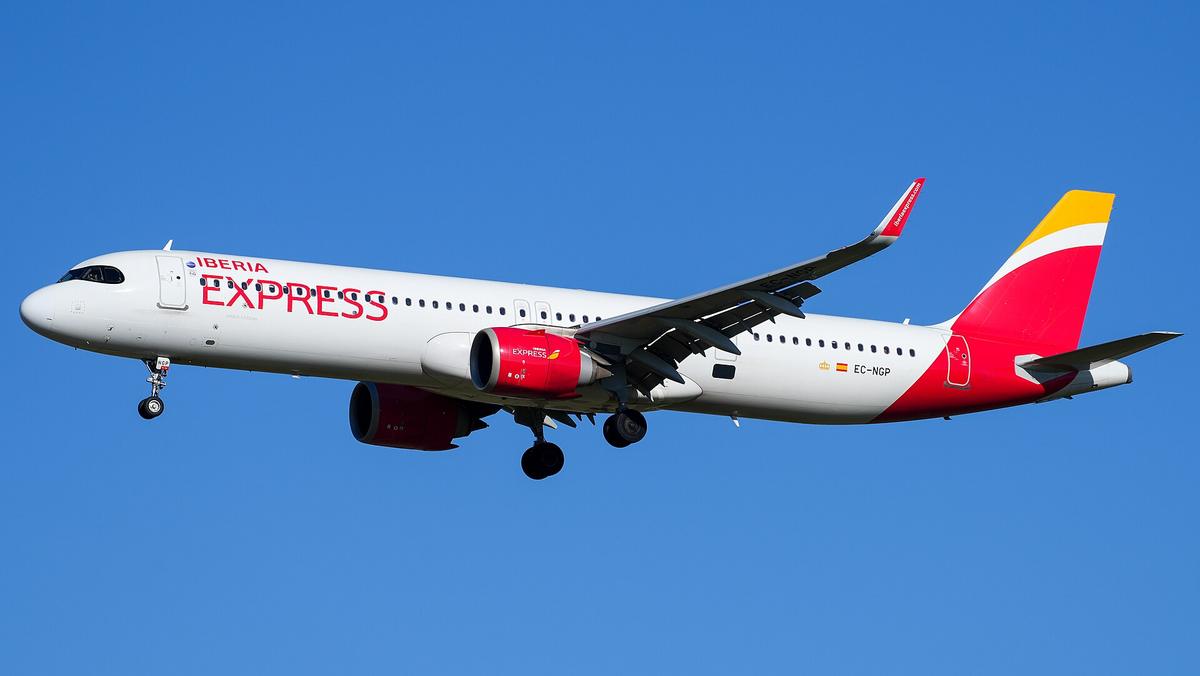
Berlin Brandenburg Airport (BER, ICAO EDDB) replaced the old Tegel and Schönefeld airports in 2020. There is no second commercial airport in Berlin. Every scheduled passenger flight, from Emirates and Qatar Airways to Ryanair and easyJet, operates out of BER's two terminals. Terminal 1 handles the Lufthansa Group carriers including Lufthansa, Swiss, Austrian Airlines, and Brussels Airlines, plus full-service operators such as British Airways, Air France, KLM, Turkish Airlines, United Airlines, Delta Air Lines, and Qatar Airways. Terminal 2, a lower-cost facility, serves Ryanair, Wizz Air, easyJet, Eurowings, Norwegian, Vueling, SunExpress, Pegasus Airlines, and several seasonal charter carriers like Corendon Airlines, Freebird Airlines, Tailwind Airlines, and Southwind Airlines. The airline-to-terminal assignments shift slightly each season; the airport operator publishes the current list on its official website, ber.berlin-airport.de. Check it before you leave. Walking between Terminal 1 and Terminal 2 takes roughly 15 minutes and you do not want to do it with luggage.

How to Get from BER to Berlin
The BER rail stop, called Flughafen BER (Terminal 1-2), sits beneath Terminal 1 on level U2. From this single point, three rail services run into the city: the FEX regional express, the RE7 regional train, and the S-Bahn S9. A fourth service, the S45 S-Bahn, goes to southern Berlin districts but does not reach the central rail hubs. The S45 is useful if your accommodation is in Neukölln or Tempelhof but is not the main route.
FEX Regional Express and RE7: The Fast Option
The FEX (Flughafen-Express) and RE7 reach Berlin Hauptbahnhof in about 28 minutes. Both are regional trains that make fewer stops than the S-Bahn. The FEX runs roughly every half hour. The RE7 runs every hour and continues to stops beyond the Hauptbahnhof. For anyone staying in central Mitte, around Alexanderplatz, or near the Hauptbahnhof, this is the time-efficient pick. The trade-off: when a FEX or RE7 is cancelled or delayed, the next one may not arrive for 30 to 60 minutes. The S9 S-Bahn, described below, may get you home faster even though its schedule says otherwise.
S-Bahn S9: The More Frequent Alternative
The S-Bahn S9 runs every 20 minutes and takes 41 minutes from BER to Berlin Hauptbahnhof. It stops at more stations, including Ostkreuz, Alexanderplatz, and Zoologischer Garten. The journey to Alexanderplatz takes 36 minutes. The advantage: the frequency means you never wait long. Miss a train and another arrives in 20 minutes. The disadvantage is the added travel time, roughly 13 minutes longer than the FEX to the Hauptbahnhof. If your hotel is in Prenzlauer Berg, Friedrichshain, or near Alexanderplatz, the S9 may deliver you closer to your final stop than the FEX anyway, making the slower speed irrelevant.
Night Travel Options
Between midnight and 4:30 AM on weeknights, the S9 does not run. On Friday and Saturday nights, the S9 operates 24 hours. On other weeknights, replacement bus N7 runs from BER to the city centre. The bus journey takes roughly 60 to 75 minutes. The exact route and stop locations change; check the BVG FahrInfo app for the current night schedule. Taxis and rideshare services from Uber, Bolt, and FREE NOW are available but the journey to the Hauptbahnhof ranges from 30 to 50 minutes depending on traffic, and the fare is substantial. Avoid the taxi unless you are travelling in a group that splits the cost.
The ABC Zone Ticket and Validation Rule
Every rail service from BER requires a ticket valid for zones A, B, and C. Berlin's public transport zones are A (city centre inside the S-Bahn ring), B (outer city districts), and C (the airport and the far outskirts). A single-trip ABC ticket costs a few euros. A 24-hour ABC ticket costs more but covers unlimited rides. Buy tickets from machines on the platform, the BVG app, the S-Bahn Berlin app, or the DB Navigator app. The critical rule: paper tickets must be validated before boarding. Find the small red or yellow validation boxes on the platform or inside the entrance. Stamp the ticket. An unvalidated ticket is not a valid ticket. Plain-clothes inspectors ride all trains and issue fines on the spot, currently set at €60 by the transport authority. The airport-to-city journey is where most visitors encounter this rule for the first time, and it is where the fines are most aggressively enforced.
Berlin Flights: Which Airlines and When They Fly
The routes serving BER shift with the seasons. During the summer schedule from May through September, low-cost carriers like Ryanair, easyJet, and Wizz Air add frequencies to Mediterranean and North African destinations. Eurowings and SunExpress run seasonal flights to Turkish and Greek islands. Winter frequencies drop on leisure routes but remain steady on business corridors to London, Paris, Vienna, and Zurich. Trade fairs create predictable price spikes. ITB Berlin in early March and IFA Berlin in early September draw exhibitors and attendees from around the world, inflating both flight and hotel prices citywide. If your dates are flexible, avoid those weeks. If your dates are fixed, book Berlin flights at least three months ahead for the best fares during those periods.
BER Airport Terminal Layout and Transfer
Terminal 1 is a large, single-building structure with separate arrivals and departure levels. Terminal 2 is a smaller building connected by a covered walkway. If you arrive on a Ryanair or Wizz Air flight, you exit through Terminal 2's arrivals hall, then walk to Terminal 1 to access the railway. The walk takes 10 to 15 minutes. If you arrive on a Lufthansa or other full-service carrier, you exit at Terminal 1 and the rail stop is directly below. Follow the signposts marked "S-Bahn" or "Regionalbahn" down to level U2. The entrance is adjacent to the main arrivals area.


Berlin Brandenburg Airport: What You Need Before You Land
Free public Wi-Fi at BER is patchy and slow. Download the BVG FahrInfo app before you leave your departure city. The app provides real-time departures, platform numbers, and service disruptions for all Berlin public transport. It also sells digital tickets, which removes the validation problem entirely. An eSIM or a local prepaid SIM card from a discounter like Aldi Talk costs very little and ensures your phone works from the moment you switch it on. Do not rely on airport Wi-Fi to buy a train ticket or call a rideshare; the connection drops unpredictably.
Alternatives to Rail: Bus, Taxi, and Rideshare from BER
Express bus X7 runs from BER to U Rudow on the U7 line in 15 minutes. From U Rudow, the U-Bahn takes 28 minutes to Alexanderplatz. Express bus X71 runs to U Alt-Mariendorf on the U6 line in 22 minutes. These bus-plus-U-Bahn combinations are slower than the direct rail, but they are useful if the S9 and FEX are disrupted. FlixBus long-distance coaches also stop at BER for onward travel to other German cities, but they do not serve central Berlin for local transfers. Taxis and rideshare services pick up from designated areas in the P7 parking garage at Terminal 1. Journey times range from 30 to 50 minutes to the Hauptbahnhof depending on traffic, with peak congestion Monday to Friday from 07:00 to 09:00 and 16:00 to 18:30. Weekend traffic is lighter, and transfer times drop to the lower end of that range.
Common Questions
Which airport serves Berlin?
Berlin Brandenburg Airport (BER) is the only commercial airport serving Berlin. Tegel and Schönefeld are closed.
How long does the train take from BER to Berlin city centre?
The FEX and RE7 regional trains reach Berlin Hauptbahnhof in about 28 minutes. The S-Bahn S9 takes 41 minutes to the Hauptbahnhof and 36 minutes to Alexanderplatz.
Is there a direct train from BER to Alexanderplatz?
Yes. The S-Bahn S9 runs directly from BER to Alexanderplatz in 36 minutes. The FEX regional express serves Alexanderplatz on some schedules; check the departure board at the station.
What ticket do I need from BER to the city?
You need a ticket covering zones A, B, and C. A single ABC ticket costs a few euros. Buy it from station machines or the BVG FahrInfo app.
Do I need to validate my train ticket at BER?
Yes, if you buy a paper ticket from a machine. Stamp it in the small red or yellow validation boxes on the platform or at the entrance before boarding. An unvalidated ticket is invalid and carries a fine, currently set at €60 by the transport authority.
Which airlines fly from Terminal 2 at BER?
Ryanair, Wizz Air, easyJet, Eurowings, Norwegian, Vueling, SunExpress, Pegasus Airlines, and several seasonal charter airlines operate from Terminal 2. The carrier assignments vary by season; check the official airport website.
Does the Berlin airport have free Wi-Fi?
Yes, but the connection is unreliable. Download the BVG FahrInfo app and consider buying a local SIM or eSIM before you arrive.
Read next
-

 Berlin Hotels What the Price Bands Actually Get You
Berlin hotel prices cluster into distinct bands, and what you get for your money varies more by district and timing than by star rating.
-
 Where to Stay in Berlin by District and What Each Costs You
Where you stay in Berlin defines your trip more than in most cities. Each district has a distinct personality, price band, and real trade-off.
-
 Berlin Things to Do Ordered by Whether It Is Worth the Time
Berlin's sights range from free and life-changing to time-consuming and skippable. Here is how to sort them by what actually repays the visit.
-
 When to Visit Berlin and What Each Season Does to the City
Berlin's seasons change more than the weather. They determine whether you get lakeside bars and street life or trade fair crowds and closed independent venues.
-
 Getting Around Berlin Without Wasting Half the Trip
Berlin is too sprawling to walk, and the BVG network is the only way to move efficiently. The catch is ticket validation, and getting it wrong costs you.
-
 Berlin Itinerary How to Spend 2 to 4 Days in Berlin
A Berlin itinerary that groups sights by adjacency across the city's sprawling districts, avoiding the mistake of trying to walk between neighbourhoods.
-
 Germany Travel Guide for People Who Like Things to Actually Work
Germany is a federation of 16 states with distinct identities, laws, and holiday calendars. This guide explains the structure before you plan a trip.
-
 Staying Connected in Germany With eSIM, Local SIM, or Roaming
Mobile data in Germany means navigating rural black spots, scarce free Wi-Fi, and mandatory passport registration for local SIM cards.
-
 When to Visit Germany and What Each Season Actually Delivers
Germany's travel seasons are defined by school holidays, trade fairs, and Christmas markets. Here is when to go and when to avoid.