Beijing Airport Transfer: Every Route Into the Centre and the One to Avoid Late at Night
Beijing airport transfer from PEK and PKX: every route into the centre, how journey time changes after the metro shuts down, and why late-night arrivals at

Beijing Airport Transfer: Every Route Into the Centre and the One to Avoid Late at Night
Your plane touches down at 23:15. The cabin lights come on, and you have exactly 45 minutes before the last metro train leaves the airport station. That is the central fact of a Beijing Airport Transfer: two airports, both far from the centre, and one of your route options disappears at 23:00 sharp. Here is every way into town from PEK and PKX, and the one route you should never rely on after dark.
Beijing is a city of ring roads, not walkable districts. Distances between sights are enormous. The metro is the only sane way to move during the day, but it stops running around 22:30-23:00, depending on the line. After that, you are on wheels. Taxi or ride-hailing. Both have specific frictions that catch first-timers.
PEK to Beijing Centre: Three Routes, One is Faster
Beijing Capital Airport (PEK) sits northeast of the city, roughly 25 km from the centre. You have three options: the Airport Express train, a taxi, or a ride-hailing car.
Airport Express Train
The fastest way into the city. The train runs from PEK to Dongzhimen in 20-25 minutes, then continues to Beixinqiao, arriving 25-30 minutes after departure. Trains depart every 10-12 minutes. A flat fare of ¥25 applies, separate from the standard subway fare cap, and you pay with a Beijing Subway single-trip card, a Yikatong stored-value card, or a mobile QR code via the Yitongxing app. At Dongzhimen you transfer to metro Line 2, which connects to most central districts. At Beixinqiao you catch Line 5. The friction here is the transfer itself: station exits are numbered and can leave you hundreds of metres from the correct side of a massive intersection. Know your onward station name in advance, and have it written in Chinese characters.
Taxi From PEK
The taxi rank sits outside the arrivals hall of each terminal. A metered fare to central districts costs ¥100-150, plus a surcharge for trips originating at the airport. Journey time is 40-70 minutes depending on destination and traffic. The late-night surcharge period runs 23:00-05:00, adding about 20% to the meter. The real problem is the queue. During evening peak, 17:00 to 20:00, the PEK taxi queue can exceed 45 minutes. If you land in that window, the train is faster even with the metro transfer.
Ride-Hailing From PEK
Didi Chuxing is the dominant platform, accessed inside Alipay. Caocao and Meituan Dache also operate. Pickup points are designated zones inside the parking garages, signed from the arrivals hall. Travel time matches a taxi. The fare uses dynamic pricing and varies with demand. Expect to pay a similar amount to a metered taxi for a standard car to Dongcheng or Xicheng. The pain point: drivers call to confirm your location. Language barrier is acute. Have your hotel or a colleague write the destination in Chinese characters before you land, and share your location via the app's built-in map rather than describing it.
PKX to Beijing Centre: Faster Train, Longer Cab Ride
Beijing Daxing International Airport (PKX) is farther south, roughly 46 km from the centre. Same three options, different numbers.
Daxing Airport Express Train
The train runs from PKX to Caoqiao in 19-22 minutes. Frequency is every 8-10 minutes. A flat fare of ¥35 applies. Payment works the same as the Capital line: single-trip card, Yikatong, or Yitongxing QR code. At Caoqiao you transfer to metro Line 10 or Line 19. Journey time from touchdown to central accommodation is 60-90 minutes including the metro leg. The Daxing line is newer, the trains have luggage racks, and the Caoqiao transfer is better signed than Dongzhimen. This is the smoothest of the four airport routes.
Taxi From PKX
The taxi rank is on Level 1 outside arrivals. A metered fare to central districts costs ¥150-200. Journey time is 50-80 minutes. The same late-night surcharge applies between 23:00 and 05:00. The PKX queue is rarely as long as PEK's, but the distance means a higher meter and a slower trip if you hit traffic on the Jingkai Expressway.
Ride-Hailing From PKX
Pickup zones are on Level B1, signed from arrivals. Expect a fare comparable to a taxi to Dongcheng or Chaoyang, dynamic pricing included. The PKX ride-hailing pain point is different: the designated pickup zones are poorly signed. First-timers walk the entire length of B1 looking for the correct bay. Open the Didi map inside the app before you leave baggage claim, and match the zone number on the screen to the physical signs. If you exit at the wrong end, it is a ten-minute walk back.
Beijing Airport Express Train: the Daytime Default
For any arrival between 06:00 and 22:30, the Airport Express is the correct choice. From PEK, the train to Dongzhimen takes 20-25 minutes and costs ¥25. From PKX, the Daxing Airport Express to Caoqiao takes 19-22 minutes and costs ¥35. Both are faster and cheaper than any road option. The catch is the last train. Last departure times from PEK and PKX vary by terminal and direction and are published annually by each airport's operator. If your flight lands after 23:00, assume the train is gone.
Beijing Airport Taxi Cost: What the Meter Actually Shows
The meter starts with a flagfall, then adds distance and time charges. A taxi from PEK to Dongcheng or Xicheng runs ¥100-150 before the late-night surcharge. From PKX, ¥150-200. The late-night surcharge, 23:00 to 05:00, adds about 20%. Drivers accept cash and mobile payment via Alipay or WeChat Pay. Physical cash is increasingly refused, so have Alipay loaded before you reach the rank.
If the queue at PEK is long, 45 minutes or more during evening peak, skip the taxi entirely. Walk to the ride-hailing pick-up zone in the parking garage. You will pay a similar amount and board within 15 minutes.
The Route to Avoid Late at Night: Airport Bus
Beijing operates 18 municipal bus routes from PEK and 10 from PKX, plus intercity lines. Journey time is 60-90 minutes depending on destination and traffic. Buses run every 20-40 minutes. The fare is payable by cash, Yikatong, WeChat Pay, or Alipay.
This is the route to avoid after 22:00. Last departures on most routes fall before midnight. Buses become infrequent, and there is no guaranteed connection to your final accommodation. The bus drops you at a terminus that may still be kilometres from your hotel. If your flight lands after 23:00, the bus is a gamble you do not need. Take a taxi or a ride-hailing car instead.

What Goes Wrong and How to Fix it
Three failures happen repeatedly, and each has a fix.
Failure one: You arrive at PEK at 23:00 and head for the taxi rank. The queue is 45 minutes. Fix: turn around, walk to the ride-hailing pickup zone in the parking garage, and order a Didi. The pickup takes 10-15 minutes to arrive, and you are on the road 30 minutes faster than the taxi queue.
Failure two: You arrive at PKX and cannot find the ride-hailing pickup zone. Fix: open the Didi map inside the Alipay mini-app while still at baggage claim. The app shows your assigned zone number. Match it to the physical signs on Level B1. If you exit at the wrong bay, walk along the row of bays until the numbers match.
Failure three: You land without a Chinese SIM and cannot access Didi. Fix: buy a Chinese SIM (China Unicom or China Mobile) at the airport shop after baggage claim. Passport registration is required at purchase. A SIM costs around ¥50-100 for a month of data. Without one, you cannot use ride-hailing reliably, and the taxi queue becomes your only option.
| Route | Travel Time To Centre | Cost | Best For | Avoid When |
|---|---|---|---|---|
| PEK Airport Express | 20–25 min to Dongzhimen | ¥25 flat fare | Daytime arrivals, solo travellers | After last train (approx 22:30–23:00) |
| PKX Daxing Airport Express | 19–22 min to Caoqiao | ¥35 flat fare | Daytime arrivals, first-time visitors | After last train (approx 22:30–23:00) |
| Taxi from PEK | 40–70 min | ¥100–150 + surcharges | Groups, late-night arrivals | Evening peak queue (17:00–20:00) |
| Taxi from PKX | 50–80 min | ¥150–200 + surcharges | Groups, late-night arrivals | Heavy traffic on Jingkai Expressway |
| Ride-hailing from PEK | 40–70 min | Dynamic, similar to taxi | When taxi queue is long | Language barrier with driver |
| Ride-hailing from PKX | 50–80 min | Dynamic, similar to taxi | When taxi queue is long | Poorly signed pickup zones on B1 |
| Airport bus (either) | 60–90 min | ¥20–40 | Budget travellers with flexible schedule | After 22:00—infrequent, last departures before midnight |
Which Traveller This City Suits and Which it Does Not
Beijing suits history obsessives who want to stand inside Ming and Qing power, food-driven travellers willing to chase specific hutong addresses, architecture pilgrims focused on socialist realism and contemporary megastructures, solo travellers comfortable with apps and pre-booking, and repeat China visitors ready for a dense urban challenge rather than a gentle introduction.
Beijing is not for first-time Asia travellers seeking a gentle, walkable introduction. It is not for people with significant respiratory issues, the air quality can be genuinely oppressive, and smog can spike without warning between November and March. It is not for travellers who rely on spontaneity and dislike rigid pre-booking, because every major landmark requires advance booking and passport presentation. And it is not for anyone seeking a compact old town. Beijing's historic fabric survives in fragments, not continuous districts.
The single thing that most often goes wrong: visitors underestimate the size of the Forbidden City and the time required to cross Tiananmen Square. They book the Forbidden City for a morning and a separate afternoon sight, then lose 90 minutes just walking from the entry gate through security, across the square, and out the north gate to the nearest metro. Budget for that walk. Do not schedule anything within that 90-minute window.
Read next
-
 Beijing Hotels What Each Price Band Actually Gets You
The most useful fact about Beijing hotels is that not every bed in the city is legally permitted to take your money.
-
 Where to Stay in Beijing District by District and What Each Costs You
Where to stay in Beijing depends on whether you prioritise imperial proximity, nightlife, or calm.
-
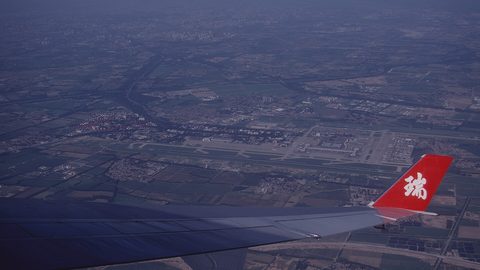 Flying into Beijing PEK or PKX and Getting Out of Both Airports
Flying into Beijing: choosing between PEK and PKX, and exactly how to get from each airport into the city centre without getting stranded after a long flight.
-
 Beijing Things to Do Ordered by Whether It Is Worth the Time
Beijing consumes your day before you see anything. The walk from Tiananmen Square metro exit to the Forbidden City gate is a long stretch of open concrete und
-
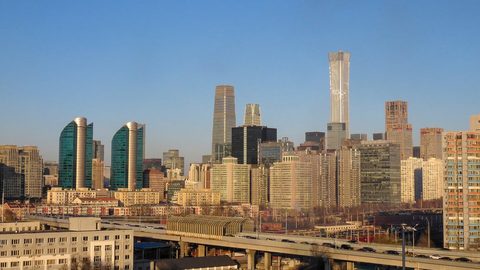 Best Time to Visit Beijing What Each Season Does to the City
The most common mistake travellers make about Beijing is searching for a single perfect month. There is none.
-
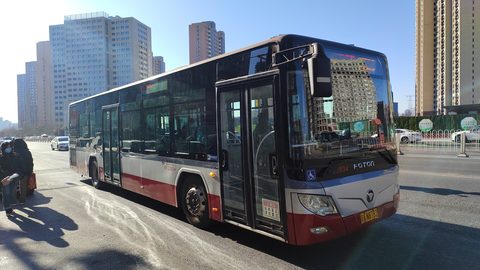 Getting Around Beijing Without Wasting Half the Trip
On a single morning in Beijing you will: tap a QR code to enter the metro, scan your passport at a landmark ticket counter, pay for a jianbing from a cart
-
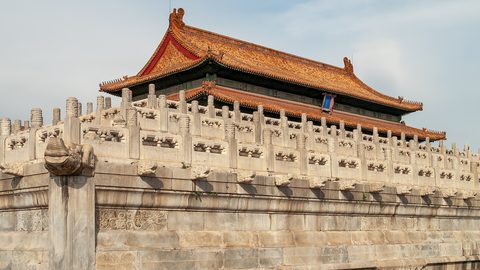 Forbidden City
The Forbidden City runs on a strict one-way route with a single entry and exit. Here is how to plan the Beijing visit without queueing twice.
-
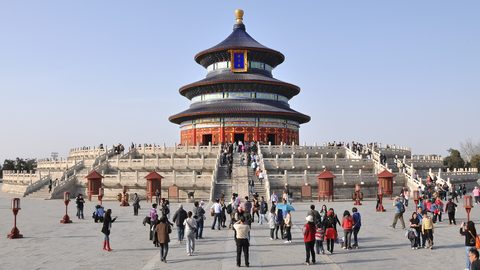 Temple of Heaven
How to visit the Temple of Heaven Beijing without queueing twice: the two-ticket system explained, which gate to use, and why the through ticket saves you a
-
 Summer Palace
How to visit the Summer Palace Beijing without queueing twice: the two time windows that avoid tour buses, which gate to enter, and why walking direction