China High-Speed Rail Ticket Booking Foreigner Tips and Tricks
China's high-speed rail is fast and efficient, but booking as a foreigner is a puzzle.
How to Get Around China
Your biggest problem in China is not the language. It is booking a high-speed train ticket without a local phone number or a WeChat Pay account. The booking process for foreigners requires real-name registration linked to your travel document, a local payment method, and often a Chinese phone number for verification. You can do it. But the official system, 12306.cn, was not designed for you, and the workarounds each have their own failure points.
The High-Speed Network at a Glance
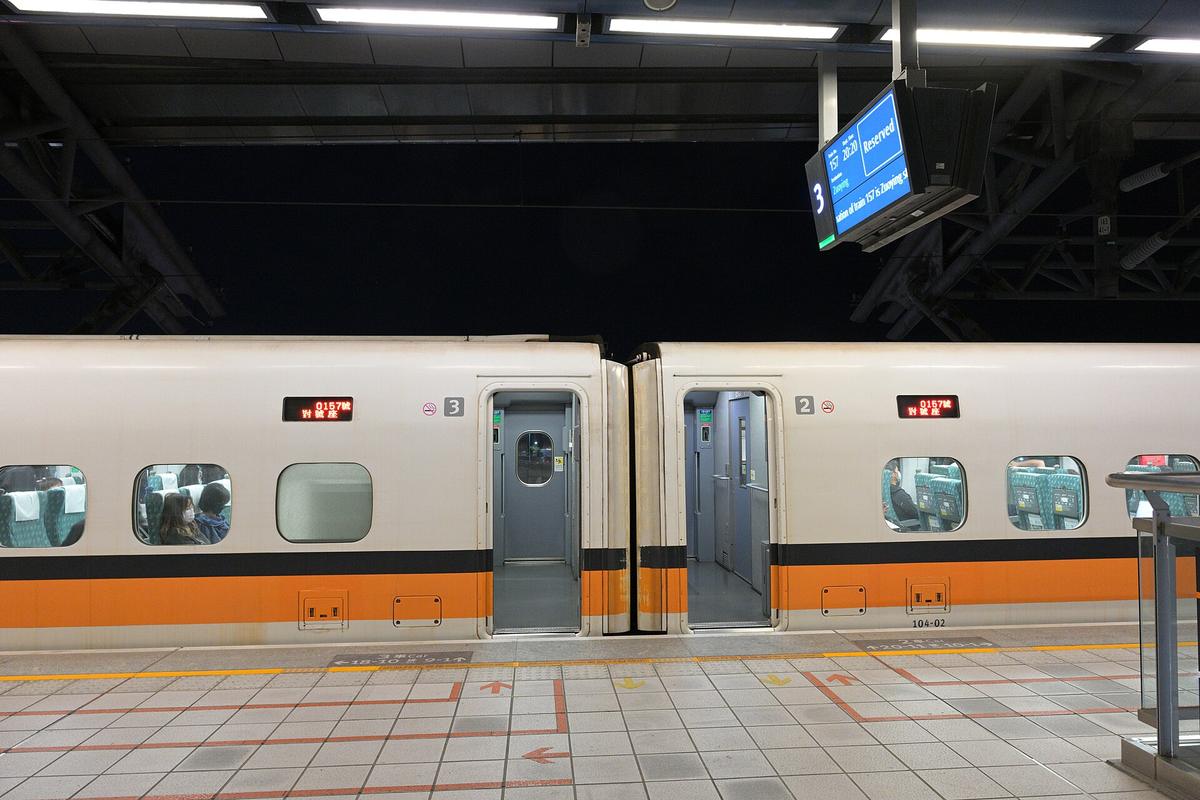
China's high-speed rail network covers roughly 45,000 km as of 2024, according to the National Railway Administration. It is the largest in the world by a wide margin. G trains run at 300 to 350 km/h and connect every major city. For distances between 200 and 1,200 km, high-speed rail is faster than flying once you account for airport transfer and security wait times. Above 1,200 km, domestic flights become the better choice. For remote western regions like Tibet, Xinjiang, and Qinghai, fly or take a long-distance sleeper bus.

The 15 Day Booking Trap and Why Tickets Vanish
Tickets go on sale exactly 15 days before departure, released at specific times per departure point. For popular routes during any holiday period, seats vanish within minutes. The worst periods are Chunyun, the 40-day window around Lunar New Year, Golden Week from October 1 to 7, and Labour Day from May 1 to 5. During those windows, hundreds of millions of people travel simultaneously. The system sells out instantly. Do not travel during these periods unless you already have tickets in hand.
Outside holidays, the 15-day release window still matters. Book on day one, not day ten. A seat on a Beijing to Shanghai G train at a desirable departure time can sell out three to five days before travel, even in low season. Set a calendar reminder for 14 days before your trip.
If tickets are sold out, your options are limited. You can try an agent such as Trip.com, formerly Ctrip, which holds a small allocation of seats and charges a service fee. You can ask your hotel concierge to buy tickets for you using their local app and payment method. You can also queue at the station counter. On sold-out routes, however, the counter shows the same inventory as the app.
China G Train Passport Booking Options
You have three ways to book a G train with a foreign passport. Each has a trade-off.
Official 12306 English Interface
The 12306 website and app have an English version. Register with your passport number. The system accepts foreign credit cards for payment about half the time and fails unpredictably the other half. If it rejects your card, you are stuck. The English interface also does not show every train the Chinese version does. Use this as a first attempt, but have a backup plan ready.
Third-Party Platforms
Trip.com acts as a booking agent. You pay in your own currency by credit card. The site adds a service fee, roughly 2 to 5 percent of the fare. The advantage is that Trip.com can sometimes secure seats after the official site shows them as sold out, because it reserves blocks in advance. The disadvantage is that cancellation and change policies are stricter than buying direct. Customer support handles document verification for you.
Hotel Concierge
In any mid-range or upscale hotel, the front desk can buy tickets using their own WeChat or Alipay account. You pay them in cash or by card at the hotel rate. This works every time. The concierge prints the paper slip for you. The only catch: you need to hand over your passport for the transaction, and they need a few hours, or overnight, to do it. Plan ahead.
China Train Station Security Rules: What Gets Confiscated
Every departure point has a security check before you enter the concourse. Put your bags through an X-ray machine and walk through a metal detector. Staff enforce specific rules that catch foreigners out.
Power Banks Over 20,000 mAh
Security confiscates power banks rated above 20,000 mAh without warning. They also confiscate units with no labelled capacity. Bring a power bank under this limit and make sure the label is legible. This is the single most common confiscation foreigners face.
Aerosol Cans
Hairspray, sunscreen spray, bug spray, deodorant, perfume in aerosol form. All banned. If security finds one, it goes in the bin. Bring solid or pump-action alternatives.
Liquids and Sharp Objects
Liquids are allowed up to standard carry-on limits, but station staff may test them by asking you to drink a sip. Scissors, knives, and tools over a certain length are banned. Leave your multi-tool in your checked bag or at home.
The Passport-as-Ticket Reality
Foreigners must collect a paper ticket at the counter or at a designated machine. The e-ticket system is not universally available for foreign passports as of the most recent data. Arrive at the station at least 45 minutes before departure on your first trip. Once you know the routine, 30 minutes is enough. The queue at the counter can be long, and the machines often reject non-Chinese ID cards. If the machine fails, join the counter queue.
Didi Chuxing English Interface and Car Rides Without Apps
Didi Chuxing is the dominant ride-hailing app in China. It has an English interface. Download the app, register with a Chinese phone number, and link a foreign credit card. The card link fails for many users. If it works, you can request rides and pay within the app. If it does not, you cannot use Didi at all.
The workaround is to use hotel concierges or flag down metered taxis. In most cities, taxis are available on the street. The catch: the driver will not speak English and you must show a Chinese-language address. Have the hotel write your destination in Chinese characters on a card. Show it to the driver. Pay in cash. The meter is standard and honest in reputable taxis.
If it is 1 a.m., no taxi is on the street, and Didi does not work, you walk or wait. Ride-hailing apps have displaced street hailing in some central urban zones. Have a backup plan for late nights. Ask your hotel to pre-arrange a taxi for early-morning departures.

_2.jpg)
China Intercity Travel Without App: Trains, Flights and Buses
You can travel between Chinese cities without ever installing a local app. The process is manual and slower. For trains, buy tickets at the counter with your passport and cash or a credit card. The staff will not speak English. Write the train number, date, and class on a piece of paper in Chinese, or show them a translation. Expect to queue for 20 to 40 minutes. This method works for same-day departures on routes with availability but fails when seats are sold out.
For domestic flights, book through airline websites or call the airline directly. Most Chinese carriers accept foreign credit cards on their English-language booking pages. You still need your passport number for real-name registration. At the airport, check in at the counter and collect a paper boarding pass.
For long-distance buses, buy tickets at the counter with cash. Some rural routes sell tickets on boarding. Real-name ID is required, so show your passport. Bus travel is a fallback where rail is absent or impractical, such as in parts of western Sichuan, Xinjiang, and Tibet.
Trains vs Domestic Flights: When to Choose Which
For distances under 1,200 km and rail journeys under six hours, high-speed rail beats flying. The reason is total door-to-door time. A G train from downtown Shanghai to downtown Beijing takes about 4.5 hours. A flight from Shanghai Pudong to Beijing Capital takes two hours in the air. But you spend one hour getting to Pudong airport, two hours at security and boarding, and 45 minutes from Capital airport into central Beijing. The train wins by about an hour and is less stressful.
For distances over 1,200 km or rail journeys over six hours, fly. Beijing to Urumqi by high-speed rail would be 18 hours if it connected directly. It does not. The flight takes four hours. Chengdu to Lhasa is 36 hours by rail or 2.5 hours by air. Fly for those routes.
Domestic air passenger volume reached roughly 620 million trips in 2023, according to the Civil Aviation Administration of China, with 259 civil airports in operation by 2024. The system is robust. Book flights through airline websites with your passport. Expect higher fares and sellouts during Chunyun, summer from July to August, and Golden Week.
The Single Thing That Most Often Goes Wrong
Underestimating the country's scale. Travellers try to visit Beijing, Shanghai, Xi'an, and Guilin in a single week. The result: half the trip is spent in transit and security lines, not experiencing any place. China requires at least ten days to comfortably see two regions. Anything less means costly internal flights or trains that eat your days. Plan for that time, or cut your ambition to one region.
This subject suits history and culture obsessives, adventurous solo travellers, food-focused backpackers, photographers chasing epic landscapes, and business travellers extending a trip. It does not suit travellers wanting a relaxing beach holiday, those unwilling to navigate language barriers and app-based ecosystems, or anyone needing unrestricted internet or social media access without a VPN installed before arrival.
Common Questions
Can I book a China high-speed train ticket without a Chinese phone number?
Yes, but it is difficult. The official 12306 English interface accepts foreign numbers. Trip.com lets you use your home number. The issue is that many public Wi-Fi and app verification steps do require a local number. Buy a SIM or eSIM from Nihao Mobile or China Unicom at the airport on arrival.
What happens if my power bank is over 20,000 mAh at the station?
Station security confiscates it. They do not hold it for collection. It is thrown away. Buy a power bank under the limit before you travel. A 10,000 or 20,000 mAh unit is safe. Labels must be legible.
Can I use Uber in China?
No. Uber sold its China operations to Didi Chuxing in 2016. Didi is the only major ride-hailing app. The English interface exists but often fails to link foreign cards. Metered taxis and hotel-arranged cars are the reliable workaround.
Do I need a paper ticket for the train with a passport?
Yes. The e-ticket system is not universal for foreign passports. You must collect a paper ticket at the station counter or machine before boarding. Arrive 45 minutes early for your first trip. The machine may reject your passport; join the counter queue if it does.
Read next
-

 Staying Connected in China Without Losing Access to Everything
The central tradeoff is this: a local physical SIM gives you the Chinese phone number you need for WeChat Pay, bike sharing, and public Wi-Fi login.
Staying Connected in China Without Losing Access to Everything
The central tradeoff is this: a local physical SIM gives you the Chinese phone number you need for WeChat Pay, bike sharing, and public Wi-Fi login.
-
 Best Time to Visit China by Region and Season
China's climate spans subtropical to subarctic. Here is what each season means region by region, from October's clear Beijing skies to August's Guangdong humidity.
Best Time to Visit China by Region and Season
China's climate spans subtropical to subarctic. Here is what each season means region by region, from October's clear Beijing skies to August's Guangdong humidity.
-
 China Visa Requirements and the Application Process Step by Step
Most visitors need a Chinese tourist visa before departure. Here is who qualifies for visa-free entry, who does not, and exactly how the L-visa application works.
China Visa Requirements and the Application Process Step by Step
Most visitors need a Chinese tourist visa before departure. Here is who qualifies for visa-free entry, who does not, and exactly how the L-visa application works.
-
 How to Pay for Things in China Without Getting Stranded
China runs on WeChat Pay and Alipay, and cash is often refused. Here is how to link a foreign card, what to do when it fails, and where renminbi notes still work.
How to Pay for Things in China Without Getting Stranded
China runs on WeChat Pay and Alipay, and cash is often refused. Here is how to link a foreign card, what to do when it fails, and where renminbi notes still work.
-
 Is China Safe for Travel and What Safety Advice Actually Applies
China is statistically safe from violent crime, but scams, air pollution, and digital surveillance are real concerns. Here is what to actually watch for.
Is China Safe for Travel and What Safety Advice Actually Applies
China is statistically safe from violent crime, but scams, air pollution, and digital surveillance are real concerns. Here is what to actually watch for.
-
 What a Trip to China Actually Costs and Where the Money Goes
A realistic breakdown of China travel costs, from G-train tickets and attraction entry fees to the hidden expenses of a cashless society.
What a Trip to China Actually Costs and Where the Money Goes
A realistic breakdown of China travel costs, from G-train tickets and attraction entry fees to the hidden expenses of a cashless society.
-
 A Ground-Level Logistics Guide to Independent Travel in China
First-time independent travel in China: what you need to know about visas, rail booking, eSIMs, mobile payments, and power adapters.
A Ground-Level Logistics Guide to Independent Travel in China
First-time independent travel in China: what you need to know about visas, rail booking, eSIMs, mobile payments, and power adapters.
-
 How Solo Travelers Stay Ahead of Flight Delays and Cancellations
How solo travelers can track inbound aircraft, claim rebooking rights, and adjust ground transport when flights go wrong — step by step.
How Solo Travelers Stay Ahead of Flight Delays and Cancellations
How solo travelers can track inbound aircraft, claim rebooking rights, and adjust ground transport when flights go wrong — step by step.
-
 Why Your eSIM Might Not Work Abroad and How to Check Before You Go
Buying an eSIM doesn't guarantee signal abroad. Learn why coverage fails by location and how to verify reach before you commit to a plan.
Why Your eSIM Might Not Work Abroad and How to Check Before You Go
Buying an eSIM doesn't guarantee signal abroad. Learn why coverage fails by location and how to verify reach before you commit to a plan.