Chaoyang Beijing: What the Embassy and Art District Is Like and What You Can Walk To
Chaoyang Beijing: what the embassy and art district is like, who should stay there over the historic centre, and what is nearby—from Sanlitun nightlife to798
- Flag
-
- ISO code
- CN
- Currency
- CNY
- Timezone
- Asia/Shanghai
The metro doors open at Sanyuanqiao and you step into a lobby of bank branches, bubble tea chains, and a Japanese restaurant whose menu has no pinyin. This is Chaoyang Beijing, the city's diplomatic and commercial lung, and it operates on a different logic from the imperial core west of the Second Ring Road. If Dongcheng is the Beijing of dynastic sequence and hutongs, Chaoyang is the Beijing of expat infrastructure: international restaurants open past midnight, ride hailing that arrives in four minutes instead of twelve, and fewer passport checks per square metre. It is not atmospheric. It is functional. And for a specific kind of visitor, it is the only base that makes sense.
Chaoyang covers 470.8 square kilometres and holds over 3.45 million residents. Its permanent population is larger than most European cities, and its built fabric runs from 1950s Soviet walkups to the steel diagrid of the CCTV Headquarters. The district has no Forbidden City, no Temple of Heaven, no continuous historic fabric. What it has is a concentration of foreign embassies exceeding 150, a central business district that rivals Shanghai's Lujiazui, and an art district built inside a Bauhaus factory complex. The question is not whether Chaoyang is worth visiting. The question is whether you should stay here instead of the historic centre, and the answer depends entirely on what kind of stamina you bring.
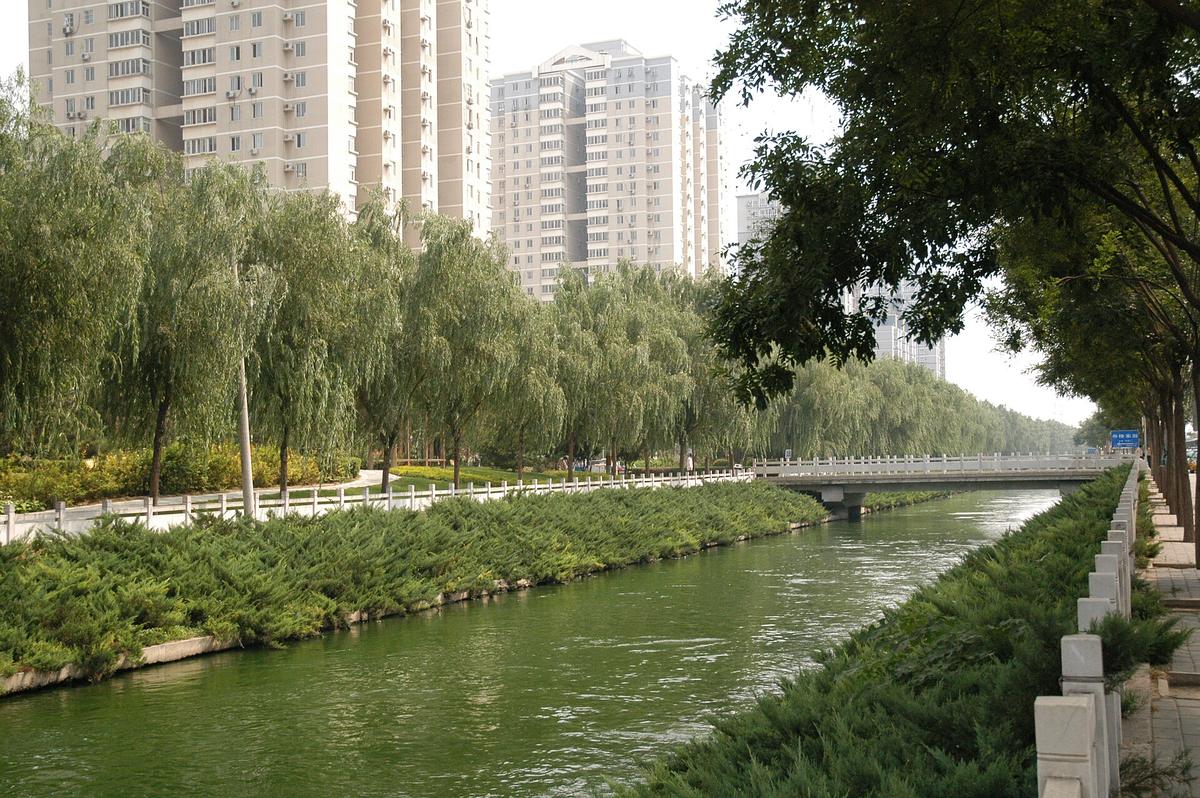

Chaoyang District Guide: What the Embassy Zone Actually Operates Like
The embassy zone runs through Sanlitun, Liangmaqiao, and Ritan. It is a landscape of fortified gates, diplomatic plates, and high rise apartment compounds built for the staff of consulates and multinational firms. The pavement quality is better than elsewhere in Beijing. The street trees are older. The convenience stores stock imported yoghurt and German beer. What that means for a traveller is straightforward: you can arrive late, eat well, and move without the friction that defines the rest of the city.
Ride hailing via Didi within Alipay works faster here because density of drivers is highest near the embassy belt. You will wait three minutes at 23:00, not fifteen. Metro Line 10 runs through the district and connects directly to Sanyuanqiao for the Capital Airport Express, which reaches Beijing Capital Airport in 25 minutes for ¥25. Beijing Chaoyang railway station in the eastern part of the district serves the Beijing Harbin and Beijing Shenyang high speed rail lines. Chaoyang is the district that lets you leave quickly and return late, and that is its central value proposition.
Sanlitun Beijing: What Nightlife Costs and Who Should Skip it
What the Night Costs
Sanlitun is the primary nightlife cluster in Chaoyang, and it is the honest version of Beijing nightlife: loud, expensive, and not particularly Chinese in feeling. The main pedestrian zone around Taikoo Li is a grid of cocktail bars, international chain restaurants, and club entrances guarded by bouncers who check IDs from every nationality. A cocktail runs ¥80 to ¥120. A dinner for two at an international restaurant in the Sanlitun complex lands at ¥400 to ¥600. The crowd is heavy on expats, visiting business travellers, and Beijing's young affluent class. If you want a night that feels culturally specific, this is not it. If you want a night that feels safe, predictable, and open past midnight, Sanlitun delivers.
Walking and Match Nights
The walkable radius from Sanlitun Taikoo Li extends 1.5 kilometres to Workers' Stadium, a 68,000 seat football venue rebuilt in 2023, and 2 kilometres to Ritan Park. The stadium hosts concerts and football matches and draws crowds that spill into the surrounding bar streets. On match nights, ride hailing from the stadium perimeter can take 20 minutes to secure, even in Chaoyang. Budget for that delay or walk south toward the Guomao metro interchange.
798 Art District Beijing: from Bauhaus Factory to Gallery Zone
798 Art District occupies roughly 0.6 square kilometres within the Dashanzi area, inside former electronics factories built in the 1950s and 1960s in Bauhaus style. The founding period of the art zone was the early 2000s, when galleries and studios moved into the vacant factory shells and transformed them into the primary contemporary art cluster in Beijing. The buildings retain their original industrial bones: high ceilings, north facing sawtooth roofs, concrete floors, exposed pipework. The art ranges from established Chinese contemporary names to transient pop up installations. The district is also a commercial zone now, with boutique hotels, coffee shops, and design stores mixed between the galleries.
Visit on a weekday morning if you want to see the art without the crowd. The galleries open around 10:00 and the space is quiet until lunch. Saturday and Sunday draw domestic tourists and the atmosphere shifts toward market rather than museum. The metro does not reach 798 directly. Take Line 14 to Wangjing or Line 10 to Sanyuanqiao and ride hail from there, or take a taxi from central Chaoyang for roughly ¥40. Allow three hours minimum, more if you stop at the smaller venues in the peripheral factory buildings.
CCTV Headquarters and Galaxy Soho: the Architecture Pilgrimage
For the traveller who comes to Beijing for built form rather than imperial chronology, Chaoyang is a pilgrimage site for contemporary design. The CCTV Headquarters on Guanghua Road, completed in 2012, is a 234 metre loop of steel and glass that appears to defy gravity. Its cantilevered overhang is a structural fact that photographs cannot convey: you need to walk underneath it to understand the scale. The building does not offer public access, so budget your time for exterior viewing from the surrounding plaza.
Galaxy Soho, designed by Zaha Hadid, sits at the intersection of Line 2 and Line 6. Its flowing white volumes and interconnected bridges are best seen from inside the atrium. The complex contains retail and office space, and the public areas are open during mall hours. Both buildings sit within the Beijing CBD corridor that runs through Guomao, Dawanglu, and Jintaixizhao. The skyscraper density here is highest in the city, and the China World Trade Center Tower III at 330 metres is the tallest structure in the district. Walk from Guomao metro interchange east along Guanghua Road and you hit the entire sequence in under 30 minutes.
Chaoyang Expat Area: Who Should Stay and Who Should Not
Who Should Stay
Chaoyang suits the visitor who needs a functional base rather than an atmospheric one. If you are a business traveller, a repeat China visitor, or a solo traveller comfortable with apps and pre booking, the district provides the infrastructure that reduces the friction of a Beijing trip. The international restaurant density in Sanlitun, Xingfucun, Liangmaqiao, and the CBD means you can eat well without navigating a foreign menu. The boutique hotels in the embassy zone offer English speaking front desks and reliable wifi with VPN capacity. The ride hailing arrival times are shorter. The metro interchanges at Guomao, Hujialou, and Dawanglu connect you to the rest of the city in under 40 minutes.
Who Should Not
Chaoyang does not suit the traveller seeking hutong lanes, courtyard housing, or imperial era monuments. The historic fabric of Beijing survives in fragments, not continuous districts, and those fragments are in Dongcheng and Xicheng. From a Chaoyang base, the Forbidden City requires a metro ride east on Line 1 or a taxi journey of 25 minutes. The Temple of Heaven is a similar distance. You will spend 60 to 90 minutes per day commuting to the imperial sights. That is the trade off: better nights, slower mornings. Chaoyang is for the visitor who knows exactly what they are giving up.

Chaoyang Park and the Green Space Ratio
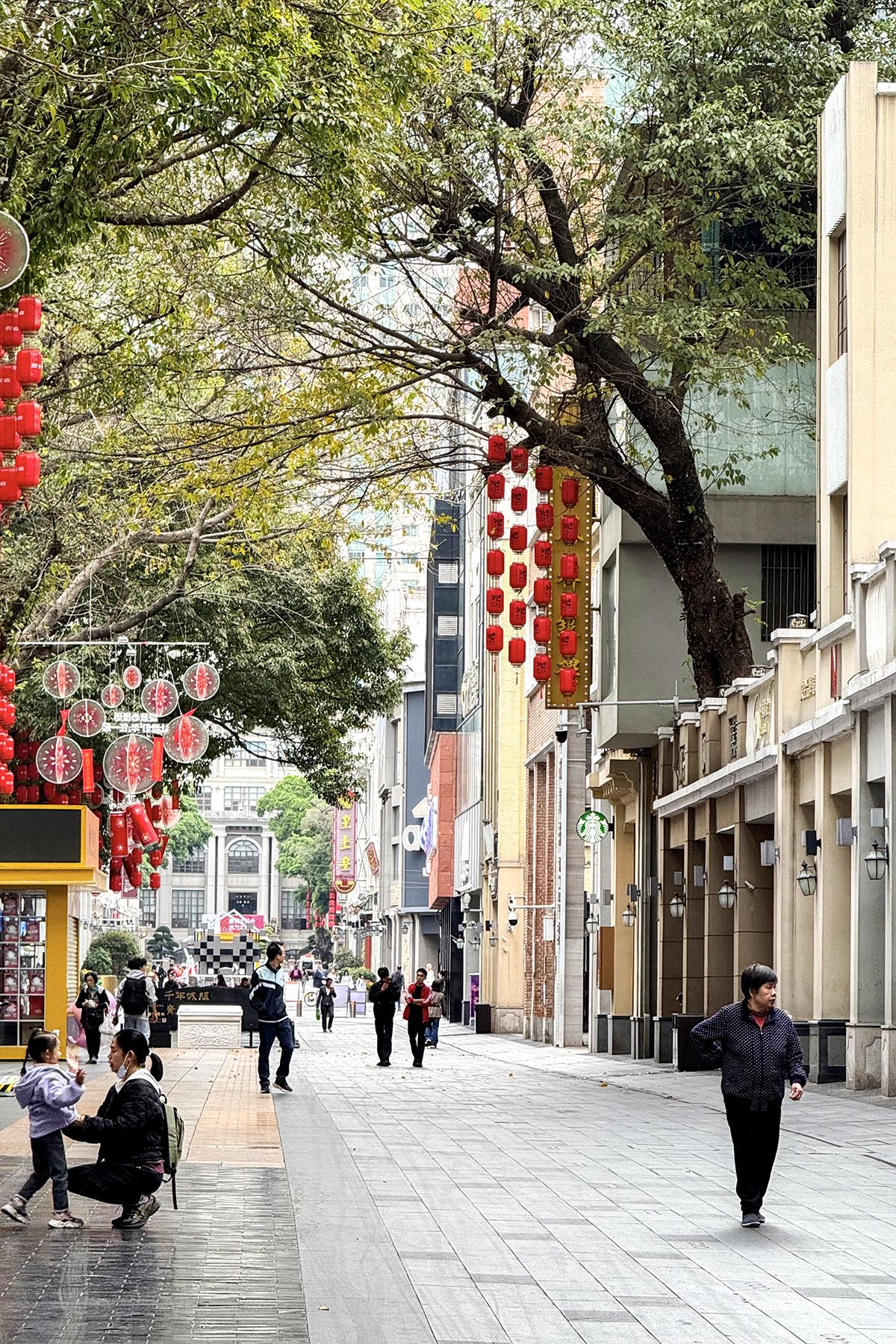
Chaoyang Park at 2.88 square kilometres is the district's largest green space and one of the largest urban parks in Beijing. It contains a lake, running tracks, paddle boat rentals, and a children's play zone. The green space ratio across the district sits at approximately 22 percent, though that figure is published by the Chaoyang District People's Government and may vary by year. Ritan Park at 0.2 square kilometres is a smaller diplomatic park near the embassy zone, quieter and better for a short walk.
Olympic Forest Park, at 6.8 square kilometres total, sits on the northern boundary of Chaoyang shared with Haidian. It contains the National Stadium, known as the Bird's Nest, with a post renovation capacity of 91,000, and the National Aquatics Center, now converted to a water park. Both are metro accessible via Line 8. The Olympic Green is a full day outing, not a quick stop.
Guijie and Domestic Dining in Chaoyang
For domestic dining that does not require a trip to Dongcheng, head to Wangjing in north east Chaoyang. This area holds the highest concentration of Korean restaurants in Beijing, a result of the large Korean expat community that settled near the tech campuses. The quality is serious: grilled pork belly, kimchi jjigae, cold noodles. The prices are lower than Sanlitun.
Guijie, the famous night food street, sits on the boundary between Chaoyang and Dongcheng near the Dongzhimen metro stop. It runs for roughly a kilometre with restaurants serving Beijing roast duck, Sichuan hotpot, and crawfish. The street is tourist facing and the quality varies. Go for the atmosphere, order the shuan yangrou mutton hotpot at Donglaishun, and leave before 22:00 when the crowds peak.
Chaoyang Beijing: What the Embassy and Art District is Like and What You Can Walk to
What You Can Walk To
From a base in Chaoyang, the walkable set of destinations is narrower than in Dongcheng but more reliable. From Sanlitun Taikoo Li you can walk 1.5 kilometres to Workers' Stadium, 2 kilometres to Ritan Park, and 2.5 kilometres to the CBD. From the CBD core you can walk 1 kilometre to China World Mall, 1.5 kilometres to CCTV Headquarters, and 2 kilometres to Ritan Park. From Liangmaqiao you can walk 1 kilometre to Solana Mall, 1.5 kilometres to Chaoyang Park west gate, and 2 kilometres to Sanlitun. These are real walking distances, not aspirational ones, and the pavements in the embassy zone are the most pedestrian friendly in the city.
What You Cannot
What is not walkable: the imperial sights. The Forbidden City requires a metro ride east on Line 1 from Guomao to Tiananmen East, then a security queue and a 90 minute crossing of the complex. The Temple of Heaven requires a journey to Line 5 or Line 8. The Summer Palace sits in Haidian and requires a 40 minute metro ride. Chaoyang is a base, not a centre, and the visitor who stays here must accept that the historic weight of Beijing requires deliberate travel, not spontaneous wandering.
When to Visit and What to Avoid
Peak season runs April through May and September through October. These months bring clear skies, manageable temperatures, and the best light for photography. They also bring domestic holiday surges during Labour Day in early May and National Day in early October. The National Day week from October 1 to 7 makes every major site impassable. Avoid it.
July and August bring oppressive humidity and frequent smog. Winter from November through February brings PM2.5 levels at their highest and temperatures that drop to minus 15 degrees Celsius. The Chaoyang streets remain navigable, but the outdoor sights become punishing. Chinese New Year in late January or February sees many local restaurants close for days and intercity travel become chaotic. Budget for at least four full days or skip the trip entirely. Any less and you are only ticking the Forbidden City and the Great Wall.
The Practical Friction of Chaoyang
Carry your physical passport every day. Digital copies are not accepted at any major landmark. Public toilets in parks and hutongs are predominantly squat style and rarely stocked with soap or toilet paper. Carry your own supply. The metro stops running around 22:30 to 23:00, and late night movement relies entirely on ride hailing, which can take 20 minutes to secure even in Chaoyang on busy nights. Check the AQI daily between November and March and carry an N95 mask during smog spikes. WhatsApp, Google, Instagram, Gmail, and Google Maps are blocked without a VPN. Install and test one before arrival. Alipay with a linked foreign card works for metro, Didi, and most vendors, but physical cash is increasingly refused at smaller outlets.
The one mistake that costs visitors the most time is underestimating the size of the Forbidden City and the time required to cross Tiananmen Square. Visitors book the Forbidden City for a morning and a separate afternoon sight, then lose 90 minutes just walking from the entry gate through security, across the square, and out the north gate to the nearest metro. Book the Forbidden City for the entire morning. Nothing else fits before lunch.
Other areas in Beijing
Common Questions
Is Chaoyang walkable for a tourist?
Parts of it are. The Sanlitun core is walkable within a 1.5 kilometre radius. The CBD corridor from Guomao to CCTV is walkable in 30 minutes. But the district covers 470.8 square kilometres. You need the metro or ride hailing for anything beyond the immediate cluster.
How far is 798 Art District from Sanlitun?
About 8 kilometres north east. Ride hailing takes 20 to 30 minutes depending on traffic. Metro requires a transfer at Sanyuanqiao to Line 14 toward Wangjing, then a short taxi. Allow 45 minutes door to door.
What is the best metro line for getting around Chaoyang?
Line 10. It runs through the district core, connects at Guomao with Line 1 for the Forbidden City, and reaches Sanyuanqiao for the Capital Airport Express. It also serves Hujialou and Jintaixizhao.
Is Chaoyang safe for a solo traveller at night?
Yes. The embassy zone and Sanlitun are well lit and heavily policed. The main risk is the late night metro closure around 22:30. After that, rely on ride hailing. Avoid the dark edges of Chaoyang Park after midnight.
Read next
-
 Beijing Hotels What Each Price Band Actually Gets You
The most useful fact about Beijing hotels is that not every bed in the city is legally permitted to take your money.
-
 Where to Stay in Beijing District by District and What Each Costs You
Where to stay in Beijing depends on whether you prioritise imperial proximity, nightlife, or calm.
-
 Flying into Beijing PEK or PKX and Getting Out of Both Airports
Flying into Beijing: choosing between PEK and PKX, and exactly how to get from each airport into the city centre without getting stranded after a long flight.
-
 Beijing Things to Do Ordered by Whether It Is Worth the Time
Beijing consumes your day before you see anything. The walk from Tiananmen Square metro exit to the Forbidden City gate is a long stretch of open concrete und
-
 Best Time to Visit Beijing What Each Season Does to the City
The most common mistake travellers make about Beijing is searching for a single perfect month. There is none.
-
 Getting Around Beijing Without Wasting Half the Trip
On a single morning in Beijing you will: tap a QR code to enter the metro, scan your passport at a landmark ticket counter, pay for a jianbing from a cart
-
 Dongcheng
 Beijing: what the imperial core district is actually like, who it suits, and which sights are genuinely within walking distance once you account for
-
 Xicheng
 Beijing: what the lakes and lanes district is like, who it suits, and how it differs from Dongcheng—older residential hutong, Beihai Park, and the
-
 Haidian
 Beijing: what the university and Summer Palace district is like, who it suits, and whether staying there makes sense given the long metro rides to