Your Guide to Beijing Flights and Navigating Both City Airports
Flying into Beijing: choosing between PEK and PKX, and exactly how to get from each airport into the city centre without getting stranded after a long flight.
Beijing Capital (PEK) is the older, closer airport with a slower taxi queue. Beijing Daxing (PKX) is farther south but its express train shaves the difference back to nearly even. For most travellers arriving under a SkyTeam ticket, PKX is the better choice. For Star Alliance passengers, PEK is unavoidable. What both airports share is a transfer process that punishes the unprepared. If you land without Alipay working and a VPN tested, you will lose time inside the terminal that you cannot get back. The choice of which Beijing airport to fly into comes down to which airline you booked and whether you want to trade a longer train ride for a shorter taxi queue. This guide breaks down the transfer from aircraft door to hotel check-in for both airports, with the exact metro routes, pickup zone locations, and the friction points that separate a 45-minute arrival from a two-hour ordeal.
Beijing flights land at two airports. PEK is northeast of central Beijing in Chaoyang District, roughly 25 to 35 km from the city centre. PKX is south in Daxing District, 45 to 55 km away. Distance alone suggests PEK wins. The reality is more specific. PKX has a single integrated terminal with shorter walking distances between gate and baggage claim. PEK has three terminals. If you arrive at T3 on Air China, the walk from the gate to the Airport Express platform can take 15 minutes. If you arrive at T2 on a low-cost carrier, add another five. The passenger experience at PKX is newer, cleaner, and more predictable. The passenger experience at PEK is older, more chaotic, and more vulnerable to peak-hour congestion. Neither airport is a gentle introduction to Beijing. Both require a plan before you land.
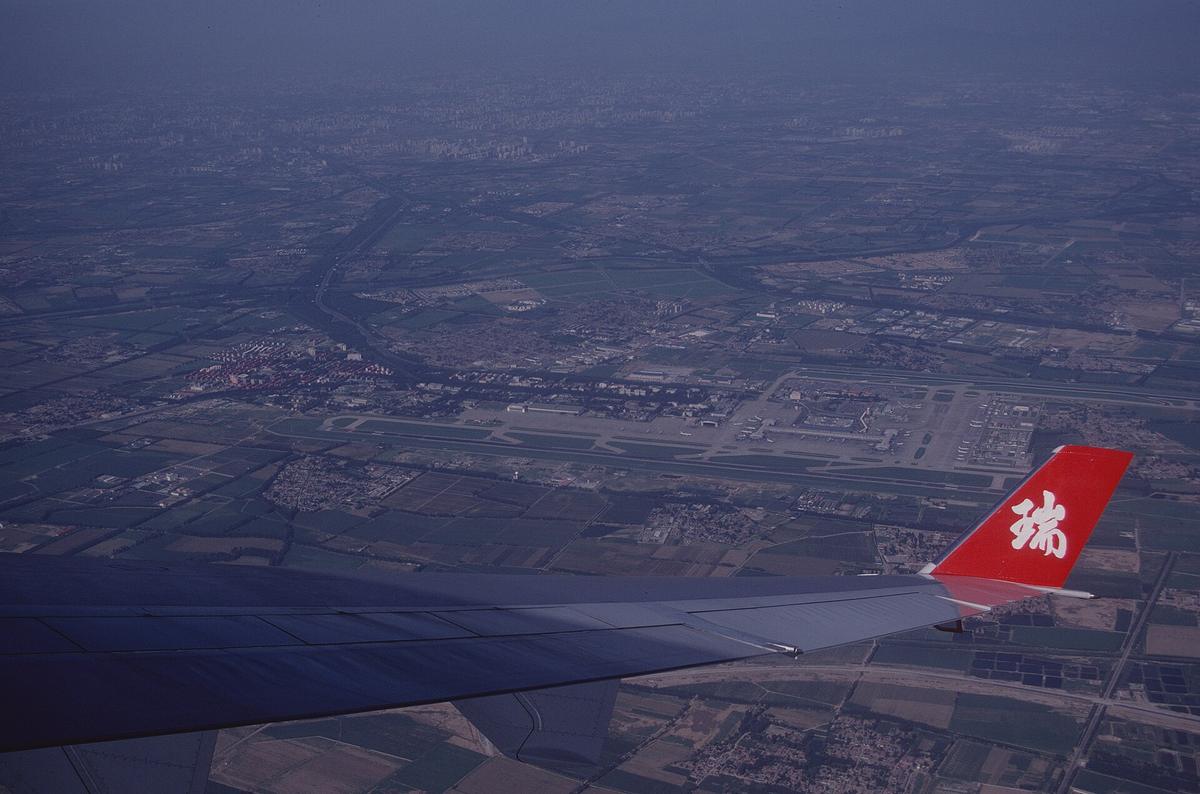

The real difference is not distance. It is the quality of the transfer mode. PEK has the Airport Express train to Dongzhimen, a 25 to 35 minute ride from T3 or 20 to 30 minutes from T2. The route goes PEK T3 to PEK T2 to Sanyuanqiao to Dongzhimen. At Dongzhimen you transfer to the metro or find a taxi. The train costs 25 yuan and runs from early morning to late evening, roughly matching flight schedules. The problem is the taxi queue at PEK. In off-peak hours a taxi to central Beijing takes 40 to 60 minutes. In weekday peak periods from 07:00 to 09:00 and 17:00 to 19:00, the taxi journey stretches to 70 to 100 minutes. The queue itself can eat 45 minutes on a busy evening. You stand in a roped lane with your luggage while the dispatcher feeds taxis in one at a time. The ride-hailing pickup zone at PEK is separate and requires walking to a designated parking structure. Drivers using Didi through Alipay will call to confirm your location in Chinese. Have your hotel write the destination in characters before you leave the gate.
PEK Airport to City: the Metro and Taxi Reality
Take the Airport Express to Dongzhimen
For PEK, the Airport Express is the fastest option to Dongzhimen. From Dongzhimen you transfer to metro Line 2 for Dongcheng or Xicheng, or Line 13 for Chaoyang. The metro requires a security scan at every station entry. You pay with Alipay through the metro QR code function. Physical cash is increasingly refused. The total journey from deplaning at PEK T3 to arriving at a Dongcheng hotel is roughly 60 minutes if you catch a train immediately and 90 minutes if you wait fifteen minutes between transfers. A taxi from PEK to central districts costs 100 to 150 yuan. In heavy traffic the taxi is slower than the train and costs more. The upside is door to door delivery. The downside is that the driver may struggle with the destination if you have not prepared a written address. Budget 60 to 90 minutes from aircraft door to central accommodation regardless of mode.
Skip the Shuttle Bus
The shuttle bus from PEK covers routes to major city districts, railway stations, and neighbouring cities. It is the cheapest option but the slowest. The bus stops at multiple points and the journey time is unpredictable. Skip it unless your hotel is at a bus terminus and your arrival is outside peak hours.
PKX Airport to City: the Faster Train, the Longer Ride
Take the Daxing Airport Express
Beijing Daxing Airport opened to relieve PEK and it was designed for speed on the airside. The single terminal means you clear baggage and customs and walk to the Daxing Airport Express platform without navigating a multi building transfer. The train runs from PKX to Caoqiao in 19 to 22 minutes and costs 35 yuan. The route goes PKX to Daxing Xincheng to Caoqiao. At Caoqiao you transfer to metro Line 10 or Line 19 for central Beijing. The total journey from deplaning at PKX to a Dongcheng hotel takes roughly 50 to 60 minutes. That is faster than PEK on a good day and significantly faster than PEK on a peak traffic day.
Consider a Taxi Only Late at Night
The taxi from PKX to central Beijing takes 50 to 70 minutes off peak and 80 to 120 minutes in peak periods. The cost is 150 to 200 yuan. The distance is 45 to 55 km, so the taxi fare is higher than PEK. The ride-hailing pickup zone at PKX is in the parking garage directly connected to the terminal. It is better organised than PEK and the walk is shorter. If you take a taxi, expect a longer ride but a shorter wait for a vehicle. The Daxing Airport Express is the better choice for most travellers. The only reason to take a taxi from PKX is if you are arriving after the train stops running, which happens around 22:30 to 23:00. Late night arrivals rely on ride-hailing, which can take 20 minutes to secure. Have Alipay with Didi installed and tested before landing.
High-Speed Rail to Beijing West
PKX also has a high-speed rail connection via the Beijing Xiong'an Intercity Railway to Beijing West Railway Station. The journey takes approximately 28 minutes. This is useful if your accommodation is near Beijing West or if you are continuing onward to another city. Check the schedule before relying on it. The official website for Beijing Daxing Airport is www.bdia.com.cn. The official website for Beijing Capital Airport is en.bcia.com.cn. Both publish live transfer information.
| Factor | PEK (Beijing Capital) | PKX (Beijing Daxing) |
|---|---|---|
| Distance to centre | 25 to 35 km | 45 to 55 km |
| Express train cost | 25 yuan | 35 yuan |
| Express train time | 20 to 35 minutes | 19 to 22 minutes |
| Express train terminus | Dongzhimen | Caoqiao |
| Taxi cost to centre | 100 to 150 yuan | 150 to 200 yuan |
| Taxi time off peak | 40 to 60 minutes | 50 to 70 minutes |
| Taxi time peak | 70 to 100 minutes | 80 to 120 minutes |
| Terminal count | 3 (T1, T2, T3) | 1 (integrated) |
| Primary hub airline | Air China (Star Alliance) | China Southern, China Eastern (SkyTeam) |
| Ride-hailing pickup | Separate parking structure | Garage connected to terminal |
Beijing Airport Transfer: the Friction Points That Delay You
Passport, Connectivity, and Payment
Both airports share the same set of problems. The first is passport registration. You need your physical passport to enter every major landmark and to purchase a Chinese SIM. A digital copy is refused. Keep the passport on your body, not in checked luggage. The second is connectivity. WhatsApp, Google, Instagram, Gmail, and Google Maps are blocked without a VPN. Install and test one before you land. A Chinese SIM from China Unicom or China Mobile is cheap and avoids Wi-Fi dependency, but it requires passport registration at the point of purchase. Do this at the airport arrivals hall or at a carrier shop. Do not assume your home carrier plan works. The third is payment. Alipay with a linked foreign card works for metro, Didi, and most vendors. Set it up and test it before departure. Cash is still accepted in some places but less each year. The fourth is language. Didi drivers frequently call to confirm your location. Have your hotel name and address written in Chinese characters on a note or a phone screen. A map pin is not enough. The driver needs the address.
Navigating the Metro
The fifth friction point is the metro itself. The Beijing metro is sprawling, cheap at 3 to 9 yuan per ride, and signed in English. But it requires a security scan at every station entry. Station exits are numbered and can leave you hundreds of metres from the correct side of a massive intersection. Exiting the wrong gate adds a 15 minute walk to correct it. Always check which numbered exit corresponds to your destination before you leave the platform. Use the metro map on your phone or a printed guide. The metro stops running around 22:30 to 23:00. Late night movement relies entirely on ride-hailing. Plan your arrival flight to land before 21:00 if you want the train. If you cannot, budget for a taxi and the associated wait.
Flying Into Beijing: the Sequence from Aircraft Door to Hotel Check in
Before You Land
Here is the sequence of actions that works for both airports. Step one, before landing: install Alipay, link a foreign card, test the metro QR code function. Install Didi within Alipay. Install a VPN and test it. Write your hotel address in Chinese characters on a note. Step two, deplane: follow signs to baggage claim and immigration. Have your physical passport ready. Step three, after baggage: decide your transfer mode. For PEK, take the Airport Express to Dongzhimen unless you are arriving in off peak hours with heavy luggage. For PKX, take the Daxing Airport Express to Caoqiao unless you are arriving after the train stops.
At the Terminus
Step four, at the terminus: transfer to the metro or find a taxi. At Dongzhimen, transfer to Line 2 or Line 13. At Caoqiao, transfer to Line 10 or Line 19. Step five, ride the metro to your station and exit the correct numbered gate. Step six, walk to your hotel and check in. Total time from landing to hotel: 60 to 90 minutes for most routes. Budget for 90 minutes if you are unfamiliar with the airport.
The single most useful fact is that the Daxing Airport Express from PKX to Caoqiao takes 19 to 22 minutes and costs 35 yuan, making PKX the faster arrival option despite being farther from the centre, provided your airline flies there. If your ticket is on Air China or a Star Alliance carrier, you land at PEK and the Airport Express to Dongzhimen is your best move. If your ticket is on China Southern, China Eastern, or a SkyTeam carrier, you land at PKX and the Daxing Airport Express is faster. In both cases, having Alipay and a VPN tested before landing is non negotiable. The airport is the first friction point of the trip. Solve it before you leave the departure gate.
Common Questions
Which Beijing airport is closer to the city centre?
PEK is closer at 25 to 35 km from central Beijing versus PKX at 45 to 55 km. But the Daxing Airport Express from PKX runs 19 to 22 minutes to Caoqiao, which makes the total journey time from landing to hotel similar to or faster than PEK in peak traffic.
How do I get from PEK to the city centre?
Take the Airport Express train to Dongzhimen. The ride costs 25 yuan and takes 20 to 35 minutes depending on your terminal. At Dongzhimen transfer to metro Line 2 or Line 13. A taxi costs 100 to 150 yuan and takes 40 to 60 minutes off peak, 70 to 100 minutes in peak traffic.
How do I get from PKX to the city centre?
Take the Daxing Airport Express train to Caoqiao. The ride costs 35 yuan and takes 19 to 22 minutes. At Caoqiao transfer to metro Line 10 or Line 19. A taxi costs 150 to 200 yuan and takes 50 to 70 minutes off peak, 80 to 120 minutes in peak traffic.
Do I need a VPN for my Beijing flight arrival?
Yes. WhatsApp, Google, Instagram, Gmail, and Google Maps are blocked in China. Install and test a VPN before you land. Without it you cannot use map apps or message your hotel.
What is the fastest way from either airport to central Beijing?
The fastest way from PKX is the Daxing Airport Express at 19 to 22 minutes. The fastest way from PEK is the Airport Express at 20 to 35 minutes. In both cases the train beats the taxi in peak traffic. The taxi queue at PEK can add 45 minutes.
Read next
-
 Beijing Hotels What Each Price Band Actually Gets You
The most useful fact about Beijing hotels is that not every bed in the city is legally permitted to take your money.
-
 Where to Stay in Beijing District by District and What Each Costs You
Where to stay in Beijing depends on whether you prioritise imperial proximity, nightlife, or calm.
-
 Beijing Things to Do Ordered by Whether It Is Worth the Time
Beijing consumes your day before you see anything. The walk from Tiananmen Square metro exit to the Forbidden City gate is a long stretch of open concrete und
-
 Best Time to Visit Beijing What Each Season Does to the City
The most common mistake travellers make about Beijing is searching for a single perfect month. There is none.
-
 Getting Around Beijing Without Wasting Half the Trip
On a single morning in Beijing you will: tap a QR code to enter the metro, scan your passport at a landmark ticket counter, pay for a jianbing from a cart
-
 Beijing Itinerary How to Spend 2 or 3 Days Without Wasting Time
How to spend 2 or 3 days in Beijing without wasting time: a logistics-first itinerary that accounts for real distances, booking requirements, and the physical
-
 Forbidden City
The Forbidden City runs on a strict one-way route with a single entry and exit. Here is how to plan the Beijing visit without queueing twice.
-
 Temple of Heaven
How to visit the Temple of Heaven Beijing without queueing twice: the two-ticket system explained, which gate to use, and why the through ticket saves you a
-
 Summer Palace
How to visit the Summer Palace Beijing without queueing twice: the two time windows that avoid tour buses, which gate to enter, and why walking direction