Dongcheng Beijing: What the Imperial Core District Is Like and What You Can Walk To
Dongcheng Beijing: what the imperial core district is actually like, who it suits, and which sights are genuinely within walking distance once you account for
- Flag
-

- ISO code
- CN
- Currency
- CNY
- Timezone
- Asia/Shanghai
Dongcheng Beijing: What the Imperial Core District is Like and What You Can Walk to
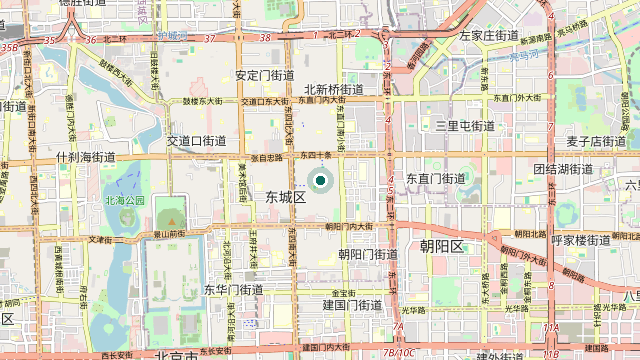
You are standing in Dongcheng Beijing, the geometric centre of imperial power, and you cannot walk a straight line for more than a few hundred metres. That is the central friction of this district. The Forbidden City, Tiananmen Square, Jingshan Park, the Drum and Bell Towers, Nanluoguxiang, Wangfujing, and the Temple of Heaven all sit inside Dongcheng's 41.84 square kilometres. On a map, they look like a tight cluster you could cover on foot. In reality, the district is carved up by walls, security queues, ticket gates, and one-way routes that turn a short walk into a 40-minute detour. The question every visitor needs answered before booking is whether the historical weight of this place justifies the logistical exhaustion.
What the Geometry Actually Means for Your Feet
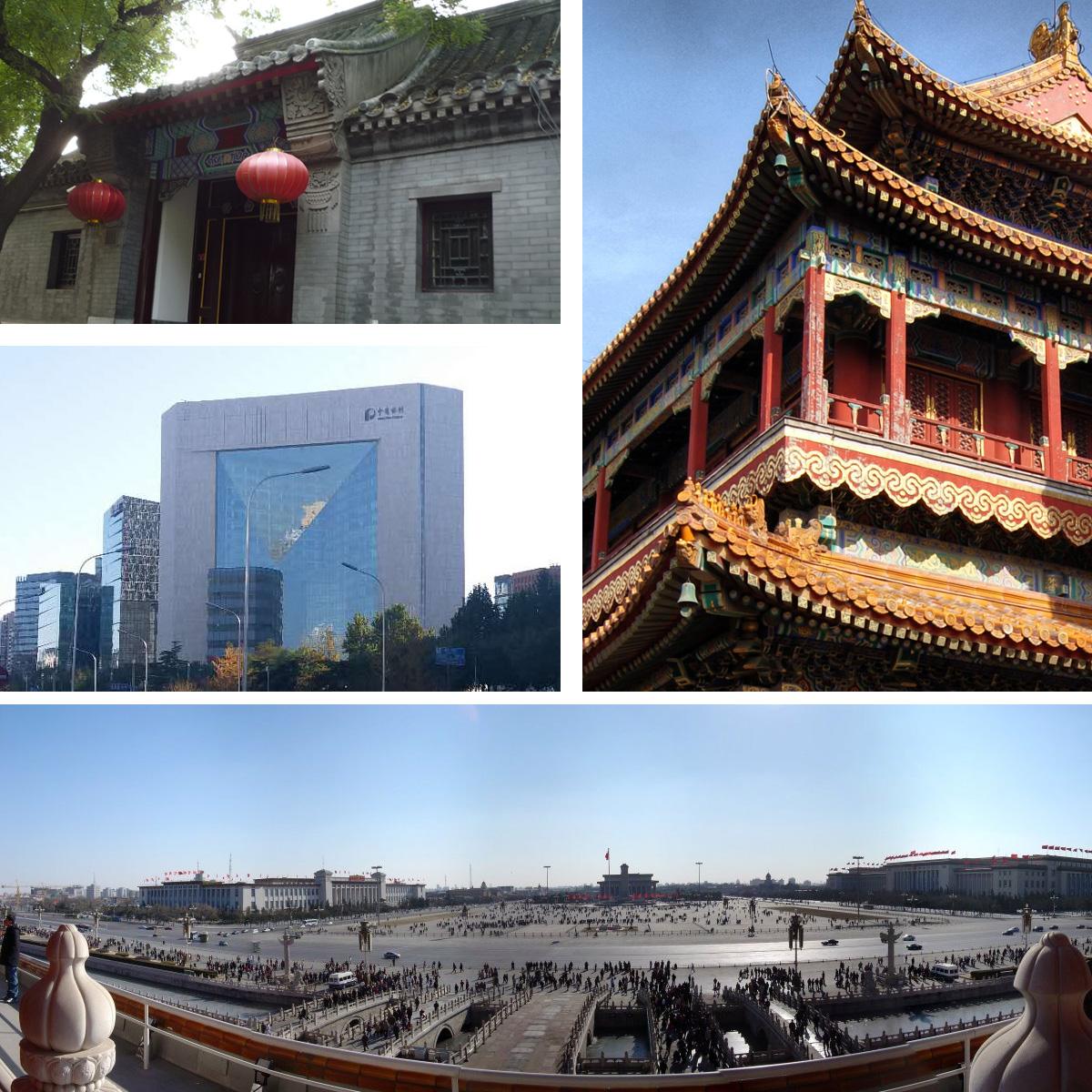
Dongcheng is not an old town you can wander freely. It is a dense historic core where fragments of Ming-Qing hutong survive between wide boulevards, government compounds, and tourist infrastructure. The Forbidden City sits at the centre, a 980-building walled rectangle that blocks east-west movement entirely. To get from the west side of the district to the east, you must go around it via the north or south, adding 20 minutes to any journey. Tiananmen Square, just south of the Meridian Gate, is its own obstacle: crossing it requires passing through security checks, carrying your physical passport, and walking across an open plaza with no shade. The one-way route through the Forbidden City compounds the problem. You enter via the Meridian Gate on the south side and exit via the north gate onto Jingshan Street. There is no shortcut back. A sight that looked close on the map becomes a 90-minute loop including the queue at the entry, the walk across the palace grounds, and the trek from the north exit to the nearest metro station.

Dongcheng District Guide: What You Can Genuinely Walk to
Jingshan Park And The Drum Tower Loop
Jingshan Park. From the north gate of the Forbidden City, cross Jingshan Street and you are at the park entrance in under two minutes. Climb Coal Hill for the rooftop panorama of the palace complex below. This is the shortest walk in the district and the one view that justifies the entire morning inside the Forbidden City.
Drum and Bell Towers. From Jingshan Park, walk north-west along the hutong fragments for 15 minutes. The towers sit at the north-west boundary of Dongcheng, and the climb gives you a view over the grey-tiled roofs of the surrounding houses. The area immediately around the towers is walkable; the Nanluoguxiang bar street is another 5 minutes north.
Wangfujing And The Temple Of Heaven
Wangfujing. This commercial street runs entirely within Dongcheng, about 10 minutes east of Tiananmen Square on foot. It is a wide pedestrian boulevard with department stores, the snack street, and the Beijing Department Store. Useful for dinner and hotel access, not for atmosphere.
Temple of Heaven. Reachable from southern Dongcheng, the former Chongwen area. From Qianmen Street, walk south-east for about 25 minutes. The park is large, and the circular Hall of Prayer for Good Harvests sits at its centre. Book entry in advance via the official WeChat mini-program.
Hutong Streets And The Lama Temple Reality Check
Nanluoguxiang and Wudaoying Hutong. Walkable from the Drum Tower area. Nanluoguxiang is the main tourist drag, crowded but lined with shops and street food. Wudaoying Hutong, one block east, is quieter, with courtyard restaurants and independent cafes. Both are genuine walking destinations.
What is not walkable: Yonghe Temple (Lama Temple). The Lama Temple looks close on the map, sitting in north-east Dongcheng. In practice, the hutong maze and the crossing of the ring-road at Andingmen turn a 20-minute map distance into a 45-minute slog. Take metro Line 2 or Line 5 to Yonghegong station instead, and save your walking energy for the temple itself.
Where to Stay in Dongcheng: Courtyard Hotels and the Hutong Fragment
The accommodation pattern in Dongcheng divides cleanly between mid-range chain hotels along the Chang'an Avenue corridor and high-end courtyard hotels tucked into the remaining hutong neighbourhoods. A courtyard hotel is the right choice if you want to sleep inside the texture of Ming-Qing Beijing: a siheyuan building around a central courtyard, with exposed wood beams and a rooftop terrace. The friction is noise and access. The hutongs are narrow, delivery scooters run past your window from 06:00, and the nearest metro station may be a 10-minute walk through unlit alleys. A chain hotel near Wangfujing or on East Chang'an Avenue costs less, gives you a lift and a front desk that speaks English, and puts you 10 minutes from the Forbidden City Meridian Gate. The trade-off is that you wake up on a six-lane boulevard, not in a fragment of the old city.
Which Conservation Areas To Target
Dongcheng's 17 administrative sub-districts include over 30 designated historic conservation areas where new construction is restricted. The most useful for visitors are the areas around Nanluoguxiang and Wudaoying Hutong in the north-west, and the Dashilar-Qianmen area in the south. Dashilar and Qianmen Street sit just south of Tiananmen Square and offer a mix of courtyard hotels, food streets, and direct access to the Temple of Heaven on foot. The area around the Drum and Bell Towers is livelier at night but louder.
Book a courtyard room on the far side from the courtyard itself if you value quiet sleep. The central courtyard functions as a common area and a sound funnel. A room facing the street in a hutong will have double-glazed windows or it will not; ask before booking.
Dongcheng Walking Distance: the One-Way Route Problem
The phrase "walking distance" in Dongcheng means something different than it does in a European old town. The district is flat, the blocks are large, and the metro stations are spaced widely apart. The catch is that the geometry is not continuous. The Forbidden City wall, the security perimeter around Tiananmen Square, and the one-way routes through the major sights all break the grid.
Plan Your Sequence Around The Gates
Here is the most common mistake: a visitor books the Forbidden City for a morning and a separate afternoon sight, then loses 90 minutes just walking from the entry gate through security, across Tiananmen Square, and out the north gate to the nearest metro. Budget the full morning for the Forbidden City alone, exit through the north gate, eat lunch at a noodle shop on Jingshan Street, and walk up to Jingshan Park for the afternoon. That sequence uses the geometry rather than fighting it.
For the Temple of Heaven, enter through the south gate and exit through the north gate. The south gate is closer to the circular hall, and the north gate exits onto a street that connects to metro Line 5. The one-way route through the park runs roughly south to north. Planning your entry and exit gates to match the one-way flow saves 20 minutes.
The Texture of the District: Fragments Between Boulevards
Dongcheng is best understood as a set of fragments. The hutong that survive are not a continuous district but islands between the wide roads built during the Maoist era and the contemporary megastructures of Wangfujing. You walk through a hutong and hit a six-lane road. You cross at the underpass and find another fragment of Ming-Qing lane on the other side. The Drum and Bell Towers sit at the intersection of a hutong zone and a modern commercial strip. The Imperial Core is real, but it is interrupted.
The texture of a Dongcheng morning: you wake in a courtyard hotel, walk out into a hutong where a woman is sweeping the lane with a bundle of twigs, turn a corner, and emerge onto a road with 8 lanes of traffic and a security checkpoint ahead. That collision of scales is the district's character. It is not a continuous historic quarter. It is a palimpsest of the Ming dynasty, the Qing dynasty, the socialist era, and the Olympic-era renovation, all stacked on top of each other.
Who Dongcheng Suits and Who Should Skip it
Dongcheng is for history obsessives who want to stand inside Ming and Qing power. It is for food-driven travellers willing to chase specific hutong addresses for a bowl of zhajiangmian or a pot of shuan yangrou at Donglaishun. It is for architecture pilgrims focused on socialist realism and the contemporary megastructures along Chang'an Avenue. It is for solo travellers comfortable with apps and pre-booking, and for repeat China visitors ready for a dense urban challenge rather than a gentle introduction.
Dongcheng is not for first-time Asia travellers seeking a walkable introduction to the continent. It is not for people with significant respiratory issues who will struggle with the AQI spikes between November and March, when an N95 mask is essential. It is not for travellers who rely on spontaneity and dislike rigid pre-booking. And it is not for anyone seeking a compact, charming old town: Beijing's historic fabric survives in fragments, not continuous districts. If you want a Ming-Qing lane that runs uninterrupted for a kilometre, you are looking for a smaller Chinese city, not the imperial core.

The Best and Worst Months for Dongcheng
Peak season runs April through May and September through October. Those months bring clear skies, manageable temperatures, and the best light for photography. They also bring domestic holiday surges, especially Labour Day in early May and National Day in early October. Book accommodation and Forbidden City tickets at least seven days ahead during these windows.
January and February are the coldest months, with lows of -10 to -15 °C, but the crowds are thin and the air quality can be excellent after strong north-west winds. July and August have highs of 30-38 °C, oppressive humidity, and the worst smog of the year. If you can only travel in summer, plan outdoor activity for early morning and carry an N95 mask. The AQI can spike without warning.
Getting Around Dongcheng: Metro, Bike, and the Wrong Exit
Metro lines serving Dongcheng include Line 1, Line 2, Line 5, Line 6, Line 7, Line 8, and Line 14. Over 30 stations sit within the district boundaries. Fares range from ¥3 to ¥9. Payment requires Alipay linked to a foreign card, or a physical transit card purchased at any station. Every station entry requires a security scan of your bag.
Check The Exit Number Before You Tap Out
The single thing that trips visitors up: station exits are numbered, and the wrong gate can leave you hundreds of metres from the correct side of a massive intersection. Exiting at the wrong gate on Line 1 at Tiananmen East means a 15-minute walk to correct it. Check the station map before you tap out, or note the exit number you need from Google Maps before you lose signal underground.
When To Use A Shared Bike
Dockless shared bicycles are dense throughout the district, with designated parking zones near major sites. They are useful for covering the gap between a metro station and a hutong hotel, but do not rely on them for crossing the Forbidden City perimeter: you cannot cycle through Tiananmen Square or the palace grounds. Bicycle-sharing apps also require Alipay registration.
The Forbidden City Neighbourhood: What the North Gate Connects to
The area immediately outside the north gate of the Forbidden City is the most practical base in Dongcheng. From the north gate, Jingshan Park is across the street. The Drum and Bell Towers are a 15-minute walk north-west. Nanluoguxiang is 20 minutes north. The metro station at Jingshan Street connects to Line 8. The one-way route through the Forbidden City deposits you here anyway, so staying in this quadrant eliminates the walk back south.
The disadvantage of the north side: fewer large hotels and more courtyard conversions with limited soundproofing. The advantage: you wake up looking at the palace wall, and the hutong fragments north of Jingshan Park are among the most intact in the district. Wudaoying Hutong, one of the quieter protected areas, is a 10-minute walk from the north gate. It has a courtyard hotel, a vegetarian restaurant, and a tea house that does not play music. That is rare in Beijing.
What the Research Tells You to Do Next
Book your Forbidden City ticket exactly seven days before your planned visit, through the official Palace Museum WeChat mini-program. Check the AQI the morning you arrive and buy an N95 mask at any convenience store if the reading is above 100. Install and test a VPN before you leave home: WhatsApp, Google Maps, and Instagram are blocked without one, and Alipay with a linked foreign card is your payment method for metro, Didi, and most vendors. Carry your passport every day, and accept that Dongcheng will exhaust you. The historical weight is unmatched, but the district demands that you earn it.
Other areas in Beijing
Common Questions
How many days should I stay in Dongcheng?
Four full days minimum. Any less and you are only ticking the Forbidden City and a Great Wall day trip, missing the district's texture. The first day covers the Forbidden City and Jingshan Park. The second covers the Temple of Heaven and the Dashilar-Qianmen food streets. The third covers the Drum and Bell Towers, Nanluoguxiang, and Wudaoying Hutong. The fourth is for the Great Wall day trip.
Do I need to carry my passport every day in Dongcheng?
Yes. Passport is required for entry to nearly every major landmark, including the Forbidden City, Tiananmen Square, and the Temple of Heaven. Digital copies are not accepted. Carry the physical passport daily. Hotel registration and domestic flights also require the physical document.
Is the Lama Temple walkable from central Dongcheng?
Not in practical terms. Yonghe Temple (Lama Temple) sits in north-east Dongcheng and looks close on the map, but the hutong maze and ring-road crossings at Andingmen turn a 20-minute map distance into a 45-minute walk. Take metro Line 2 or Line 5 to Yonghegong station instead.
When is the worst time to visit Dongcheng?
Chinese New Year (late January or February, dates vary) because local restaurants close for days and intercity travel is chaotic. National Day week (1-7 October) because sights become impassable. July and August bring oppressive humidity and frequent smog. The best windows are April-May and September-October.
Read next
-
 Beijing Hotels What Each Price Band Actually Gets You
The most useful fact about Beijing hotels is that not every bed in the city is legally permitted to take your money.
-
 Where to Stay in Beijing District by District and What Each Costs You
Where to stay in Beijing depends on whether you prioritise imperial proximity, nightlife, or calm.
-
 Flying into Beijing PEK or PKX and Getting Out of Both Airports
Flying into Beijing: choosing between PEK and PKX, and exactly how to get from each airport into the city centre without getting stranded after a long flight.
-
 Beijing Things to Do Ordered by Whether It Is Worth the Time
Beijing consumes your day before you see anything. The walk from Tiananmen Square metro exit to the Forbidden City gate is a long stretch of open concrete und
-
 Best Time to Visit Beijing What Each Season Does to the City
The most common mistake travellers make about Beijing is searching for a single perfect month. There is none.
-
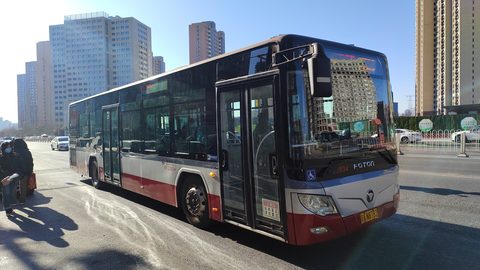 Getting Around Beijing Without Wasting Half the Trip
On a single morning in Beijing you will: tap a QR code to enter the metro, scan your passport at a landmark ticket counter, pay for a jianbing from a cart
-
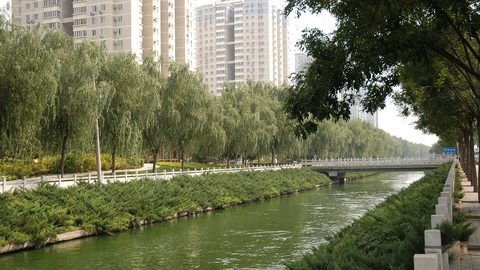 Chaoyang
 Beijing: what the embassy and art district is like, who should stay there over the historic centre, and what is nearby—from Sanlitun nightlife to798
-
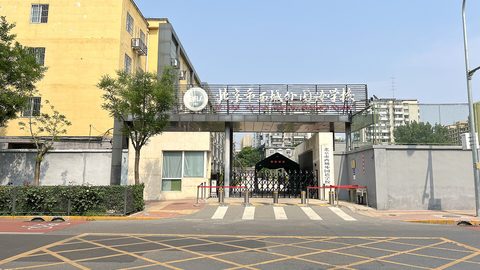 Xicheng
 Beijing: what the lakes and lanes district is like, who it suits, and how it differs from Dongcheng—older residential hutong, Beihai Park, and the
-
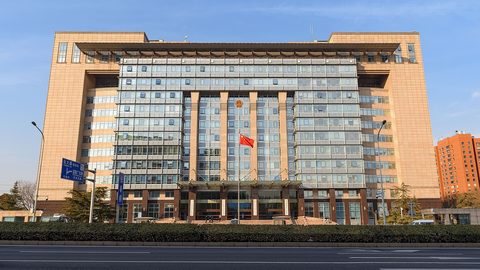 Haidian
 Beijing: what the university and Summer Palace district is like, who it suits, and whether staying there makes sense given the long metro rides to