What Checkpoint Charlie in Berlin Is and Whether It Is Worth the Time
What Checkpoint Charlie in Berlin is actually like, whether the Cold War border crossing is worth your time, and how it compares to other Wall sites.

What Checkpoint Charlie in Berlin is and Whether it is Worth the Time
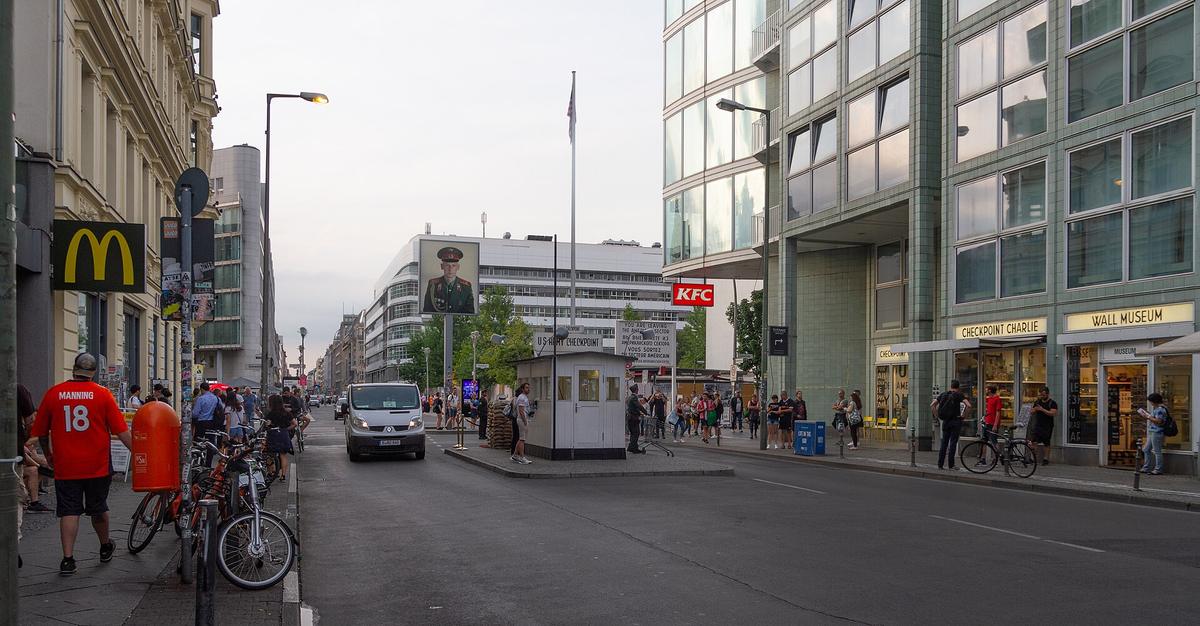
A costumed soldier in an American uniform stands on a traffic island, posing for photos while a queue of tourists waits its turn. Twenty feet away, a replica guardhouse marks what was once the most famous Cold War border crossing in the world. This is the tension every Berlin visitor walks into: Checkpoint Charlie is a genuine historical location, but what you see today is a restaged version of it. The experience you get depends entirely on what you came for and what you are willing to spend.
The site sits in Mitte at the corner of Friedrichstrasse and Zimmerstrasse, right on the line that divided East from West for nearly three decades. The original guardhouse was removed on 22 June 1990. The replica you see today was installed in 2000, modelled on the 1961 design. What is actually there: a wooden guardhouse, a cobblestone border line running through the intersection, a section of the Berlin Wall relocated from elsewhere, and photo panels mounted along both streets. The open-air part is free to see, accessible 24 hours, and takes 15 to 30 minutes if all you want is a photograph and a sense of the geography.
The question is whether that 15-minute stop is enough. For many visitors, the answer depends on how much context they need. Stand at the cobblestone line and look south down Friedrichstrasse: the street is now a busy commercial thoroughfare. Without the history, it looks like any other city intersection. The value of Checkpoint Charlie comes from understanding what happened on this specific patch of asphalt, and that understanding is mostly inside the paid museums surrounding it.
Checkpoint Charlie Berlin Visit: What You Actually See and Do
Free Outdoor Site And The Actor Guards
A Checkpoint Charlie visit breaks into three parts, and you can choose any combination. The outdoor site costs nothing. Walk around the guardhouse, stand on the cobblestone line that marks the exact border course, read the photo panels along Zimmerstrasse and Friedrichstrasse, and take your picture with the actor soldiers. Those actors work daily from roughly 09:00 to 18:00, weather permitting. They expect a tip for posing. The Berlin Wall segment on display is a section from the outer wall, moved to this location. It is a real fragment, but not one that stood here originally.
Arrive before 10:00 or after 16:00. Between 11:00 and 15:00 the traffic island is packed and getting a clean photo requires patience. The density of souvenir stalls selling Soviet surplus hats and replica border signs peaks in the middle of the day. If you want the outdoor site to yourself, arrive at 08:30 on a weekday in January or February.
Getting There
The U-Bahn station serving the site is Kochstrasse on the U6 line, 100 metres from the guardhouse. The S-Bahn station is Anhalter Bahnhof, about 800 metres south. Bus lines M29 and M41 stop at Kochstrasse and Checkpoint Charlie. If you are cycling, public bike racks are on Friedrichstrasse and Zimmerstrasse. The outdoor site is step-free and paved. A paid public toilet is inside the Mauermuseum. A free one is at Gendarmenmarkt, 600 metres north.
Checkpoint Charlie Berlin Museum: the Mauermuseum and BlackBox
The Mauermuseum
The Mauermuseum, officially Museum Haus am Checkpoint Charlie, was founded in 1963 by Rainer Hildebrandt and holds over 3,000 exhibits across multiple floors. It covers escape stories, the artifacts used to cross the border, and the broader Cold War context. Set aside 1.5 to 2.5 hours. Buy tickets on site or through the official website, www.mauermuseum.de. No advance booking is required for individuals, but groups of 10 or more should reserve ahead. Audio guides are available in German, English, French, Spanish, Italian, and other languages.
The BlackBox Cold War Exhibition
The BlackBox Kalter Krieg exhibition is a multimedia installation covering 400 square metres with original film footage, audio stations, and interactive screens. It takes 45 to 60 minutes. A combined ticket for both the Mauermuseum and the BlackBox is available. The BlackBox covers the Cold War from a wider angle. The Mauermuseum focuses on the human stories of the Berlin Wall itself. Choose the Mauermuseum for depth on individual escape attempts. Choose the BlackBox for a broader political and military timeline.
Photography is permitted in most indoor areas, but flash and tripods are restricted in some sections. The Mauermuseum has an elevator, though some corridors on upper floors are narrow. The BlackBox exhibition is in German and English, with audio stations in additional languages. If you plan to visit all components, budget for 2.5 to 4 hours total.
Checkpoint Charlie Berlin Worth It: the Honest Trade Off
The question of whether Checkpoint Charlie is worth it comes down to what you value in a historical site. Here is the honest trade-off. The outdoor site, free and quick, is a photo stop with theatrical elements. The actor soldiers, the guardhouse, and the souvenir stalls create a theme-park atmosphere that frustrates visitors who come looking for historical authenticity. The site functions more as a symbol than as a preserved artifact. The original guardhouse is gone. The Wall segment was brought in from elsewhere.
If your interest is in standing at the geographic point of a famous Cold War crossing and taking a picture, the outdoor site delivers exactly that. Spend 15 minutes, move on. If your interest is in learning why this crossing mattered, the Mauermuseum gives you the story, but it costs time and money. If your interest is in experiencing a historically accurate, serious Cold War site, Checkpoint Charlie is not the best option in Berlin.
Better Free Sites Nearby
Two free sites within walking distance do a better job of conveying the reality of a divided city. Walk 500 metres south to the Topography of Terror. It sits on the former site of the Gestapo and SS headquarters and documents the Nazi regime and its aftermath. It is free, sober, and uses the excavated foundation walls of the original buildings. The Tranenpalast at Friedrichstrasse station, a 10-minute walk north, was the border crossing for diplomats and visitors. It is free and its permanent exhibition, Border Experience, uses original footage and personal accounts to show what crossing between East and West felt like. The Berlin Wall Memorial at Bernauer Strasse, 3 kilometres north, preserves a segment of the Wall in its original position with a memorial and viewing platform. It is also free.
Checkpoint Charlie Berlin Tourist Trap: Separating Performance from History
The label "tourist trap" sticks because of the gap between expectation and reality. First-time visitors arrive expecting a preserved Cold War border crossing. They find a replica guardhouse on a traffic island, costumed actors who pose for tips, and a strip of souvenir vendors selling the same trinkets. The site is not a museum in the traditional sense. It is a public intersection where a memorial and a commercial street scene occupy the same space.
Tourist density is highest from late morning through mid-afternoon. The site becomes a bottleneck for tour groups. The actor guards, the replica, and the constant flow of people can make the experience feel manufactured. But calling it a tourist trap misses the nuance. The Mauermuseum, just steps away, holds over 3,000 original exhibits. The photo panels along Friedrichstrasse and Zimmerstrasse show what the crossing actually looked like in 1961, 1970, and 1989. The cobblestone line is accurate to the centimetre. The history is there. It is just buried under the surface of a scene that prioritises quick consumption.
Skip the actor guard photo unless you specifically want it. Skip the souvenir stalls. Walk the cobblestone line, read the panels, then decide whether the museums justify the time. Got 30 minutes? Do the outdoor site and walk south to the Topography of Terror. Got three hours? Add the Mauermuseum. Got one day for Cold War Berlin? Skip Checkpoint Charlie entirely and spend your time at the Berlin Wall Memorial and the Tranenpalast. Those sites have the historical authenticity that Checkpoint Charlie lacks.
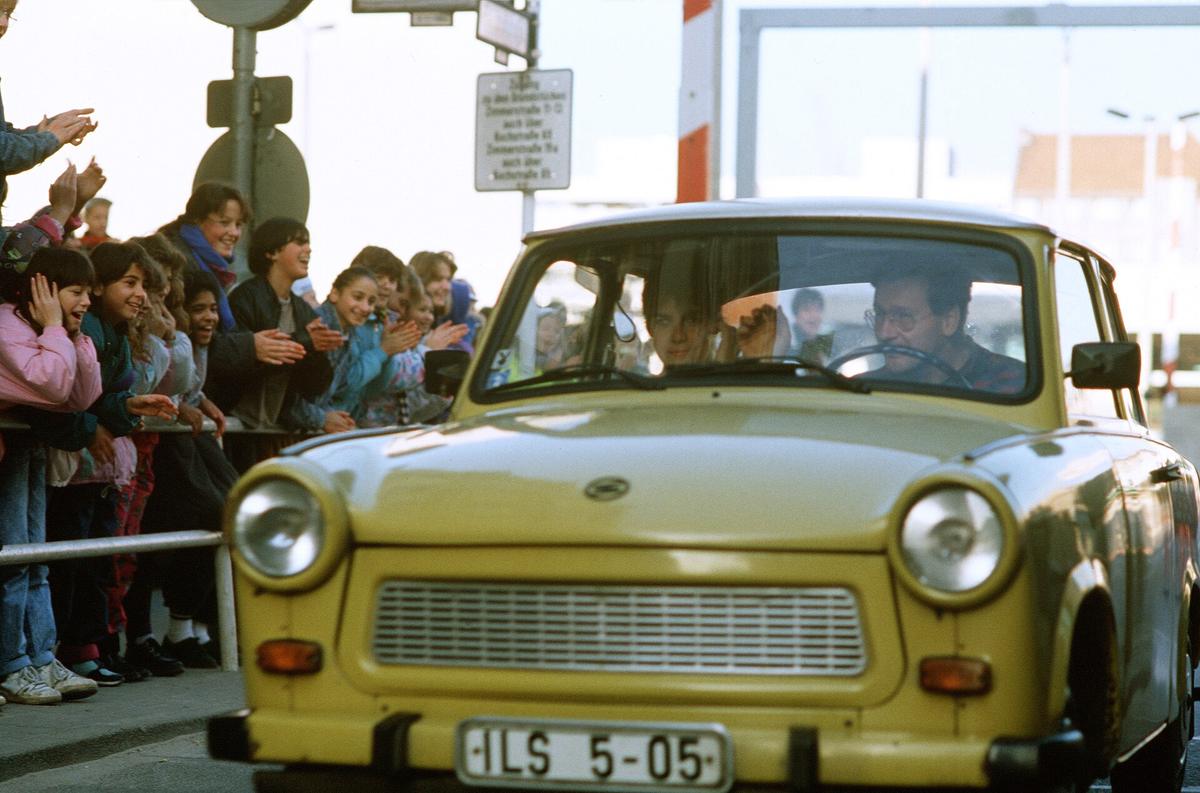

- Site Type: Former border crossing point, now an open air memorial and museum cluster
- Core Components: Guardhouse replica (1961 design), Berlin Wall segment, cobblestone border line marking, Mauermuseum, BlackBox Cold War exhibition, outdoor photo panels
- Outdoor Site Access: Free, no ticket required, accessible 24 hours
- Typical Visit Duration (Outdoor Only): 15 to 30 minutes
- Typical Visit Duration (Mauermuseum): 1.5 to 2.5 hours
- Typical Visit Duration (All Components): 2.5 to 4 hours
- Busiest Periods: 11:00 to 15:00; peak in summer (June August) and public holidays
- Nearest U Bahn: Kochstrasse (U6), 100 metres
- Nearest S Bahn: Anhalter Bahnhof (S1, S2, S25, S26), 800 metres
- Bus Lines: M29, M41 (stop: Kochstrasse/Checkpoint Charlie)
- Museum Name: Mauermuseum Haus am Checkpoint Charlie, founded 1963
- Ticket Purchase: On site or via www.mauermuseum.de
- Actor Guard Presence: Daily 09:00 to 18:00, weather dependent; tipping expected for photos
- Accessibility (Outdoor): Step free, paved surface
- Accessibility (Mauermuseum): Elevator available; narrow corridors on upper floors
- Official Website: www.mauermuseum.de
What to Do Instead of the Actor Guard Photo
Skip the costumed soldier. Stand on the cobblestone line at the intersection of Friedrichstrasse and Zimmerstrasse and face south. That line traces exactly where the border ran. The photo you take will be geolocated on the precise point where a defector or a diplomat once stopped. That is a stronger image than one with a paid actor.
Read the photo panels along Zimmerstrasse. They show the crossing in operation: the sandbag barrier, the armed guards, the queue of vehicles waiting to pass through. Those double-sided lightboxes are free, in German and English. They tell more in five minutes than the actor does in an hour.
| Museum | Focus | Typical Visit Duration | Ticket Required |
|---|---|---|---|
| Mauermuseum | Escape stories and Cold War artifacts from the border | 1.5 to 2.5 hours | Yes |
| BlackBox Kalter Krieg | Multimedia exhibition on Cold War history and geopolitics | 45 to 60 minutes | Yes |
| Outdoor Site | Guardhouse replica, border line, Wall segment, photo panels | 15 to 30 minutes | No |
The One Thing to Do Next
Walk south on Friedrichstrasse for 500 metres to the Topography of Terror. It is free, open daily, and it will show you what a proper memorial site looks like when no one is selling you a Soviet hat. That walk takes seven minutes and connects the two sites in a straight line, no detours. Do that before you decide whether Checkpoint Charlie was worth your time.
Common Questions
Is Checkpoint Charlie free to visit?
The outdoor site, including the guardhouse replica, cobblestone border line, Berlin Wall segment, and outdoor photo panels, is free and accessible 24 hours. The Mauermuseum and BlackBox Kalter Krieg exhibition require paid tickets.
How long should I spend at Checkpoint Charlie?
15 to 30 minutes for the outdoor site only. Add 1.5 to 2.5 hours for the Mauermuseum, or 45 to 60 minutes for the BlackBox exhibition. A combined visit covering everything takes 2.5 to 4 hours.
Is the guardhouse at Checkpoint Charlie original?
No. The original guardhouse was removed on 22 June 1990. The replica you see today was installed in 2000 and is modelled on the 1961 design.
When is Checkpoint Charlie least crowded?
Early morning before 10:00 and late afternoon after 16:00. Weekdays are quieter than weekends. January and February are the least crowded months.
What U-Bahn station is Checkpoint Charlie on?
Kochstrasse on the U6 line, approximately 100 metres from the guardhouse. The S-Bahn station Anhalter Bahnhof is 800 metres south.
Are the actor soldiers at Checkpoint Charlie real military personnel?
No. They are costumed actors who pose as Allied soldiers. They work daily from roughly 09:00 to 18:00, weather permitting, and tipping is expected for photographs.
What free Cold War sites are near Checkpoint Charlie?
Topography of Terror is 500 metres south on foot. Tranenpalast at Friedrichstrasse station is a 10 minute walk north. Both are free, and both offer more historically accurate presentations of the Cold War period.
Read next
-
 Berlin Hotels What the Price Bands Actually Get You
Berlin hotel prices cluster into distinct bands, and what you get for your money varies more by district and timing than by star rating.
-
 Where to Stay in Berlin by District and What Each Costs You
Where you stay in Berlin defines your trip more than in most cities. Each district has a distinct personality, price band, and real trade-off.
-
 Berlin Flights Flying Into BER Airport and Getting to the City
Berlin Brandenburg Airport is Berlin's sole airport. Here are the rail options—FEX, RE7, and S9—and the ticket rules for reaching the city centre.
-
 Berlin Things to Do Ordered by Whether It Is Worth the Time
Berlin's sights range from free and life-changing to time-consuming and skippable. Here is how to sort them by what actually repays the visit.
-
 When to Visit Berlin and What Each Season Does to the City
Berlin's seasons change more than the weather. They determine whether you get lakeside bars and street life or trade fair crowds and closed independent venues.
-
 Getting Around Berlin Without Wasting Half the Trip
Berlin is too sprawling to walk, and the BVG network is the only way to move efficiently. The catch is ticket validation, and getting it wrong costs you.
-
 Brandenburg Gate
What the Brandenburg Gate in Berlin is really like, whether it is worth your limited time, and how to see it without the worst of the crowds.
-
 Museum Island
What Museum Island in Berlin is, how its five museums fit together, and how to visit without queueing twice for the Pergamon and the rest.
-
 East Side Gallery
What the East Side Gallery in Berlin is really like, whether the 1.3km Wall mural stretch is worth your time, and how to pair it with the Oberbaumbrücke.