A Berlin Neighbourhood Guide for Choosing Where to Stay
How Berlin's eight key districts differ on noise, price, transport links and daily feel, so you can choose the right neighbourhood for your trip.
Choosing a Berlin Neighbourhood: How the Districts Differ
At 1am on a Tuesday, Warschauer Straße in Friedrichshain is still trading techno through open club doors and späti queues for cheap beer. Two and a half kilometres west in central Mitte, the government quarter is dead quiet except for a taxi dropping someone at a hotel. That difference is the real Berlin. This guide exists because the city does not have one walkable centre. It has eight distinct districts, each with a different noise level, price bracket, metro density, and daily feel. Pick the wrong one and you spend four nights wondering where the Berlin you imagined went.
Berlin Districts Comparison: the Eight in Brief
Berlin is a collection of villages, not a single downtown. The table below ranks each district on the four dimensions a visitor actually weighs: noise at night, restaurant and bar density, transit convenience, and family-friendliness, plus the rough price bracket for a place to stay. Read the character notes after the table to see which one fits your trip.
| District | Noise At Night | Restaurant & Bar Density | Transport Convenience | Family-Friendliness | Price Bracket |
|---|---|---|---|---|---|
| Mitte | High on arteries, low in Spandauer Vorstadt side streets | High, but empties after 10pm outside main drags | Highest in city: 4 U-Bahn lines + 8 S-Bahn + 8 trams | Low; government-heavy, few playgrounds | Highest in city |
| Friedrichshain-Kreuzberg | High on Warschauer Straße and Oranienstraße | Very high; the nightlife core | Excellent: 6 U-Bahn + 4 S-Bahn + 2 trams | Low to moderate; gritty-cool, young crowd | Mid-range to upper mid-range |
| Prenzlauer Berg | Moderate; high on Schönhauser Allee, low on back streets | High, café-heavy, fewer late clubs | Good: U2 + 4 S-Bahn + 6 trams | High; playgrounds, strollers, family feel | Upper mid-range |
| Charlottenburg-Wilmersdorf | Low to moderate; high on Ku'damm, low near Lietzensee | High on Kantstraße, moderate elsewhere | Excellent: 3 U-Bahn + 6 S-Bahn + many bus routes | Moderate; leafy but formal | Upper mid-range to high |
| Schöneberg | Moderate; high on Hauptstraße, low in Akazienkiez | Moderate to high; good Turkish and LGBTQ+ bars | Very good: 7 U-Bahn + 5 S-Bahn | Moderate; residential, traditional | Mid-range |
| Neukölln | High on Karl-Marx-Straße and Sonnenallee | Very high; hipster epicentre, bars every block | Good: 2 U-Bahn + 5 S-Bahn | Low; student-heavy, loud | Budget to mid-range |
| Wedding | Moderate to low; rising as gentrification accelerates | Moderate; emerging art scene, few destination restaurants | Good: U6 + U8 + 2 S-Bahn | Moderate; rapidly gentrifying | Budget to lower mid-range |
| Tempelhof (area of Schöneberg) | Low; no aircraft noise since 2008 | Low; residential, few clusters | Moderate: 2 U-Bahn + 4 S-Bahn | High; families use the park | Budget to mid-range |
Where to Stay in Berlin by Area: Matching District to Trip
Every district has a visitor profile that matches a type of trip. Match yours below.
First-Time Visitors With Museum Focus: Mitte
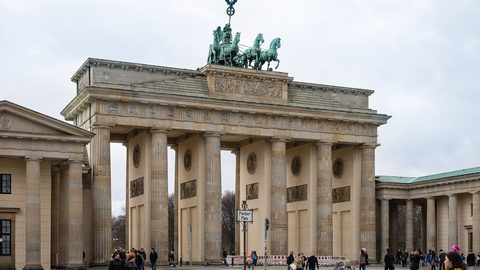
Mitte holds the Reichstag, Brandenburg Gate, Museum Island, and the Memorial to the Murdered Jews of Europe. Rooms are the highest in the city, rising further within 500 metres of Brandenburg Gate and Museum Island. Noise is high along arterial roads and near Alexanderplatz, but drops to low in the side streets of Spandauer Vorstadt. The problem: after dark, Mitte empties. The government quarter goes dead quiet. If you book here and wonder where the Berlin of imagination is, that is why. Stay 1-4 nights, see the sights, then move east.
Nightlife And Longer Stays: Friedrichshain-Kreuzberg
This is the Berlin most visitors imagine. Noise is high in nightlife corridors around Warschauer Straße, Boxhagener Platz, and Oranienstraße, but drops to moderate in residential back courts. The East Side Gallery runs along the Spree here. Places to stay run mid-range to upper mid-range, with lower prices east of Warschauer Straße and higher near Oberbaumbrücke and western Kreuzberg. Typical stay is 2-5 nights. Best for nightlife-oriented travellers, budget-conscious longer stays, and repeat visitors. Späti hours here stretch past 3am on many blocks.
Families And Café Life: Prenzlauer Berg
Affluent, family-friendly, with restored pre-war buildings and a palpable family feel. Noise is moderate, higher on Schönhauser Allee and Danziger Straße, lower in side streets north of Helmholtzplatz. Rooms are upper mid-range, dominated by small apartments and boutique hotels. The U2 line connects you to central Mitte in 10 minutes. Typical stay is 3-7 nights. Best for families with young children and café-oriented travellers. Rent a courtyard apartment on the quiet side of the building.
Business And Shopping: Charlottenburg-Wilmersdorf
West Berlin's old centre, near Charlottenburg Palace. Noise is low to moderate, higher along Kantstraße and Ku'damm, low in residential streets around Lietzensee. Hotels are upper mid-range to high, highest around Savignyplatz and Ku'damm. Three U-Bahn lines and six S-Bahn lines make this the best-connected area for the Messe Berlin trade fair venue. Typical stay is 2-4 nights. Best for business travellers, trade fair attendees, and visitors who want classic Berlin shopping and dining with a bourgeois feel.
Budget And Hipster: Neukölln
The hipster epicentre, dense with bars, international students, and cheap eats. Noise is high on Karl-Marx-Straße, Sonnenallee, and around Hermannplatz, moderate to low in side streets south of Tempelhofer Feld. Beds are budget to mid-range, rising in the northern part within the S-Bahn ring. Two U-Bahn lines and five S-Bahn lines serve it. Typical stay is 2-5 nights. Best for budget travellers, nightlife-oriented visitors, and long-stay remote workers. Cash is mandatory in most bars here; card payment fails often.
Residential And Traditional: Schöneberg
Traditional, leafy, and the historic LGBTQ+ quarter. Noise is moderate, higher on Hauptstraße and Martin-Luther-Straße, low in residential quarters around Akazienkiez. Rooms are mid-range, lower than adjacent Charlottenburg. Seven U-Bahn lines and five S-Bahn lines give excellent connections. Typical stay is 2-5 nights. Best for LGBTQ+ travellers, market visitors (Winterfeldtplatz market Saturdays), and repeat visitors who want a residential feel without paying Charlottenburg prices.
Rough-Edged And Gentrifying: Wedding
Rough-edged, rapidly gentrifying, with an emerging art scene and no destination restaurants yet. Noise is moderate to low. Beds are budget to lower mid-range. The U6 and U8 lines connect you to central Berlin in 15-20 minutes. Typical stay is 1-3 nights. Best for budget travellers who want to watch a neighbourhood change in real time. The Berliner Schnauze (blunt directness) is strongest here; do not take it personally.
Budget And Green: Tempelhof Area (South Schöneberg)
Tempelhofer Feld, a 303-hectare former airport turned into a public park, dominates this area. Noise is low; aircraft noise has been absent since the airfield closed in 2008. Beds are budget to mid-range, lower than adjacent Schöneberg. Two U-Bahn lines and four S-Bahn lines serve it. Typical stay is 2-4 nights. Best for budget-conscious visitors, families who want the park, and anyone who values quiet over nightlife density.
Berlin Neighbourhood Character: How the Feel Differs on the Ground
Beyond price and transit, each district has a daily character that affects your experience from morning to night.
Mitte: Quiet After Dark, Government-Heavy
Mitte is historic core, museums, and the government quarter. By day it is the busiest district; by 10pm, the streets around the Reichstag and Brandenburg Gate are empty except for hotel guests. Restaurant clusters exist around Hackesche Höfe and Oranienburger Straße, but many close by 11pm. First-timers often choose Mitte and then wonder why the Berlin they imagined is somewhere else. The Berlin of imagination lives in Friedrichshain-Kreuzberg and Neukölln. Book Mitte only if you are museum-focused and plan to be in bed by 11pm.
Friedrichshain-Kreuzberg: Gritty-Cool, Street Art, Nightlife Density
Friedrichshain and Kreuzberg were merged administratively but feel different. Friedrichshain is gritty-cool with street art, the East Side Gallery, and clubs along Warschauer Straße. Kreuzberg was formerly punk, now gentrified, with great Turkish food along Oranienstraße. Noise is high in both; you hear club bass through the walls in many apartments. Späti hours extend past 3am. Beds east of Warschauer Straße are cheaper; book there if you want to stay longer without burning your budget.
Neukölln: Hipster Epicentre, Dense With Bars
Neukölln has replaced Kreuzberg as the hipster epicentre. Bars crowd every block on Sonnenallee and around Hermannplatz. The area is dense with international students and young remote workers. Gentrification is visible in real time: the northern section within the S-Bahn ring rises in price each year. Cash is mandatory in most smaller bars; card machines are rare. The U7 and U8 lines run 24 hours on Friday and Saturday nights.
Prenzlauer Berg: Family Feel, Restored Pre-War Buildings
Prenzlauer Berg is affluent, family-friendly, with restored pre-war buildings and cobblestone streets. Playgrounds outnumber bars. The M1 tram runs down the spine of Schönhauser Allee, connecting you to Mitte in 10 minutes. The quiet side streets north of Helmholtzplatz are some of the quietest in the inner city. Book a courtyard room to cut street noise entirely.
Schöneberg: Traditional, Leafy, Historic LGBTQ+ Quarter
Schöneberg is traditional Berlin: leafy streets, old apartment blocks, and a slower pace. The historic LGBTQ+ quarter around Motzstraße and Nollendorfplatz has a lower noise level than the alternative scenes in Kreuzberg or Neukölln. The Winterfeldtplatz market on Saturdays is the best fresh-food market in the city. The U1, U2, U3, U4, U7, and U9 lines converge here, making it one of the most connected districts.
Best Berlin Neighbourhood for Me: a Decision Framework
Ask yourself three questions to decide.
- What time do I go to sleep? If 11pm or earlier, pick Prenzlauer Berg, Schöneberg, or Tempelhof. If 3am or later, pick Friedrichshain-Kreuzberg or Neukölln. If you are on a business schedule, pick Charlottenburg or Mitte.
- How much do I care about price? Budget travellers should target Neukölln, Wedding, or Tempelhof. Mid-range goes to Schöneberg or Friedrichshain-Kreuzberg east of Warschauer Straße. High budget goes to Mitte or Charlottenburg.
- Am I travelling with children? Yes: Prenzlauer Berg or Tempelhof. No: Friedrichshain-Kreuzberg or Neukölln. The family feel in Prenzlauer Berg is real; playgrounds and cafés with high chairs are everywhere.
Transit links matter more in Berlin than in most European cities. A district with a direct U-Bahn line to your main sight saves 20 minutes each way. Check the U-Bahn line serving your area against the line serving the Reichstag (U55/U5) and Museum Island (U5). If you are staying in Neukölln (U7/U8) and need to reach Museum Island daily, budget 30-40 minutes each way.
Berlin District Guide: Transport, Noise, and Practical Detail
Every district has a transport hub that defines its connectivity.
Mitte: Alexanderplatz And Friedrichstraße
Alexanderplatz is the busiest interchange: U2, U5, U8, S-Bahn lines S3, S5, S7, S9, and multiple trams converge here. Friedrichstraße handles S1, S2, S3, S5, S7, S9 and the U6. Noise is high around Alexanderplatz; book a hotel well away from the station to avoid it. The 100 and 200 buses run the tourist route through the government quarter.
Friedrichshain-Kreuzberg: Warschauer Straße And Hermannplatz
Warschauer Straße serves U1, U3, S3, S5, S7, S9, and the M10 tram. It feeds straight into the club district; noise here is the highest in the city after midnight. Hermannplatz serves U7, U8, and multiple night bus routes. The night bus network covers all other nights when U-Bahn stops running; Nollendorfplatz, Hermannplatz, and Zoologischer Garten are the major night bus interchanges.
Prenzlauer Berg: Eberswalder Straße And Schönhauser Allee
Eberswalder Straße on the U2 is the main access point. The M1, M2, M4, M10, M12, and M13 trams serve the district, making it well-connected despite only one U-Bahn line. The 200 bus runs direct to Mitte and the government quarter.
Charlottenburg: Zoologischer Garten And Savignyplatz
Zoologischer Garten is a major interchange: U2, U7, U9, and S-Bahn lines S3, S5, S7, S9, S41, S42. Savignyplatz on the S-Bahn ring is quieter and surrounded by good restaurants on Kantstraße. For Messe Berlin trade fairs, the U2 stations Kaiserdamm and Theodor-Heuss-Platz are closest.
The One Thing That Most Often Goes Wrong
The most common mistake in choosing a Berlin neighbourhood is booking a room in the dead-quiet government quarter of central Mitte and then wondering where the Berlin of imagination is. The Berlin you saw in photos and films lives in Friedrichshain, Kreuzberg, and Neukölln. Mitte is a museum district that goes silent after dinner. If you want the Berlin of imagination, book east of the Spree. If you want quiet and museums, book Mitte. Do not try to get both from one address.
Read next
-
 Berlin Hotels What the Price Bands Actually Get You
Berlin hotel prices cluster into distinct bands, and what you get for your money varies more by district and timing than by star rating.
-
 Where to Stay in Berlin by District and What Each Costs You
Where you stay in Berlin defines your trip more than in most cities. Each district has a distinct personality, price band, and real trade-off.
-
 Berlin Flights Flying Into BER Airport and Getting to the City
Berlin Brandenburg Airport is Berlin's sole airport. Here are the rail options—FEX, RE7, and S9—and the ticket rules for reaching the city centre.
-
 Berlin Things to Do Ordered by Whether It Is Worth the Time
Berlin's sights range from free and life-changing to time-consuming and skippable. Here is how to sort them by what actually repays the visit.
-
 When to Visit Berlin and What Each Season Does to the City
Berlin's seasons change more than the weather. They determine whether you get lakeside bars and street life or trade fair crowds and closed independent venues.
-
 Getting Around Berlin Without Wasting Half the Trip
Berlin is too sprawling to walk, and the BVG network is the only way to move efficiently. The catch is ticket validation, and getting it wrong costs you.
-
 Brandenburg Gate
What the Brandenburg Gate in Berlin is really like, whether it is worth your limited time, and how to see it without the worst of the crowds.
-
 Museum Island
What Museum Island in Berlin is, how its five museums fit together, and how to visit without queueing twice for the Pergamon and the rest.
-
 East Side Gallery
What the East Side Gallery in Berlin is really like, whether the 1.3km Wall mural stretch is worth your time, and how to pair it with the Oberbaumbrücke.