Toronto Shopping That Is Not Just Another North American Mall
Toronto shopping worth your suitcase space happens in food halls, vintage streets, and independent strips where what you buy is tied to the city itself.
Where to Find Toronto Shopping Local Markets
Toronto's local shopping clusters in four places, each with a different price point, schedule, and reason to go. The peameal bacon sandwich at St. Lawrence Market is the city's signature bite. Kensington Market stocks vintage that does not appear on a corporate buying sheet. West Queen West boutiques carry Canadian designers who sell nowhere else. The growers' markets around town rotate by day and season, so you can hit a different one almost every morning from May to October. Miss the schedule and you eat a sad hotel muffin instead of a butter tart from a farm stand. Know where to stand and when to show up.
St. Lawrence Market Toronto Food Shopping: the City’s Pantry
St. Lawrence Market, 93 Front Street East, is a covered public market open Tuesday through Saturday in the main hall. The Sunday antique market runs in the north building. The Saturday growers' market, also in the north building, follows a seasonal pattern from May to October. Buy Ontario produce that actually grew in Ontario: apples from Norfolk County, corn from Holland Marsh, butter tarts from a stall that bakes them that morning.
Do not leave without eating at Carousel Bakery. Their peameal bacon sandwich is the single food item Toronto is known for. It costs roughly CAD 7. Eat it standing up at a counter. The line moves fast.
St. Lawrence is closed Sundays except for the antique market in the north building. The main hall is shut Monday entirely. Arrive Tuesday to Saturday from 09:00 to 15:00 for the fullest food selection. The south building has permanent vendors. The north building has the growers on Saturday. Confuse the two and you waste an hour.

Kensington Market Vintage Toronto: a Street Market That Refuses to Be a Mall
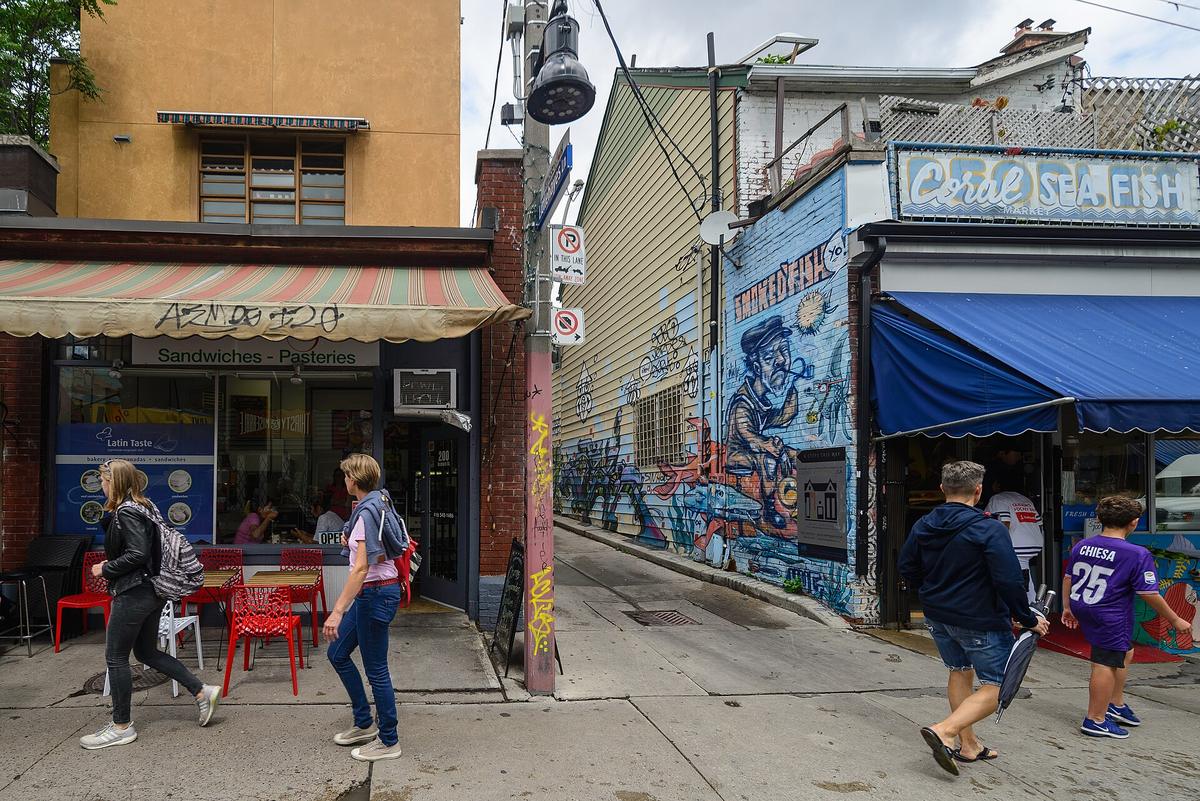
Kensington Market is not a market in the building sense. It is an outdoor street market bounded by Spadina Avenue, Bathurst Street, College Street and Dundas Street West. The Victorian houses hold vintage clothing shops, used bookstores, vinyl stores, and global food stalls selling tacos, Tibetan momos, Jamaican patties, and Portuguese custard tarts from a single counter. It feels nothing like a mall and that is the point.
When to Walk the Streets
Shops open daily, but the fullest vendor presence runs Friday through Sunday. Pedestrian only street closures on Sundays from May to October on Augusta Avenue and parts of Baldwin Street turn the area into a proper walking market. Avoid a rainy Tuesday. Half the stalls will be shuttered.
What to Buy Here
Buy vintage that is not curated into blandness. Buy hot sauce from a shop that bottles it in the back room. Buy a singed plastic bag of jerk chicken from a barrel smoker. This is where you shop for the city's immigrant cooking, not for a souvenir.
Toronto Independent Shopping Streets Beyond the Mall
Toronto's independent shopping streets are not compact. You will need the TTC streetcar to cover more than one in a day. Here is where each one lands, what it stocks, and who should go.
Queen Street West: University Avenue To Dufferin Street
This is the city's independent and vintage concentration. Queen West runs from mass market near the Eaton Centre to genuinely weird near Bathurst Street. The sweet spot sits between Spadina Avenue and Ossington Avenue. Find Canadian designers, record stores, bookstore cafes, and the entrance to Graffiti Alley, a legal street art corridor south of Queen West. It is free and quick. Budget two hours to walk it at a normal pace.
West Queen West: The Cool Strip
West of Dufferin Street the boutiques get smaller and the rent gets lower, which means riskier stock and better finds. This strip stocks Canadian designer clothing, ceramics, leather goods, and art galleries. Arrive after 11:00 when shops open. Before that there is nothing.
Bloor Yorkville: The Large Retail Concentration
Bloor Street West from Avenue Road to Bay Street is the shopping street with the largest retail concentration. This is where the designer flagships sit: Hermes, Louis Vuitton, Gucci. Yorkville Village, an enclosed shopping centre dropped into the same neighbourhood, handles the mid range. Skip it if you came for local product.
Distillery District: Cobblestone And Craft
The Distillery District is a pedestrian only Victorian industrial precinct with galleries, design shops, and a Christmas market crush from November to December. The buildings are the attraction. The retail leans toward art glass, jewellery, and home decor. Walk it on a weekday morning when the crowds are thin. Arrive on a Saturday afternoon in December and you spend more time queuing for the bathroom than looking at anything.
What to Buy in Toronto Local and Where to Find the Rest
The question "what to buy in Toronto local" has a short answer: food, vintage, and things made by people who live here. Packable food is the easiest bet.
Peameal bacon is available vacuum packed at St. Lawrence Market stalls. Butter tarts travel if you wrap them carefully. Maple syrup is not local to Toronto but every growers' market stall sells Ontario syrup. Hakka chili chicken, an Indo Chinese dish born in Toronto's eastern suburbs, is not something you take home but something you eat on the spot in Scarborough or Markham. Tibetan momos in Parkdale, a cuisine barely found outside the subcontinent, are the same: eat them there.
For clothing and housewares, look for Canadian designers on Queen West and West Queen West. For vinyl and books, Kensington Market and the Annex hold the stock. For mass market chains, Yonge Street from Dundas to Bloor is the corridor. For discount and outlet stock, Orfus Road in the Yorkdale area has factory outlets. For furniture and design, King Street East from Jarvis Street to Parliament Street has the highest concentration.
Ethnic Retail Neighbourhoods
- South Asian retail: Gerrard India Bazaar, Gerrard Street East from Coxwell Avenue to Glenside Avenue
- East Asian retail: Chinatown, Spadina Avenue from College Street to Queen Street West
- Korean retail: Koreatown, Bloor Street West from Christie Street to Bathurst Street
- Portuguese retail: Little Portugal, Dundas Street West from Ossington Avenue to Lansdowne Avenue
- Polish retail: Roncesvalles Village, Roncesvalles Avenue from Queen Street West to Dundas Street West
- Caribbean retail: Little Jamaica, Eglinton Avenue West from Marlee Avenue to Keele Street
- Italian retail: Corso Italia, St. Clair Avenue West from Westmount Avenue to Lansdowne Avenue
Each of these is a neighbourhood, not a store. Walk the street and buy from the shops that are open. Arrive at 09:00 on a Tuesday to Little Portugal and the bakeries are open but the clothing shops stay locked until 11:00. Know the rhythm of the street before you ride the TTC for 40 minutes to reach it.

Toronto Farmers Markets: the Calendar That Determines Your Breakfast
Toronto's growers' markets run on a day of week schedule that changes with the season. Miss the day and you drive to a closed square. The main covered market at St. Lawrence handles year round food. The rest are seasonal, mostly May to October, and they do not overlap much. Plan a different market for every morning of a four day trip.
The Year Round Markets
St. Lawrence Market main hall, Tuesday through Saturday. Evergreen Brick Works growers' market, 550 Bayview Avenue, Saturdays year round. Sorauren Park growers' market, 50 Wabash Avenue, Mondays year round. Wychwood Barns growers' market, 601 Christie Street, Saturdays year round. Montgomery's Inn growers' market, 4709 Dundas Street West, Wednesdays year round. These four are your backup in deep winter. The rest shut down from January to April.
Seasonal Markets Within Transit Reach
Nathan Phillips Square growers' market, 100 Queen Street West, Wednesdays June to October. Trinity Bellwoods growers' market, 790 Queen Street West, Tuesdays May to October. Withrow Park growers' market, 725 Logan Avenue, Saturdays May to October. Leslieville growers' market, Jonathan Ashbridge Park, Sundays May to October. Junction growers' market, 2960 Dundas Street West, Saturdays May to October. These five sit within a 30 minute streetcar ride from downtown and each lands on a different day. That is how you eat a butter tart every morning without repeating yourself.
Check the date before you ride. The seasonal markets all run May to October but some start in June and end in September. The Junction market runs May to October. The Nathan Phillips Square market runs June to October. A difference of two weeks can leave you staring at an empty square. The Transit app gives real time TTC data and is more reliable than Google Maps for surface routes.
The Difference Between Shopping as Consumption and Shopping as Reading the City
Toronto's shopping is a neighbourhood experience tied to what is locally produced or distinctively Torontonian. St. Lawrence Market is the food hall where the peameal bacon sandwich is the bite that every resident points a visitor toward. Kensington Market's chaotic Victorian streets hold vintage and global food that exists because the landlords are still cheap enough to let independent shops survive. West Queen West boutiques stock Canadian designers that you cannot find in an airport lounge store.
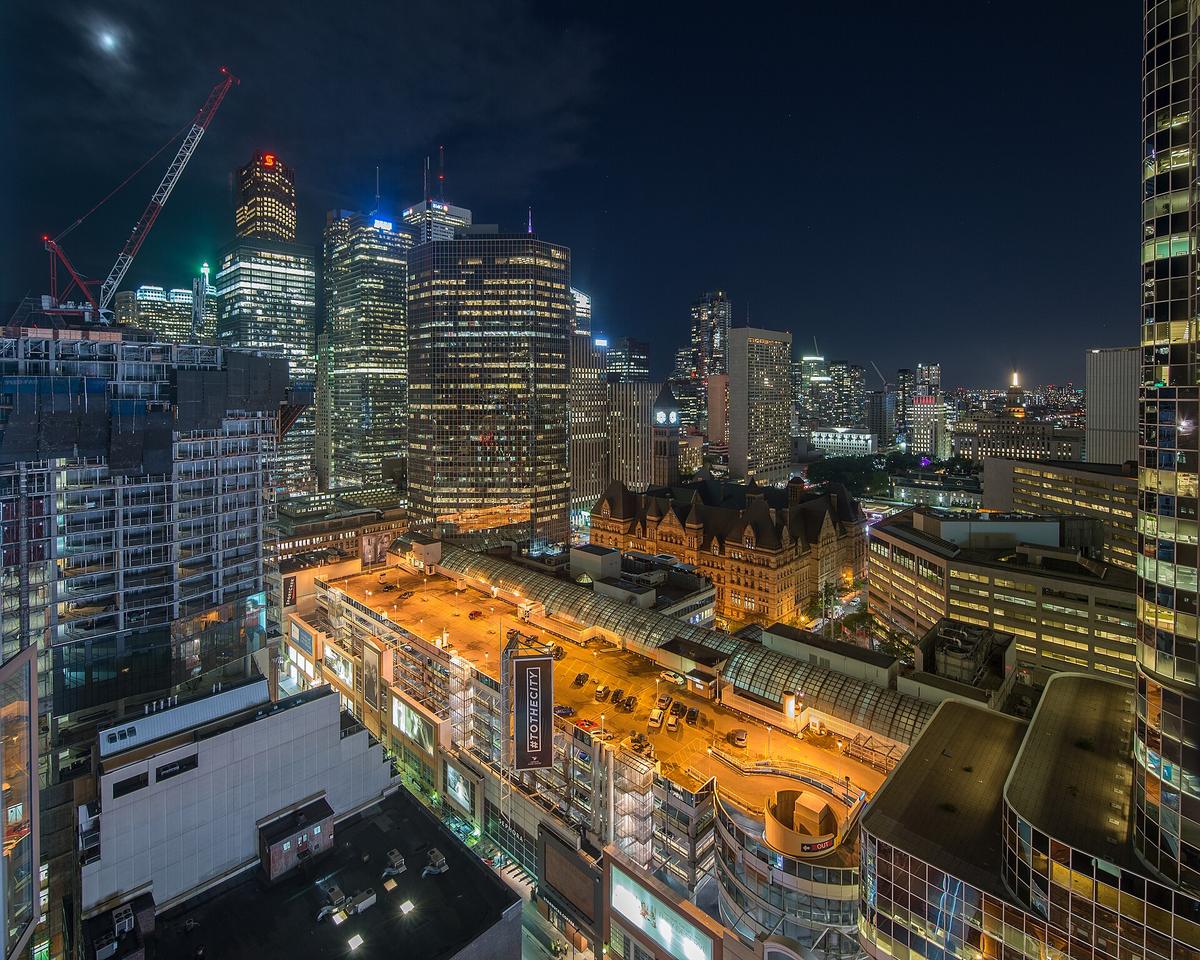
This city suits food focused travellers who plan trips around meals, neighbourhood wanderers who enjoy street level diversity over grand monuments, live music and festival chasers, families wanting a safe big city trip, and repeat visitors to Canada who have already done the nature circuit. It does not suit travellers seeking a compact walkable historic core or European beauty. Skip Toronto if you want dramatic scenery, if you dislike car dependent sprawl, or if you expect a 48 hour greatest hits trip to feel satisfying. The common mistake is staying only in the financial core and judging the city by its least interesting streets. Toronto's value is in its neighbourhoods. A downtown hotel without a plan to leave the core produces the most common complaint: that the city felt sterile and soulless.
Common Questions
Where can I find the peameal bacon sandwich in Toronto?
Carousel Bakery inside St. Lawrence Market, 93 Front Street East. Roughly CAD 7. Eat it standing at the counter. The market is closed Sunday except for the north building antique market and closed Monday entirely.
Which day is best for Kensington Market?
Sunday from May to October, when Augusta Avenue and parts of Baldwin Street are pedestrian only. The fullest vendor presence is Friday through Sunday regardless of season. Rainy weekdays see half the stalls closed.
Can I find Canadian designer clothing in Toronto?
Yes, on Queen Street West from Spadina Avenue to Ossington Avenue, and on West Queen West west of Dufferin Street. These shops stock Canadian designers who do not sell in the Eaton Centre or Yorkville.
What is the best covered public market in Toronto?
St. Lawrence Market at 93 Front Street East. Main hall open Tuesday to Saturday. Saturday growers' market in the north building is seasonal, May to October. The Sunday antique market is in the north building.
Which Toronto market is open year round?
St. Lawrence Market main hall, Evergreen Brick Works (Saturdays), Sorauren Park (Mondays), Wychwood Barns (Saturdays), and Montgomery's Inn (Wednesdays) all run year round. All other growers' markets close from January to April.
What food is Toronto known for that I can take home?
Peameal bacon vacuum packed from St. Lawrence Market stalls. Butter tarts from any growers' market stall. Ontario maple syrup is sold at every market but is not exclusive to Toronto. Pack the butter tarts carefully, they crumble.
Which Toronto neighbourhood has the best vintage shopping?
Kensington Market. The Victorian streets hold vintage clothing, used books, and vinyl stores mixed with global food stalls. The selection is chaotic, not curated. Shops open daily but Friday through Sunday is fullest.
Read next
-
 Toronto Hotels and What the Price Bands Actually Get You
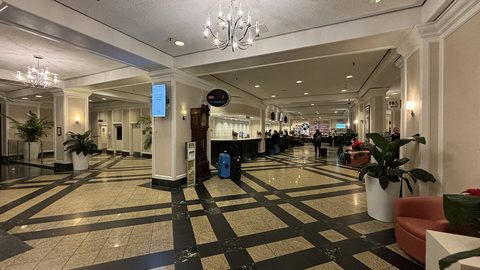
Toronto hotel prices cluster into bands that deliver distinctly different experiences, from suburban chain functionality to character-rich midrange spots in
Toronto Hotels and What the Price Bands Actually Get You
Toronto hotel prices cluster into bands that deliver distinctly different experiences, from suburban chain functionality to character-rich midrange spots in
-
 Where to Stay in Toronto and What Each District Costs You
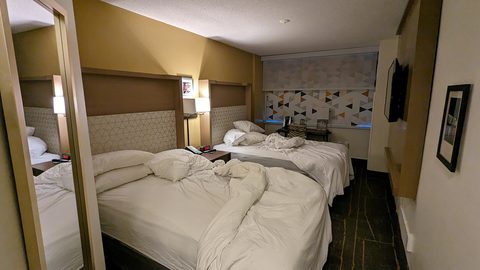
Where you stay in Toronto shapes everything about your trip. Each district comes with a tradeoff in transit time, street life, and what you can walk to after dinner.
Where to Stay in Toronto and What Each District Costs You
Where you stay in Toronto shapes everything about your trip. Each district comes with a tradeoff in transit time, street life, and what you can walk to after dinner.
-
 Flying Into Toronto Pearson or Billy Bishop and Getting Downtown
Flying into Toronto means choosing between Pearson and Billy Bishop. Here's how each airport works and how to get downtown from both.
Flying Into Toronto Pearson or Billy Bishop and Getting Downtown
Flying into Toronto means choosing between Pearson and Billy Bishop. Here's how each airport works and how to get downtown from both.
-
 What to Do in Toronto Ordered by Whether It Is Worth the Time
Toronto's attractions compete for your limited days. Some earn their time cost, others don't. This ranks them by what you actually get for the hours you spend.
What to Do in Toronto Ordered by Whether It Is Worth the Time
Toronto's attractions compete for your limited days. Some earn their time cost, others don't. This ranks them by what you actually get for the hours you spend.
-
 When to Visit Toronto and What Each Season Does to the City
Toronto shifts dramatically with the seasons, from festival-packed spring and fall shoulders to humid summer patios and bitter winter sidewalks that never
When to Visit Toronto and What Each Season Does to the City
Toronto shifts dramatically with the seasons, from festival-packed spring and fall shoulders to humid summer patios and bitter winter sidewalks that never
-
 Getting Around Toronto Without Wasting Half Your Trip in Transit
Toronto's transit map looks simple but hides slow surface routes, a disorienting underground maze, and walking distances everyone underestimates.
Getting Around Toronto Without Wasting Half Your Trip in Transit
Toronto's transit map looks simple but hides slow surface routes, a disorienting underground maze, and walking distances everyone underestimates.
-
 Canada Travel Guide for First-Timers Who Have No Idea How Big It Is
Canada is the second-largest country on earth, and its vastness punishes anyone who mistakes it for a quick trip between iconic sights.
Canada Travel Guide for First-Timers Who Have No Idea How Big It Is
Canada is the second-largest country on earth, and its vastness punishes anyone who mistakes it for a quick trip between iconic sights.
-
 Staying Connected Across Canada Without Roaming Surprises
A mobile plan bought from Rogers in Toronto can trigger roaming charges the moment you cross into Manitoba. That is not a glitch. That is Canada.
Staying Connected Across Canada Without Roaming Surprises
A mobile plan bought from Rogers in Toronto can trigger roaming charges the moment you cross into Manitoba. That is not a glitch. That is Canada.
-
 When to Visit Canada and What Each Season Actually Delivers
Canada's reliable travel window runs June to September. Outside that, rural attractions close, daylight vanishes, and winter is aggressively extreme.
When to Visit Canada and What Each Season Actually Delivers
Canada's reliable travel window runs June to September. Outside that, rural attractions close, daylight vanishes, and winter is aggressively extreme.