What the Royal Ontario Museum Holds and How to See It Well
The Royal Ontario Museum pairs world cultures with natural history inside a crystal-winged building, and a focused visit to two or three galleries beats a
.jpg)
What the Royal Ontario Museum Holds and How to See it Well
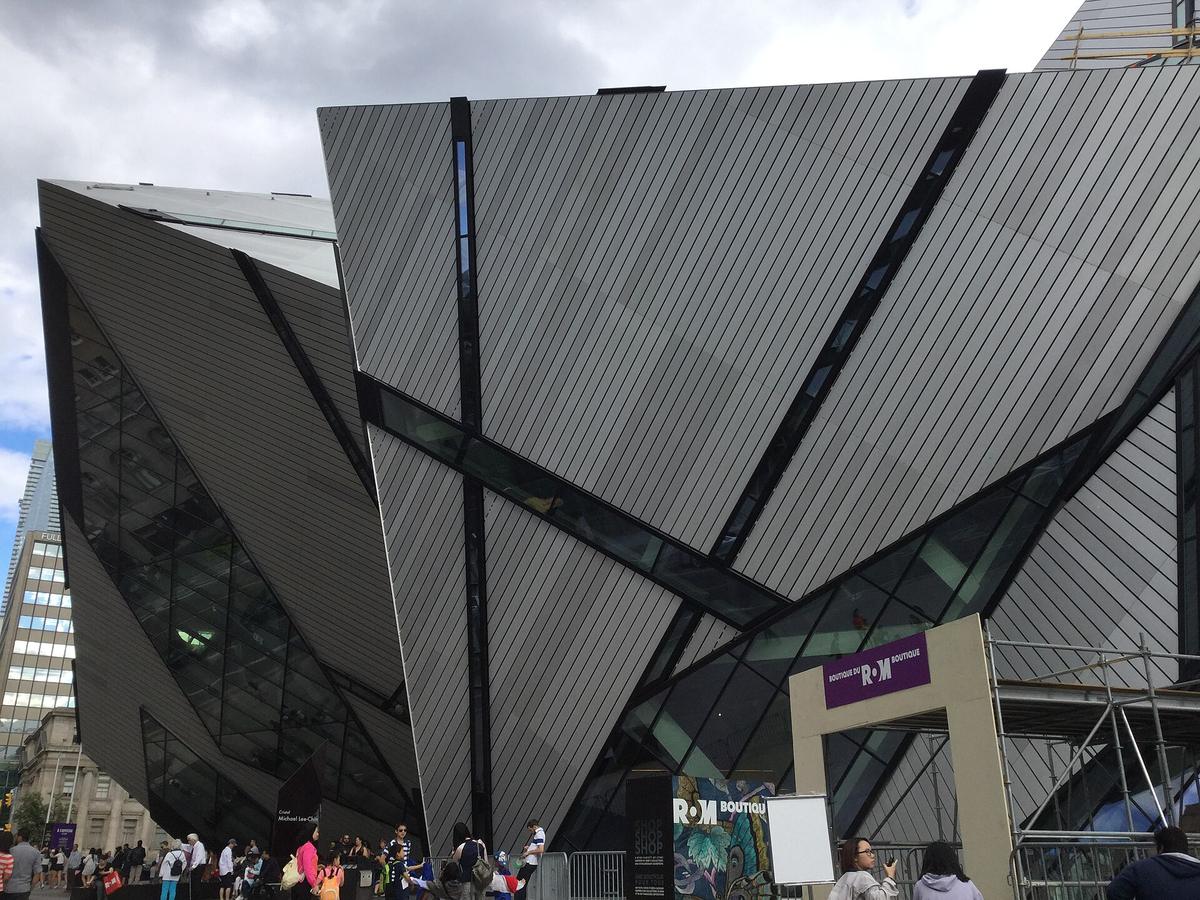
A glass and aluminium shard erupts from the corner of Bloor Street West and Avenue Road, five intersecting volumes cantilevered over the sidewalk in a way that makes pedestrians stop and tilt their heads. That is the Michael Lee-Chin Crystal, the 2007 Daniel Libeskind addition that turned the Royal Ontario Museum into two conversations: one about the 12 million objects inside, and another about whether the building itself belongs on the skyline. Both conversations are worth having, but only one of them will help you decide where to walk once you are through the doors.
- Address: 100 Queens Park, Toronto, ON M5S 2C6
- Museum Type: Art, world culture, and natural history museum
- Permanent Collection Size: Roughly 12 million objects and specimens. The exact count changes as collections grow; check the ROM website for the current figure.
- Number of Galleries: About 40 collection galleries
- Typical Visit Length: 2 to 3 hours for highlights; half day for multiple galleries
- Busiest Periods: Weekends, school holidays, summer afternoons
- Quieter Periods: Weekday afternoons in school term, winter months outside holidays
- Annual Visitor Volume: Over 1 million in pre-2020 years. The Toronto tourism board publishes updated annual figures.
- Transit Access: Museum station on TTC Line 1 Yonge-University is at the museum entrance. St. George station on Line 2 Bloor-Danforth is about 500 m west.
- Parking: No dedicated public parking on site. Use nearby paid lots or street parking.
- Official Website: rom.on.ca
ROM Toronto Collections Overview: What is Actually Inside
The ROM is two museums stacked inside one building. The natural history side holds fossils, minerals and biological specimens. The world cultures side holds art, textiles, ceramics and archaeological objects from every inhabited continent. Most first time visitors walk in expecting a single coherent experience and walk out 45 minutes later, overwhelmed, having seen three rooms badly. The trick is to understand the shape of the holdings before you arrive.
The James and Louise Temerty Galleries of the Age of Dinosaurs
This is the hall that draws the crowds and justifies the ticket for families. The dinosaur display runs across two levels connected by a glass bridge that puts you eye level with a reconstructed Parasaurolophus. The exhibits include real fossil skeletons, not casts, mounted in active poses. The space is at the north end of the building on the second floor. Arrive here first if you are visiting with children: it fills fast, and by 11:00 on a weekend the noise level makes reading the exhibit labels difficult.
The Teck Suite of Galleries: Earth's Treasures
One floor below the dinosaurs sits the mineral display. The cases hold specimens arranged by colour and crystal structure rather than by origin, which makes the room visually striking and geologically coherent. The centrepiece is a 2.5-metre wall of amethyst geodes. This section takes 20 minutes to walk through properly. Do not skip it for a second pass at the dinosaurs.
The Bishop White Gallery of Chinese Temple Art
This single room holds three complete Chinese temple wall paintings from the Yuan dynasty (1271-1368) and a set of carved wooden temple sculptures. The paintings were removed from their original temples in Shanxi province in the 1920s and installed at the ROM in the 1930s. The space is dark, deliberately lit only by the paintings themselves. It sits at the back of the Chinese collection on the first floor. Most visitors walk past it. Do not.
Royal Ontario Museum Architecture: Two Buildings, One Address
The original ROM opened in 1914 as a Beaux Arts building faced in stone, the west wing. The east wing followed in 1933, adding a matching symmetry. For 73 years the museum was a sober, classical block on the edge of Queen's Park. Then Daniel Libeskind added the crystal in 2007. The Michael Lee-Chin Crystal is a deconstructivist structure of glass and aluminium that contains the new main entrance and a five-storey atrium. It does not match. That is the point.
The crystal wing replaced the original entrance and shifted the museum's orientation from Queen's Park toward Bloor Street. The old west wing and east wing now function as the display spaces, while the crystal houses the lobby, gift shop, restaurant and temporary exhibition space. The transition between the two architectural languages is abrupt: you walk from the crystal's angular white lobby into the original building's arched stone corridors. That transition is where navigation gets confusing. The floor plan changes direction between wings, and not all staircases connect to every level.
Pick up a paper map at the admissions desk inside the crystal. The digital version on the ROM website works, but the cell reception in the lower rooms is inconsistent and the museum's Wi-Fi is patchy, consistent with Toronto's broader connectivity issues. A paper map saves the 10 minutes you would otherwise spend walking into a dead end.
ROM Toronto Timed Entry: When to Book and How to Skip the Line
The ROM offers timed entry for special exhibitions and recommends it for general admission during peak periods. You do not need a timed ticket on a Tuesday morning in February. You absolutely need one on a Saturday in July or during the week of the Canadian National Exhibition in late August, when Toronto adds its own crowds to the museum's summer base.
Book your ticket on the ROM website before you leave your hotel. The online price is the same as the walk up price, and booking ahead gives you a specific entry window. Arrive at the start of that window. The queue at the admissions desk inside the crystal peaks between 10:30 and 11:30. An 09:30 entry means you walk past that line and into the rooms before the school groups arrive.
If you arrive without a booking on a busy day, the wait at the admissions desk can exceed 20 minutes. The museum does not hold capacity for walk ups beyond a small buffer. On the busiest summer weekends, walk up tickets sell out by early afternoon. Do not risk a 45 minute transit ride to a sold out door.
When to Go for Quiet Galleries
Weekday afternoons during school term are the quietest windows. January and February are the lowest attendance months of the year. The museum is open year round except December 25. If you are visiting Toronto in winter despite the bitter cold and slushy sidewalks, the ROM becomes a reliable indoor anchor for a half day.
ROM Toronto with Kids: How Not to Exhaust Everyone
A museum with roughly 40 galleries and 12 million objects is a bad place to try to cover everything with children. The ROM knows this and the building works against you: the floor plan requires multiple staircases and long corridors between sections. The solution is to pick two or three rooms and treat the rest as a bonus if energy holds.
Start in the dinosaur hall. It is the most popular section for a reason. The mounted skeletons are dramatic, the interactive stations let children touch fossil casts, and the glass bridge across the upper level gives a view down into the main hall. Budget 45 minutes here.
Move next to the Galleries of Africa: Egypt. The Egyptian collection includes actual mummies and a reconstruction of a tomb chamber. It is on the same floor as the dinosaurs, connected by a short corridor. The dim lighting and narrow layout keep children engaged because each exhibit feels like a discovery rather than another glass case.
End in the Hands On Biodiversity area on the lower level. This is a touch based room with live insects, mounted specimens and drawers of objects that children can handle. It is designed for ages 4 to 12 and it costs nothing extra beyond general admission. Do not save it for last if your children are under 7; place it second, between the dinosaurs and the exit, to preserve their attention span for the walk back to the subway.
The Gardiner Museum directly across the street offers a quieter, smaller ceramics collection that works as a low stakes second stop if the ROM fills your morning. The Royal Conservatory of Music immediately south on Bloor Street West has free student recitals on some afternoons, worth checking before you plan the rest of your day.

What to Skip, What to Pair, and Where to Eat Afterwards
The ROM sits at the southern edge of Yorkville, Toronto's designer retail district of flagships and valet parking. A morning at the museum pairs naturally with an afternoon walking Bloor Street's luxury storefronts or ducking into the Bata Shoe Museum about 400 metres northwest on Bloor Street West, a small, specific collection that takes 45 minutes to see. The University of Toronto St. George campus is adjacent to the museum, and the walk through its Gothic and Romanesque buildings toward Queen's Park gives you a free architectural tour that complements the ROM's interior.
Skip the museum cafe. The food is overpriced and the queue at lunch is long. Instead, walk north into Yorkville for a proper meal, or south into the Annex for the student priced pubs and bookshops on Bloor Street. If you are on a tight schedule, grab a peameal bacon sandwich from a street cart or a butter tart from a farmers' market stall and eat it on a bench in Queen's Park.
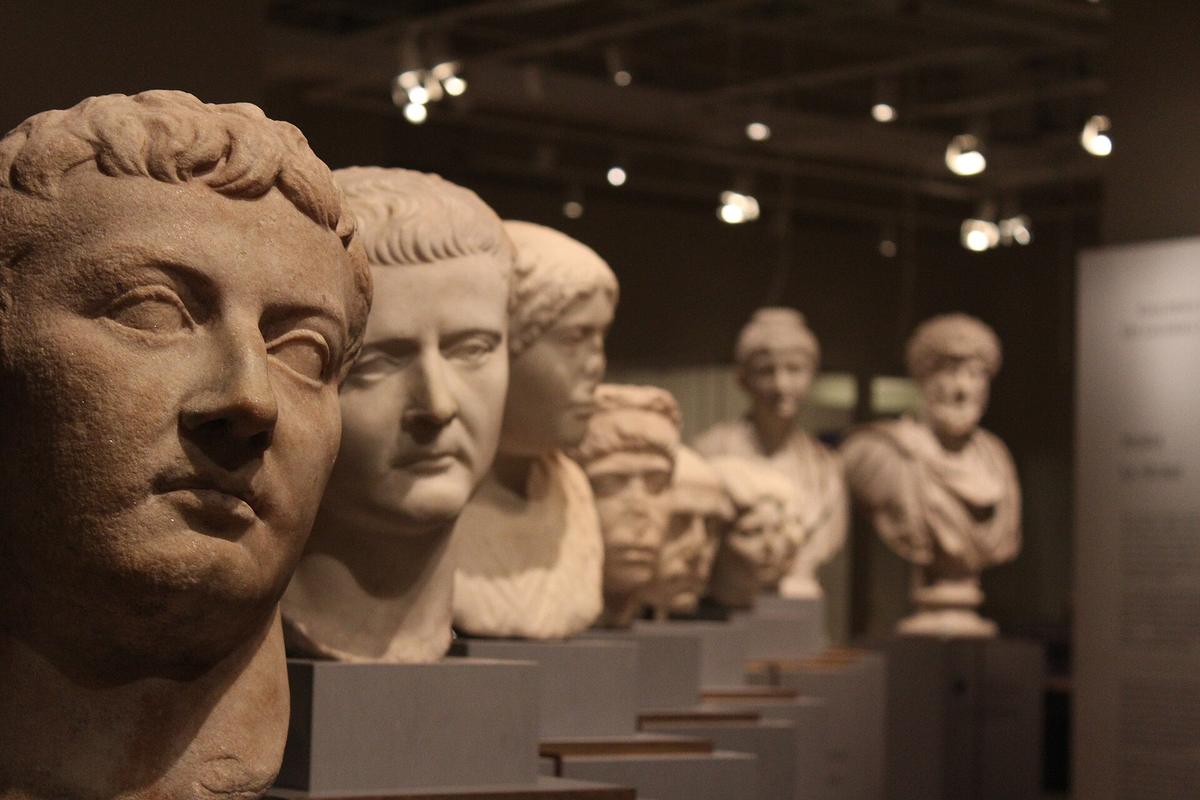
The Daphne Cockwell Gallery dedicated to First Peoples art and culture is worth a dedicated stop on your way out. It occupies the fourth floor and contains contemporary and historical works from Indigenous artists across Canada. It is the only space in the museum that explicitly addresses the context of the objects on display, including how and why they came to the ROM. Read the wall texts here. They are careful and specific in a way most museum labels are not.
Common Questions
How long should I spend at the Royal Ontario Museum?
Two to three hours for the highlights. Half a day if you want to see multiple galleries. Do not try to cover all 40 galleries in one visit. Pick two or three sections and leave the rest for a return trip.
Do I need to book tickets in advance for the ROM?
Recommended for special exhibitions and peak periods. General admission is available on arrival, but summer weekends can sell out by early afternoon. Book on the ROM website before you go.
What is the best time of day to visit the ROM?
Arrive at opening or within the first hour. Weekday mornings are quieter than weekends. The quietest months are January and February outside school holidays.
Is the ROM good for children?
Yes, but limit the visit to two or three galleries. Start with the dinosaur hall, add the Egyptian gallery, and finish in the Hands On Biodiversity room on the lower level. The Gardiner Museum across the street is a good backup.
Read next
-
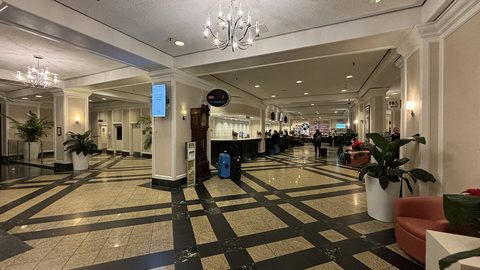
 Toronto Hotels and What the Price Bands Actually Get You
Toronto hotel prices cluster into bands that deliver distinctly different experiences, from suburban chain functionality to character-rich midrange spots in
Toronto Hotels and What the Price Bands Actually Get You
Toronto hotel prices cluster into bands that deliver distinctly different experiences, from suburban chain functionality to character-rich midrange spots in
-
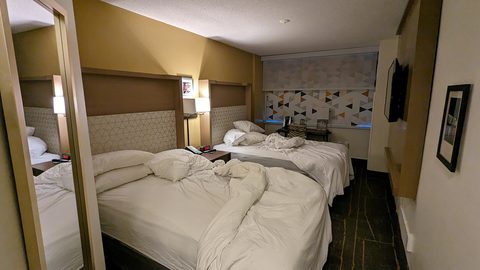 Where to Stay in Toronto and What Each District Costs You
Where you stay in Toronto shapes everything about your trip. Each district comes with a tradeoff in transit time, street life, and what you can walk to after dinner.
Where to Stay in Toronto and What Each District Costs You
Where you stay in Toronto shapes everything about your trip. Each district comes with a tradeoff in transit time, street life, and what you can walk to after dinner.
-
 Flying Into Toronto Pearson or Billy Bishop and Getting Downtown
Flying into Toronto means choosing between Pearson and Billy Bishop. Here's how each airport works and how to get downtown from both.
Flying Into Toronto Pearson or Billy Bishop and Getting Downtown
Flying into Toronto means choosing between Pearson and Billy Bishop. Here's how each airport works and how to get downtown from both.
-
 What to Do in Toronto Ordered by Whether It Is Worth the Time
Toronto's attractions compete for your limited days. Some earn their time cost, others don't. This ranks them by what you actually get for the hours you spend.
What to Do in Toronto Ordered by Whether It Is Worth the Time
Toronto's attractions compete for your limited days. Some earn their time cost, others don't. This ranks them by what you actually get for the hours you spend.
-
 When to Visit Toronto and What Each Season Does to the City
Toronto shifts dramatically with the seasons, from festival-packed spring and fall shoulders to humid summer patios and bitter winter sidewalks that never
When to Visit Toronto and What Each Season Does to the City
Toronto shifts dramatically with the seasons, from festival-packed spring and fall shoulders to humid summer patios and bitter winter sidewalks that never
-
 Getting Around Toronto Without Wasting Half Your Trip in Transit
Toronto's transit map looks simple but hides slow surface routes, a disorienting underground maze, and walking distances everyone underestimates.
Getting Around Toronto Without Wasting Half Your Trip in Transit
Toronto's transit map looks simple but hides slow surface routes, a disorienting underground maze, and walking distances everyone underestimates.
-
 CN Tower
The CN Tower anchors Toronto's skyline, but a good visit depends on booking ahead for sunset slots and knowing which experience fits your time and tolerance
CN Tower
The CN Tower anchors Toronto's skyline, but a good visit depends on booking ahead for sunset slots and knowing which experience fits your time and tolerance
-
 Art Gallery of Ontario
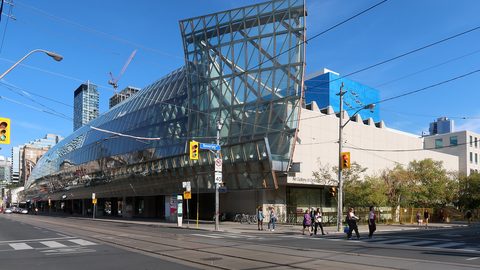
The Art Gallery of Ontario pairs a deep Group of Seven collection with Frank Gehry's glass-and-wood redesign, a focused art experience steps from Chinatown
Art Gallery of Ontario
The Art Gallery of Ontario pairs a deep Group of Seven collection with Frank Gehry's glass-and-wood redesign, a focused art experience steps from Chinatown
-
 Toronto Islands
The Toronto Islands offer a car-free half-day escape with skyline views and beaches, reached by a 15-minute ferry that can demand an hour of queuing on summer
Toronto Islands
The Toronto Islands offer a car-free half-day escape with skyline views and beaches, reached by a 15-minute ferry that can demand an hour of queuing on summer