United States Power Plugs Voltage, What Your Devices Actually Need
The United States uses Type A and B sockets at 120V. Most modern chargers are dual-voltage and only need a plug adapter, but check the label first.
Sockets and Voltage in the United States: What Your Devices Need
You land at LAX after a 10 hour flight, drop your bag in the hotel room, and reach for your phone charger. The prongs on your plug are round. The socket on the wall expects two flat pins. That is the moment this information solves. The United States runs on 120 V at 60 Hz. The only plug types you will see are Type A and Type B. If your charger brick says INPUT 100-240 V, you are fine with just a shape adapter. If it says 220-240 V only, you need a voltage converter or you risk destroying the device.
Type a and B Sockets USA: What They Look Like and Where You Find Them
Type A has two flat parallel pins. Type B has those same two flat pins plus a round grounding pin below them. Both sockets accept Type A plugs. Only Type B sockets accept the grounded Type B plug. A Type A plug goes into any socket in the United States. A Type B plug only goes into a socket with the third round hole.
Where You Will and Won't Find Sockets
Every wall outlet in the United States is designed to accept both types. You will find them in hotel rooms, airports, coffee shops, rental cars, and public transport terminals. The socket is a NEMA 5-15R receptacle, rated for 15 amps. That is the standard for the entire country.
Where you will not find them: bathrooms. American bathrooms, especially in older hotels and mid-range chains, rarely have any electrical outlet at all. If they do, it is a single socket near the sink labelled "for electric razors only." You cannot charge a phone or laptop in a US bathroom. Plan your charging around the bedroom or the living area.
What a Plug Adapter Does vs. What a Converter Does
A plug adapter changes the shape of your plug so it fits into a Type A or Type B socket. It does nothing to voltage. If your device is dual voltage, an adapter is all you need. Plug a 220 V hair dryer into a 120 V socket with just an adapter and it will run at half power, or not at all. Some devices will heat up and fail.
A voltage converter, also called a step-down transformer, changes 120 V to 220 V or the reverse. Converters are heavy and generate heat. You only need one for single-voltage appliances: a curling iron, a flat iron, a fan, an older radio. For anything with a switching power supply, which covers nearly every phone, laptop, camera, and tablet charger made in the last decade, the converter is dead weight in your bag.


US Voltage 120V Adapter: What to Pack and What to Leave at Home
For most travellers, the correct answer is a Type A to Type C or Type A to Type G adapter brick. Buy one on Amazon or at any airport electronics kiosk. Expect to pay roughly $10 to $20. The United States uses 120 V. Most of the world outside North America uses 220-240 V. The difference is small enough that dual-voltage chargers handle both ranges automatically.
Check the fine print on your charger block. It should read "INPUT: 100-240 V" followed by a current rating such as 0.5 A or 1.5 A. If it says that, you can plug it into any socket between 100 V and 240 V worldwide. If it says "INPUT: 220-240 V" only, it was made for a specific region and will not function at 120 V without a transformer.
What Not to Bring
Leave behind any single-voltage device that does not travel well: large kitchen appliances, space heaters, electric blankets, high-wattage hair styling tools. A standard American 120 V hair dryer designed for the domestic market is non-dual-voltage and will be useless in the European or Asian part of your trip if you are connecting through multiple countries. For the United States only, a 120 V device works with just a plug adapter, but only if your device's voltage rating matches 120 V exactly. Buy a cheap travel hair dryer at a US drugstore instead.
| Characteristic | Value |
|---|---|
| Mains voltage | 120 V |
| Mains frequency | 60 Hz |
| Plug type A | NEMA 1-15, two flat parallel pins, non-polarized or polarized |
| Plug type B | NEMA 5-15, two flat parallel pins plus round grounding pin |
| Adapter needed | Type A or Type B plug adapter for devices from regions using other styles |
| USB-A in hotels | Common in mid-range and upscale; less consistent in budget motels and older inns |
| USB-C in hotels | Increasing in mid-range and upscale; not standard in budget or older properties |
Dual Voltage Devices America: How to Tell If Yours Works Here
Dual-voltage gear is the norm for modern electronics. Your laptop charger, phone charger, tablet charger, camera battery charger, electric razor, and noise-cancelling headphone charger are almost all dual voltage. The simplest test: look at the block where the cable meets the plug. If you see a line that reads "INPUT: 100-240 V" anywhere on it, use that charger anywhere in the United States with a plug adapter. If you see only "INPUT: 220-240 V," you need a voltage converter.
The exception is anything with a motor or a heating element. Hair dryers, curling irons, electric shavers, coffee grinders, and fans rarely have dual-voltage power supplies. A European 220 V hair dryer will not work at 120 V without a heavy step-up transformer, and the transformer costs more than a cheap travel hair dryer. Buy a drugstore hair dryer in the United States instead.
Some equipment labels itself as "universal" but is actually auto-switching. It detects the input voltage and adjusts internally. Those units show nothing on the label except the range. If you see 100-240 V on a charger, you have an auto-switching dual-voltage device. Pack it with confidence.
Power Strip for United States Travel: Why You Need One
Older American hotels, especially outside the Northeast Corridor and major cities, were built when a guest carried one phone that plugged into the wall. You arrive with a phone, a laptop, a tablet, a smartwatch, a camera, a portable battery, and a Kindle. A single nightstand outlet is not enough.
Pack a small power strip with a short cord and a built-in surge protector. Get one with a Type B plug. Three outlets plus two USB-A ports will charge your entire kit off a single wall socket. Motels and older hotels in the South, the Midwest, and the Great Plains are the most likely to have a single outlet in the room, often behind the TV stand rather than near the bed.
If you forget yours, buy one at a Walmart or a Target. Expect to pay roughly $10 to $15. Do not count on the hotel providing one. Even mid-range chains like Hampton Inn and Holiday Inn Express rarely stock them for guest use. Budget motels never do.
Where You Can Charge Your Devices in Transit
USB charging on the road is better than it was five years ago, but still inconsistent. On domestic flights with major carriers such as Delta, American, United, and Southwest, USB-A ports are common on mainline aircraft. Regional jets often lack any charging. USB-C is expanding but not standard. Pack a battery bank for any flight longer than two hours.
Intercity buses including Greyhound, FlixBus, and Megabus offer USB-A ports at each seat. The coverage is reliable on newer fleet vehicles. Older buses on rural routes may have none. Amtrak provides USB-A ports at most seats in coach and business class on corridor and long-distance routes. The true weak spot is rural areas and national parks. There is no charging at the Grand Canyon South Rim trailheads. Yellowstone in-park lodging may have one outlet per room. Download offline maps before you drive the Mountain West or the Great Plains, and carry a power bank.
Ride-hailing vehicles such as Uber and Lyft are a gamble. Some drivers offer charging cables. Most do not. Never rely on a car charger you do not own. If you rent a car, bring a 12 V car charger with a USB port. Most rental cars still offer a 12 V cigarette lighter socket but no USB port, especially older models.
The One Thing That Goes Wrong Most Often
The most common mistake travellers make with power in the United States is not the plug shape. It is the voltage. A European traveller plugs a 220 V hair dryer into a 120 V socket with a Type A adapter, finds the hair dryer runs weakly, and assumes it is broken. It is not broken. It is receiving half the voltage it was designed for, and it will overheat if left on long enough. Pack a dual-voltage hair dryer, or buy one when you arrive.
The second most common mistake: assuming the hotel room has enough outlets. In a major city like New York or Los Angeles, new-build hotels have USB ports and multiple sockets. In a budget motel in the Great Plains or a historic inn in the Rocky Mountain West, you may find one outlet behind the TV cabinet and nothing on the nightstand. Pack a short power strip with surge protection. It is the single most useful charging accessory you can bring.
This subject suits road trippers and national park visitors who carry multiple gadgets and stay in varied accommodation types. It does not suit travellers who stay in a single upscale hotel in a walkable neighbourhood like the Northeast Corridor, where modern outlets and USB ports are standard. For everyone else, a plug adapter and a small power strip are the difference between arriving with a full battery and waking up to a dead phone.
Common Questions
Do I need a voltage converter for the United States?
Only if your device is single voltage and rated for 220-240 V only. Modern phone, laptop, and camera chargers are almost always dual voltage and need only a plug adapter.
Is Type A the same as Type B?
No. Type A has two flat pins. Type B has those same two flat pins plus a round grounding pin. Both fit into American sockets. Type B plugs only fit into sockets with the grounding hole.
Can I charge my phone in a US bathroom?
Usually not. American bathrooms rarely have electrical outlets, and when they do, they are labelled for electric razors only. Charge in the bedroom.
Will my 220 V hair dryer work in the United States?
No, not without a heavy step-up transformer. It is cheaper and easier to buy a travel hair dryer at a US drugstore.
Do American hotels have USB ports?
Common in mid-range and upscale hotels. Less common in budget motels and older inns. USB-C is becoming standard in upscale properties but is not guaranteed.
Can I use a European plug straight into an American socket?
No. European plugs use two round pins (Type C, E, or F). American sockets accept only two flat pins (Type A) or two flat pins plus a round pin (Type B). You need a plug adapter.
Is it safe to drink tap water in the United States?
Yes, tap water is safe everywhere. In parts of the rural Southwest and the Great Plains it may taste strongly of minerals or sulphur, but it is not dangerous.
Read next
-
 Staying Connected While Traveling Through the United States
Prepaid eSIMs work well in US cities, but a physical T-Mobile or AT&T SIM bought at arrival gives better rural coverage for national parks and long highway drives.
Staying Connected While Traveling Through the United States
Prepaid eSIMs work well in US cities, but a physical T-Mobile or AT&T SIM bought at arrival gives better rural coverage for national parks and long highway drives.
-
 Best Time to Visit the United States by Region and Season
The United States spans so many climates that no single season works everywhere. Here is what each region delivers, and when to stay away.
Best Time to Visit the United States by Region and Season
The United States spans so many climates that no single season works everywhere. Here is what each region delivers, and when to stay away.
-
 Getting Around the United States Without Underestimating the Distances
Outside the Northeast Corridor, the United States runs on cars and domestic flights. Distances are enormous and Amtrak is scenic but slow.
Getting Around the United States Without Underestimating the Distances
Outside the Northeast Corridor, the United States runs on cars and domestic flights. Distances are enormous and Amtrak is scenic but slow.
-
 United States Visa Rules and the ESTA Process Explained Simply
Most visitors to the United States need either an ESTA authorization or a B-2 tourist visa. Here is who needs which and how the process runs.
United States Visa Rules and the ESTA Process Explained Simply
Most visitors to the United States need either an ESTA authorization or a B-2 tourist visa. Here is who needs which and how the process runs.
-
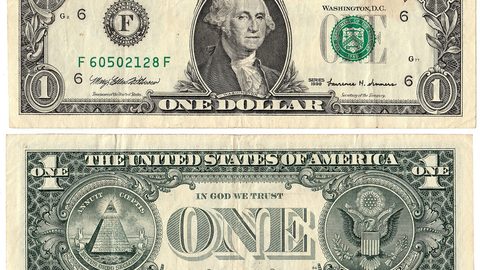 Money in the United States, Cards, Cash, Tipping and That Extra Tax
The United States runs on cards, but sales tax is added at the register and tipping 18-22% is effectively mandatory. Here is how money actually works.
Money in the United States, Cards, Cash, Tipping and That Extra Tax
The United States runs on cards, but sales tax is added at the register and tipping 18-22% is effectively mandatory. Here is how money actually works.
-
 Reading United States Safety Advice Without Being Misled by It
Safety in the United States is hyperlocal, and the visible poverty in public spaces can jar first-timers. Here is how to read the advice without being misled.
Reading United States Safety Advice Without Being Misled by It
Safety in the United States is hyperlocal, and the visible poverty in public spaces can jar first-timers. Here is how to read the advice without being misled.
-
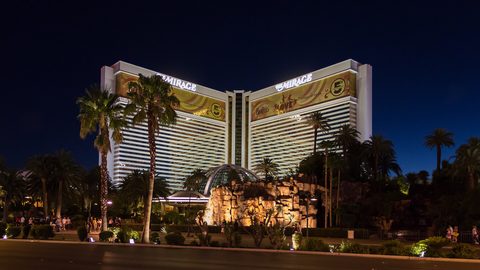 Nevada
 is a state of extreme contrasts: the 24-hour artificial fantasy of the Las Vegas Strip gives way to vast, silent desert where services vanish and the
Nevada
Nevada is a state of extreme contrasts: the 24-hour artificial fantasy of the Las Vegas Strip gives way to vast, silent desert where services vanish and the
-
 Maryland
 is built around the Chesapeake Bay, where steamed crabs and slow ferries set the pace and the two shores are close on a map but far apart by road.
Maryland
Maryland is built around the Chesapeake Bay, where steamed crabs and slow ferries set the pace and the two shores are close on a map but far apart by road.
-
 California
Eight hundred miles of desert, alpine range, and temperate coast in one state. The season that suits one part rules out another.
California
Eight hundred miles of desert, alpine range, and temperate coast in one state. The season that suits one part rules out another.