What Are the Tourist Traps in Budapest and What to Do Instead
Budapest tourist traps that trade on the name, and the equivalent markets, baths and cafés locals actually use.

What Are the Tourist Traps in Budapest and What to Do Instead
At 10 a.m. on a Tuesday in May, the queue at New York Café stretched down the block. Inside, a dozen tour groups rotated through the gold-leafed hall, and the filter coffee arrived at a price that makes you wince. That is the moment you realise you are in a Budapest tourist traps situation, not a café. The city rewards slow wandering, but its famous names trade harder on reputation than on experience. Skip these places and head straight to where locals go instead.
Váci Street, the Souvenir Corridor, and Where to Shop Instead
Váci Street is Budapest’s most famous shopping street. It is also its most overrated. The markup starts the moment you step onto the pavement: a fridge magnet that costs 600 HUF at a kiosk on Király utca goes for 1,500 HUF here. The restaurants along Váci Street run almost entirely on the tourist menu model, with goulash and a small beer priced at roughly double what you pay two streets back.
The crowd is dense from 10 a.m. until late evening, mostly cruise passengers and group tours. The souvenir shops sell identical paprika boxes and embroidered tablecloths, most of which come from the same wholesaler.
Better Shopping in the Market Halls
Instead of Váci Street, walk five minutes east to the Central Market Hall for paprika and lángos on the ground floor, but skip the upstairs food stalls, which are priced for the same crowds. For a proper alternative, head to Lehel Market Hall in Újlipótváros. Take tram 4 or 6 to Lehel tér. Here you find produce, hung meats, and a first-floor food court where a bowl of goulash costs 1,400 HUF and no one speaks English. The vendors sell decent paprika and hung peppers without the tourist surcharge.
Souvenirs at Local Prices
For souvenirs, look on the side streets between Király utca and Dob utca in the old Jewish Quarter, where independent shops sell prints and ceramics at local prices.
New York Café: the Overpriced Photo Stop and Where to Sit Instead
New York Café is a beautiful building. But it functions as a group-tour assembly point from 9 a.m. onward. The queue for a table can hit 45 minutes in peak season, and once seated you are paying a steep price for a slice of Dobos torte and a coffee that is no better than what you get at a decent local café. The service is rushed because the volume is high.
The local alternative is Central Café (Kávéház) on Károlyi utca in the Belváros, a ten-minute walk from New York Café. It opened in 1887, has high ceilings and newspapers, and costs roughly half: a cappuccino for 1,200 HUF and a cake for 1,800 HUF. The crowd is a mix of students from nearby ELTE university and older locals. Another option is Művész Café on Andrássy út, which has a quieter terrace and a loyal local clientele. It is two doors down from the Opera House and costs about the same as Central Café.
Danube River Cruises: the Markup and What Locals Do Instead
The evening Danube river cruises departing from Vigadó tér charge a steep fee for a 60-minute loop with a glass of sparkling wine. The boat is full, the recorded commentary is loud, and the photo angle is the same for every passenger.
Instead, take BKK’s public riverboat. Line D14 runs from Római-part in the north down to the Boráros tér stop near the Liberty Bridge. A single ticket costs the same as a metro ride, or is included in any 24-hour BKK pass. The boat has no commentary, no bar, and no crowds. The route passes the Parliament, the Chain Bridge, and Gellért Hill. You can sit on the upper deck and take the same photos without paying the cruise markup. The boats run roughly every 20-40 minutes depending on the season. Check the schedule on BKK’s website before you go.
Budapest Tourist Scams: How the Traps Work and How to Spot Them
Budapest tourist scams usually take three forms. First, taxi scams: drivers at the airport or Keleti station quote a flat rate far above the regulated fare for a trip to the city centre. Only use Bolt or the Főtaxi app. A Bolt from the airport to central Pest costs a transparent, card-paid fare in the app. Do not accept a taxi offer from a driver who approaches you inside the arrivals hall.
Second, currency exchange offices with signs that say “0% commission”. These offer rates 10-15% below the mid-market rate. The actual exchange rate is available on Google or XE. Use a bank ATM (OTP, K&H, Erste) and choose to be charged in HUF, not in your home currency. Avoid the exchange booths on Váci Street and at Deák Ferenc tér.
Third, the “free” walking tour that ends with a hard sell for a restaurant, a boat cruise, or a spa booking. Pay a tip at the end; do not buy the add-ons.
The Concierge Tip-Off
Hotel concierges in the Belváros sometimes earn a commission for recommending a particular Danube cruise or a “traditional” restaurant. The restaurant will have a printed menu in six languages and a tourist menu price. Instead, search for étkezde on Google Maps, filter by Hungarian keywords, and go to a place with only a chalkboard sign outside.
Budapest Overrated: Which Big Names to Skip (and What to Do Instead)
Budapest overrated is a short list, but each item wastes time and money if you treat it as essential.
Széchenyi Thermal Bath
Széchenyi is the largest bath, with outdoor pools opened in 1913. It is also the busiest. In high season, the main outdoor pool feels like a crowded swimming complex, not a spa. The queue for the entrance is 15-30 minutes on any sunny day.
Instead, go to Rudas Baths. Built around a Turkish core from the 16th century, Rudas is smaller and quieter. The rooftop pool has a panoramic view over the Danube. Rudas runs a gender-schedule system: check the BGYH site for men-only, women-only and mixed days before you go. The crowd size is a fraction of Széchenyi’s. Lukács Baths in Óbuda is another option, with documented spa use from the 12th century. It costs 5,600 HUF for a full day, and the crowd is local. No tour groups.
Fisherman’s Bastion
The upper towers are ticketed, and the viewpoint is shoulder-to-shoulder from 10 a.m. to dusk. The free lower terraces give the same view of the Parliament. Go at 7 a.m. or after 8 p.m.
Central Market Hall Upper Floor
The ground floor is useful for produce. The upstairs is a food court with queues and markups. A lángos upstairs costs 2,400 HUF; the same lángos at Lehel Market Hall costs 1,200 HUF.
Budapest Local Alternatives: Where Locals Eat, Drink and Bathe
Budapest local alternatives sit one neighbourhood away from the tourist core. Here is where to find them.
Eating
Skip the restaurants along the Danube promenade and on Váci Street. Walk to Bartók Béla Boulevard in Újbuda. This street runs from Móricz Zsigmond körtér south along the tram 47 and 49 lines. It is full of mid-range Hungarian and international restaurants used by university staff and residents. A two-course lunch with a drink costs 4,000-5,000 HUF. Try Bock Bistro or VakVarjú for modern Hungarian dishes at local prices.
In Ferencváros, the area around Tompa utca and Ráday utca is gentrifying fast, with food halls and craft beer bars. For a proper Hungarian lunch, find an étkezde: look for a handwritten menu taped to the door. The place will serve goulash, stuffed cabbage, and chicken paprikash to a lunchtime crowd of office workers. Pay at the counter, and expect to spend 2,500-3,500 HUF for a full meal.
Drinking
The famous ruin bars like Szimpla Kert in the old Jewish Quarter are worth one drink for the aesthetic, but on Friday and Saturday evenings they fill with stag parties and tour groups. The queues at the bar are long and the drinks are priced for tourists: a beer costs 1,200 HUF at Szimpla and 800 HUF two blocks away.
Instead, drink on Bartók Béla Boulevard in Újbuda, where the bars are full of local students and young professionals. Kiadó a Romkocsma, a laid-back ruin bar with a courtyard, serves a pint for 900 HUF. Or go to Ferencváros, Boráros tér area, where the crowd is local and the noise level is lower.
Bathing
Already covered above: Rudas and Lukács over Széchenyi and Gellért.
Budapest Avoid Crowds: Timing, Route and District Strategy
To Budapest avoid crowds, you need three tactics: timing, routing, and neighbourhood selection.
Timing
Budapest’s peak season runs April through May and September through October, plus December for the Christmas markets. July and August are hot and crowded. The worst week is around August 20, St Stephen’s Day, when fireworks draw huge crowds and some venues close. In spring and autumn, major trade fairs at Hungexpo spike hotel prices; check the Hungexpo calendar before booking.
Visit major sights at opening time. The Central Market Hall opens at 6 a.m. for vendors; arrive at 7 a.m. for empty halls. The Fisherman’s Bastion is open 24 hours, with the best light at sunrise in October and the lowest crowds between 6:30 and 7:30 a.m.
Routing
Do not stay only in Pest. The Castle District on the Buda side gets heavy traffic during the day, but empties out from mid-afternoon when the tours leave. Walk up the hill from Clark Ádám tér (the funicular is just a short ride, but the walk takes 15 minutes and avoids the queue) after 4 p.m.
Where to Stay
Stay in Újlipótváros for calm streets and decent restaurants, with easy Danube-side access. Stay in Újbuda near Bartók Béla Boulevard for low tourist density and good transport. Avoid the Belváros and Terézváros unless your trip is under 48 hours.
Read next
-
 Budapest Hotels What Each Price Band Actually Gets You
Budapest hotels span from cheap courtyard rooms to grand Danube-view addresses. Here is what each price band actually gets you.
-
 Where to Stay in Budapest District by District
Where to stay in Budapest depends on how much noise, walking, and nightly rate you will accept. Here is the district-by-district trade-off.
-
 Budapest Flights, Flying Into Ferenc Liszt Airport and Getting Out
Flying into Budapest Ferenc Liszt Airport: what to expect on arrival and how to get into central Pest by bus or taxi.
-
 Budapest Things to Do Ordered by Whether It Is Worth the Time
Budapest things to do ordered by whether they are worth the time, the queue, and the crowd they demand.
-
 Best Time to Visit Budapest and What Each Season Does to It
The best time to visit Budapest depends on how much heat, crowd, and seasonal closure you will tolerate. Here is what each season does.
-
 Getting Around Budapest Without Wasting Half the Trip
Getting around Budapest means mastering the per-vehicle ticket rule, the validation boxes, and the BudapestGO app before you board.
-
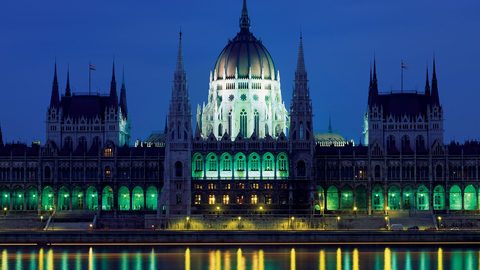 Hungarian Parliament
How a Hungarian Parliament Building visit works, where tours start, when they sell out, and how to avoid queueing twice.
-
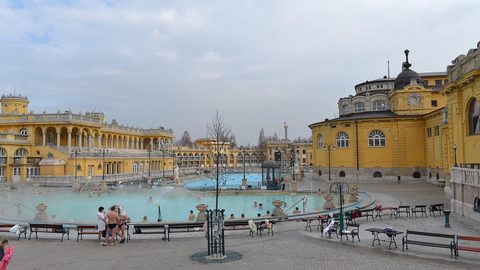 Széchenyi Thermal Bath
What Széchenyi Thermal Bath Budapest is really like, how crowds shift by season and hour, and how to plan a visit that matches your tolerance.
-
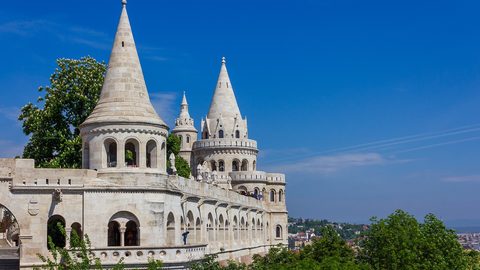 Fisherman's Bastion
How Fisherman's Bastion Budapest works, which terraces cost money, and when to go for the Danube panorama without tour bus crowds.