Getting Around Budapest Without Wasting Half the Trip
Getting around Budapest means mastering the per-vehicle ticket rule, the validation boxes, and the BudapestGO app before you board.
Getting Around Budapest Without Wasting Half the Trip
You step out of Deák Ferenc tér metro station, see tram 47 rumble past, and realise you have no idea whether your paper ticket is valid. That moment is where most visitors lose 12,000 HUF to a fine. Getting around Budapest is simple once you understand one rule, but the city’s transport system punishes the assumption that a ticket works like it does in London or Paris. Here is how Budapest’s public transport actually works: the validation rules and the per-vehicle ticket system that trips visitors up every single day.
Budapest Public Transport: the Core Rule That Saves You Money
A single ticket covers one uninterrupted ride on one vehicle. That is not the same as one journey. Buy a single ticket, ride metro line M1 from Vörösmarty tér to Deák Ferenc tér, walk to tram 47 and board it, and you are on a second vehicle. You need a second single ticket or a transfer ticket. A transfer ticket allows exactly one change.
The metro system is the exception. A single ticket bought for the metro network lets you switch between metro lines without leaving the paid area. Ride M2 from Keleti pályaudvar to Deák Ferenc tér, switch to M3, and continue to Kőbánya-Kispest on the same ticket. Step out of a metro station and onto a tram or bus, and the ticket is dead.
The 24-hour travelcard and its 72-hour and weekly variants are the better bet for anyone making more than two trips per day. Validate a travelcard once at first use: at an orange box at a metro station entrance or on the machine inside a tram or bus. After that, carry it without further validation for the full period.
Budapest Metro Ticket Validation: the Orange Box Trap
How Validation Works on the Metro
Validation is where Budapest separates travellers who read the instructions from those who pay the fine. Paper tickets must be stamped at the start of every ride. For the metro, the stamping point is the orange machines at station entrances, before the escalator. Push the ticket into the slot until it clicks. The machine prints the time and date. Reach the platform with an unvalidated ticket and that counts as fare evasion. Ticket inspectors board metro trains between stations and check every passenger. They fine on the spot. Expect around 12,000 HUF for a first offence.
How Validation Works on Trams and Buses
For trams and buses, the machines are onboard. Find them near the doors. Stamp your ticket as soon as you board, not after you sit down. Some travellers queue at the back door of a tram, forget to stamp, then see inspectors step on at the next stop. The inspectors are aggressive, speak very little English once they start writing the fine, and do not accept excuses. The only safe approach: stamp every paper ticket before the vehicle moves. Every time.
BudapestGO App: the Smarter Alternative to Paper Tickets
Buying and Activating Digital Tickets
The BudapestGO app is the official journey planner and ticket vendor for Budapesti Közlekedési Központ (BKK). Download it before you arrive. It lets you buy tickets and passes digitally, activate them when you board, and skip the orange boxes entirely. The app also runs the official journey planner, giving real-time departures for every metro line, tram, bus, and trolleybus in the network.
Digital tickets bought through BudapestGO must be activated before boarding. Open the app, select the ticket, tap the activation button, and scan the QR code on the validator. The app works offline after you have loaded tickets, but you need a connection to buy them. A local SIM or eSIM is cheap and solves this: mobile signal is strong on all four metro lines and at almost every station.
Which Digital Ticket to Choose
The fare for a single ticket on the app matches a paper single ticket, but the app version of a transfer ticket is easier to use because you cannot forget to stamp it for the second vehicle. The 24-hour travelcard in the app is the most popular option for visitors who plan to make three or more trips in a day.
Budapest Tram System: Your Best Friend Along the Danube
The Two Tram Lines Every Visitor Needs
The Budapest tram system runs 30+ routes across the city. For most visitors, two lines matter most. Tram 2 runs along the Pest-side Danube embankment from Jászai Mari tér to Közvágóhíd, past the Parliament building, Chain Bridge, and Vigadó. It is the scenic line. Tram 4 and tram 6 share the Nagykörút route along the Grand Boulevard, with frequencies every 2 to 3 minutes at peak. They run 24 hours: line 6 is a night tram that covers the same route when the metro shuts.
On the Buda side, tram 19 and tram 41 run along the Danube embankment past the Castle District and Gellért Hill. Tram 47 and 49 cross from Deák Ferenc tér to Buda via Szabadság híd (Liberty Bridge). Boarding a tram without a ticket is easy because many tram stops have no barriers. That is the trap. Inspectors board trams more frequently than they board metro trains. Always have a stamped ticket or an active digital ticket before you step on.
Night Trams and the Late-Night Network
Tram operating hours vary by line, but most run from approximately 04:00 to 00:00. After midnight, night trams and the extensive network of 40+ night bus routes take over. Hubs are at Széll Kálmán tér, Astoria, Deák Ferenc tér, and Blaha Lujza tér.
| Ticket Type | Validity | Best For | Approximate Price |
|---|---|---|---|
| Single Ticket (Paper) | One vehicle, no transfer | One metro trip within the network | 450 HUF |
| Transfer Ticket | One journey with one transfer | A metro ride then a tram or bus | 600 HUF |
| 24-Hour Travelcard | Unlimited BKK services for 24 hours from validation | Three or more trips per day | 1,650 HUF |
| 72-Hour Travelcard | Unlimited BKK services for 72 hours from validation | Long weekend exploring both sides of the city | 4,150 HUF |
| Weekly Travelcard | Unlimited BKK services for 7 consecutive days | Full week covering Pest, Buda, and day trips | 5,500 HUF |
| Airport Express Bus 100E | Single trip from the airport to Deák Ferenc tér | Direct arrival from the terminal | 2,200 HUF |
Budapest Metro Lines: M1, M2, M3, and M4
Line M1: the Historic Railway Under Andrássy út
Budapest’s four metro lines cover the city efficiently, but knowing which line does what saves you the wrong turn. Metro line M1 is the oldest, opened in 1896 and part of the Andrássy út World Heritage Site. It runs shallow under Andrássy út from Vörösmarty tér to Mexikói út. The stations are short and the carriages are small. Ride it for the look of the old platforms, but know it is slow compared to the other lines.
Lines M2, M3, and M4: Crossing the Danube and the City
Metro line M2 runs east-west, connecting Déli pályaudvar on the Buda side to Örs vezér tere in Pest. It crosses the Danube under the river. Metro line M3 runs north-south from Újpest-központ to Kőbánya-Kispest, which is the change point for local bus 200E from the airport. Metro line M4, opened in 2014, runs southwest-northeast from Kelenföld vasútállomás to Keleti pályaudvar. Both M2 and M4 cross the Danube. That is how you get from Pest to Buda without walking a bridge.
Late-Night Metro Replacements
Metro operating hours are approximately 04:30 to 23:30 daily. After 23:30, night buses replace the metro. The 900-series night bus routes cover the M1, M2, and M3 corridors. Route 990 covers the M2 corridor, and route 950 and 950A cover M3. If you are out after the metro shuts, the night tram 6 and night buses at the hub stations are your way home.


Budapest Airport to City: Bus 100E Versus Taxi
Bus 100E: the Direct Express Service
Budapest Ferenc Liszt International Airport (BUD) has no direct rail link to the centre. The two options are the express bus or a taxi. Bus 100E runs from Terminal 2 to Deák Ferenc tér in central Pest every 10 to 20 minutes. The ride takes 35 to 45 minutes depending on traffic. It stops at Kálvin tér and Astoria before reaching Deák Ferenc tér. The fare is 2,200 HUF one-way, and this is a separate fare category from standard BKK tickets. Buy the ticket from vending machines at the airport or through the BudapestGO app. If you buy a paper ticket from the machine, stamp it onboard.
Bus 200E: the Cheaper, Slower Alternative
The cheaper alternative is bus 200E, which runs from the airport to Kőbánya-Kispest metro M3 terminus. That ride takes 20 to 25 minutes and uses a standard BKK ticket, so a 24-hour travelcard covers it. From Kőbánya-Kispest, ride M3 into the centre. This option costs less but requires a change and takes longer overall.
Taxis from the Terminal: Only Two Safe Choices
A taxi to the centre takes 30 to 40 minutes and costs roughly 12,000 to 15,000 HUF. The only safe way to take a taxi from the airport is to use the Főtaxi desk at Terminal 2 arrivals. Főtaxi is the official airport taxi partner and operates a fixed zonal fare set by BKK, which changes annually. Do not hail a taxi from the street outside the terminal. Unofficial drivers quote a price, then charge double when you arrive. Bolt also works at the airport and gives a fixed price through the app. Only Bolt or Főtaxi. No other company.
Bolt and Főtaxi: the Only Safe Taxi Options
Hailing a taxi on the street in Budapest is a gamble you should not take. The city’s taxi regulation body, BKK, licenses official companies, but not every driver on the street works for one. Only use Bolt or Főtaxi. Both give a fixed price through their app before the ride starts. Főtaxi also operates taxi ranks at major train stations and the airport. The meter is required on all licensed taxis, but an unlicensed driver can ignore it and demand cash.
The risk is highest near Keleti pályaudvar, Nyugati pályaudvar, and Déli pályaudvar, and around Deák Ferenc tér. Drivers approach travellers who look tired or lost, quote a flat fee that seems reasonable, and at the destination demand double. If you need a taxi, open the Bolt app or walk to the nearest Főtaxi rank. Uber also operates in the city, but Bolt has wider coverage and consistently lower prices.
What Most Visitors Get Wrong About Budapest Transport
The single biggest mistake is assuming a ticket works per journey, like Paris or Berlin. In Budapest, a single ticket is per vehicle. That one rule causes more fines than anything else. The second mistake is not stamping a paper ticket on the tram. The third is staying only on the Pest side, treating Buda as a half-day afterthought, then realising the Castle District, Gellért Hill, and the baths each deserve their own unhurried block of time. The metro and trams make crossing the river easy. Use them.
Ticket inspectors do not warn. They do not give a second chance. They board in groups, spread across the carriage, and check every passenger before the next stop. If your ticket is not stamped, you pay. The city is grand on the Danube but grittier one street back, and the public transport system reflects that practicality. It works, it covers the city well, and it is cheap. But it punishes the assumption that you know how it works before you have read the rules.
Common Questions
What happens if I forget to validate my Budapest metro ticket?
You will be fined on the spot if an inspector boards your train. The fine is approximately 12,000 HUF for a first offence. Inspectors board metro trains, trams, and buses regularly. Always stamp your ticket before you board.
Can I use the same single ticket on bus 100E and the metro?
No. Bus 100E uses a separate fare category from standard BKK tickets. You need a dedicated 100E ticket for that bus. A standard single ticket or travelcard is not valid on the express bus.
Does the BudapestGO app work without mobile data?
Yes, for tickets you have already purchased and downloaded. You activate them offline. But you need a connection to buy new tickets. Signal is strong on all metro lines and at most stations.
Which metro line goes from Pest to Buda?
Metro line M2 and metro line M4 both cross the Danube. M2 connects Déli pályaudvar to Örs vezér tere. M4 connects Kelenföld vasútállomás to Keleti pályaudvar. Both run east-west, but they meet different parts of the city.
Are night buses safe in Budapest?
Yes, they are part of the regular BKK network and run on designated routes with night bus hubs at Széll Kálmán tér, Astoria, Deák Ferenc tér, and Blaha Lujza tér. The 900-series routes replace the metro lines after 23:30. The usual precautions about late-night travel in any city apply.
How do I validate a transfer ticket on a tram?
If you bought a paper transfer ticket, stamp it at the tram door machine before boarding the first vehicle. That stamp covers your first ride. When you change to the second vehicle, do not stamp the same ticket again. The single stamp covers both parts of the journey. If you use the BudapestGO app, activate the transfer ticket before boarding the first vehicle, and it is done.
What is the cheapest way from the airport to the city centre?
Bus 200E to Kőbánya-Kispest metro station, then metro M3 to Deák Ferenc tér. A standard BKK ticket covers both the bus and the metro if you buy a transfer ticket. Total journey time is roughly 45 to 55 minutes. This is cheaper than bus 100E at 2,200 HUF but requires one change.
Read next
-

 Budapest Hotels What Each Price Band Actually Gets You
Budapest hotels span from cheap courtyard rooms to grand Danube-view addresses. Here is what each price band actually gets you.
-
 Where to Stay in Budapest District by District
Where to stay in Budapest depends on how much noise, walking, and nightly rate you will accept. Here is the district-by-district trade-off.
-
 Budapest Flights, Flying Into Ferenc Liszt Airport and Getting Out
Flying into Budapest Ferenc Liszt Airport: what to expect on arrival and how to get into central Pest by bus or taxi.
-
 Budapest Things to Do Ordered by Whether It Is Worth the Time
Budapest things to do ordered by whether they are worth the time, the queue, and the crowd they demand.
-
 Best Time to Visit Budapest and What Each Season Does to It
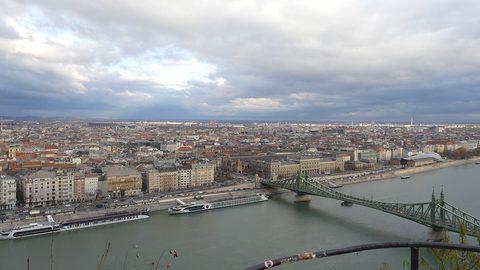
The best time to visit Budapest depends on how much heat, crowd, and seasonal closure you will tolerate. Here is what each season does.
-
 Budapest Itinerary, How to Spend Two or Three Days in Budapest
A realistic Budapest itinerary for two or three days, balancing Pest's core, Buda Castle Hill, one thermal bath and a ruin bar evening.
-
 Hungarian Parliament
How a Hungarian Parliament Building visit works, where tours start, when they sell out, and how to avoid queueing twice.
-
 Széchenyi Thermal Bath
What Széchenyi Thermal Bath Budapest is really like, how crowds shift by season and hour, and how to plan a visit that matches your tolerance.
-
 Fisherman's Bastion
How Fisherman's Bastion Budapest works, which terraces cost money, and when to go for the Danube panorama without tour bus crowds.