District VIII Budapest: Józsefváros, Palace Quarter and the Edgier Streets
District VIII Budapest, Józsefváros: the elegant Palace Quarter, the edgier outer streets, and what staying there is actually like.
- Flag
-
- ISO code
- HU
- Currency
- HUF
- Timezone
- Europe/Budapest
District VIII Budapest: Józsefváros, Palace Quarter and the Edgier Streets
The single most useful fact about District VIII Budapest is its internal divide: the elegant Palace Quarter around the Hungarian National Museum and the edgier outer streets beyond the Grand Boulevard. You can walk from a street of 19th-century residential palaces lined with bookshops and cafés into a block of dense housing and late-night kebab shops in under ten minutes. That contrast is the reason to stay here. It is also the reason to choose your exact street carefully. Arrive at Budapest Keleti pályaudvar, the district's main railway station, and you step out onto Baross utca, a wide axis that runs straight through the middle of both halves. Metro line 4 and tram lines 4 and 6 handle the main east-west movement. Buy a single ticket valid for one vehicle, not one journey, and validate it in the orange box before boarding. The inspectors do not negotiate.
Józsefváros Budapest: the District’s Character and Scale
Józsefváros Budapest covers 6.85 square kilometres and holds roughly 70,000 to 77,000 residents. The density tells you these are tight streets. The district is one of 23 municipal districts of Budapest, governed by the Józsefvárosi Önkormányzat. Its sub-areas are named after their defining feature: Palotanegyed (Palace Quarter), Corvinnegyed (Corvin Quarter), Csarnoknegyed (Market Hall Quarter), Magdolnanegyed, Orczynegyed, Losoncinegyed, Népszínháznegyed, Tisztviselőtelep and Századosnegyed. That list matters because where you sleep changes what you see.
Where the Night Unfolds
The Palace Quarter around Mikszáth Kálmán tér and Krúdy Gyula utca is quiet, café-heavy and walkable at night. The outer parts, beyond the József körút ring, are louder, less polished and draw a different traveller. Blaha Lujza tér is the night bus hub. Night routes 907, 908, 909, 914, 914A, 923, 931, 950, 950A, 956 and 973 all pass through it. If you arrive late, aim for a room near that square or on a tram line 4 or 6 stop. The 24-hour service on those trams runs every 10 to 15 minutes overnight.

Palace Quarter Budapest: Where to Walk and What to See
Palace Quarter Budapest refers to the cluster of historic residential palaces around the Hungarian National Museum, Wenckheim Palace and the university faculties. The Hungarian Natural History Museum sits at Ludovika tér 2-6. The Metropolitan Ervin Szabó Library, housed in the Wenckheim Palace built between 1886 and 1889, is open to the public and worth an hour of your afternoon. The quarter's pedestrian centre is Mikszáth Kálmán tér, a café and restaurant square where you can sit outside under plane trees. Krúdy Gyula utca, the main street for cafés and restaurants, runs off it.
After Dark in the Palace Streets
The streets here are quiet at night. You will see students from Semmelweis University and Pázmány Péter Catholic University walking home. The bookshops on Baross utca and the main boulevard stay open into the early evening. Part of the Palace Quarter lies inside the UNESCO World Heritage buffer zone of Andrássy Avenue and Heroes' Square. That does not mean the streets are pristine. Peeling 19th-century plaster sits next to freshly renovated facades. The district's appeal is that unfinished quality, not a polished museum feel.
Where to Stay in District VIII Budapest: Choosing Your Street
Where to stay in District VIII Budapest depends on whether you want quiet or convenience. The Palace Quarter has the highest density of short-term rental apartments. Hotels cluster around Keleti pályaudvar and Blaha Lujza tér. The Corvin Quarter, redeveloped from 2004 into the 2020s, added roughly 2,500 to 3,000 residential units in mixed-use towers with a cinema, retail and a shopping centre that opened in 2010. Corvin Plaza gives you supermarket access and a multi-screen cinema. The trade-off is noise: Corvin-negyed sits on Üllői út, a main road axis.
The Quietest Beds in the District
Tisztviselőtelep, the early 20th-century garden suburb for civil servants, offers the quietest beds in the district. It is a 15-minute walk from Keleti pályaudvar and has tree-lined streets and low-rise buildings. Századosnegyed, the 1920s to 1930s residential quarter, is similar. Book a room on a street off the main boulevard, not on the main avenue or Üllői út. District-level restrictions on whole-home short-term rentals are in force in parts of Józsefváros. Check the listing's permit status before you book for 2026. The nearest public baths, Rudas, Gellért and Széchenyi, are outside the district. Budget for a taxi or tram ride.
Rákóczi Market Hall Budapest: What to Buy and When to Go
The market hall opened in 1897 and anchors the Csarnoknegyed sub-area. The ground floor sells produce, meat and dairy. The upper floor holds food stalls and a farmers market that operates Monday to Saturday. Arrive before 10:00 for the best selection of paprika, pickled vegetables and dried sausage. The market hall is smaller than the Central Market Hall in District V. That is its advantage: fewer tour groups, shorter queues at the lángos stall, and prices that stay local.
The Surrounding Street Food Zone
The surrounding streets, Népszínház utca and the square itself, are the main street food cluster. Kebab, lángos and gyros outlets line the pavements. The square is wide, with tram tracks running through the middle. At night it feels edgy, not dangerous. The bars on the square's edges are loud and cheap. If you want a quieter evening, walk ten minutes west into the Palace Quarter. The contrast between the market zone and the palace streets is the fastest way to understand the district.
The Grand Cemeteries: Fiume Road Graveyard and Kerepesi Cemetery
Fiume Road Graveyard, Fiumei úti sírkert, covers 56 hectares and functions as Hungary's National Pantheon. It holds the graves of statesmen, writers and artists. The Salgótarján Street Jewish Cemetery nearby is a closed, protected heritage site. Both lie along Fiumei út, a main road axis that separates the district from its eastern neighbour. Kerepesi Cemetery is the name used interchangeably with Fiume Road Graveyard, though technically Kerepesi is the older section. Walk the main avenue from the gate. The funerary sculpture is unguarded and unpolished. Gravel paths, overgrown ivy and stone angels. Allow 90 minutes to see the notable graves. The cemetery is open during daylight hours. Entry is free.
Green Escapes Few Tourists Find
The Orczy Park, the district's main green space at 18.5 hectares, sits a ten-minute walk south. The ELTE Botanical Garden, founded in 1771, is at Illés utca 25 and covers 3.1 hectares. It is the oldest botanical garden in Hungary. Both are calm afternoon stops that few tourists visit.

Night Walking and the Edgier Streets: What to Expect
The edgier outer streets of District VIII, Magdolnanegyed, Népszínháznegyed and the blocks south of József körút, are not dangerous. They are poorly lit, uneven underfoot and dotted with closed shops behind security grilles. Pavements in Pest are narrow, cracked or blocked by parked cars. In the outer parts of Józsefváros it is more noticeable. Walk with purpose. Keep your phone in your pocket. The main mistake visitors make is wandering into these streets at midnight without a map, expecting the café-lit atmosphere of the Palace Quarter. Do not.
Late-Night Food, Music and Getting Home
Stick to the square and Blaha Lujza tér for late-night food and bars. The Dürer Kert music venue on Kőbányai út draws a young crowd for live music and club nights. Tram 37 and 37A run to it. The night bus network converges at Blaha Lujza tér. If you are walking back to a Palace Quarter apartment after midnight, take a Bolt or Főtaxi. The ride from Blaha Lujza tér to Mikszáth Kálmán tér costs under 2,500 HUF. Pay in the app, not in cash.
Gentrification and the Fast-Changing Character
Gentrification in Józsefváros is uneven. The Corvin Quarter redevelopment transformed a block of dilapidated housing into a residential and retail complex. The Corvin Mozi cinema with six screens and the Corvin Plaza shopping centre anchor a middle-class pedestrian zone. Meanwhile, Magdolnanegyed remains dense 19th-century housing under social urban regeneration programs. The student population from Semmelweis University and the Metropolitan University Rózsa utca campus keeps rents affordable in the outer streets. The district's character shifts every few blocks. Stand at the corner of Krúdy Gyula utca and Baross utca and you see a ruin bar crowd on one side and a bookshop on the other. That mix is the draw.
Practical Notes for the Walk
The district rewards slow wandering, but its beauty is uneven and the weather can turn harsh. Pack a rain jacket and comfortable shoes. The escalators on metro line 2 at Keleti pályaudvar are long and steep. If you have limited mobility, budget extra time for surface transport.
Other areas in Budapest
Common Questions
Is District VIII Budapest safe at night?
The Palace Quarter around Mikszáth Kálmán tér and Krúdy Gyula utca is well-lit and busy with students and café patrons until late. The outer streets beyond József körút are not dangerous but are poorly lit and less frequented. Stick to Rákóczi tér and Blaha Lujza tér for late-night activity. Take a Bolt or Főtaxi to your accommodation after midnight.
How do I get from Budapest Airport to District VIII?
Bus 100E runs to Deák Ferenc tér in central Pest every 10 to 20 minutes, taking 35 to 45 minutes. The one-way fare is 2,200 HUF. From Deák Ferenc tér, take metro line 2 or tram 4 or 6 to reach the district. A taxi to the centre costs 12,000 to 15,000 HUF and takes 30 to 40 minutes.
What is the difference between the Palace Quarter and the rest of District VIII?
The Palace Quarter is a pocket of 19th-century residential palaces around the Hungarian National Museum, with bookshops, cafés and quiet streets. The outer parts, Magdolnanegyed, Népszínháznegyed, are denser, louder and less polished. The two are separated by the József körút boulevard.
Which metro lines serve District VIII?
Metro lines M2, M3 and M4 serve the district. M2 stops at Astoria, Blaha Lujza tér, Keleti pályaudvar and Puskás Ferenc Stadion. M3 stops at Kálvin tér, Corvin-negyed, Semmelweis Klinikák and Nagyvárad tér. M4 stops at Kálvin tér, Rákóczi tér, II. János Pál pápa tér and Keleti pályaudvar.
Where is the best place to eat in District VIII?
Rákóczi Market Hall for fresh produce and prepared food. Krúdy Gyula utca and Mikszáth Kálmán tér for sit-down cafés and restaurants. The Rákóczi tér area has the densest cluster of street food: lángos, kebab and gyros outlets. The Erste Theatre area holds a few traditional étkezde options for goulash and stuffed cabbage.
Read next
-
 Budapest Hotels What Each Price Band Actually Gets You
Budapest hotels span from cheap courtyard rooms to grand Danube-view addresses. Here is what each price band actually gets you.
-
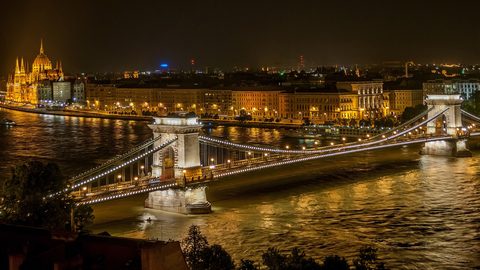 Where to Stay in Budapest District by District
Where to stay in Budapest depends on how much noise, walking, and nightly rate you will accept. Here is the district-by-district trade-off.
-
 Budapest Flights, Flying Into Ferenc Liszt Airport and Getting Out
Flying into Budapest Ferenc Liszt Airport: what to expect on arrival and how to get into central Pest by bus or taxi.
-
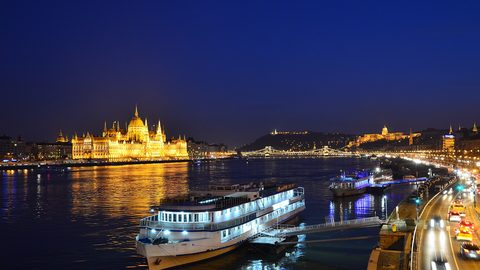 Budapest Things to Do Ordered by Whether It Is Worth the Time
Budapest things to do ordered by whether they are worth the time, the queue, and the crowd they demand.
-
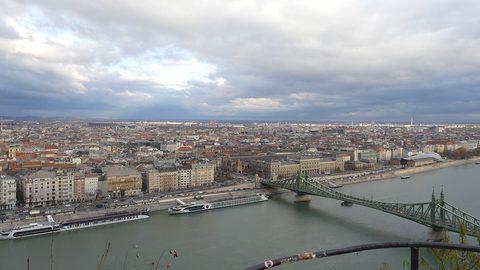 Best Time to Visit Budapest and What Each Season Does to It
The best time to visit Budapest depends on how much heat, crowd, and seasonal closure you will tolerate. Here is what each season does.
-
 Getting Around Budapest Without Wasting Half the Trip
Getting around Budapest means mastering the per-vehicle ticket rule, the validation boxes, and the BudapestGO app before you board.
-
 Castle District
Buda Castle District Budapest: Castle Hill's museums, Fisherman's Bastion and cobbled streets, and what staying there is really like.
-
 Belváros
District V Budapest, the Belváros: what it feels like, who it suits, and what is within walking distance of Parliament and the Danube.
-
 Erzsébetváros
District VII Budapest, Erzsébetváros: the Jewish Quarter's synagogues, ruin bars and street food, and who should actually stay there.