What to Eat in Beijing and Where Locals Actually Go for It
What to eat in Beijing and where locals actually go: from morning jianbing carts and lunch zhajiangmian to late-night hotpot on Guijie and the duck restaurant
What to Eat in Beijing and Where Locals Actually Go
Beijing residents eat on a strict hourly rhythm: street carts until 09:00, noodle shops from 11:30, copper pot hotpot or duck from 17:30, and almost nothing after 21:30. The city's eating culture follows a single day, not a dish category. Specific neighbourhoods still make each item properly.
Guijie is the 24 hour food street but most kitchens there close by 21:30 anyway. Niujie, the Muslim quarter around the Niujie Mosque, holds the best snack vendors. Huguosi Snack Street concentrates Beijing snack ensemble vendors under one roof. The hutong stalls vanish between lunch and dinner. If you see a jianbing cart at 14:00, it is probably not a local operation. Skip Wangfujing Snack Street. Food quality and hygiene standards are inconsistent and prices are set for visitors.
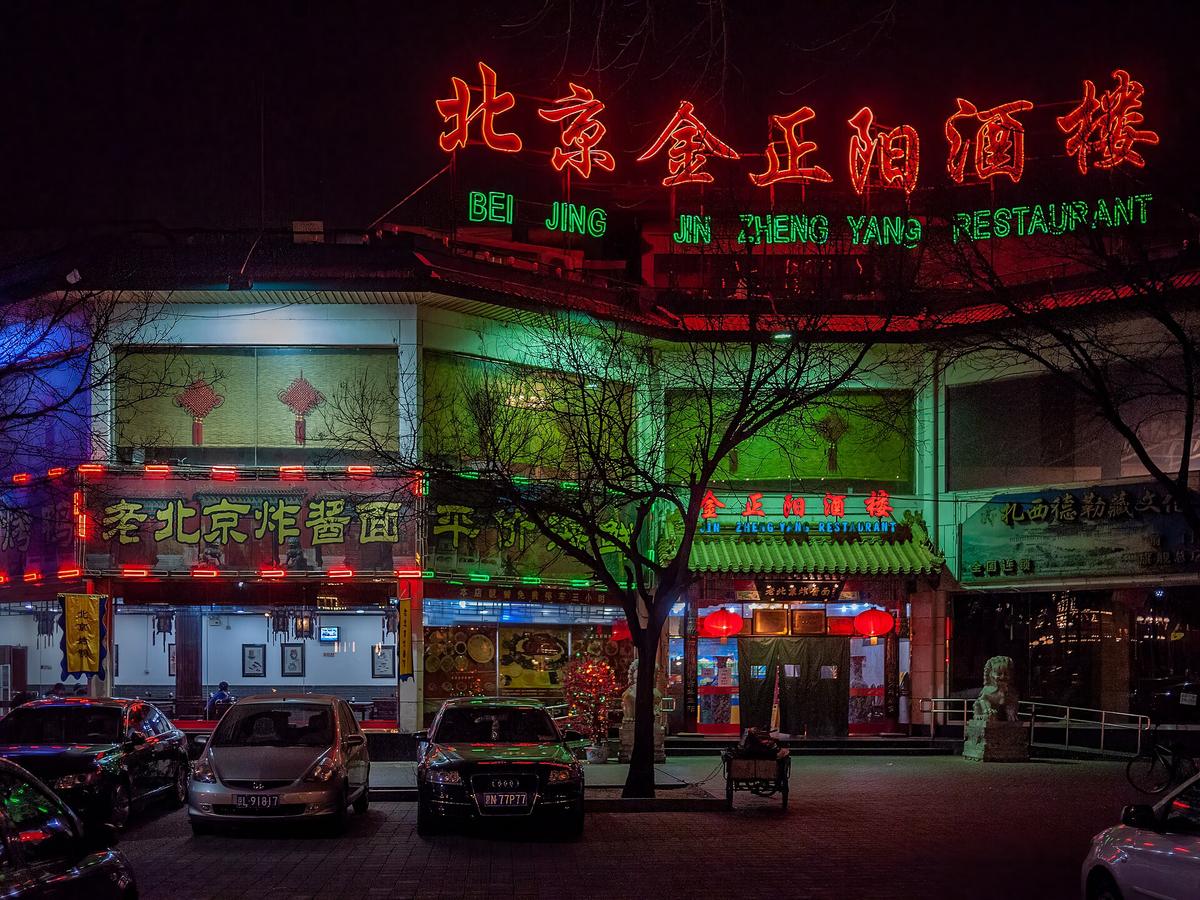

Breakfast: Street Carts and Hutong Stalls, 06:30 to 09:00
Beijing breakfast is a street transaction that happens before 09:00. After that hour, the carts disappear. Join a short queue at a metal cart on a hutong corner, hand over ¥5 to ¥10, and eat standing up or walking.
Jianbing is the most accessible entry point. A griddle is ladled with thin batter, an egg is cracked and spread across the surface, a crispy cracker is laid on top, and the whole thing is folded around hoisin and chilli sauce. The texture is crisp at the edges and soft in the middle. Find it on any residential hutong in Dongcheng or Xicheng before 08:30.
Douzhi is the local test of palate. This fermented mung bean drink is sour, grey green, and served with pickles and jiaoquan, the deep fried dough rings you dip into it. It is an acquired taste. Huguosi Snack Street serves it year round. Niujie also has vendors who sell it, especially during Ramadan and Eid when the area is busiest.
Mantou with red fermented tofu is a vanishing breakfast. Steamed bread is split and spread with red furu, a salty fermented bean curd. Remaining hutong vendors in Xicheng still sell it, but numbers are shrinking. If you see it on a cart, buy it. You might not see it again.
Luzhu, the stewed offal with wheaten cake, is intense enough for breakfast or late night. Luzhu huoshao, the full name, is pork offal stewed with tofu in a broth thickened with fermented bean curd and garlic. Hutong stalls in Dongcheng serve it. The broth is dark, the smell is pungent, and the texture is soft. Carry your own wet wipes.
What to Eat in Beijing: Lunch Noodles and Muslim Quarter Snacks
Lunch in Beijing runs from 11:30 to 13:30. The default is noodles. The definitive Beijing noodle dish is zhajiangmian. Hand pulled wheat noodles are topped with a thick sauce made from fermented soybean paste and diced pork, then finished with julienned cucumber, radish, and soybean sprouts. The sauce is salty and earthy. Mix everything yourself at the table.
Haiwanju is the restaurant known for zhajiangmian. It is a noisy, efficient canteen where the staff shout orders and the noodles arrive in bowls the size of your head. Walk in for lunch on a weekday. No reservation is taken. Order the standard version, not the deluxe.
Niujie Snacks
Niujie is the Muslim quarter and the right place for a lunch that is not noodles. The area around the Niujie Mosque concentrates Beijing snack vendors who serve wandouhuang, the pea flour cake, and lüda gun, the glutinous rice roll dusted with bean flour. Both are sweet, both are eaten cold, and both cost roughly ¥3 to ¥5 per piece. Baodu, quick boiled tripe served with a sesame paste dipping sauce, is also sold here. The tripe is tender and the sauce is thick. Eat it standing at the counter.
Beijing yoghurt in ceramic pots is sold in convenience stores citywide. The grey clay pot is sealed with a paper lid. Scrape the set yoghurt clean with a flat wooden spoon. It costs about ¥5. Buy one after any meal. It cuts the salt and the heat.
- Breakfast window: 06:30 to 09:00; street carts vanish after 09:00
- Lunch window: 11:30 to 13:30; walk in accepted on weekdays
- Dinner window: 17:30 to 20:30; most kitchens close by 21:30
- Late night: Limited; Guijie is open late but individual kitchens close by 21:30
- Booking lead time: High end restaurants: 1 to 7 days; mid range: reserve for weekend dinner
Dinner: Roast Duck, Mutton Hotpot, and the Neighbourhoods That Do Them Right
Dinner in Beijing is a structured meal. Two dishes dominate the evening. Both require advance planning.
Beijing Roast Duck
A whole duck is carved tableside. Eat the skin first, dipped in sugar. Wrap the meat in thin pancakes with scallions, cucumber, and sweet bean sauce. The carcass is returned to the kitchen and made into soup or a stir fry. The meal takes about 90 minutes. Book ahead, especially for dinner and weekends.
Three restaurants dominate this category. Quanjude is the old school benchmark, known for thin skin. Bianyifang is the alternative, known for crispy skin. Da Dong is the modern version, known for a leaner, less fatty duck. All three are in central districts. Walk into Quanjude on a Tuesday lunch without a booking and you will probably get a table. Try that on a Saturday at 19:00 and you will wait 90 minutes.
Pre packaged roast duck sold at airport and train station gift shops bears little resemblance to the freshly prepared dish. Skip it entirely.
Mutton Hotpot: Shuan Yangrou
Shuan yangrou is Mongolian style mutton hotpot. The vessel is a copper pot with a central chimney, heated by charcoal. Hand sliced, paper thin lamb is swished in the boiling broth for a few seconds, then dipped in sesame paste. The meal is communal, loud, and best eaten in winter, when consumption peaks.
Donglaishun is the century old benchmark for this dish. The restaurant is in Dongcheng. Book at least one day ahead for dinner. The broth is plain, the lamb is the point, and the sesame paste is the only sauce you need.
Guijie, the 24 hour food street in Dongcheng, has several hotpot restaurants. Most kitchens close by 21:30 despite the street's reputation. Arrive by 19:00 to eat properly.

Beijing Local Restaurants and Snack Streets Worth the Trip
Niujie, the Muslim quarter, is the most reliable neighbourhood for Beijing local restaurants. The food street around the Niujie Mosque serves baodu, wandouhuang, lüda gun, and lamb skewers. It is busiest during Ramadan and Eid. Walk from the mosque south along the main street. Every vendor is worth trying.
Huguosi Snack Street concentrates the entire Beijing snack ensemble in one location. Douzhi, jiaoquan, luzhu huoshao, wandouhuang, lüda gun, and baodu are all sold here. It is a sit down canteen, not a street market. No reservation is taken. Go for lunch or an early dinner.
Guijie is the famous night food street, but its reputation as a 24 hour destination is misleading. Most individual restaurant kitchens close by 21:30. Walk the street for the spectacle of red lanterns and outdoor seating, but arrive by 19:00 to actually eat. Hotpot and lamb skewers dominate the menus.
Beijing Street Food: What to Eat and What to Skip
Beijing street food is a morning phenomenon. Jianbing from a cart before 09:00 is the definitive street food experience. Tanghulu, candied hawthorn berries on a stick, is sold from street carts in winter. It costs roughly ¥5 to ¥10. It is mostly sugar.
Sesame paste appears in multiple forms across Beijing street food. It is the dipping sauce for baodu and shuan yangrou. It is spread on mantou. It is stirred into noodle soups. Buy a jar from a supermarket before you leave. It keeps.
Skip anything sold from a cart after 14:00. Hutong stalls vanish between lunch and dinner. If you see a vendor selling jianbing at 15:00, the ingredients have been sitting out for hours. The exception is Niujie, where the Muslim quarter vendors operate throughout the afternoon and evening.
The Failure Case: What Goes Wrong with Beijing Food
The single thing that most often goes wrong with Beijing food is timing. Visitors arrive at a hutong at 14:00 expecting lunch and find every stall closed. They walk into Quanjude at 20:00 on a Saturday without a reservation and wait 90 minutes. They buy pre packaged duck at the airport and wonder what the fuss was about.
The fix is simple. Eat breakfast by 09:00. Eat lunch between 11:30 and 13:30. Eat dinner between 17:30 and 19:00. Book roast duck restaurants at least one day ahead for dinner. Carry your own toilet paper and wet wipes to every meal. Public toilets in hutongs are squat style and rarely stocked with soap or paper.
Beijing food suits the traveller willing to chase specific hutong addresses and eat on the city's schedule. It does not suit anyone who wants to wander into a restaurant at 15:00 and find a full kitchen. The city eats by the clock. Follow it and the food is extraordinary. Miss the window and you eat convenience store yoghurt in a ceramic pot for dinner.
Common Questions
What should I actually eat in Beijing beyond roast duck?
Zhajiangmian at Haiwanju, shuan yangrou at Donglaishun, and the snack ensemble at Huguosi Snack Street and Niujie. Jianbing from a hutong cart before 09:00. Douzhi if you want to test your palate.
Where do Beijing residents go for dinner that is not a tourist restaurant?
Niujie for Muslim quarter snacks and lamb dishes. Huguosi Snack Street for the snack ensemble. Guijie for hotpot and late night eating, but arrive by 19:00 because kitchens close by 21:30.
Is Wangfujing Snack Street worth visiting?
No. Food quality and hygiene standards are inconsistent and prices are set for tourists. Go to Huguosi Snack Street or Niujie instead.
Can I find street food in Beijing after 09:00?
Breakfast street carts vanish by 09:00. Lunch and dinner are eaten in shops and restaurants. Hutong food stalls disappear between lunch and dinner. After 21:30, almost nothing is open except a few Guijie restaurants that stay late.
Do I need to book roast duck restaurants in advance?
Yes for dinner and weekends. Quanjude, Bianyifang, and Da Dong all require a booking 1 to 7 days ahead for dinner. Walk in on a weekday lunch without a booking and you will probably get a table.
Read next
-
 Beijing Hotels What Each Price Band Actually Gets You
The most useful fact about Beijing hotels is that not every bed in the city is legally permitted to take your money.
-
 Where to Stay in Beijing District by District and What Each Costs You
Where to stay in Beijing depends on whether you prioritise imperial proximity, nightlife, or calm.
-
 Flying into Beijing PEK or PKX and Getting Out of Both Airports
Flying into Beijing: choosing between PEK and PKX, and exactly how to get from each airport into the city centre without getting stranded after a long flight.
-
 Beijing Things to Do Ordered by Whether It Is Worth the Time
Beijing consumes your day before you see anything. The walk from Tiananmen Square metro exit to the Forbidden City gate is a long stretch of open concrete und
-
 Best Time to Visit Beijing What Each Season Does to the City
The most common mistake travellers make about Beijing is searching for a single perfect month. There is none.
-
 Getting Around Beijing Without Wasting Half the Trip
On a single morning in Beijing you will: tap a QR code to enter the metro, scan your passport at a landmark ticket counter, pay for a jianbing from a cart
-
 Forbidden City
The Forbidden City runs on a strict one-way route with a single entry and exit. Here is how to plan the Beijing visit without queueing twice.
-
 Temple of Heaven
How to visit the Temple of Heaven Beijing without queueing twice: the two-ticket system explained, which gate to use, and why the through ticket saves you a
-
 Summer Palace
How to visit the Summer Palace Beijing without queueing twice: the two time windows that avoid tour buses, which gate to enter, and why walking direction