Understanding the China Golden Week Travel Impact on Your Plans
During Chinese New Year and Golden Week, the entire country moves at once. Here are the dates that shut China down, the ones that just make it crowded, and
Chinese Public Holidays and Travel Blackout Periods
The question of which Chinese public holidays make travel genuinely impossible is answered in two words: Golden Week. The China Golden Week travel impact is a phenomenon where the entire country moves simultaneously. The scale is hard to grasp until you are pinned in a sold-out Beijing subway car at 9am. There are two absolute blackout periods, two secondary surges that demand careful planning, and a handful of manageable breaks. The distinction matters. Flying into the wrong week can triple your costs, evaporate your train tickets, and turn a rewarding trip into a survival exercise.
The Two Unmissable Travel Blackouts
Chinese New Year: The Largest Migration on Earth
Chinese New Year travel chaos is the largest annual human migration on the planet. The 40-day Chunyun period begins 15 days before the lunar new year and ends 25 days after. Official days off are three, but the State Council bridges adjacent weekends to create a 7-day break. Dates shift annually because the festival depends on the lunisolar calendar. In 2027 it falls on 5 February. Trains sell out within minutes of the 15-day ticket release window. Attractions in every city operate over capacity. Private restaurants and small businesses close for one to two weeks. Delivery services slow to a crawl. Travel during this window and you pay triple for flights and hotels that still have space, and you compete with hundreds of millions of people doing the same thing.
National Day Golden Week
The second absolute blackout is National Day Golden Week, 1 to 7 October. These are fixed Gregorian dates. 1 to 3 October are official days off; the State Council bridges the other four. The Labour Day surge is smaller but has grown since 2019, when the government extended the break to five days. Labour Day on 1 May is now a secondary peak with genuine crowding at headline sites like the Forbidden City and the Great Wall. Mid-Autumn Festival, based on the lunisolar calendar, creates a 3-day break that draws regional crowds but is less intense than the two Golden Weeks. Qingming Festival and Dragon Boat Festival are manageable with advance booking, though popular parks fill quickly.


China Golden Week Travel Impact: the Mechanics of a Nation on the Move
During any Golden Week, hundreds of millions of people buy train tickets simultaneously. High-speed rail G trains dominate intercity travel. Tickets require a passport for purchase at the station or online. They are released 15 days in advance and vanish within minutes for popular routes such as Beijing to Shanghai or Xi'an to Chengdu. Miss the release window and your fallback is a domestic flight. It will cost two to three times the normal fare and still sell out. Attractions that normally see huge daily visitor numbers operate at dangerous capacity. The Great Wall at Mutianyu, the Forbidden City in Beijing, the Terracotta Army in Xi'an, and Zhangjiajie National Forest Park all impose daily caps that fill weeks ahead. Accommodation prices triple. Even budget hostels in Shanghai and Chengdu charge premium rates.
Book every train and every attraction ticket the moment they become available. For Chinese New Year, set a calendar alert for 15 days before your travel date. For National Day Golden Week, book accommodation at least two months ahead. For Labour Day and Mid-Autumn, book one month ahead. This is the single rule that separates a manageable trip from a disaster.
| Holiday | Date Basis | Days Off | Blackout Severity |
|---|---|---|---|
| New Year's Day (Yuandan) | 1 January fixed Gregorian | 1 day, rarely bridged | Low. Manageable with planning. |
| Chinese New Year (Spring Festival) | Lunisolar calendar, late Jan to mid Feb | 3 official, bridged to 7 | Absolute. Avoid entirely. |
| Qingming Festival | Lunisolar calendar, 4 to 5 April | 1 official, bridged to 3 | Moderate. Book ahead for parks. |
| Labour Day (Laodong Jie) | 1 May fixed Gregorian | 1 official, bridged to 5 | High. Second biggest surge. |
| Dragon Boat Festival | Lunisolar calendar, May to June | 1 official, bridged to 3 | Moderate. Smaller regional crowds. |
| Mid-Autumn Festival | Lunisolar calendar, September to October | 1 official, bridged to 3 | Moderate to high if close to National Day. |
| National Day (Golden Week) | 1 to 3 October fixed Gregorian | 3 official, bridged to 7 | Absolute. Avoid entirely. |
How to Use the China Public Holiday Calendar for Trip Planning
The public holiday calendar is published annually by the General Office of the State Council, usually in November or December for the following year. Search for the 2027 schedule in late 2026. Do not rely on old dates. Because Chinese New Year and Mid-Autumn Festival shift with the lunar calendar, and because the bridging pattern changes year to year, the exact travel blackout windows are never the same. The make-up workday system means weekends are designated as working days to create longer breaks, which shifts domestic travel volume unpredictably.
Your Three Strategies for Avoiding Crowds
First, travel during shoulder seasons. April and May outside Labour Day, and September and October outside Golden Week, offer the best weather in most regions. The North China Plain is hot and humid in July and August, but the summer school break also brings domestic crowds to the coast and mountain resorts. Second, book everything 15 days ahead for any trip that touches a holiday window, even a minor one. Third, if you must travel during a holiday, go to a place that does not attract domestic tourists. Xinjiang, with its extreme continental climate and vast deserts, draws fewer visitors. Tibet is closed to foreign travellers for roughly six weeks from late February through early April, so check the current policy before planning. Xinjiang has its own foreign government travel advisories. Verify these with your issuing body: the UK FCDO, the US State Department, the Government of Canada, Australia's Smartraveller, New Zealand's Safetravel, or your national ministry.
Book the Earliest Train
Book the earliest train of the day. On any holiday weekend, a 6am departure from Shanghai to Nanjing or from Guangzhou to Shenzhen leaves before the surge peaks. The 8am trains sell out first. The 10am trains cost double and remain crowded.
Use Domestic Flights for Short Routes
Use domestic flights instead of high-speed rail for routes under 500 kilometres. This is counterintuitive, but during holiday peaks, flights add capacity that trains cannot. Check China Southern or China Eastern for last-minute seats. Prices will be high, but availability is better than rail.
The Failure Case: What Goes Wrong When You Ignore the Calendar
The single thing that most often goes wrong is underestimating the scale. A traveller books a 10-day trip in early October, lands in Beijing on 2 October, and discovers that the Forbidden City is sold out for the entire week, the high-speed rail to Xi'an has no seats until 9 October, and every hotel within walking distance of the Great Wall is charging triple its September rate. That traveller spends half the trip in transit and security lines, not experiencing any place. The correct response: shift the trip to late April or late September, avoid the break windows entirely, and book every train and attraction ticket the moment they become available. That is the one rule that separates a manageable trip from a disaster.
Public Holiday Travel: Seven Questions That Save Your Trip
Which Chinese public holiday is the worst for travel?
Chinese New Year. The 40-day Chunyun period creates the largest annual migration on earth. Train tickets vanish in minutes, private businesses close, and prices triple. Avoid it entirely.
When does Golden Week start in 2027?
National Day Golden Week runs 1 to 7 October, fixed Gregorian dates. The exact schedule is confirmed by the State Council in late 2026. The Labour Day break in 2027 will be 1 to 5 May, also confirmed in that publication.
Can I visit the Forbidden City during Golden Week?
Technically yes, but tickets sell out within hours of the 7-day advance release window. If you miss it, you do not get in. Book online exactly 7 days ahead at 8am Beijing time.
How far ahead do I need to book high-speed rail tickets for Labour Day?
Tickets are released 15 days in advance. For Labour Day, book within the first two hours of release. Routes like Beijing to Xi'an, Shanghai to Hangzhou, and Guangzhou to Changsha sell out first.
What happens to restaurants and shops during Chinese New Year?
Many private restaurants and small businesses close for one to two weeks. Hotels and major chains in tourist areas stay open, but street food stalls and family-run eateries go dark. Stock snacks and plan for limited dining options.
Is Mid-Autumn Festival as bad as Golden Week?
No. Mid-Autumn creates a 3-day break that draws regional crowds but not the national migration of Golden Week. Hotels in popular cities like Hangzhou and Guilin fill up, but trains remain bookable if you plan two weeks ahead.
Can I use cash during a holiday surge?
Cash is in decline across China. WeChat Pay and Alipay dominate, and foreign credit cards are not widely accepted outside international hotel chains. Without a local SIM card to register these apps, even buying water becomes a puzzle. Install a VPN before arrival and set up payment apps with a local phone number from Nihao Mobile or China Unicom at the airport.
Read next
-

 Staying Connected in China Without Losing Access to Everything
The central tradeoff is this: a local physical SIM gives you the Chinese phone number you need for WeChat Pay, bike sharing, and public Wi-Fi login.
Staying Connected in China Without Losing Access to Everything
The central tradeoff is this: a local physical SIM gives you the Chinese phone number you need for WeChat Pay, bike sharing, and public Wi-Fi login.
-
 Best Time to Visit China by Region and Season
China's climate spans subtropical to subarctic. Here is what each season means region by region, from October's clear Beijing skies to August's Guangdong humidity.
Best Time to Visit China by Region and Season
China's climate spans subtropical to subarctic. Here is what each season means region by region, from October's clear Beijing skies to August's Guangdong humidity.
-
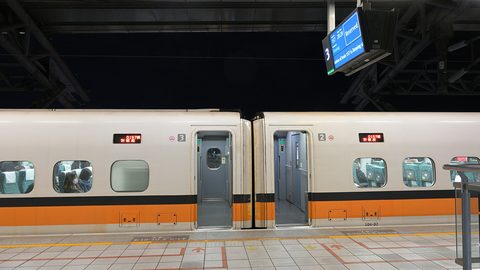 China High-Speed Trains and Getting Around Without a Chinese App
China's high-speed rail is fast and efficient, but booking as a foreigner is a puzzle.
China High-Speed Trains and Getting Around Without a Chinese App
China's high-speed rail is fast and efficient, but booking as a foreigner is a puzzle.
-
 China Visa Requirements and the Application Process Step by Step
Most visitors need a Chinese tourist visa before departure. Here is who qualifies for visa-free entry, who does not, and exactly how the L-visa application works.
China Visa Requirements and the Application Process Step by Step
Most visitors need a Chinese tourist visa before departure. Here is who qualifies for visa-free entry, who does not, and exactly how the L-visa application works.
-
 How to Pay for Things in China Without Getting Stranded
China runs on WeChat Pay and Alipay, and cash is often refused. Here is how to link a foreign card, what to do when it fails, and where renminbi notes still work.
How to Pay for Things in China Without Getting Stranded
China runs on WeChat Pay and Alipay, and cash is often refused. Here is how to link a foreign card, what to do when it fails, and where renminbi notes still work.
-
 Is China Safe for Travel and What Safety Advice Actually Applies
China is statistically safe from violent crime, but scams, air pollution, and digital surveillance are real concerns. Here is what to actually watch for.
Is China Safe for Travel and What Safety Advice Actually Applies
China is statistically safe from violent crime, but scams, air pollution, and digital surveillance are real concerns. Here is what to actually watch for.
-
 A Ground-Level Logistics Guide to Independent Travel in China
First-time independent travel in China: what you need to know about visas, rail booking, eSIMs, mobile payments, and power adapters.
A Ground-Level Logistics Guide to Independent Travel in China
First-time independent travel in China: what you need to know about visas, rail booking, eSIMs, mobile payments, and power adapters.
-
 How Solo Travelers Stay Ahead of Flight Delays and Cancellations
How solo travelers can track inbound aircraft, claim rebooking rights, and adjust ground transport when flights go wrong — step by step.
How Solo Travelers Stay Ahead of Flight Delays and Cancellations
How solo travelers can track inbound aircraft, claim rebooking rights, and adjust ground transport when flights go wrong — step by step.
-
 Why Your eSIM Might Not Work Abroad and How to Check Before You Go
Buying an eSIM doesn't guarantee signal abroad. Learn why coverage fails by location and how to verify reach before you commit to a plan.
Why Your eSIM Might Not Work Abroad and How to Check Before You Go
Buying an eSIM doesn't guarantee signal abroad. Learn why coverage fails by location and how to verify reach before you commit to a plan.