Switzerland Schengen Visa Requirements for Every Type of Visitor
Switzerland is in Schengen but not the EU. Visa requirements depend on your passport, and the application process involves cantonal immigration offices.
Who Needs a Visa to Enter Switzerland: the Schengen Rule
Switzerland is a full Schengen member. Its entry rules match the other 28 Schengen states exactly. If you carry a passport from a visa-free country, you get 90 days in any 180-day period with no paperwork. No visa on arrival exists here. No e-visa either. Every other nationality must secure a Uniform Schengen Visa (Type C) before departure. Apply in person at a Swiss embassy or consulate in your country of legal residence. There is no workaround.
Swiss Entry Rules Non EU
Visa-Free Nationals
If you hold a non-EU passport, start by checking the visa-free list. The United States, Canada, the United Kingdom, Australia, New Zealand, Japan, South Korea, Singapore, Brazil, and Argentina all appear on it, along with many others. Confirm your status on the State Secretariat for Migration (SEM) website before you book a flight. If your nationality is absent, you need a Schengen visa.
Border Requirements
Visa-free travellers face three entry checks. Your passport must have been issued within the past 10 years. It needs three months of validity beyond your planned departure from the Schengen zone. Border officers may demand proof of onward travel or sufficient funds. They scan, stamp, and question. Carry printed confirmations of your hotel bookings and your return flight. The State Secretariat for Migration (SEM) publishes the authoritative rules. The Federal Department of Foreign Affairs (FDFA) maintains the government travel advisory.

Schengen Visa for Switzerland: Who Must Apply
Apply for a Uniform Schengen Visa (Type C). It grants 90 days in any 180-day period across the entire Schengen zone. Processing takes up to 15 calendar days. Complex cases stretch to 45 days. Submit at the Swiss embassy or consulate in your country of legal residence. No border applications. No online portal.
Applicants aged 12 and over give biometrics: fingerprints and a photo. You need travel health insurance covering at least EUR 30,000, valid for every Schengen country and the full length of your stay. The fee is non-refundable. Swiss authorities decide under Schengen rules. Visiting several Schengen countries? Apply at the embassy of the nation where you will spend the most nights. Equal stays mean the first entry country.
| Region | Nationalities |
|---|---|
| EU/EEA | All EU and EEA member states |
| Americas | Argentina, Bahamas, Barbados, Brazil, Canada, Chile, Colombia, Costa Rica, Dominica, El Salvador, Grenada, Guatemala, Honduras, Mexico, Nicaragua, Panama, Paraguay, Peru, Saint Kitts and Nevis, Saint Lucia, Saint Vincent and the Grenadines, Trinidad and Tobago, United States, Uruguay, Venezuela |
| Asia/Pacific | Australia, Brunei, Hong Kong (SAR passport), Israel, Japan, Kiribati, Macao (SAR passport), Malaysia, Marshall Islands, Micronesia, New Zealand, Palau, Samoa, Singapore, Solomon Islands, South Korea, Taiwan (passport with national ID number), Timor Leste, Tonga, Tuvalu, United Arab Emirates |
| Europe (non EU) | Andorra, Georgia, Moldova, Monaco, Montenegro, North Macedonia, San Marino, Serbia, Ukraine (biometric passport), United Kingdom, Vatican City |
| Africa/Other | Antigua and Barbuda, Mauritius, Saint Vincent and the Grenadines, Seychelles |
Switzerland Border Control Policy: What Happens at Entry
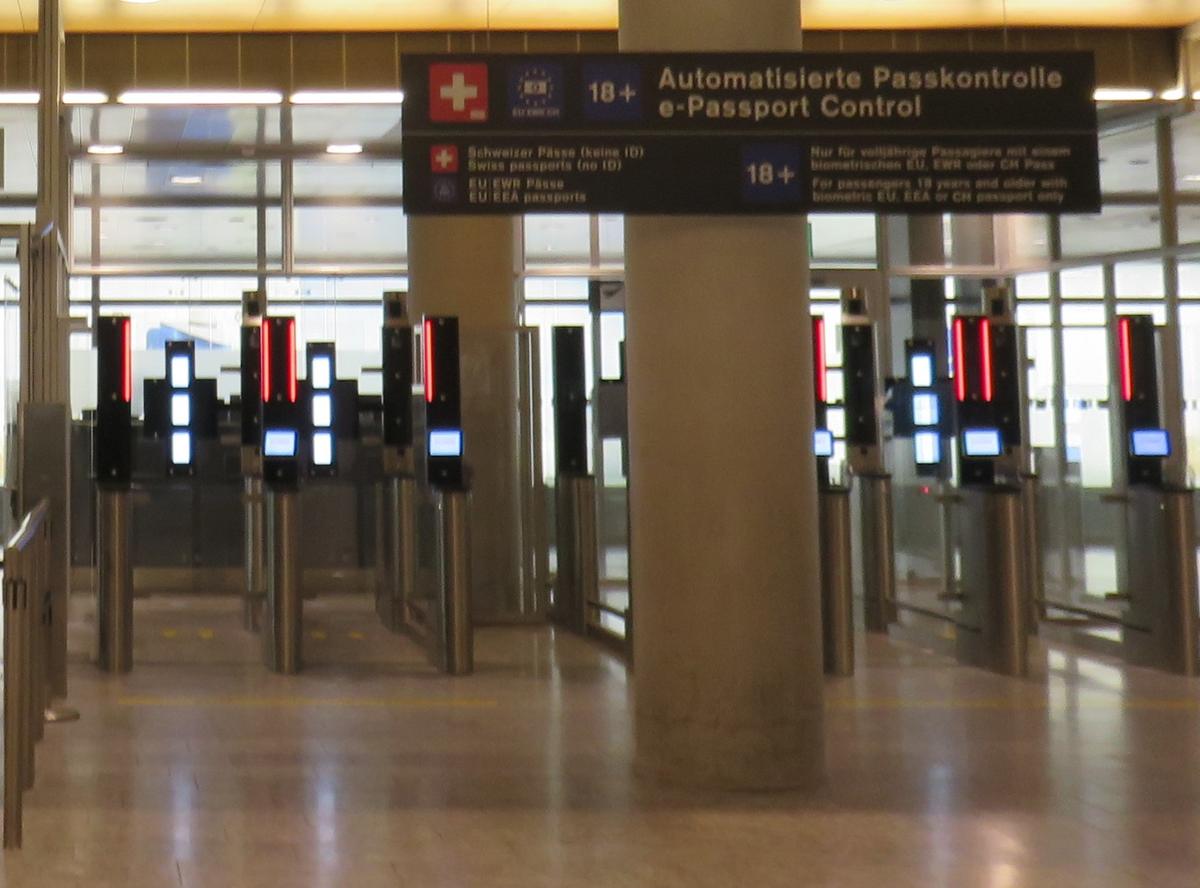
Schengen external border checks apply at every Swiss airport and land crossing. The officer scans your travel document, stamps the entry, and may question your itinerary. Show your hotel reservation, return ticket, and proof of funds.
Basel Mulhouse Freiburg Airport
This airport has exits in Switzerland, France, and the EU sector. Follow the signs for Switzerland to clear Swiss border control. Exiting into France puts you in the EU; you then cross the land border to enter Switzerland.
Geneva Airport French Sector
Geneva Airport runs a French sector with a direct train to Paris that bypasses Swiss checks entirely. Fly into Geneva and use that sector, and you never enter Switzerland. You need a Schengen visa valid for France instead. To enter Switzerland, exit through the Swiss sector and clear Swiss border control.
Swiss Visa Application Process: Steps and Swiss Specific Quirks
The Swiss process follows standard Schengen procedure with one twist: cantonal immigration office involvement. The embassy or consulate may consult the canton you plan to visit. Rare for short-stay visas, but it adds time. Submit at least 30 days before travel and no more than six months ahead. Seafarers get a nine-month window.
Required Documents
You need a completed application form, a valid passport (issued within 10 years, valid three months beyond departure), two passport photos, travel health insurance (EUR 30,000 minimum), flight itinerary, hotel bookings, proof of sufficient funds, and proof of employment or leave. The embassy may request more.
Airport Transit Visa
Nationals of Afghanistan, Bangladesh, Democratic Republic of the Congo, Eritrea, Ethiopia, Ghana, Iran, Iraq, Nigeria, Pakistan, Somalia, Sri Lanka, Syria, and Turkey need an airport transit visa even if they stay airside. Check the SEM list before booking connecting flights through Zurich or Geneva.
Entry Ban Checks
Border officers consult the Schengen Information System (SIS). An entry ban from any Schengen country means refusal. No appeal at the booth.

Practical Entry Details and Customs
Money and Customs
Switzerland uses the Swiss franc (CHF), not the euro. Carrying cash or bearer instruments worth CHF 10,000 or more? Declare them to the Federal Office for Customs and Border Security (FOCBS) on arrival. Customs allowances for personal goods follow quantitative limits set by the Swiss Federal Customs Administration. The standard VAT rate is 8.1%, with a reduced rate of 3.8% for accommodation. Claim a VAT refund on purchases over CHF 300 at participating retailers.
Driving Rules
A motorway vignette is mandatory for vehicles up to 3.5 tonnes. Only an annual sticker is sold. Speed limits: 120 km/h on motorways, 100 km/h on expressways, 80 km/h on rural roads, 50 km/h in urban areas. The blood alcohol limit is 0.05%, dropping to 0.01% for new and professional drivers. Non-EU/EEA licence holders need an International Driving Permit after 12 months of residence. Short-term visitors from most countries use their home licence.
Practical Reference
Switzerland runs on Central European Time (UTC+1), with daylight saving from the last Sunday in March to the last Sunday in October. Mains voltage is 230 V, 50 Hz. Plug types are Type J (three round pins) and Type C (Europlug). Emergency numbers: Police 117, Fire 118, Ambulance 144, European emergency number 112.
Who Switzerland Suits and Who it Does Not
Switzerland suits hikers, alpine sport enthusiasts, rail-travel romantics, families wanting safe and clean outdoor holidays, and time-poor travellers who rely on punctual infrastructure. The Swiss Travel System runs like clockwork. A Swiss Travel Pass pays for itself on multi-city itineraries. One catch: the pass covers most scenic routes but not seat reservations, which are mandatory and sell out on the Glacier Express and Bernina Express. Book those early.
Switzerland is not for budget backpackers, spontaneous nightlife seekers, or anyone who finds early closing times and Sunday closures maddening. Shops shut at 18:30 on weekdays and stay closed all day Sunday. Train station shops are the exception. Coop and Migros supermarkets are the reliable budget lunch option; even a kebab costs CHF 12 to 14. Tap water is free and safe. Ask for Hahnenwasser in a restaurant or you will get a charged bottle of mineral water.
The most common mistake: trying to cover the whole country in four to five days, sleeping in a different town each night. This burns half the trip in transit and leaves no margin for mountain weather that blocks the very views you came for. Budget a minimum of seven days. The marquee sights are geographically scattered across the Alps and the Central Plateau, and mountain weather can wipe out a full day without notice. Plan for that day and you will not lose the trip.
Common Questions
Do I need a visa to enter Switzerland if I have a US passport?
No. United States passport holders enter visa-free for up to 90 days in any 180-day period for tourism, business, or family visits. Your passport must be valid for at least three months beyond departure from the Schengen area and issued within the previous 10 years.
Can I get a Swiss visa on arrival at Zurich Airport?
No. Switzerland does not issue visas on arrival. Obtain a Schengen visa from a Swiss embassy or consulate in your country of legal residence before travel.
What is the difference between a Swiss visa and a Schengen visa?
There is no difference for short stays. Switzerland issues the Uniform Schengen Visa (Type C), which allows travel to all Schengen countries for up to 90 days in any 180-day period. The visa is identical to those issued by France, Germany, Italy, or any other Schengen member.
How long does it take to get a Swiss Schengen visa?
Standard processing takes up to 15 calendar days. Individual cases may extend to 45 days. Apply at least 30 days before your planned departure. Check the embassy website for appointment availability.
Do I need a visa to transit through Switzerland without leaving the airport?
It depends on your nationality. Citizens of 14 countries including Afghanistan, Bangladesh, Iran, Iraq, Nigeria, Pakistan, and Syria need an airport transit visa even airside. All other nationalities do not.
What happens if I overstay my 90 day limit in Switzerland?
Overstaying violates Swiss immigration law. Penalties include fines, a re-entry ban across the Schengen area, or both. The Schengen Information System (SIS) records the overstay.
Can I extend my Swiss Schengen visa while in Switzerland?
Extensions are granted only for exceptional circumstances: force majeure or humanitarian reasons. Tourism does not qualify. For stays beyond 90 days, apply for a national visa (Type D) before travel.
Read next
-
 Staying Connected in Switzerland With eSIM, Local SIM, or Roaming
Compare eSIM, local Swisscom or Salt SIM, and roaming for reliable mobile data across Swiss cities and high Alpine valleys.
Staying Connected in Switzerland With eSIM, Local SIM, or Roaming
Compare eSIM, local Swisscom or Salt SIM, and roaming for reliable mobile data across Swiss cities and high Alpine valleys.
-
 When to Visit Switzerland and What Each Season Actually Delivers
July and August deliver reliable high-alpine hiking at peak hotel rates. Mid-April to early June brings lift closures, mud, and snow-blocked passes.
When to Visit Switzerland and What Each Season Actually Delivers
July and August deliver reliable high-alpine hiking at peak hotel rates. Mid-April to early June brings lift closures, mud, and snow-blocked passes.
-
 Swiss Travel System Explained and What the Map Oversells
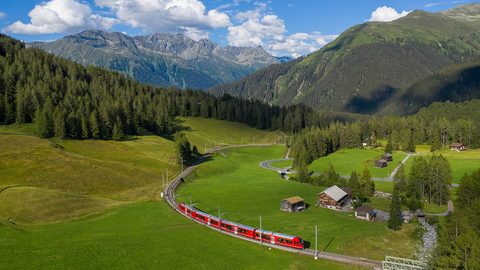
The Swiss Travel Pass covers most trains, buses, and boats, but not mandatory seat reservations on the Glacier Express and Bernina Express, which sell out in
Swiss Travel System Explained and What the Map Oversells
The Swiss Travel Pass covers most trains, buses, and boats, but not mandatory seat reservations on the Glacier Express and Bernina Express, which sell out in
-
 Swiss Francs, Card Payments and Where Cash Still Wins in Switzerland
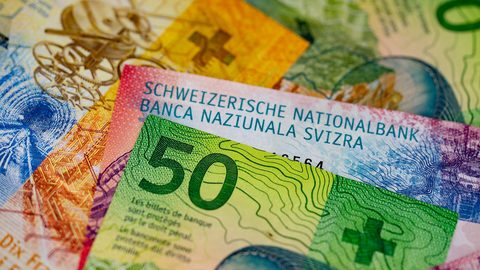
Switzerland uses the Swiss franc, not the euro. Cards work almost everywhere in cities, but mountain huts and small vendors often demand cash.
Swiss Francs, Card Payments and Where Cash Still Wins in Switzerland
Switzerland uses the Swiss franc, not the euro. Cards work almost everywhere in cities, but mountain huts and small vendors often demand cash.
-
 Switzerland Safety Advice Without the Hype
The train from Zurich Airport to Zurich HB takes 10 minutes. A one-way second-class ticket costs a few francs, set by SBB and updated on their website.
Switzerland Safety Advice Without the Hype
The train from Zurich Airport to Zurich HB takes 10 minutes. A one-way second-class ticket costs a few francs, set by SBB and updated on their website.
-
 What Switzerland Costs and How to Spend Less Without Missing Out
Understand Switzerland's real trip costs, from CHF 12 kebabs to CHF 210 mountain railways, and the structural reasons behind the prices.
What Switzerland Costs and How to Spend Less Without Missing Out
Understand Switzerland's real trip costs, from CHF 12 kebabs to CHF 210 mountain railways, and the structural reasons behind the prices.
-
 A Ground-Level Logistics Guide to Independent Travel in China
First-time independent travel in China: what you need to know about visas, rail booking, eSIMs, mobile payments, and power adapters.
A Ground-Level Logistics Guide to Independent Travel in China
First-time independent travel in China: what you need to know about visas, rail booking, eSIMs, mobile payments, and power adapters.
-
 How Solo Travelers Stay Ahead of Flight Delays and Cancellations
How solo travelers can track inbound aircraft, claim rebooking rights, and adjust ground transport when flights go wrong — step by step.
How Solo Travelers Stay Ahead of Flight Delays and Cancellations
How solo travelers can track inbound aircraft, claim rebooking rights, and adjust ground transport when flights go wrong — step by step.
-
 Why Your eSIM Might Not Work Abroad and How to Check Before You Go
Buying an eSIM doesn't guarantee signal abroad. Learn why coverage fails by location and how to verify reach before you commit to a plan.
Why Your eSIM Might Not Work Abroad and How to Check Before You Go
Buying an eSIM doesn't guarantee signal abroad. Learn why coverage fails by location and how to verify reach before you commit to a plan.