Your Switzerland Month by Month Weather Guide for Planning
July and August deliver reliable high-alpine hiking at peak hotel rates. Mid-April to early June brings lift closures, mud, and snow-blocked passes.
Switzerland by Season, Not by Brochure
You are standing on the platform at Zermatt station at 08:47, watching the Gornergrat train fill with skiers carrying carbon-fibre skis and jackets that cost more than a month's rent. The Matterhorn is clear. The hotel charged you a peak-season rate for a standard double. This is the Switzerland the brochures sell. The Switzerland you actually get depends entirely on whether you came in July, February, or the week the lifts closed for maintenance. This is your Switzerland month by month weather guide, and it starts with a truth most guides skip: Switzerland delivers postcard views year-round, but equal access is a myth. The cable cars, mountain railways, and high passes operate on a schedule that punishes the uninformed traveller.
Peak Season: July, August and the Swiss Alps Hiking Window
July and August are the only months when the entire Swiss Alps hiking network is open. Trails above 2,500 metres, including the ridge routes above the Eiger, Mönch, and Jungfrau, are clear of snow by late June and stay passable until mid-September. The weather is consistent: valley temperatures of 25-30°C, 18-20°C at 2,000 metres, and afternoon thunderstorms that clear by evening. Lake swimming peaks in late July and August, when water temperatures hit 22-24°C on Lake Lucerne and Lake Zurich.
What It Costs and Who It Draws
Peak rates apply. A standard double in Zermatt or Grindelwald in August runs CHF 300-500 per night, set by each hotel and published on their own booking pages. Check the hotel website for this year's band. The Jungfraujoch return ticket price is set by Jungfrau Railways and changes each season; check their official site before you book. Morning slots sell out by 09:00. Swiss Travel Pass holders still need to reserve seats on the Glacier Express and Bernina Express; those reservations sell out weeks ahead. Families with school-age children dominate the trails and the cable car queues. Time-poor travellers who value punctual infrastructure get exactly that, but they pay for it.
The Swiss Alps July August Hiking Peak Reality
The phrase swiss alps july august hiking peak describes the only window for high-altitude routes. The Aletsch Glacier is best viewed from the Bettmerhorn in July. The Oeschinensee toboggan run above Kandersteg operates from June to October, but the lake is warmest in August. The Furka Pass, a high Alpine road, opens only in summer, typically from June to October. If you want to walk the Lavaux Vineyards terraces from Lutry to St-Saphorin, July is the greenest month. But the crowds on the Jungfraujoch train are real, and the price is not negotiable.

Winter Peak: Switzerland Ski Season December February
The switzerland ski season december february is the country's second peak. Reliable natural snow sits above 1,500 metres; most major resorts operate above 1,800 metres. The high season runs from mid-December through the Christmas and New Year holidays, then again in February when European school sports holidays arrive. January, after New Year and excluding weekends, is a quieter window with lower rates at some hotels.
What You Actually Get
Glacier ski areas, such as those above Zermatt and Saas-Fee, open from late October to early May, so early-season visitors can still ski. But the classic deep-winter experience demands December to February. Valais resorts like Zermatt and Verbier get reliable snow and the driest climate. The Engadine region in Graubünden offers cold, sunny conditions with large daily temperature swings. The Swiss Plateau, by contrast, sits under high fog for weeks at a time. Book your accommodation by September for February weeks. And remember: this is fondue season. Fondue moitié-moitié, equal parts Gruyère and Vacherin Fribourgeois, is a winter dish and not served in July. Raclette, melted Alpine cheese scraped onto potatoes, is a Valais winter staple.
The Critical Avoid Window: Mid-April to June Lift Closures
The mid-april june lift closures switzerland window is the single most destructive gap for a traveller who wants high peaks. From roughly mid-April to early June, most high-altitude cable cars, funiculars, and mountain railways shut for annual maintenance. The exact dates vary by operator and change each year, but the pattern is consistent: you can stand at the base of a peak in Zermatt in the second week of May and find the lift to the top closed.
What Stays Open
Valley-level hiking is possible from May. The Oeschinensee trail above Kandersteg is walkable. Lowland routes, including the Lavaux Vineyards and the shores of Lake Geneva, are dry. Lake Lugano and Monte Brè, in the Italian-speaking Ticino region, are accessible and warm. But if your plan involves the Matterhorn Glacier Paradise, the Jungfraujoch, or any high pass, you are blocked. Alpine passes above 2,000 metres, including Furka, Susten, Grimsel, and Flüela, are closed by snow from roughly November to May. Opening dates depend entirely on spring snow conditions, so no published date is reliable.
What to Do Instead
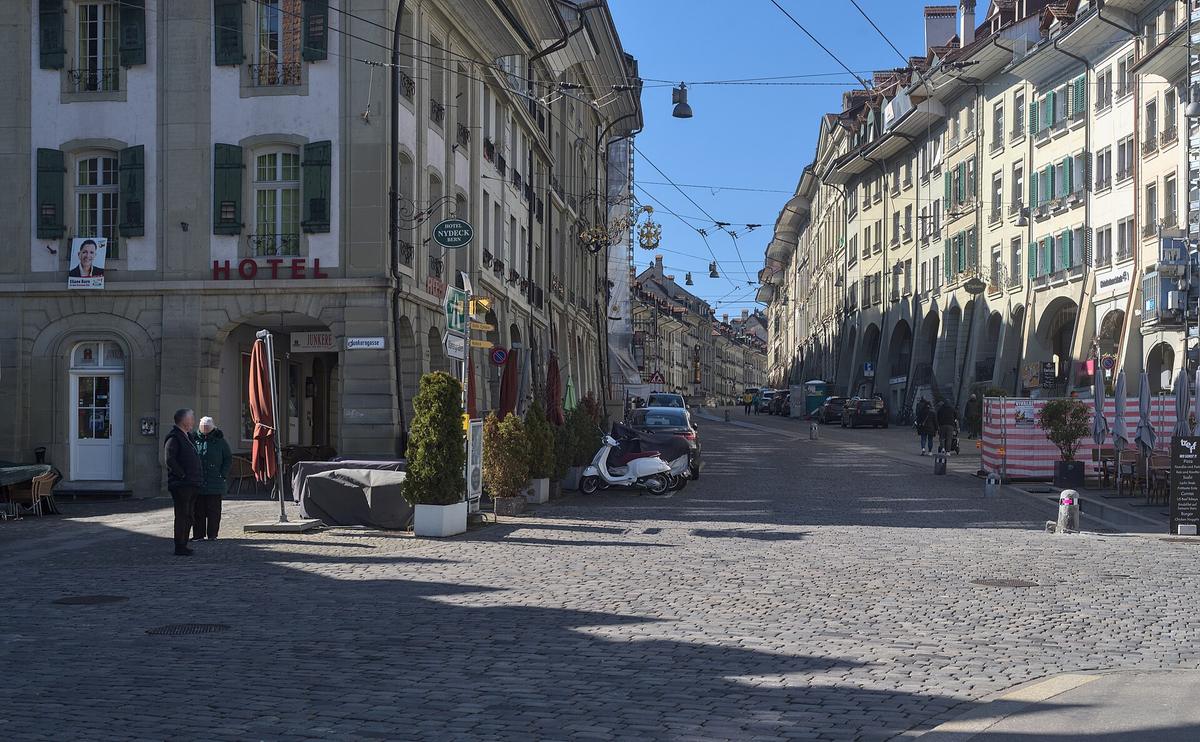
Use this window for city-based itineraries. Bern Old Town, with its arcaded medieval streets, is a free walking route. The Abbey of St. Gall, with its baroque library, requires an advance booking for guided tours. The Château de Chillon on Lake Geneva needs no booking. The Rhine Falls, Europe's largest waterfall by volume, is accessible. Cross into Ticino for gelato and granite. But do not book a mountain resort expecting to reach the summit until the lifts reopen, typically in early June.
Date-Driven Price Spikes: Davos WEF Week and Baselworld
Two specific events trigger hotel price spikes that catch travellers off guard. The first is the World Economic Forum week in Davos, which falls in mid-January. Hotels in Davos and nearby Klosters charge 3-5 times normal rates, and availability drops to zero. The second is Baselworld, a watch and jewellery trade show that varies in timing each year. Hotels in Basel and neighbouring towns in the Jura region raise prices sharply. If you are not attending either event, avoid those dates entirely. Check the official event websites for the exact calendar each year, as the dates shift.
Shoulder Seasons: Spring and Autumn Reality
The shoulder seasons deliver lower prices and fewer crowds, but they also deliver closed infrastructure. Spring, from April to mid-June, allows valley-level hiking and city touring. High-altitude trails remain snowbound, and mountain transport is on maintenance closure. The alpine wildflower peak bloom runs from mid-June to late July, so early June catches the start of the flowers at lower elevations but not the full display. Autumn, from late September to mid-November, offers autumn foliage in deciduous forests from mid-October to early November. The high-altitude hiking season ends in mid-September. Mountain transport may close for maintenance in late October, and some lake boats and secondary rail lines reduce service.
Seasonal Food Anchors
Autumn is the season for vermicelles, a sweet chestnut purée piped like spaghetti, served only in the autumn months. Winter is fondue and raclette season. Summer is the time for Zürcher Geschnetzeltes with rösti, and for Bündner Nusstorte from Graubünden. The seasonal food calendar is strict: vermicelles will not appear on a menu in February, and fondue will not be offered in August. Plan your eating around the season, not the other way around.
| Month | High-Altitude Hiking (Above 2,000m) | Mountain Lifts & Railways | High Alpine Passes | Skiing (Above 1,800m) |
|---|---|---|---|---|
| January | Closed (snow) | Open (ski operations) | Closed | Peak season |
| February | Closed (snow) | Open (ski operations) | Closed | Peak season |
| March | Closed (snow) | Open; late season soft slopes | Closed | Good at altitude |
| April | Closed (snow) | Closing for maintenance mid-month | Closed | Glacier only by late April |
| May | Snow-covered into June | Most closed for maintenance | Closed | None |
| June | Trails open late June | Reopening early to mid-June | Opening depends on snow | None |
| July | Full network open | All open | All open | None |
| August | Full network open | All open | All open | None |
| September | Open until mid-month | Open | Open | None |
| October | Closed after mid-month | Closing for maintenance late October | Closing by snow | Glacier skiing starts late October |
| November | Closed (snow) | Most closed | Closed | Glacier only |
| December | Closed (snow) | Open (ski operations) | Closed | Peak season from mid-December |
.jpg)
Practical Planning: Minimum Days, Arrival, and Getting Around
Switzerland demands a minimum of 7 days. The marquee sights are scattered across the Alps and the Central Plateau, and mountain weather can wipe out a full day without notice. Arriving at Zurich Airport (ZRH) puts you on a train to Zurich HB in 10 minutes. Buy the ticket at the station before boarding; the fare is set by SBB and changes with the timetable. Arriving at Geneva Airport (GVA) puts you on a train to Geneve-Cornavin in 7 minutes; collect a free ticket from the baggage hall machine. Basel Airport (BSL, EuroAirport) is technically in France; take bus 50 to Basel SBB in 20 minutes. Check the current fare on the BVB website before you travel. Milan Malpensa (MXP) is a practical alternative for southern valleys, with direct trains to Brig via Domodossola.
Getting Around
The Swiss Travel System is the dominant mode of transport. A Swiss Travel Pass gives unlimited travel on consecutive days and is almost essential for multi-city itineraries. It covers most scenic routes but does not cover seat reservations, which are mandatory and sell out on the Glacier Express and Bernina Express. The pass also covers lake boats and urban public transport, and grants free entry to over 500 museums. The Half Fare Card gives a 50% discount on most rail, bus, boat, and mountain railway tickets for one month. Children aged 6-15 travel free with a Swiss Family Card when accompanied by at least one parent holding a valid Swiss Travel System ticket.
Common Mistake
Trying to cover the whole country in 4-5 days by staying in a different town each night burns half the trip in transit and leaves no margin for mountain weather that frequently blocks the very views the traveller came for. Base yourself in one region. The Bernese Oberland, Valais, or Graubünden each deliver a week of material. If the weather closes the Jungfraujoch one morning, you have the afternoon to try again.
Local Friction: What Works and What Does Not
Tap water is free and safe nationwide, but asking for it in a restaurant gets you a charged bottle of mineral water unless you specify Hahnenwasser. Coop and Migros supermarkets are the only reliable budget lunch option; even a kebab costs CHF 12-14. Mountain weather shifts in minutes: a sunny valley start guarantees nothing at 3,000 metres. Many shops close at 18:30 on weekdays and all day Sunday; train station shops are the exception. Free Wi-Fi is sparse and often requires SMS verification. Buy a prepaid eSIM or a Salt or Lebara SIM at a mobile shop in any main station; Swisscom has the best mountain coverage. The SBB Mobile app is essential for all transport, tickets, and platform changes.
Who Switzerland Suits and Who it Does Not
Switzerland suits hikers and alpine sport enthusiasts, rail travel romantics, luxury seekers with deep pockets, families wanting safe and clean outdoor holidays, and time-poor travellers who value punctual infrastructure. The country rewards advance planning and a willingness to spend. It does not suit budget backpackers, spontaneous nightlife seekers, travellers who prefer chaotic street-food energy over orderly quiet, or anyone who finds early closing times and Sunday closures frustrating.
Common Questions
When is the absolute worst time to visit Switzerland for mountain access?
The worst window is mid-April to early June, when most high-altitude lifts and mountain railways close for annual maintenance and trails above 2,000 metres are still snowbound or muddy. You can still visit cities and valley-level sites, but you will not reach the high peaks.
Is July or August better for hiking in the Swiss Alps?
Both months offer the full hiking network, but July catches the alpine wildflower peak bloom from mid-June to late July. August has warmer lake swimming temperatures, peaking at 22-24°C, and more consistent afternoon weather. Both are crowded and expensive.
Does the Swiss Travel Pass cover mountain railways and cable cars?
The Swiss Travel Pass covers most scenic train routes, lake boats, and urban public transport, and grants free entry to over 500 museums. It does not cover seat reservations, which are mandatory and sell out on the Glacier Express and Bernina Express. Many mountain railways and cable cars offer a 50% discount with the pass, but some are not included.
What is the cheapest way to eat in Switzerland?
Buy lunch at Coop or Migros supermarkets. Even a kebab costs CHF 12-14. Restaurant meals, especially in mountain resorts, cost significantly more. Tap water (Hahnenwasser) is free if you specify it; otherwise, you will be charged for bottled mineral water.
Can I visit Zermatt and see the Matterhorn in May?
You can visit Zermatt in May, a car-free village, and see the Matterhorn from the valley floor. But the lifts to the Matterhorn Glacier Paradise and the Gornergrat may be closed for maintenance. Check the operator's website for exact closure dates, which vary annually.
Read next
-
 Staying Connected in Switzerland With eSIM, Local SIM, or Roaming
Compare eSIM, local Swisscom or Salt SIM, and roaming for reliable mobile data across Swiss cities and high Alpine valleys.
Staying Connected in Switzerland With eSIM, Local SIM, or Roaming
Compare eSIM, local Swisscom or Salt SIM, and roaming for reliable mobile data across Swiss cities and high Alpine valleys.
-
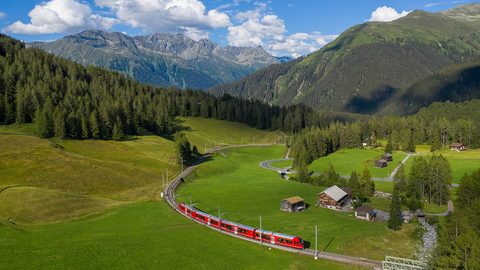 Swiss Travel System Explained and What the Map Oversells
The Swiss Travel Pass covers most trains, buses, and boats, but not mandatory seat reservations on the Glacier Express and Bernina Express, which sell out in
Swiss Travel System Explained and What the Map Oversells
The Swiss Travel Pass covers most trains, buses, and boats, but not mandatory seat reservations on the Glacier Express and Bernina Express, which sell out in
-
 Switzerland Visa Rules for Schengen Travelers and Everyone Else
Switzerland is in Schengen but not the EU. Visa requirements depend on your passport, and the application process involves cantonal immigration offices.
Switzerland Visa Rules for Schengen Travelers and Everyone Else
Switzerland is in Schengen but not the EU. Visa requirements depend on your passport, and the application process involves cantonal immigration offices.
-
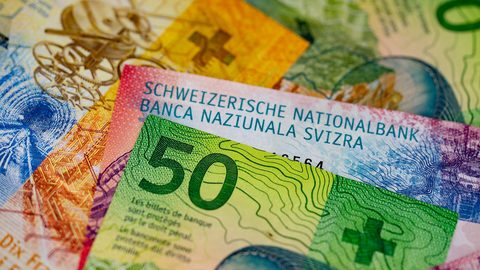 Swiss Francs, Card Payments and Where Cash Still Wins in Switzerland
Switzerland uses the Swiss franc, not the euro. Cards work almost everywhere in cities, but mountain huts and small vendors often demand cash.
Swiss Francs, Card Payments and Where Cash Still Wins in Switzerland
Switzerland uses the Swiss franc, not the euro. Cards work almost everywhere in cities, but mountain huts and small vendors often demand cash.
-
 Switzerland Safety Advice Without the Hype
The train from Zurich Airport to Zurich HB takes 10 minutes. A one-way second-class ticket costs a few francs, set by SBB and updated on their website.
Switzerland Safety Advice Without the Hype
The train from Zurich Airport to Zurich HB takes 10 minutes. A one-way second-class ticket costs a few francs, set by SBB and updated on their website.
-
 What Switzerland Costs and How to Spend Less Without Missing Out
Understand Switzerland's real trip costs, from CHF 12 kebabs to CHF 210 mountain railways, and the structural reasons behind the prices.
What Switzerland Costs and How to Spend Less Without Missing Out
Understand Switzerland's real trip costs, from CHF 12 kebabs to CHF 210 mountain railways, and the structural reasons behind the prices.
-
 A Ground-Level Logistics Guide to Independent Travel in China
First-time independent travel in China: what you need to know about visas, rail booking, eSIMs, mobile payments, and power adapters.
A Ground-Level Logistics Guide to Independent Travel in China
First-time independent travel in China: what you need to know about visas, rail booking, eSIMs, mobile payments, and power adapters.
-
 How Solo Travelers Stay Ahead of Flight Delays and Cancellations
How solo travelers can track inbound aircraft, claim rebooking rights, and adjust ground transport when flights go wrong — step by step.
How Solo Travelers Stay Ahead of Flight Delays and Cancellations
How solo travelers can track inbound aircraft, claim rebooking rights, and adjust ground transport when flights go wrong — step by step.
-
 Why Your eSIM Might Not Work Abroad and How to Check Before You Go
Buying an eSIM doesn't guarantee signal abroad. Learn why coverage fails by location and how to verify reach before you commit to a plan.
Why Your eSIM Might Not Work Abroad and How to Check Before You Go
Buying an eSIM doesn't guarantee signal abroad. Learn why coverage fails by location and how to verify reach before you commit to a plan.