Why a Switzerland Type J Plug Adapter Is Needed and What Fits
Switzerland uses the Type J plug, not the standard European Type F. A loose-fitting Type C may work, but a dedicated Swiss adapter is worth packing.
Swiss Sockets Are Not the Same as the Rest of Europe
You have just arrived at Zürich main station, dropped your bag at the hotel, and pulled out your laptop charger. The two round pins slide into the socket. They fit. But the plug wobbles. It does not feel seated. You push harder. It still wobbles. That moment, in the first hour of a trip, is where the Swiss power system catches everyone out. Switzerland uses Type J sockets. A standard European Europlug Type C often fits physically, but the two systems are not the same, and the difference matters for devices that need a ground connection. For almost every traveller arriving from outside Switzerland, a switzerland type j plug adapter needed is the single most practical thing to buy before leaving home.
Switzerland Type J Plug Adapter Needed: What the Socket Looks Like
The Type J socket, defined by Swiss standard SEV 1011, uses three round pins arranged in a triangle. The two outer pins carry the current. The centre pin is the earth connection. That third pin is recessed into the socket, so a two pin Europlug Type C can enter the outer holes but cannot reach the earth. For a phone charger or a laptop power brick rated up to 2.5 A, the Type C plug will work. It will not fall out if the socket is in good condition. But you will have no ground protection, and in older sockets the fit can be loose enough that the plug drops out under its own weight.
Devices that need an earth connection, such as power tools, hairdryers, or some kitchen appliances, will not work safely with a Type C plug jammed into a Type J socket. The correct solution is a travel adapter with the Type J pin configuration, which has the three pins and the proper recessed shape. A universal travel adapter that includes a Type J option is the most efficient buy if you visit multiple countries in one trip.
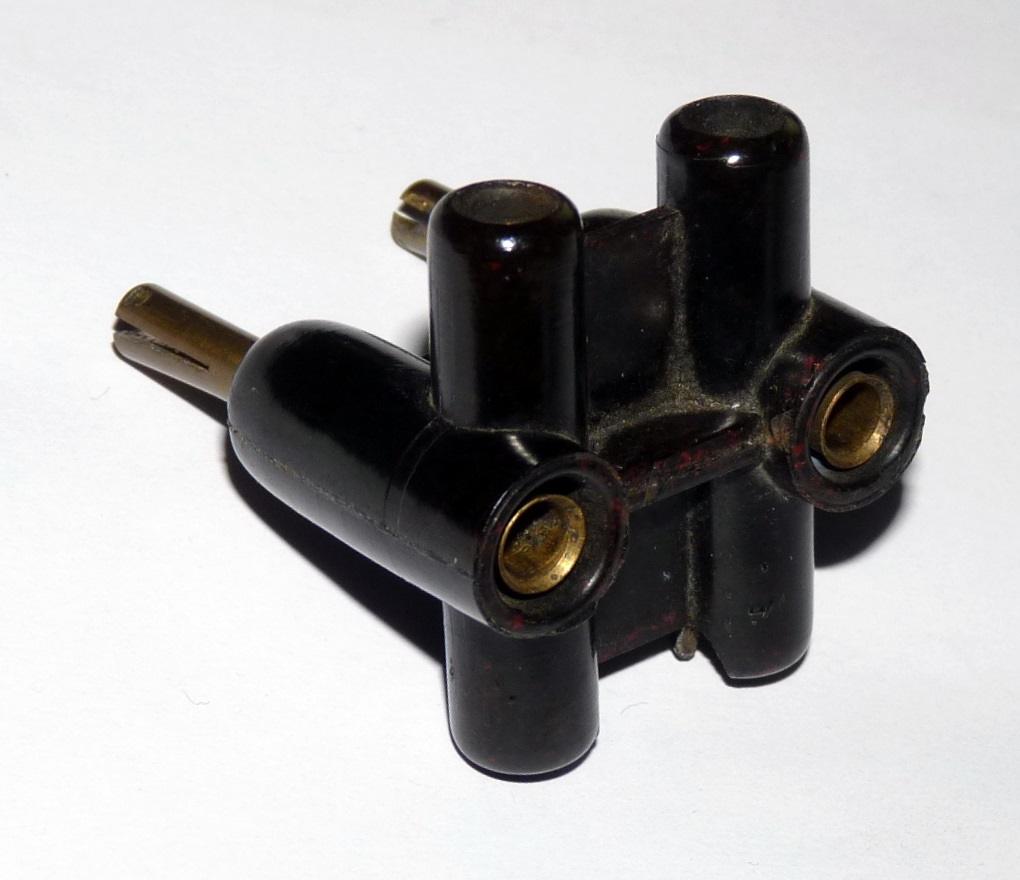

Swiss Voltage 230V Appliance Check
Check Your Device Label First
Mains voltage in Switzerland is 230 V at 50 Hz. That is the same standard as the rest of continental Europe, the UK, Australia, and most of Asia. Any device rated 100-240 V and 50/60 Hz, which includes nearly all modern laptop chargers, phone chargers, and camera battery chargers, will operate without a voltage converter. Check the label on the power brick. If it says 100-240 V, you only need the plug adapter. If it says 110-120 V only, which covers older North American or Japanese appliances, you need a step down transformer. Do not plug a 110 V hairdryer into a 230 V socket without a transformer. It will blow the fuse or catch fire.
Single-Voltage Devices Are the Real Risk
Single voltage devices that draw high current, such as hair straighteners or travel kettles, are the common failure case. Buy a dual voltage travel version before the trip, or plan to buy a local appliance in Switzerland. A basic hairdryer at a Coop or Migros supermarket costs roughly CHF 20 to CHF 30. That is cheaper than a transformer and safer than assuming the device will survive 230 V.
| Specification | Value |
|---|---|
| Mains voltage | 230 V |
| Mains frequency | 50 Hz |
| Plug type in use | Type J (SEV 1011, three round pins in a triangular arrangement) |
| Plug type also compatible | Type C (Europlug, two round pins, 4.0–4.8 mm diameter) |
| Type C compatibility note | Type C plugs fit Swiss Type J sockets for devices up to 2.5 A; earthed Type C plugs may not connect earth |
| Adaptor that covers Switzerland | Universal travel adapter with Type J pin configuration, or a Type C to Type J adapter for two pin devices |
| Dual voltage requirement | Devices rated 100–240 V, 50/60 Hz operate without a voltage converter; single voltage 110–120 V devices require a step down transformer |
| USB A provision in accommodation | Widespread in hotels and hostels built or renovated since approximately 2015; less common in traditional mountain huts and older guesthouses |
| USB C provision in accommodation | Increasing in hotels opened or renovated since approximately 2020; not standard in budget or traditional accommodation. Verify with your hotel before relying on it. |
Type C Plug Fits Swiss Socket but Not Always Well
The Europlug Type C has two round pins, 4.0 to 4.8 mm in diameter, spaced 19 mm apart. That matches the outer pin spacing of a Type J socket. So a standard European phone charger will physically enter a Swiss wall socket. The problem is mechanical fit and earthing. The Type C plug has no notch for the centre pin, so it sits on the surface of the socket rather than clicking into the recess. On a nightstand, the weight of the charger cable can pull the plug sideways and disconnect it. In a train or an airport, where the socket is wall mounted and the plug hangs downward, it usually stays in place. But never trust it for a device that must charge overnight.
If your device has a moulded Type C plug with short pins, as most USB chargers do, carry a small Type C to Type J converter. Electronics shops in Switzerland sell them for roughly CHF 5 to CHF 12. Online retailers sell them for less. The converter adds a few grams to your bag and removes the frustration of waking up to a dead phone battery.
Switzerland Power Adapter vs Europe: What to Buy
Universal or Dedicated: Pick One
A universal travel adapter that covers Type J plus the other European types is the best choice for travellers who visit multiple countries. Many universal adapters include a Type J slider or a separate insert. Test it before you leave: the adapter must have the three pin triangular arrangement, not a two pin flat shape. A standard European two pin adapter without the centre earth hole will not fit Swiss sockets at all.
If you only visit Switzerland and its neighbours, a dedicated Type J adapter is smaller and cheaper. Look for one rated at 10 A or higher, which covers any device you would plug into a wall socket. Do not buy a Type C to Type J converter that is only rated 2.5 A if you plan to charge a laptop and a phone at the same time. The unit will overheat. Check the rating printed on the body before you plug it in.
Where to Buy a Converter in Switzerland
If you arrive without one, buy it at the electronics section of any Coop or Migros supermarket, or at a MediaMarkt in Zürich, Geneva, or Basel. The airport electronics kiosks charge roughly double the supermarket price. A Type J converter costs CHF 8 to CHF 15 at a supermarket and CHF 20 to CHF 30 at the airport. The train station shops at Zürich HB also stock them, but selection is narrow.
Swisscom Salt Sim Card Mobile Shop: Solving the Connectivity Gap
Get Data Before You Leave the Station
Once you have sorted power, the next practical step is mobile connectivity. Free Wi Fi in Switzerland is sparse. Where it exists, it requires SMS verification, which you cannot complete without a local number. The SBB Mobile app is essential for all transport, tickets, and platform changes. You need data to use it. A prepaid eSIM is the simplest option for short stays. Buy it online before departure, activate it on arrival, and you have data within minutes.
If you prefer a physical SIM, buy a Salt or Lebara SIM at a mobile shop in any main station. Zürich HB, Geneva Cornavin, and Basel SBB all have a Salt shop in the shopping concourse. Expect to pay roughly CHF 10 to CHF 20 for a starter pack with a few gigabytes of data. Swisscom has the best mountain coverage, but its prepaid options cost more. For any valley or cable car journey, Swisscom is worth the premium. For city stays, Salt or Lebara work fine.
The One Thing That Goes Wrong
The most common mistake travellers make with Swiss power is assuming that because the Europlug fits, the system is identical. It is not. The lack of earthing and the loose fit cause devices to disconnect during charging, leaving a phone or a laptop dead when you need it most. Buy a Type J adapter before you leave. It costs less than a coffee in Zürich and solves the problem completely.
Swiss sockets suit the traveller who prepares ahead, packs a universal adapter, and checks device voltage before plugging in. They do not suit the traveller who assumes every European socket is the same and arrives without one. That first night will end with a half charged phone and a trip to a station shop at closing time.
Frequently Asked Questions
Can I use my European two pin plug in Switzerland?
Yes, if your device is a two pin Europlug Type C rated up to 2.5 A. The pins fit the outer holes of a Type J socket. But the plug will not be earthed, and it may sit loose. For a phone or laptop charger this is fine. For a hairdryer or power tool, use a proper Type J adapter.
Does Switzerland use the same voltage as Germany or France?
Yes. Switzerland runs on 230 V at 50 Hz, the same as the rest of continental Europe. Any dual voltage device rated 100-240 V will work with just a plug adapter.
Do I need a voltage converter for a US appliance?
Only if the appliance is rated 110-120 V only. Check the label on the device. Most modern phone and laptop chargers are dual voltage. Hairdryers, curling irons, and electric toothbrushes from the US are usually single voltage and require a step down transformer.
Do Swiss hotels have USB ports?
Many hotels built or renovated since 2015 have USB A ports. Hotels opened or renovated since 2020 increasingly include USB C. Traditional mountain huts and older guesthouses rarely have any USB charging. Do not rely on it. Bring your own plug adapter.
Can I charge my phone on Swiss trains?
SBB InterCity and EuroCity trains on modern rolling stock, such as refurbished IC2000, Giruno, and Twindexx, offer USB A ports at seats in first and second class. Older IC compositions may not have seat level USB. Regional trains vary: newer stock often has USB A, older stock usually does not. PostBus and city buses rarely have USB ports, though some newer buses in Zürich, Geneva, and Basel may offer them.
Is there a Swiss government travel advisory?
The Swiss Federal Department of Foreign Affairs issues travel advisories for outbound travel. Inbound advisories for Switzerland are issued by individual foreign governments such as the UK Foreign Office, the US State Department, and the Australian Department of Foreign Affairs and Trade. Check your own government's travel advice before departure.
Do I need a visa for Switzerland?
Switzerland is in the Schengen Area. EU and EFTA nationals do not need a visa. Nationals of about 60 third countries, including the UK, USA, Canada, Australia, New Zealand, Japan, and South Korea, may stay up to 90 days within any 180 day period without a visa. Nationals of other countries require a uniform Schengen visa. Your passport must be valid for at least three months beyond your intended departure from the Schengen Area and must have been issued within the previous ten years.
Read next
-
 Staying Connected in Switzerland With eSIM, Local SIM, or Roaming
Compare eSIM, local Swisscom or Salt SIM, and roaming for reliable mobile data across Swiss cities and high Alpine valleys.
Staying Connected in Switzerland With eSIM, Local SIM, or Roaming
Compare eSIM, local Swisscom or Salt SIM, and roaming for reliable mobile data across Swiss cities and high Alpine valleys.
-
 When to Visit Switzerland and What Each Season Actually Delivers
July and August deliver reliable high-alpine hiking at peak hotel rates. Mid-April to early June brings lift closures, mud, and snow-blocked passes.
When to Visit Switzerland and What Each Season Actually Delivers
July and August deliver reliable high-alpine hiking at peak hotel rates. Mid-April to early June brings lift closures, mud, and snow-blocked passes.
-
 Swiss Travel System Explained and What the Map Oversells
The Swiss Travel Pass covers most trains, buses, and boats, but not mandatory seat reservations on the Glacier Express and Bernina Express, which sell out in
Swiss Travel System Explained and What the Map Oversells
The Swiss Travel Pass covers most trains, buses, and boats, but not mandatory seat reservations on the Glacier Express and Bernina Express, which sell out in
-
 Switzerland Visa Rules for Schengen Travelers and Everyone Else
Switzerland is in Schengen but not the EU. Visa requirements depend on your passport, and the application process involves cantonal immigration offices.
Switzerland Visa Rules for Schengen Travelers and Everyone Else
Switzerland is in Schengen but not the EU. Visa requirements depend on your passport, and the application process involves cantonal immigration offices.
-
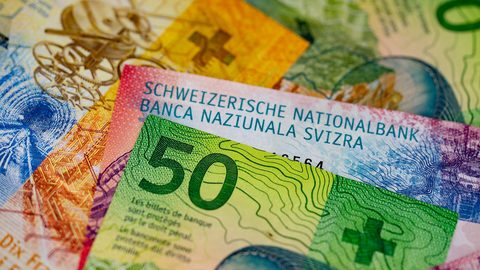 Swiss Francs, Card Payments and Where Cash Still Wins in Switzerland
Switzerland uses the Swiss franc, not the euro. Cards work almost everywhere in cities, but mountain huts and small vendors often demand cash.
Swiss Francs, Card Payments and Where Cash Still Wins in Switzerland
Switzerland uses the Swiss franc, not the euro. Cards work almost everywhere in cities, but mountain huts and small vendors often demand cash.
-
 Switzerland Safety Advice Without the Hype
The train from Zurich Airport to Zurich HB takes 10 minutes. A one-way second-class ticket costs a few francs, set by SBB and updated on their website.
Switzerland Safety Advice Without the Hype
The train from Zurich Airport to Zurich HB takes 10 minutes. A one-way second-class ticket costs a few francs, set by SBB and updated on their website.
-
 A Ground-Level Logistics Guide to Independent Travel in China
First-time independent travel in China: what you need to know about visas, rail booking, eSIMs, mobile payments, and power adapters.
A Ground-Level Logistics Guide to Independent Travel in China
First-time independent travel in China: what you need to know about visas, rail booking, eSIMs, mobile payments, and power adapters.
-
 How Solo Travelers Stay Ahead of Flight Delays and Cancellations
How solo travelers can track inbound aircraft, claim rebooking rights, and adjust ground transport when flights go wrong — step by step.
How Solo Travelers Stay Ahead of Flight Delays and Cancellations
How solo travelers can track inbound aircraft, claim rebooking rights, and adjust ground transport when flights go wrong — step by step.
-
 Why Your eSIM Might Not Work Abroad and How to Check Before You Go
Buying an eSIM doesn't guarantee signal abroad. Learn why coverage fails by location and how to verify reach before you commit to a plan.
Why Your eSIM Might Not Work Abroad and How to Check Before You Go
Buying an eSIM doesn't guarantee signal abroad. Learn why coverage fails by location and how to verify reach before you commit to a plan.