Sweden Cashless Payment Guide, Where Cards Are the Only Option
Sweden is effectively cashless and many places refuse cash entirely, but the Swish payment app requires a Swedish bank account, leaving tourists reliant on cards.
Pay for Things in Sweden Without a Swedish Bank Account
The most common mistake visitors make is assuming a country that uses cash will accept cash. Sweden is not that country. This guide is built on one fact: you will struggle to use physical currency in many everyday situations. Businesses here can legally refuse cash, and many do. Buses, parking meters, public toilets, and even some museum gift shops have gone entirely cash free. The default payment method is a debit card, specifically a contactless chip and PIN card issued by Visa or Mastercard. That single piece of plastic, not a wallet full of krona, is what you need to operate here. If your card works for tap to pay, you are set for roughly 98% of transactions.
Swedish Krona Card Payments: What Works and What Does Not
The krona, code SEK, symbol kr, is the currency. Physical öre coins were discontinued years ago; öre now exists only in digital transactions. You will see prices like 49.90 kr, but you cannot pay 0.90 kr in coins. The terminal rounds the digital total automatically. Card payment acceptance is near universal, including at market stalls, on the Arlanda Express train to central Stockholm, and at small rural cafes. The key requirement is chip and PIN. Magnetic swipe only cards often fail. Contactless tap to pay is the default, and the limit is high enough that you rarely need to insert the card. Set a PIN of four to six digits before you travel. You will need it for the terminal at some point and for withdrawing cash at a Bankomat ATM.

Using Cash in Sweden: Where it Still Works and Where it Fails
Cash is legal tender, but that does not force any business to accept it. The law allows a shop or a bus company to contractually refuse physical money. You need to know exactly where cash still works and where it will get you stuck.
Where Cash Still Works
Some taxis accept cash, though most prefer card. A few very rural markets, particularly in Lapland or on Gotland, may take notes. Systembolaget, the state run alcohol monopoly, does accept cash. The bigger problem there is the hours: Systembolaget closes by 19:00 on weekdays, 15:00 on Saturdays, and is shut entirely on Sunday. Arrive at 17:30 on a Saturday with a handful of kronor and the door is already locked.
Where Cash Fails Completely
Public buses in most cities, including Stockholm, Göteborg, and Malmö, refuse cash. Pay with a contactless card or a regional transport app. Public toilets, especially the automated street toilets, require a Swish payment or a specific coin. If you do not have the exact coin, the door stays locked. The Flygbussarna coach from Göteborg Landvetter Airport to the city centre runs on card payments. You cannot pay with notes or coins on board.
Getting Cash If You Need It
Bankomat ATMs exist but are decreasing in number; many bank branches are themselves cash free. When you find a Bankomat, the machine will offer Dynamic Currency Conversion, sometimes labelled as With Conversion or Without Conversion. Always choose Without Conversion, meaning you let your home bank set the exchange rate. The ATM operator's rate is worse. Withdraw only a small amount. You will likely have it in your wallet at the end of the trip.
The Swish App Problem for Tourists: Can You Use it Without a Swedish Bank Account?
Swish is the mobile payment app used by nearly every adult in the country. It works instantly between phone numbers and is used for everything from splitting a restaurant bill to buying a single kanelbulle at a cafe. The problem is clear: Swish requires a local bank account and a personal number. You cannot download the app and register as a foreign visitor. This creates real friction. Some public toilets in the Stockholm Archipelago or along the Bohuslän coast accept Swish only. If the toilet sign says Swish and you do not have the app, you either find another toilet or hold it until the next town. There is no tourist workaround. Do not expect one. Your backup is a contactless card and, for toilets specifically, a small stash of 5 and 10 kronor coins if you can find them.
Sweden Money Tips: What to Do Before You Land
Three actions before you fly will save you every money related hassle.
First, call your bank and confirm your card is enabled for international use, has a chip, and that you know your PIN. A card that works at home may be blocked on the first terminal. Second, set up your card for contactless payments in your banking app. Third, inform your bank you are travelling so they do not flag the first transaction as fraud. That is it. You do not need to order krona from your home bank before departure. You do not need a travel money card if your debit card works. Forex exchange offices still exist in airports and central stations, but their main business now is exchanging leftover euros or US dollars for tourists who cannot use their cards elsewhere. You will not need them.
Tipping in Sweden: a Short Rule
Tipping is not expected. Service charge is included in menu prices at restaurants. In bars, rounding up the bill to the nearest convenient amount is occasional. In taxis and hotels, it is not expected. If you receive exceptional service, a small gratuity is offered voluntarily, never solicited. Do not calculate percentages. Do not leave 15% out of habit. You will overpay.
The One Thing That Most Often Goes Wrong
Visitors assume that because the country is modern and efficient, the payment infrastructure will be familiar and forgiving. It is not forgiving. The moment that catches most people is the public toilet. You are on a road trip through Dalarna or Värmland, you stop at a rest area, and the toilet door has a card reader that only accepts Swish. No Swish, no toilet. Or you board a bus in Malmö with a handful of coins, and the driver waves you off. The single worst mistake is arriving without a working contactless debit card. That card is your bus ticket, your toilet key, your museum entrance, and your dinner. Protect it. Know your PIN. And keep a small stash of coins as a backup for the machines that still demand them, because in a cashless country, the gaps in the system are the most punishing.
Common Questions
Can I use my American credit card in Sweden?
Yes, if it has a chip and a PIN. Visa and Mastercard are the dominant networks. American Express is accepted at some hotels and larger stores but not at many small businesses or at Systembolaget. Do not rely on Amex as your only card.
What happens if my card is magnetic stripe only?
It will fail at most terminals. Card readers here require a chip. If you only have a magnetic stripe card, withdraw cash at a Bankomat ATM and pay with that. But you will struggle at bus terminals and self service kiosks that do not accept cash.
Can I buy an SJ train ticket with cash at the station?
No. SJ tickets require a card payment at the station machine or advance booking online. Seat reservations are mandatory on long distance routes and sell out. Booking on the platform without a reservation is a common mistake.
Is there any place I am forced to use cash?
Very few. Some very small rural markets or private tour operators in Lapland may take cash only. Keep a small amount of cash in your bag for that unlikely scenario. But even the Icehotel in Jukkasjärvi and the Treehotel in Harads take cards.
Is it worth exchanging money at Forex before I leave the airport?
Only if you want a small amount of emergency cash and understand you will lose on the exchange rate. Forex and other exchange offices exist because some tourists still expect to use cash. You can skip them entirely if you have a working card.
Read next
-
 Staying Connected in Sweden With eSIM, Local SIM or Roaming
Compare eSIM, local SIM cards from Comviq or Telia, and roaming for Sweden, including the dead zones in Sarek and Padjelanta where offline maps are essential.
Staying Connected in Sweden With eSIM, Local SIM or Roaming
Compare eSIM, local SIM cards from Comviq or Telia, and roaming for Sweden, including the dead zones in Sarek and Padjelanta where offline maps are essential.
-
 Best Time to Visit Sweden and What Each Season Actually Does
June to August brings midnight sun and open trails, but November is dark and closed, and late February sportlov fills domestic flights and ski resorts.
Best Time to Visit Sweden and What Each Season Actually Does
June to August brings midnight sun and open trails, but November is dark and closed, and late February sportlov fills domestic flights and ski resorts.
-
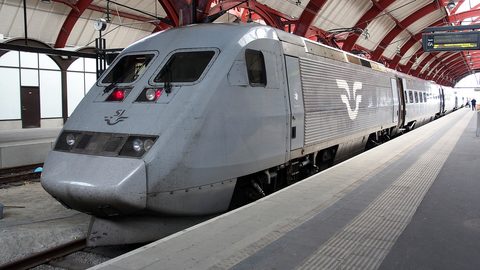 Getting Around Sweden, Trains, Cars and What the Map Oversells
SJ trains connect Swedish cities but mandatory seat reservations sell out, regional buses require apps or contactless cards, and distances between north and
Getting Around Sweden, Trains, Cars and What the Map Oversells
SJ trains connect Swedish cities but mandatory seat reservations sell out, regional buses require apps or contactless cards, and distances between north and
-
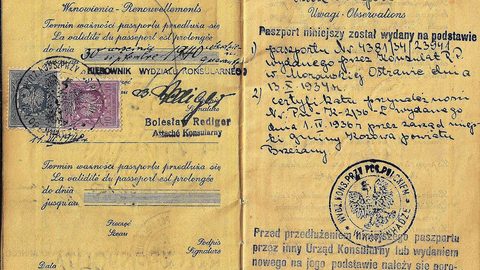 Sweden Visa Requirements and the Schengen Application Process
Who needs a visa for Sweden, who does not, and how the Schengen application process works through Swedish embassies and VFS Global centres.
Sweden Visa Requirements and the Schengen Application Process
Who needs a visa for Sweden, who does not, and how the Schengen application process works through Swedish embassies and VFS Global centres.
-
 Reading Sweden Safety Advice Without Being Misled by It
Sweden is safe for tourists but the real risks are wilderness isolation, no mobile coverage in Sarek, severe northern mosquitoes, and winter driving conditions.
Reading Sweden Safety Advice Without Being Misled by It
Sweden is safe for tourists but the real risks are wilderness isolation, no mobile coverage in Sarek, severe northern mosquitoes, and winter driving conditions.
-
 What a Trip to Sweden Costs Without the Surprises
Understand the shape of a Sweden travel budget, from the Systembolaget alcohol monopoly rhythm to the free camping that offsets steep restaurant bills.
What a Trip to Sweden Costs Without the Surprises
Understand the shape of a Sweden travel budget, from the Systembolaget alcohol monopoly rhythm to the free camping that offsets steep restaurant bills.
-
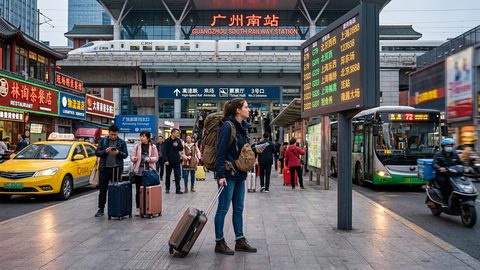 A Ground-Level Logistics Guide to Independent Travel in China
First-time independent travel in China: what you need to know about visas, rail booking, eSIMs, mobile payments, and power adapters.
A Ground-Level Logistics Guide to Independent Travel in China
First-time independent travel in China: what you need to know about visas, rail booking, eSIMs, mobile payments, and power adapters.
-
 How Solo Travelers Stay Ahead of Flight Delays and Cancellations
How solo travelers can track inbound aircraft, claim rebooking rights, and adjust ground transport when flights go wrong — step by step.
How Solo Travelers Stay Ahead of Flight Delays and Cancellations
How solo travelers can track inbound aircraft, claim rebooking rights, and adjust ground transport when flights go wrong — step by step.
-
 Why Your eSIM Might Not Work Abroad and How to Check Before You Go
Buying an eSIM doesn't guarantee signal abroad. Learn why coverage fails by location and how to verify reach before you commit to a plan.
Why Your eSIM Might Not Work Abroad and How to Check Before You Go
Buying an eSIM doesn't guarantee signal abroad. Learn why coverage fails by location and how to verify reach before you commit to a plan.